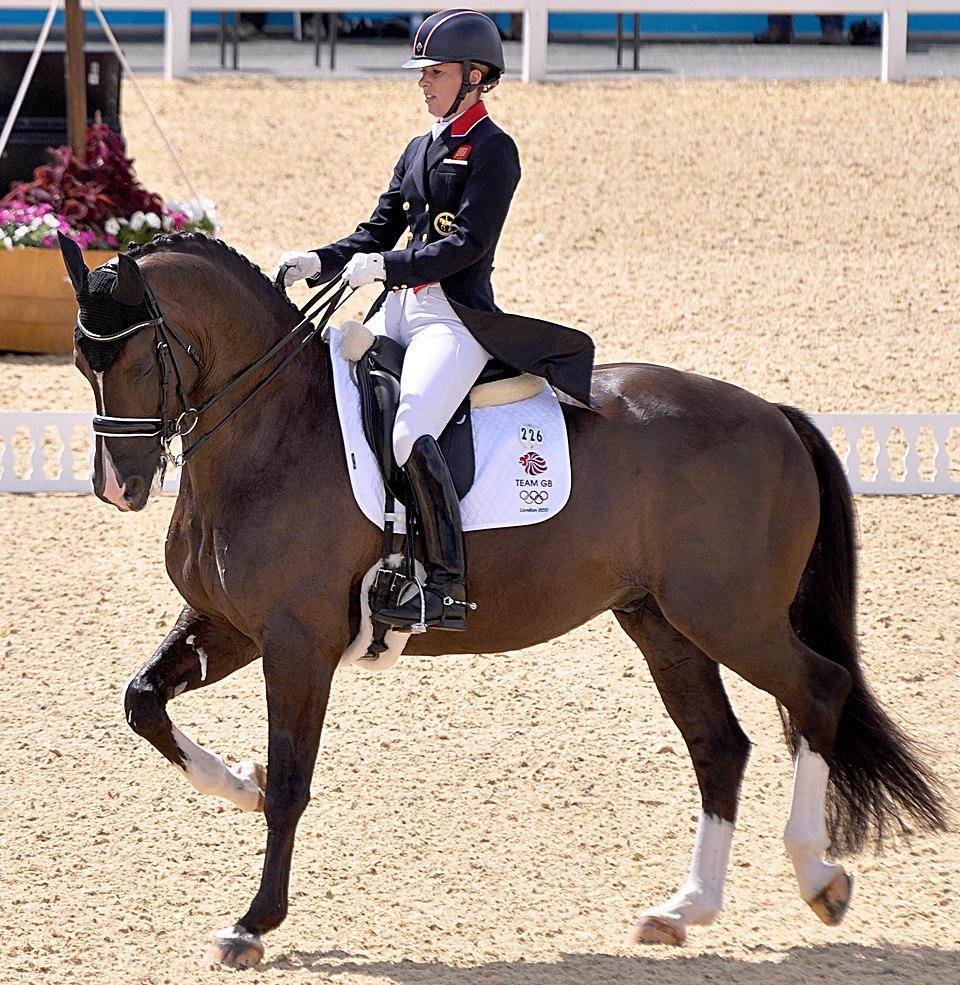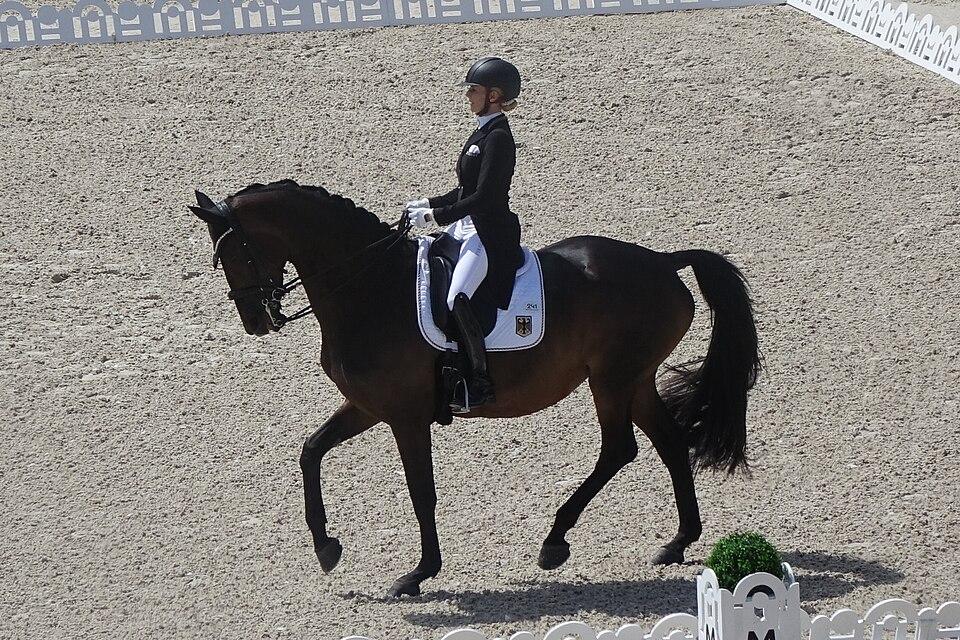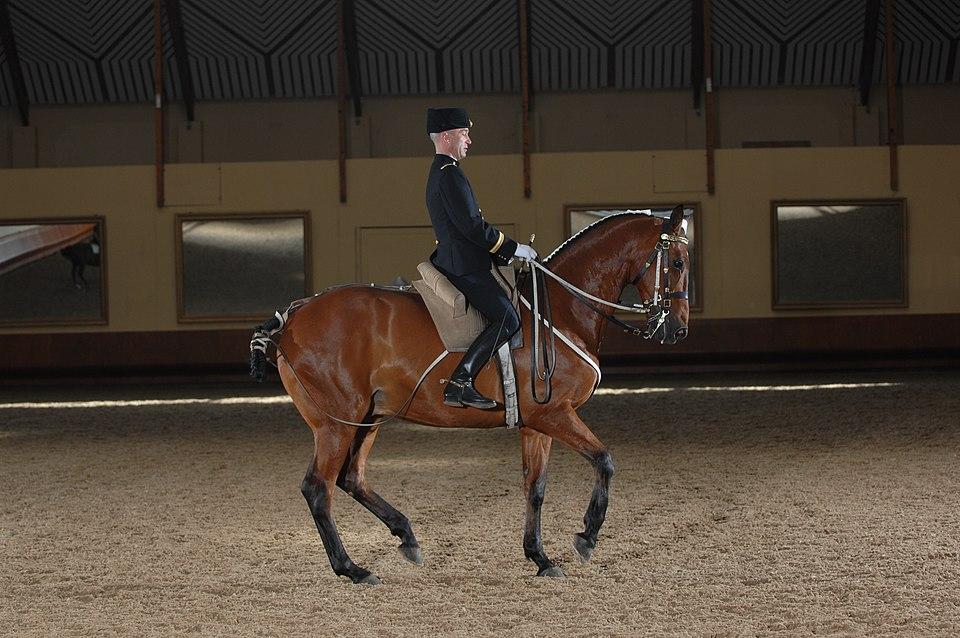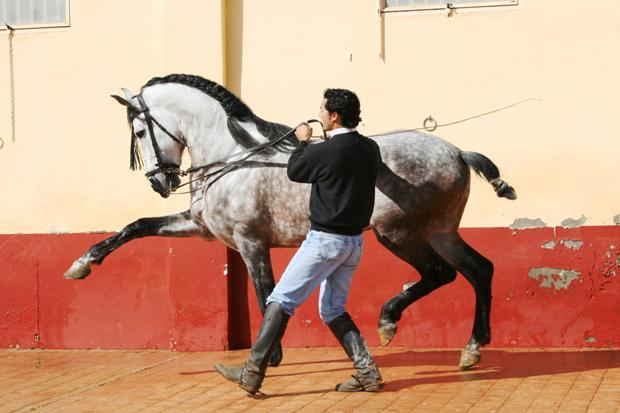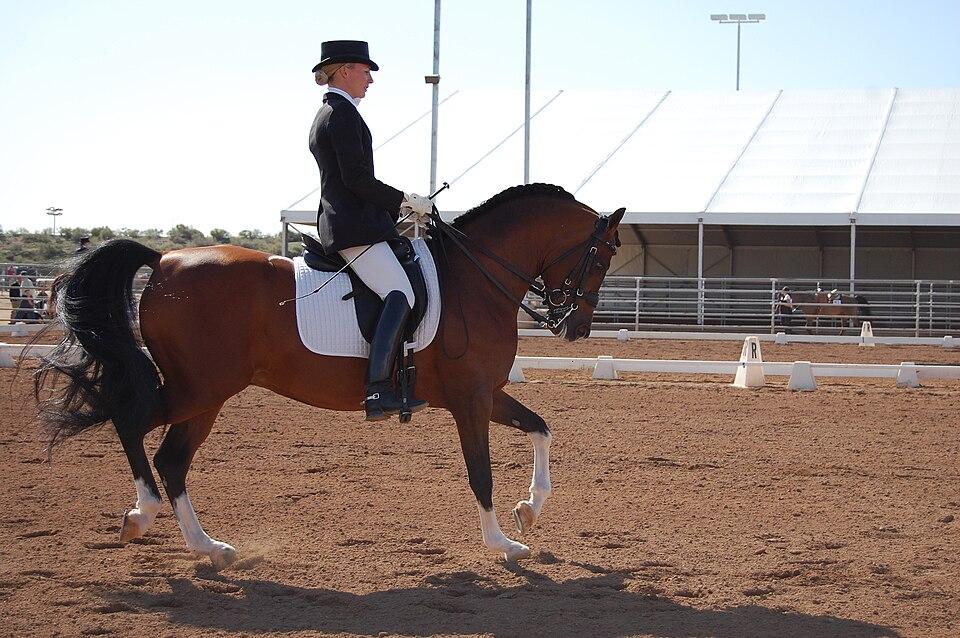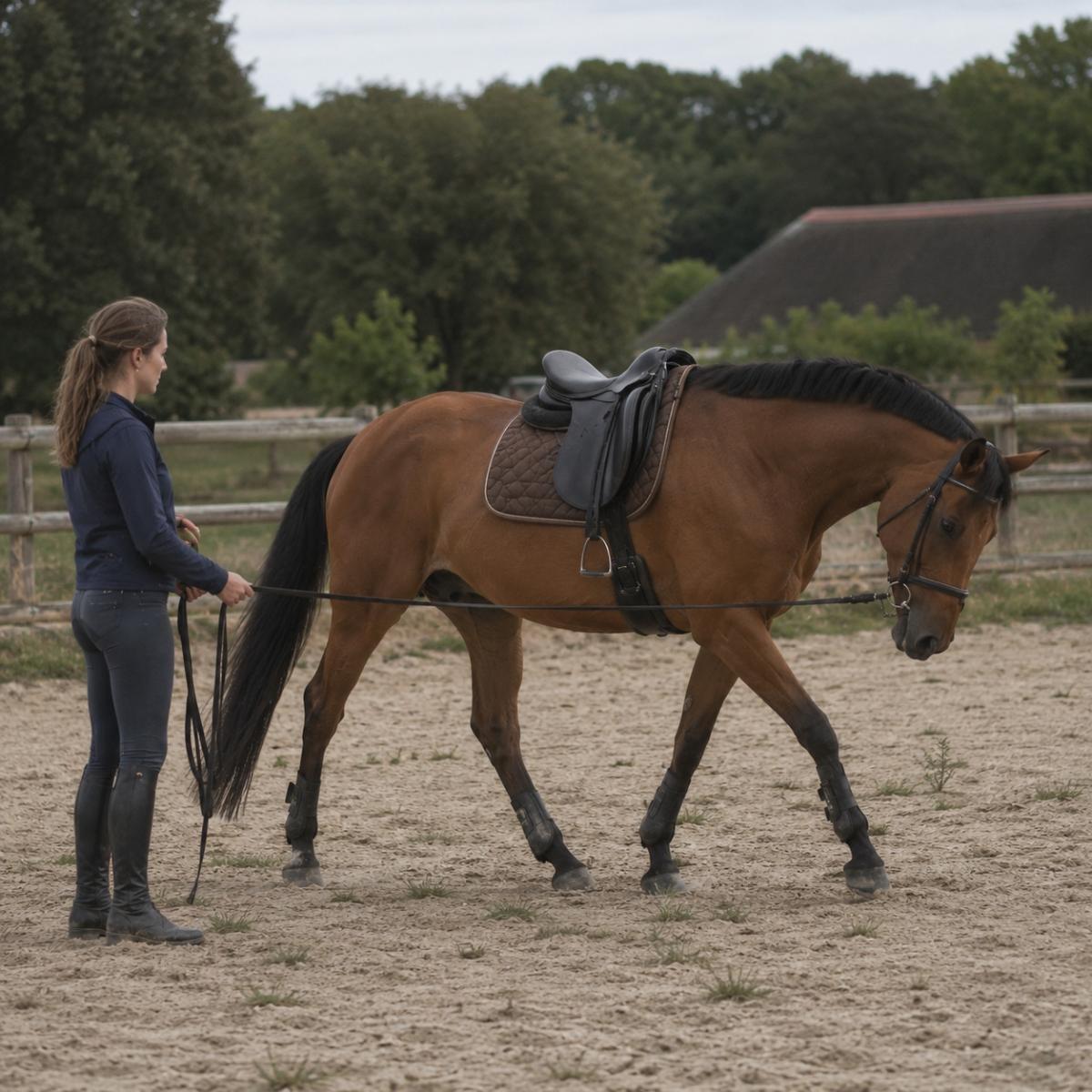
The training of a young dressage horse does not begin with piaffe, flying changes or collection. Before tackling advanced movements, the horse must learn to understand simple cues, move with a rider and gradually develop a new balance while carrying additional weight.
This education begins even before ridden work. Handling, habituation to the environment, learning simple signals and eventually breaking in are already part of the horse's learning process.
There is, however, no universal timetable that applies to every horse. Age, physical and behavioural maturity, health, previous experience, intended discipline and training intensity all need to be considered together.
Education begins before breaking in
A young horse starts learning long before a rider gets on its back.
During its early education, it may gradually learn to:
- accept a halter;
- be led in hand;
- stand still;
- have its feet handled;
- accept grooming and routine handling;
- be examined and treated;
- load into a trailer or horsebox;
- encounter new places and situations.
These lessons primarily have practical and safety purposes: the horse needs to be handled, moved and cared for safely.
The IFCE's guidance on young horse education covers learning from the young horse's early life through to breaking in. It notably discusses research into handling, human-horse interactions and the use of reinforcement during early education.
It is therefore too simplistic to consider dressage training as something that begins only when a saddle is first placed on the horse.
How does a young horse learn?
Horses learn through processes including habituation, conditioning and reinforcement.
When a behaviour is being taught, the way a cue is presented and what happens after the horse responds influence learning.
The objective is therefore not simply to obtain a particular movement, but to allow the horse to understand which signal corresponds to which response.
The International Society for Equitation Science (ISES) Training Principles recommend, among other things, breaking new tasks into achievable steps, using consistent and distinguishable signals, and avoiding unnecessarily long sessions or excessive repetition.
This provides a useful way of looking at young horse training: the horse should not have to "guess" what the rider wants. The training process should progressively make the correct response understandable.
Breaking in: discovering ridden work
Breaking in refers to the period during which the horse is progressively prepared for its future ridden work.
For a horse intended to be ridden, this includes learning to accept equipment, a rider and the first basic cues given from the saddle.
The exact stages vary according to the horse and the training method.
The young horse may progressively become accustomed to:
- the saddle pad and saddle;
- the girth;
- the mounting process;
- the rider's weight;
- basic ridden cues;
- moving while carrying this new load.
There is no single breaking-in method that is appropriate for every horse.
A more useful principle is to divide learning into manageable stages, check that the previous stage has been understood and pay attention to the horse's physical and behavioural responses.
What does carrying a rider actually change?
A horse naturally knows how to walk, trot, canter, turn and alter its balance long before it is ridden.
A rider nevertheless introduces a new constraint: additional, moving weight carried on the horse's back.
The horse must learn to maintain its locomotion while adapting to this load and to the rider's movements.
During the early stages of ridden work, a young horse may lack stability or coordination in certain situations. This does not necessarily mean that it is permanently "on the forehand": its balance varies with conformation, speed, gait, the exercise being performed and the rider's own balance.
The initial objective is therefore not to produce the balance expected from an experienced dressage horse.
It is first to enable the young horse to move regularly and without excessive constraint while carrying a rider.
What does a young horse learn during its first ridden sessions?
The earliest ridden lessons are generally simple.
The horse gradually learns how to:
- move forward from a cue;
- slow down and halt;
- turn;
- maintain a gait;
- perform transitions;
- follow a line;
- respond to increasingly subtle and precise signals.
Training may include straight lines, large curves and simple transitions.
The exact content depends on the individual horse, the available space and the rider. There is no programme requiring every young horse to perform exactly the same exercises in exactly the same order.
What matters more is the quality of the response and locomotion than the number of exercises performed.
Why are regular gaits important?
The quality of the gaits is one of the foundations of dressage.
A young horse needs to be able to walk, trot and canter with a sufficiently consistent rhythm before the rider attempts to make major changes to its balance or posture.
This principle can also be seen in the evaluation of young sport horses. The FEI Dressage Judging Manual for young horse competitions places particular emphasis on the paces, standard of training and overall impression of the young horse.
The early years of training are therefore not intended to reproduce prematurely the work expected from a Grand Prix horse.
Is relaxation really the priority?
Physical and mental relaxation are important, but the concept needs to be defined carefully.
Relaxation does not mean that the horse must always move slowly or lack energy.
A horse can be active and attentive while remaining mentally available to the rider.
Conversely, severe tension, very high arousal or repeated flight, fight or freeze responses can make learning more difficult and may indicate that the situation needs to be reassessed.
The ISES Training Principles recommend considering the horse's current emotional state, avoiding unnecessarily triggering flight, fight or freeze responses, and maintaining a level of arousal appropriate for the task.
The aim is therefore not to produce a horse that is "perfectly relaxed" at all times, but to work in a state in which the horse remains capable of perceiving cues and responding without excessive distress.
How long should a young horse work?
There is no universal duration.
Saying that every young horse should work for exactly twenty, thirty or forty minutes would not be justified.
The appropriate duration depends on factors including:
- age;
- physical condition;
- stage of training;
- exercise intensity;
- footing;
- temperature;
- difficulty of the session;
- recovery;
- the horse's physical and behavioural state.
A short but highly demanding session can place greater demands on the horse than a longer period of low-intensity exercise.
From a learning perspective, unnecessary repetition is not desirable either. ISES recommends keeping repetitions to a minimum to avoid overloading the horse during training.
The useful question is therefore not simply "how many minutes?", but what is the horse being asked to do during those minutes, and how well does it recover?
Is a young horse's skeleton still developing?
Yes.
Musculoskeletal maturation continues while a horse is young, but this does not mean that all physical activity should be avoided until a particular age.
The effects of exercise on a developing body are more complex.
Tissues such as bone, tendon and cartilage adapt to mechanical loading, within certain limits. Scientific reviews of training in young horses have therefore examined how controlled exercise may contribute to musculoskeletal adaptation, while emphasising the importance of the nature and intensity of that exercise.
Much of this research has involved racehorses and should not simply be transferred directly to dressage horses. Nevertheless, it demonstrates why the statement "working a horse young inevitably damages it" is too simplistic.
Conversely, the evidence does not justify unlimited workloads in young animals.
Progressive loading, recovery, footing, intensity, health and individual adaptation remain important considerations.
How does a young horse develop muscle?
Muscles develop in response to movement and training.
It is not necessary to demand a highly collected posture immediately in an attempt to "build the back".
At first, training is primarily about allowing the horse to use its body progressively while carrying a rider and maintaining functional locomotion.
As training develops, exercises can progressively improve:
- trunk stability;
- coordination;
- propulsion;
- balance;
- straightness;
- and, much later and progressively, the ability to carry more weight toward the hindquarters.
This development takes place over a long period.
Are the foundations more important than advanced movements?
For a young horse, yes.
Advanced movements only become meaningful once the basic responses are sufficiently established.
The horse first needs to learn to maintain a gait and direction, perform transitions and understand the rider's principal aids.
More complex exercises can then be introduced progressively.
Collection, flying changes, passage and piaffe are therefore not the starting point of dressage training.
They depend on qualities developed much earlier: control of the gaits, understanding of the aids, balance, strength, coordination and experience.
What does "going forward" mean for a young horse?
Teaching a young horse to go forward does not simply mean making it move faster.
The horse needs to learn to respond to a forward cue and then maintain the gait without the rider continually repeating the same signal.
This relates to the ISES principle of self-carriage: the horse progressively learns to maintain gait, tempo, stride length, direction and posture without being constantly maintained by the aids.
It also helps prevent the rider's leg from becoming background noise to which the horse gradually responds less effectively.
What role does rein contact play?
Contact should not be understood as immediately trying to produce a particular head position.
In a young horse, it develops progressively alongside understanding of the aids and improvements in balance.
Attempting to impose a particular neck position before the horse can support it through its overall locomotion may produce an external shape without solving underlying problems of balance or coordination.
ISES specifically advocates self-carriage and recommends avoiding forcing a posture or maintaining it through relentless signalling.
Head and neck position can therefore be understood as part of the horse's overall way of going rather than an isolated objective.
How important is the young horse's mental state?
Behaviour and emotional state inevitably influence learning.
A young horse may be discovering several things at once: equipment, the rider, the environment, new signals and new exercises.
Consistency is therefore particularly important.
Contradictory or poorly differentiated cues can create confusion. Situations that repeatedly cause intense fear can also compromise learning and safety.
However, statements such as "a horse that is rushed will be traumatised forever" should be treated cautiously.
Horses can learn new responses, and their behaviour changes through subsequent experiences.
Negative experiences should be avoided, but their long-term consequences depend on their intensity, repetition, the individual horse and what the horse learns afterwards.
Should a young horse experience many different situations?
Exposure to varied experiences can be useful, provided that progressive habituation is not confused with forced exposure.
A young horse can gradually encounter different environments, objects, sounds, surfaces and situations.
The objective is to allow it to learn that certain unfamiliar stimuli do not represent a threat.
The level of difficulty should remain sufficiently controlled for learning to occur.
Suddenly exposing a horse to a very intense stimulus until it stops reacting is not equivalent to carefully planned habituation. ISES specifically advises against flooding, where a horse is forced to endure an aversive stimulus.
Are some breeds predisposed to dressage?
Genetic selection influences some characteristics sought in dressage horses.
Specialised studbooks have selected horses over generations for traits that can include movement, conformation and sporting performance.
The Hanoverian, KWPN and Oldenburg, for example, are strongly represented in modern sport-horse breeding.
The Pura Raza Española (PRE) and Lusitano also have long histories associated with dressage and classical equitation.
However, it is important to distinguish between a population-level predisposition and the aptitude of an individual horse.
Belonging to a breed associated with dressage does not guarantee a particular temperament, exceptional movement or suitability for high-level competition.
Conformation, health, individual behaviour, training, rider and living conditions all remain important.
At what age does dressage training really begin?
There is no single answer.
Education begins well before ridden work, while the age at which a horse is broken in varies according to the individual, intended use and practices within different equestrian sectors.
In international sport, specific FEI young horse dressage competitions include 5-, 6- and 7-year-old horses. The FEI states that the basic idea of these competitions is to introduce young horses to the dressage arena, allow them to gain competition experience and assess the correctness of their training.
This obviously does not mean that dressage training begins at five years old. A horse entering these classes has already received previous education and training.
It is therefore more useful to think in terms of stages of development and training rather than searching for a universal age at which every horse should begin exactly the same work.
Are young horse competitions necessarily harmful?
No, but they raise legitimate questions about how training progression is managed.
A competition designed for young horses is not inherently incompatible with good welfare.
Problems are more likely to arise when competitive objectives take priority over the horse's actual level of preparation.
A competition calendar cannot artificially accelerate an individual horse's physical maturation or learning.
Conversely, an appropriately managed programme can gradually expose a horse to new environments and help it gain experience.
The FEI describes its international young horse classes as opportunities for horses to gain experience in the dressage arena while judges assess the correctness of their training, rather than merely rewarding spectacular movement.
What mistakes should be avoided during early dressage training?
Problems do not necessarily arise from one particular exercise, but often from the way it is taught or performed.
Important points of caution include:
- increasing difficulty too quickly;
- continuing repetitions when the quality of the response is deteriorating;
- using contradictory cues;
- maintaining continuous pressure instead of teaching a response;
- forcing a posture the horse cannot maintain independently;
- ignoring signs of pain or discomfort;
- interpreting confusion, fear or physical difficulty as "bad behaviour";
- continuing an exercise when fatigue compromises its quality.
Evidence-based training principles instead favour breaking tasks into smaller steps, keeping cues consistent and increasing demands progressively.
How can you tell whether a young horse is progressing correctly?
Progress should not be measured simply by counting how many movements the horse has learned.
A young horse may also be progressing when it becomes able to:
- understand a familiar request more readily;
- maintain its gait with fewer interventions;
- keep a more consistent rhythm;
- perform more balanced transitions;
- remain responsive in different environments;
- recover appropriately after work;
- perform an exercise from increasingly subtle aids.
Difficulties need to be interpreted in context.
A sudden decline in performance, a new defensive response or a significant behavioural change should not automatically be regarded as a training problem: pain, equipment discomfort, fatigue and health problems should also be considered.
How is a future dressage horse really developed?
Training a young horse is a process that takes several years.
It begins with basic learning around humans, continues through breaking in, and then progresses through the gradual acquisition of ridden responses.
Regularity of the gaits, understanding of the aids, coordination, balance and strength develop progressively before the horse can meet the more advanced demands of dressage.
Progress is not perfectly linear. A horse may develop quickly in one area while requiring considerably more time in another. Growth, changes in environment or physical difficulties can also temporarily affect training.
The aim is therefore not to assign every age a rigid list of exercises.
Developing a young horse means gradually increasing the demands as its understanding, experience and physical abilities allow.
Spectacular movements may come much later. The early stages are less visible, but they provide the foundation for everything that follows.
Sources and references
- IFCE Equipedia – Education of the young horse
- International Society for Equitation Science – ISES Training Principles
- International Society for Equitation Science – Equitation Science and Position Statements
- FEI – Dressage Judging Manual: Young Horse Competitions
- Logan & Nielsen – Training Young Horses: The Science behind the Benefits, Animals (2021)