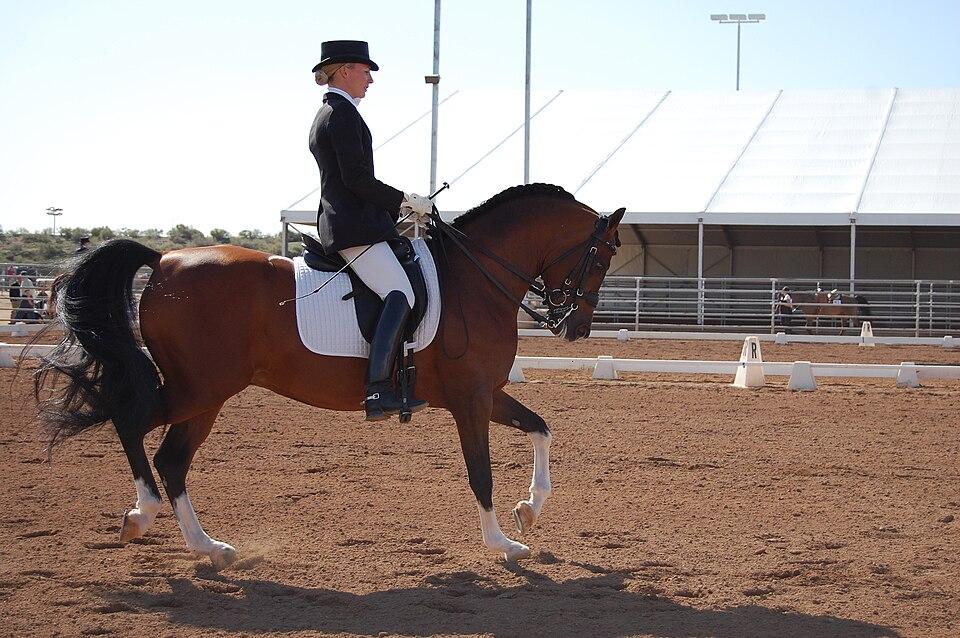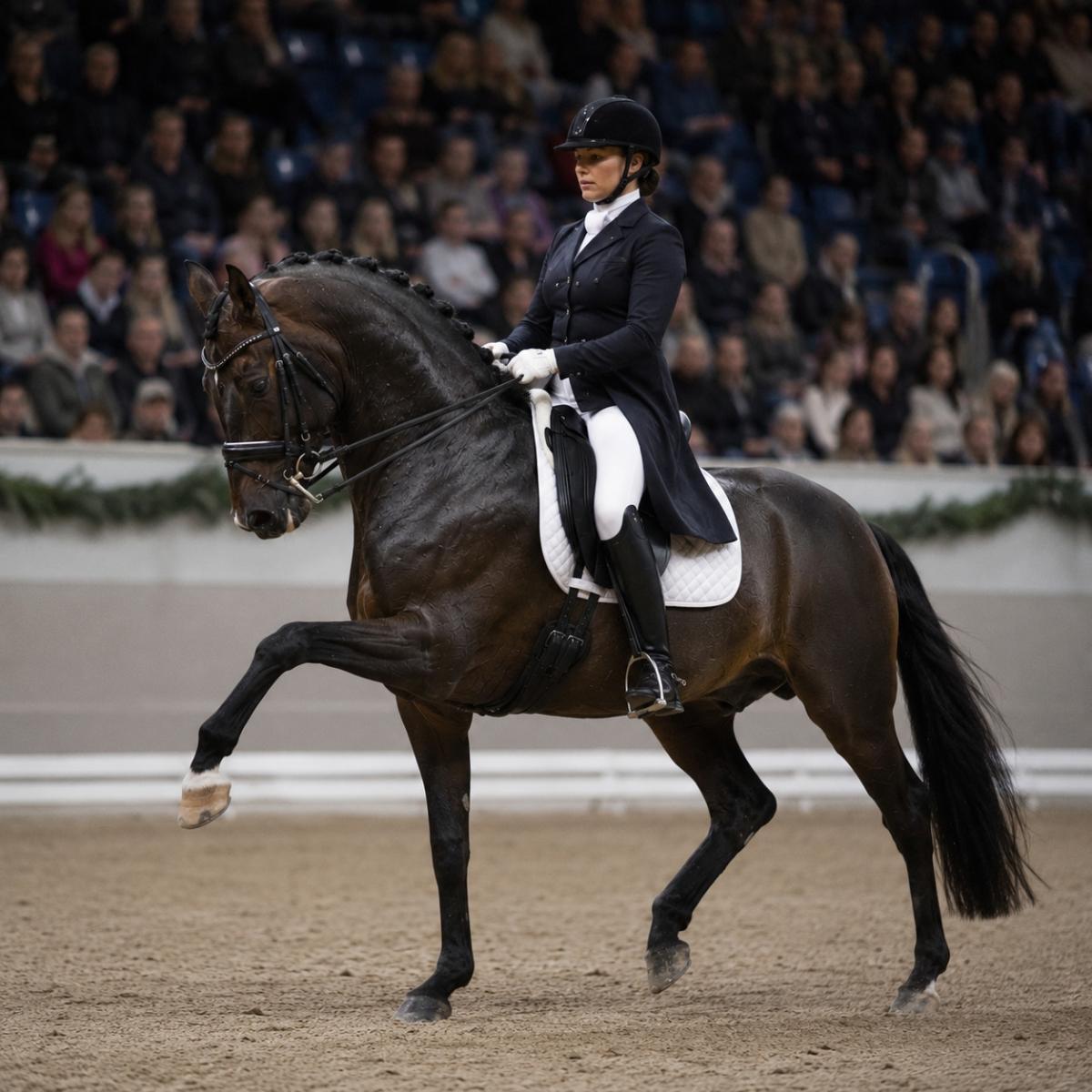
In high-level dressage, some horses can reach prices of several hundred thousand euros and, in exceptional transactions, several million.
These figures are far removed from the ordinary dressage horse market. They concern individuals combining particularly sought-after characteristics: quality of movement, aptitude for collection, level of training, sporting performance, pedigree, behaviour, health and, in some cases, breeding potential.
A horse's price therefore does not simply reflect the number of years spent training it or the prestige of its bloodlines. At the highest level, value is strongly influenced by how difficult it is to find a horse combining enough of these qualities to meet the demands of international sport.
The demands of high-level dressage
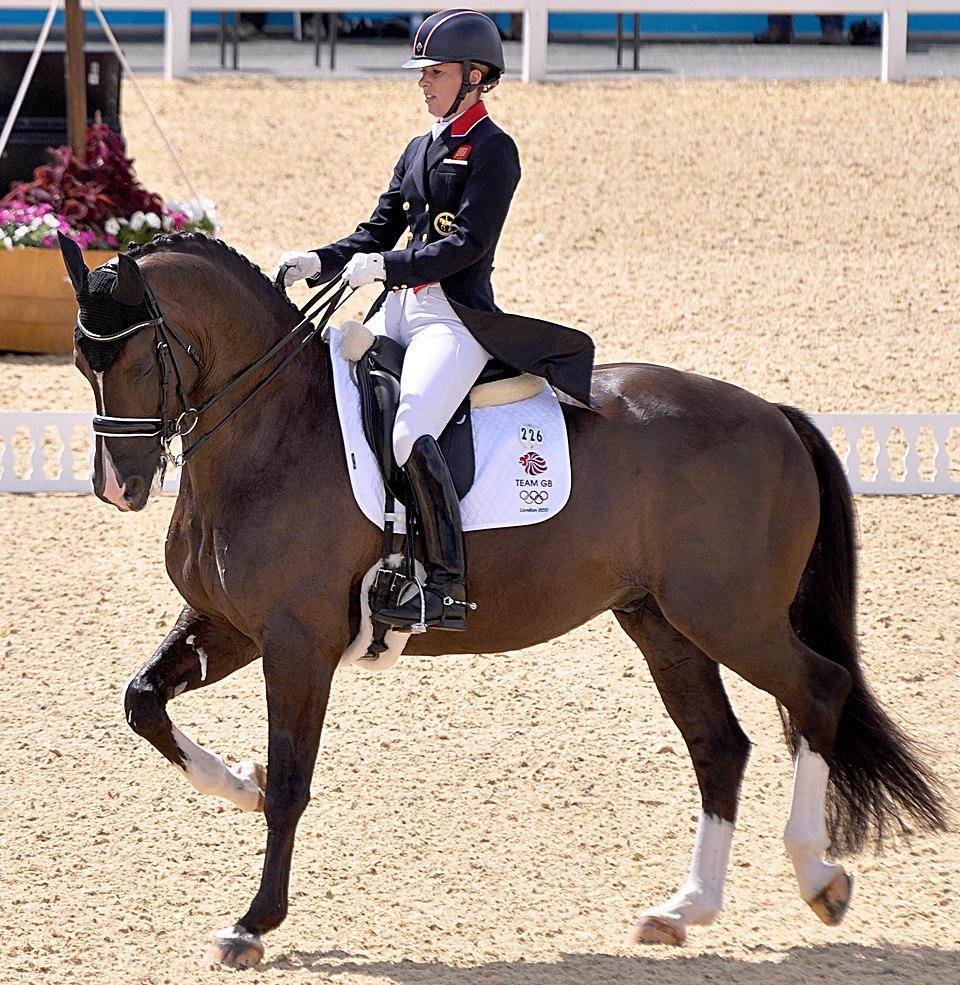
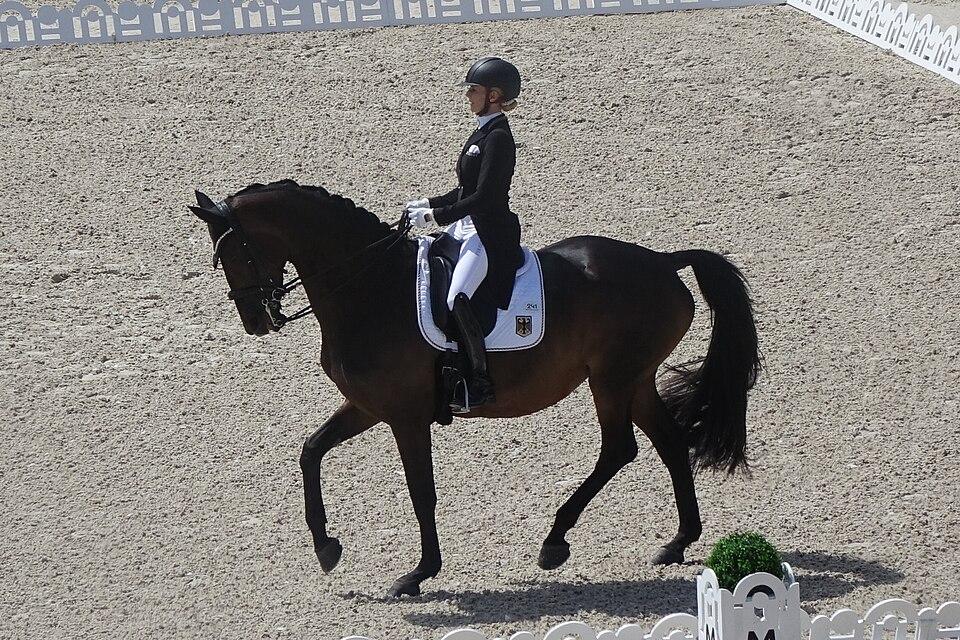
International dressage requires horses to progressively master movements of considerable technical difficulty.
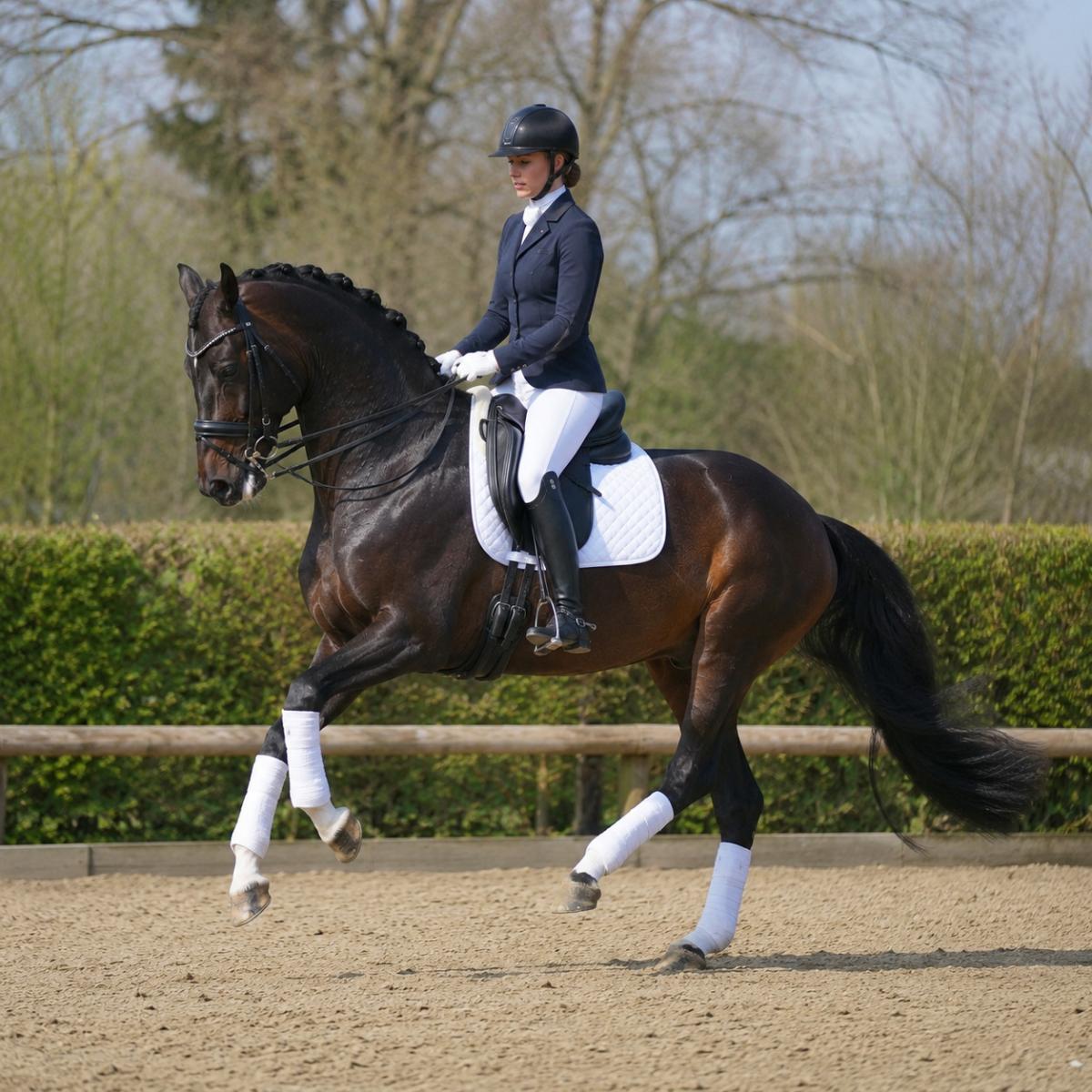
At Grand Prix level, these include piaffe, passage, canter pirouettes and sequences of tempi changes. The French Equestrian Federation describes top-level tests as combining complex movements with significant variations in impulsion, amplitude and collection. (ffe.com)
The difficulty does not lie solely in learning these movements individually.
The horse must be able to perform them within a complete test, maintain the quality and regularity of its gaits and respond precisely to the rider's aids.
A horse that has genuinely reached this level therefore represents the outcome of several years of training and progressive selection, during which many promising young horses will never ultimately reach Grand Prix.
This rarity of horses genuinely capable of competing at the highest level is one of the first factors behind their value.
The genetic selection of dressage horses
Genetics plays an important role in modern sport-horse breeding.
Studbooks such as the Hanoverian, KWPN and Oldenburg have been selecting horses for equestrian sport for generations.
The increasing specialisation of sport-horse populations can be measured.
A study involving more than 122,000 Swedish Warmbloods born between 1980 and 2020 found a pronounced shift towards dressage- and show-jumping-specialised bloodlines. While more than 80% of horses born between 1980 and 1985 belonged to the general-purpose group defined in the study, 92% of those born between 2016 and 2020 belonged to one of the specialised groups. (pubmed.ncbi.nlm.nih.gov)
This selection acts on traits for which part of the variation is heritable.
Sporting performance itself has measurable heritability. A study of KWPN horses, for example, estimated heritability of competition performance at approximately 0.11 to 0.13 for dressage and show jumping, while also demonstrating the importance of accounting for the rider effect when analysing results. (pubmed.ncbi.nlm.nih.gov)
Genetics therefore cannot predict the future of an individual foal with certainty. Instead, it allows breeders to progressively increase the probability of producing particular characteristics.
Pedigree and its influence on value
Pedigree becomes particularly important when a horse is young and has few or no sporting results of its own.
At this stage, a buyer has relatively little information about what the horse will ultimately become. The performances of its parents, siblings and wider family can provide additional information.
Modern breeding programmes do not rely solely on the reputation of famous stallions. They use competition results, young horse evaluations and information from related horses to calculate breeding values and genetic evaluations.
A foal or young horse from bloodlines repeatedly represented at high levels of sport may consequently attract greater interest on the market.
Pedigree remains a probability rather than a guarantee. Two offspring from the same parents can differ substantially in conformation, movement, behaviour and sporting potential.
Pedigree therefore becomes particularly valuable when it is accompanied by desirable qualities already observable in the individual horse.
Movement as a central characteristic of the dressage horse
The gaits play a major role in dressage-horse selection.
In a young horse, before advanced movements can even be performed, the walk, trot and canter already provide breeders, riders and buyers with considerable information.
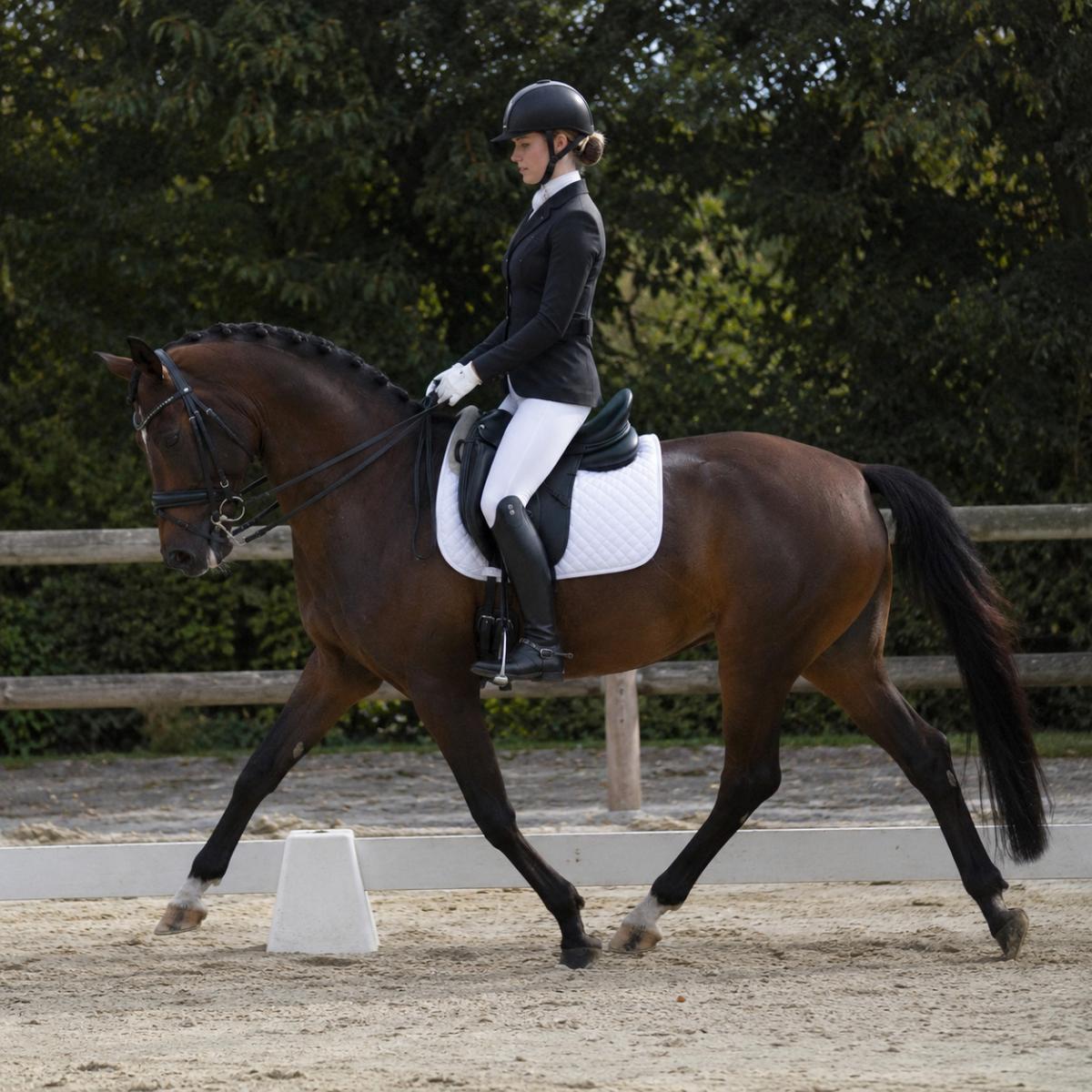
They may assess rhythm, balance, scope, elasticity and the way the horse uses its body.
Selection for these characteristics also has a measurable genetic basis. In dressage-oriented Swedish Warmbloods, a 2022 study reported heritability estimates of 0.42 to 0.56 for gait traits evaluated in young horses. (pubmed.ncbi.nlm.nih.gov)
This helps explain why particular bloodlines become highly sought after in dressage breeding.
Expressive movement can also make a young horse especially attractive on the market. It does not, however, create a Grand Prix horse by itself: advanced work will subsequently require strength, coordination, balance, learning ability and aptitude for collection.
Value therefore depends less on one spectacular trot than on the combination of qualities professionals believe can be developed over time.
Sporting potential can be valuable before it is proven
One distinctive feature of the sport-horse market is that a significant proportion of value can be based on the future.
A young horse may never have performed an advanced dressage test and yet already command considerable interest.
At this stage, professionals may assess a combination of factors including:
- pedigree;
- conformation;
- gaits;
- natural balance;
- results in young horse tests or competitions;
- behaviour;
- development under saddle.
Research on sport horses has indeed found relationships between some assessments made when horses are young and their later competitive performance.
Among almost 40,000 Swedish Warmbloods, genetic correlations were found between dressage-related traits evaluated at four years old and subsequent competition results. These relationships were not perfect, illustrating the difficulty of predicting the individual career of a young horse. (pubmed.ncbi.nlm.nih.gov)
Buying a particularly promising young horse therefore partly means buying a probability of future success.
Years of training before Grand Prix
A Grand Prix horse cannot be produced in a few months.
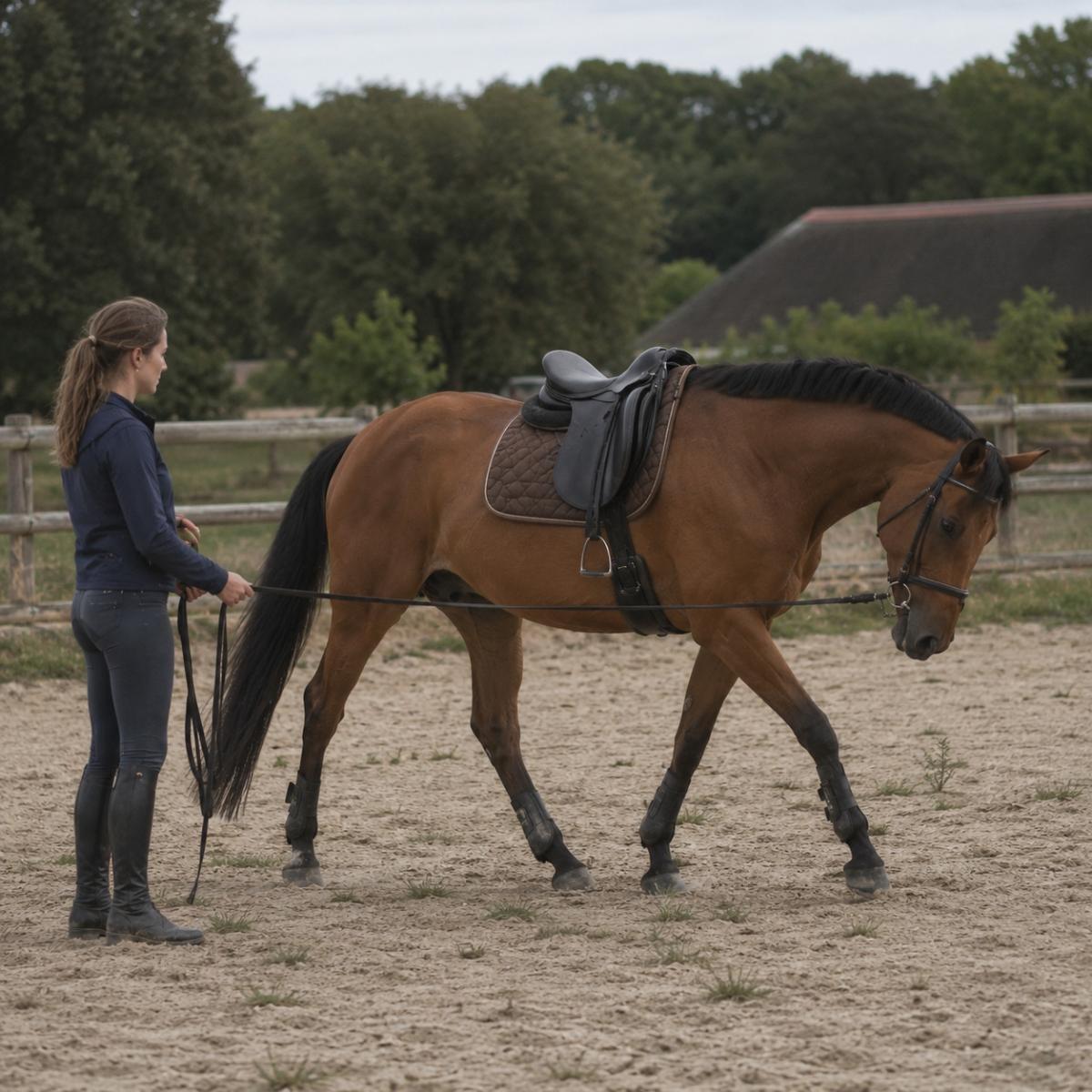
Between the earliest stages of ridden work and the most advanced movements, the horse must progressively develop its understanding of the aids, coordination, strength and balance.
Learning piaffe, passage, pirouettes and sequences of tempi changes takes place on foundations that have already been built over a long period.
The FEI notes, for example, that piaffe and passage are two distinct movements and that the transition between them is itself a significant technical challenge at advanced level. (fei.org)
This development represents years of specialised work.
During this period, the horse must be housed, fed, trained and cared for. Farriery, veterinary care, transport, competition fees and the work of the professionals involved in its career also contribute to the overall cost.
These expenses do not mechanically determine the final selling price: spending a large amount of money on a horse does not guarantee that a future buyer will reimburse that investment.
They nevertheless help explain why producing a horse already trained to the highest level represents a considerable investment.
Behaviour and rideability
Physical qualities alone are not enough.
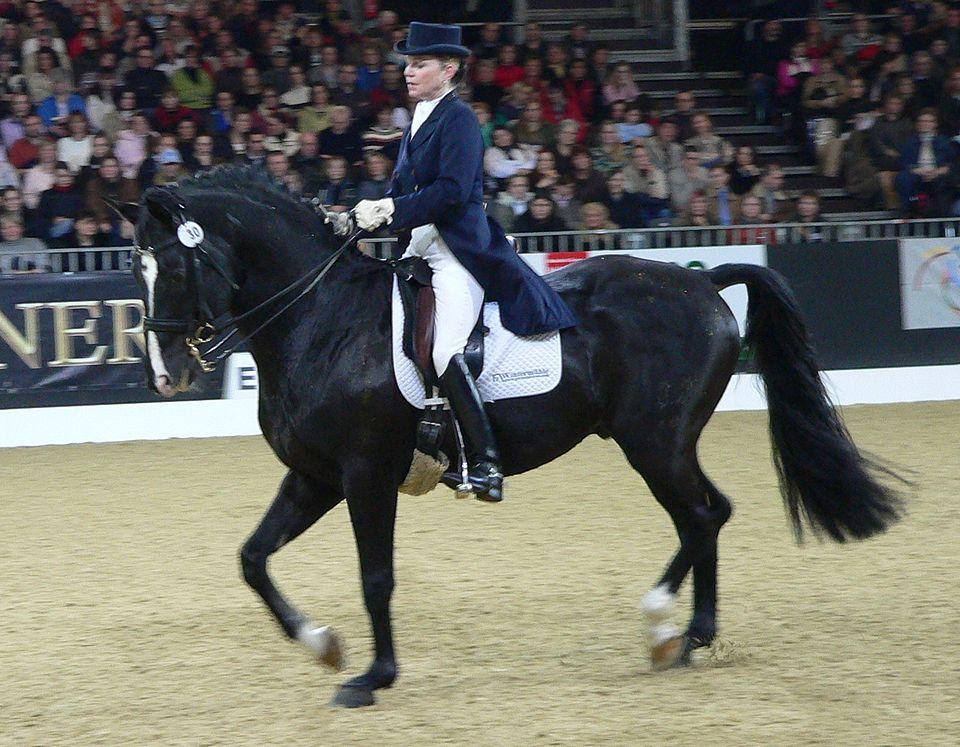
A competition horse must be able to express its abilities in situations very different from its everyday environment: transport, temporary stabling, warm-up arenas with other horses, spectators, music, unfamiliar facilities and the atmosphere of major competitions.
Its ability to remain responsive to the rider therefore becomes extremely important.
Sensitivity is not necessarily a disadvantage. Many sport horses are highly energetic and reactive.
What matters is how these characteristics can be managed and channelled by the rider.
A highly talented but extremely difficult horse may appeal to some professionals while being unsuitable for other buyers. Conversely, an established, consistent and relatively rideable horse may become particularly desirable.
Value therefore also depends on the type of rider for whom the horse may be suitable.
The rider contributes directly to performance
Dressage is a partnership.
Competition performance does not reflect the horse's abilities in isolation: it results from the interaction between horse and rider.
This influence is significant enough to appear in scientific models of genetic evaluation.
Research on KWPN competition results found that the rider effect needed to be taken into account when analysing performance data used for genetic evaluation. (pubmed.ncbi.nlm.nih.gov)
This also has commercial implications.
Buying a horse that has achieved outstanding results with an international rider does not guarantee that exactly the same performance will immediately be reproduced with someone else.
Horses capable of maintaining their qualities with different riders, or adapting relatively easily to a new rider, may therefore be particularly attractive to some buyers.
Rarity increases with the level required
As sporting demands increase, the number of horses capable of meeting them decreases.
Many horses can learn the foundations of dressage and compete successfully at different levels.
Far fewer simultaneously possess:
- the necessary physical abilities;
- the desired quality of movement;
- aptitude for collection;
- behaviour compatible with competition;
- sufficient health to continue training;
- and the ability to master Grand Prix work.
It also takes years before the true limits of a promising young horse become clear.
A horse reaching the highest level has therefore passed through a succession of filters: breeding selection, growth, breaking in, training, health, sporting progression and competition.
This accumulation makes some horses exceptionally difficult to replace.
Sporting results reduce part of the uncertainty
In a young horse, much of the value is based on an estimate of potential.
As the horse progresses through the sport, much more concrete information becomes available.
A horse consistently performing advanced tests demonstrates that it has actually learned the required movements and can present them in competition with its rider.
Results can also provide information about the consistency of its career and the level at which it has competed.
They do not guarantee future success, but they reduce some of the uncertainty associated with buying a prospect.
There can therefore be a considerable difference in value between a horse that might potentially reach Grand Prix and one that is already successfully competing at that level.
Health and sporting longevity
A horse's sporting career also depends on its ability to remain sufficiently healthy to continue training.
This becomes especially important when a horse represents a substantial financial investment.
A study involving 8,238 Swedish Warmbloods found associations between health status, traits evaluated in young horses and subsequent longevity in competition. Horses with generally favourable health, conformation and performance assessments at four or five years old tended to have better longevity and performance later in their careers. (pubmed.ncbi.nlm.nih.gov)
For a major transaction, the pre-purchase veterinary examination and any appropriate additional examinations therefore become particularly important.
They cannot predict the horse's future career with certainty, but they contribute to the assessment of the risks involved in the purchase.
The breeding value of dressage horses
A sporting career is not always the horse's only source of value.
For some horses, breeding adds another dimension.
This is particularly visible in stallions. A sought-after sire can produce a large number of offspring, and the subsequent performance of those offspring may progressively strengthen his breeding reputation.
Mares can also possess considerable genetic value, particularly when they belong to maternal families that have produced several successful sport horses.
Studbooks use information from offspring and other relatives precisely because it can improve the estimation of breeding values.
It is nevertheless important to distinguish sporting performance from breeding value. An outstanding Grand Prix horse is not automatically an outstanding breeding animal, just as an influential sire does not necessarily need to have had the greatest sporting career himself.
When the same horse combines international performance, desirable bloodlines and breeding interest, however, several different forms of value may accumulate.
An increasingly international market
European sport horses are no longer marketed solely within the regions in which they are bred.
The high-level dressage market is international.
Breeders, owners, riders, dealers and investors may search for horses across several countries, while specialised sales and professional networks can present particular horses to buyers around the world.
This internationalisation increases the number of potential buyers interested in the same exceptional horse.
At the same time, the supply of horses already capable of competing at the highest level remains extremely limited.
When several buyers have both the financial resources and the same sporting objective, the rarity of the horse can create intense competition around its sale.
A market in which prices remain difficult to measure
The figures published about famous horses can create the impression that dressage horses have a clearly established market value.
The reality is less transparent.
Some horses are sold at auction, where the final sale price may be published. Many major transactions, however, take place privately and their terms remain confidential.
It is therefore important to distinguish between:
- advertised prices;
- valuations;
- auction records;
- figures reported in the media;
- and prices actually agreed in private transactions.
This lack of complete public data makes it extremely difficult to calculate a representative average price for high-level dressage horses.
Multimillion-euro transactions exist at the extreme end of the market, but they do not represent the normal value of a dressage horse.
Visibility and marketing around sport horses
The sport-horse market also has a commercial dimension.
Photographs, videos, public performances, social media, stallion catalogues and specialised auctions can now present a horse to potential buyers around the world.
A particularly impressive video can therefore increase the visibility of a young horse very quickly.
This exposure may generate greater buyer interest, but it cannot by itself turn a horse into an elite athlete.
Marketing primarily affects the visibility of a horse that already possesses characteristics likely to interest the market.
Over the longer term, sporting performance, health and development are much harder to replace with visual appeal alone.
Record prices remain exceptional
Horses sold for several hundred thousand or several million euros naturally attract attention.
They nevertheless represent only a very small part of the market.
The vast majority of horses used for dressage will never compete at international Grand Prix level and will never reach such prices.
A horse can be perfectly suited to an amateur rider, be well trained and achieve good results without having a commercial value comparable to that of a horse sought for international sport.
The market therefore includes very different types of horses, ranging from young horses intended for leisure or amateur sport to established elite athletes.
Directly comparing their prices would have little meaning.
A value built from a combination of rare qualities
The most expensive dressage horses are not valuable simply because they have beautiful movement or prestigious pedigrees.
Their value is built progressively.
In a young horse, the market primarily evaluates potential through pedigree, conformation, movement and the first stages of training.
As the years pass, some of these expectations are confirmed while others disappear.
The horse learns advanced movements, progresses through the levels, enters competition and gradually demonstrates what it is actually capable of doing.
A horse that reaches Grand Prix and produces consistent performances therefore possesses something much rarer than attractive genetics alone: its original qualities have successfully endured several years of selection, training and competition.
When good health, desirable behaviour, breeding value or adaptability to different riders are added to the equation, the number of comparable horses becomes smaller still.
It is this combination of selection, potential, training, performance and rarity that explains why a small elite of dressage horses can reach exceptional values on the international market.
Sources and references
- French Equestrian Federation – Dressage at the 2026 World Championships
- Fédération Équestre Internationale – Dressage Rules
- FEI – Dressage Movements 101: Advanced
- Rovere et al. – Analysis of competition performance in dressage and show jumping of Dutch Warmblood horses
- Viklund et al. – Genetic variation in competition traits and correlations with young horse field tests
- Jönsson et al. – Consequences of specialized breeding in the Swedish Warmblood horse population
- Jönsson et al. – Associations of health status and conformation with longevity and lifetime competition performance in young Swedish Warmblood horses