
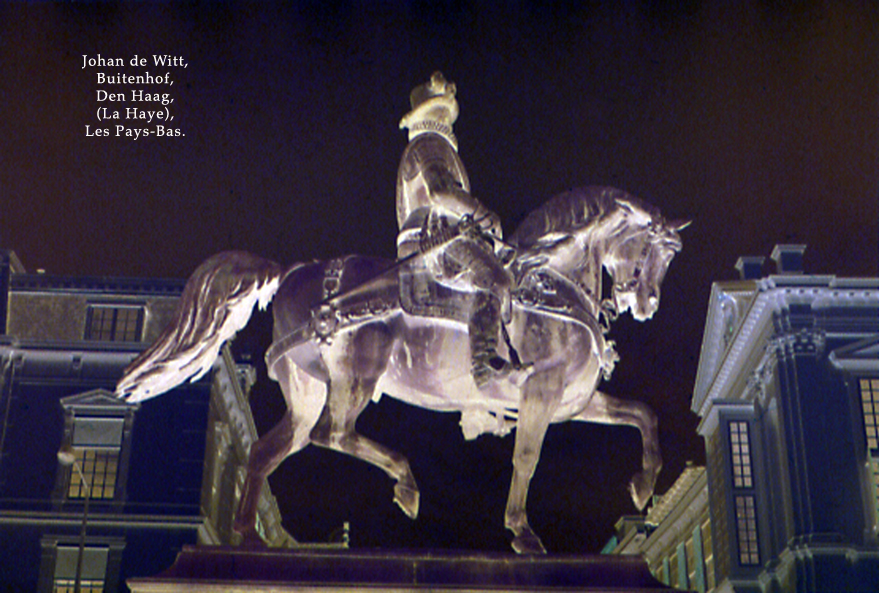
This equestrian statue pays tribute to Johan de Witt, a major statesman of the Dutch Republic. A rare civilian figure shown on horseback, it symbolises his political and intellectual influence.
Photo credit: Chevaux du Monde
Global equestrian heritage
Imagine a world map covered with points, each one marking the location of an equestrian statue. Apart from the oceans, almost no country or continent escapes this monumental presence, which reflects the historical, symbolic, and cultural importance of the horse.
The horse is probably the animal most often represented in public sculpture. These equestrian monuments reveal the profound influence of the horse on human history, whether through war, power, collective memory, or artistic prestige.
An equestrian statue generally refers to a three-dimensional representation of a horse ridden by a mounted figure, although the horse alone may also be celebrated. They are so numerous that no true global inventory has ever been fully established... until now.
Great historical figures have often chosen to be immortalised on horseback. These works tell a sculpted story of the relationship between humans and horses across millennia and bear witness to centuries of craftsmanship, creation, and heritage.
To help build this worldwide inventory, we need a committed community: Ceux du Cheval. This encyclopedia of equestrian statues is also a collective project.
You can contribute to this encyclopedia of horse statues by sending your photographs along with the information needed to document each monument.
This equestrian statue pays tribute to Johan de Witt, a major statesman of the Dutch Republic. A rare civilian figure shown on horseback, it symbolises his political and intellectual influence.
Photo credit: Chevaux du Monde
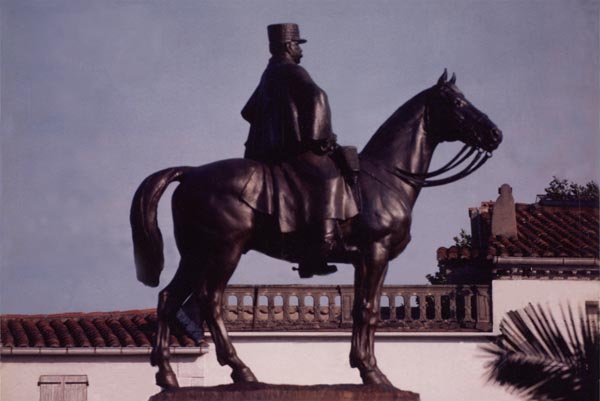
Marshal Joseph Joffre, a major figure of the First World War, is depicted on horseback in this statue located in Rivesaltes, in the Pyrénées-Orientales.
Photo credit: Chevaux du Monde
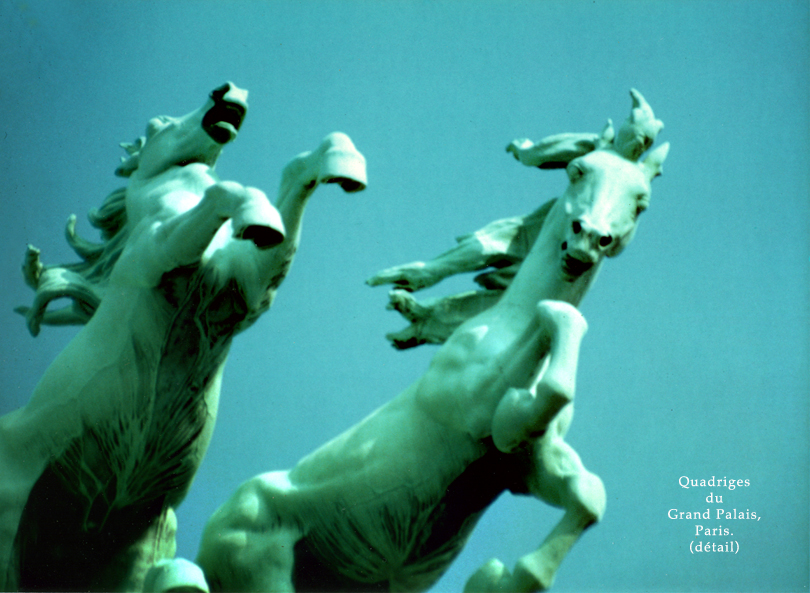
Detail of the monumental quadriga of the Grand Palais in Paris. This sculpture captures the energy, power, and triumphal spirit of the chariot team in European monumental art.
Photo credit: Chevaux du Monde
This page aims to lay the foundations for a global inventory of equestrian statues, bringing together monumental heritage, historical memory, and horse culture. It fits within the encyclopedic approach of Chevaux du Monde, which highlights horses not only as animals, but also as artistic, cultural, and symbolic figures.
Through equestrian statues, an entire history of the horse’s representation in public space emerges: rulers, military leaders, national heroes, allegories, quadrigas, and horses alone all form an exceptional heritage that is still too rarely centralised.