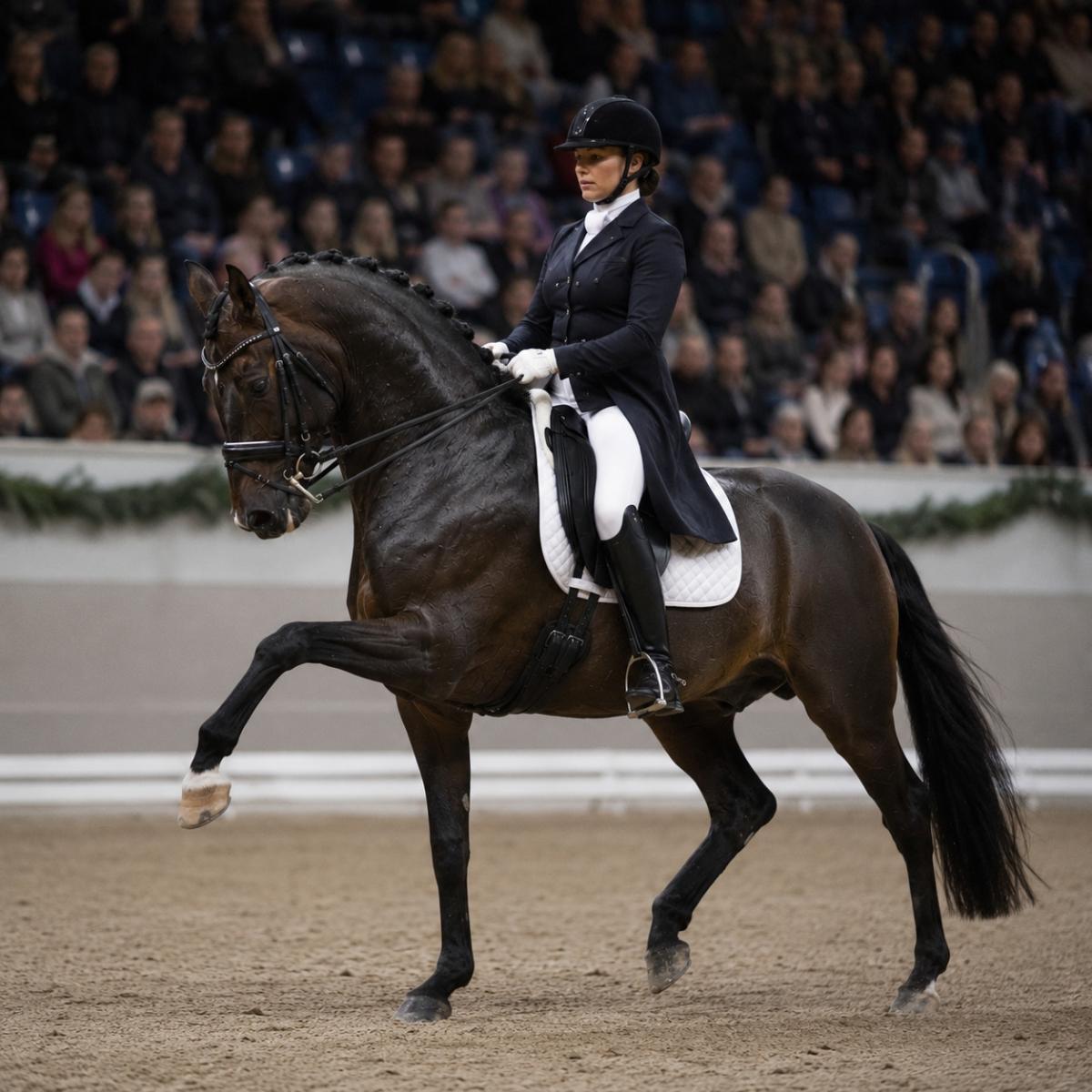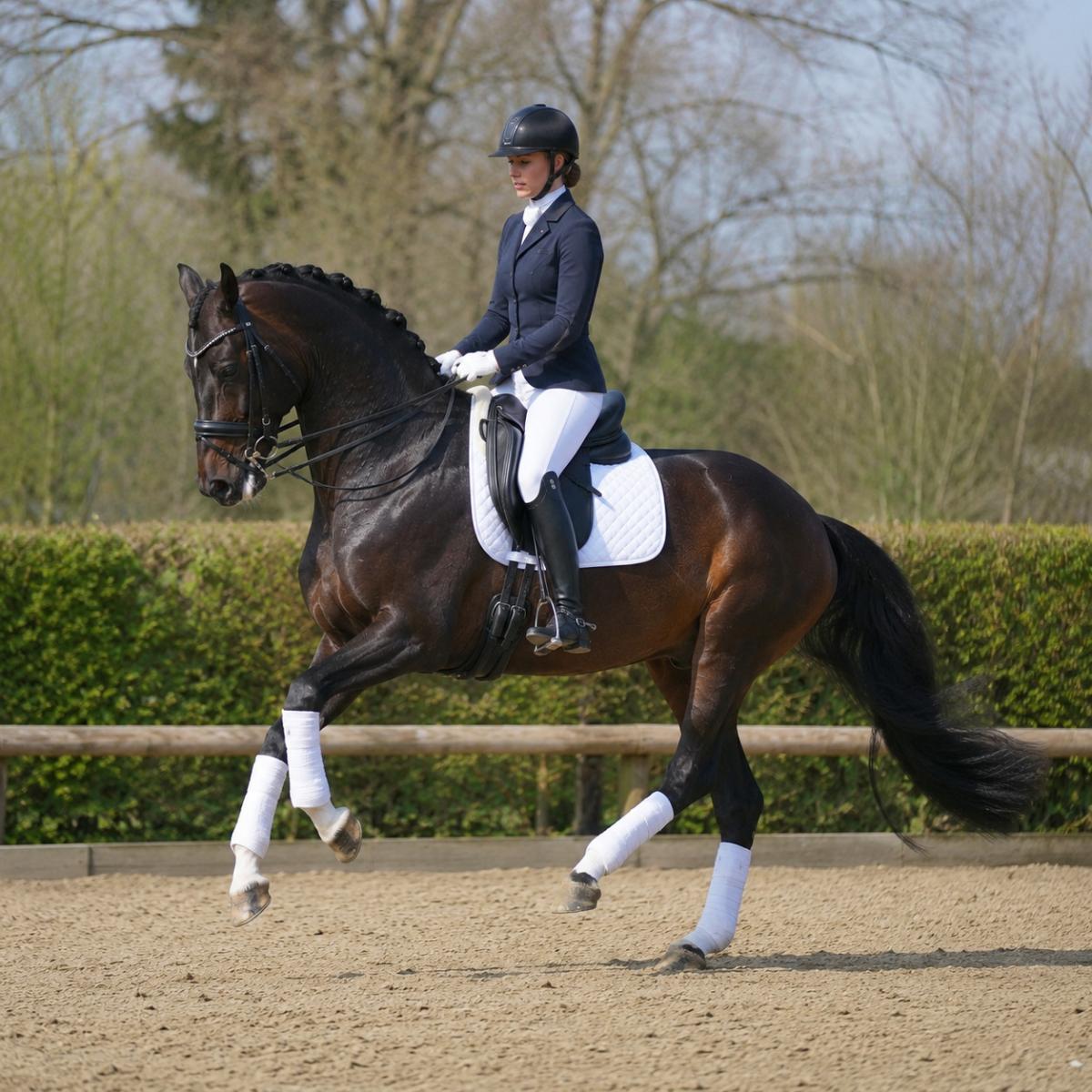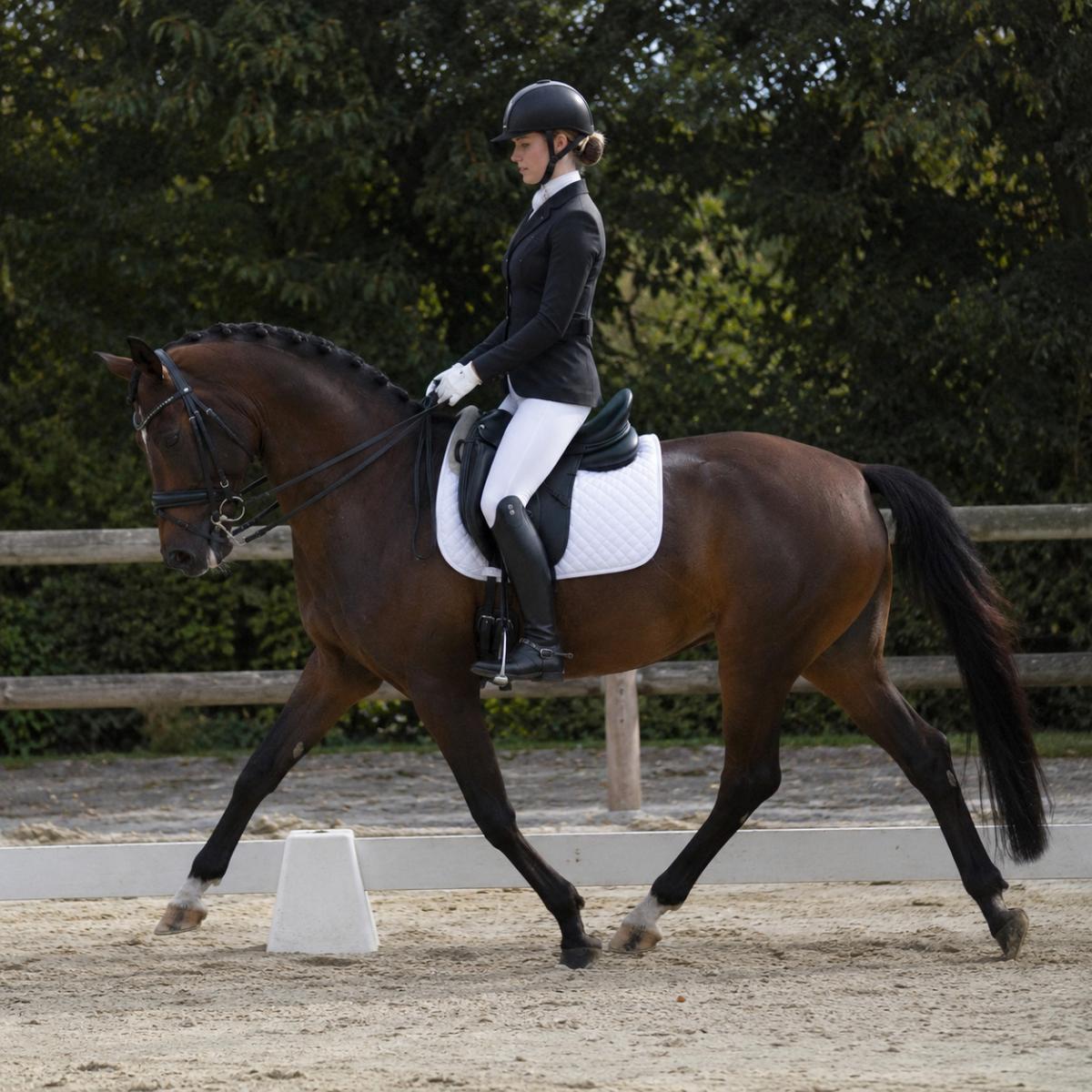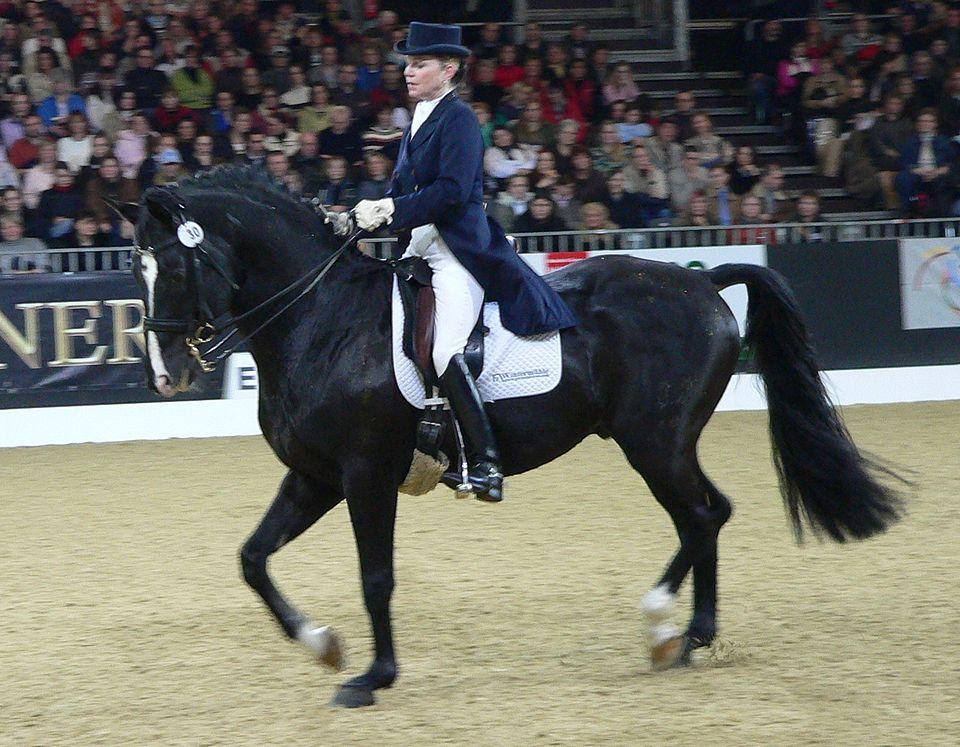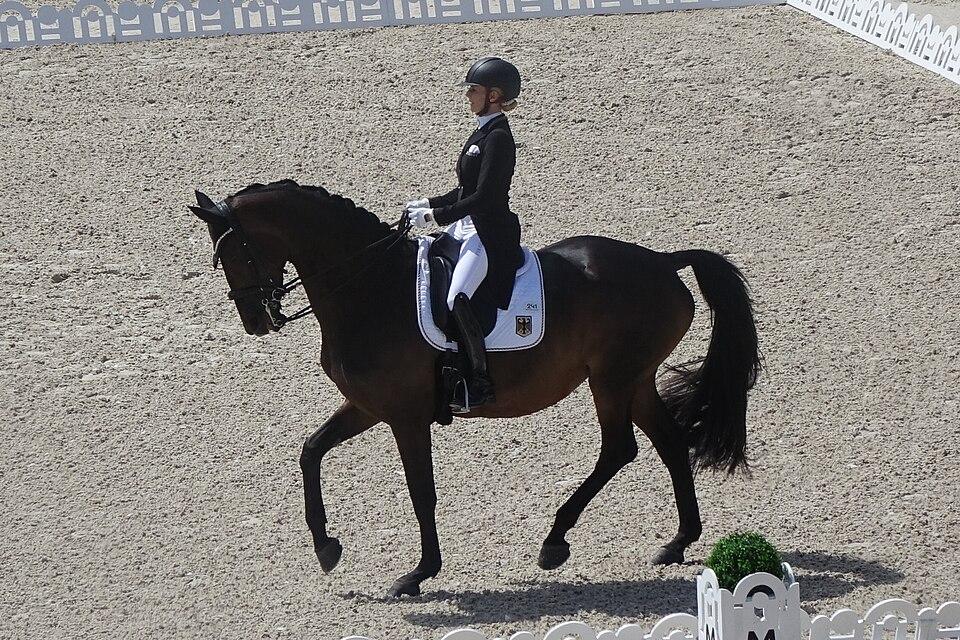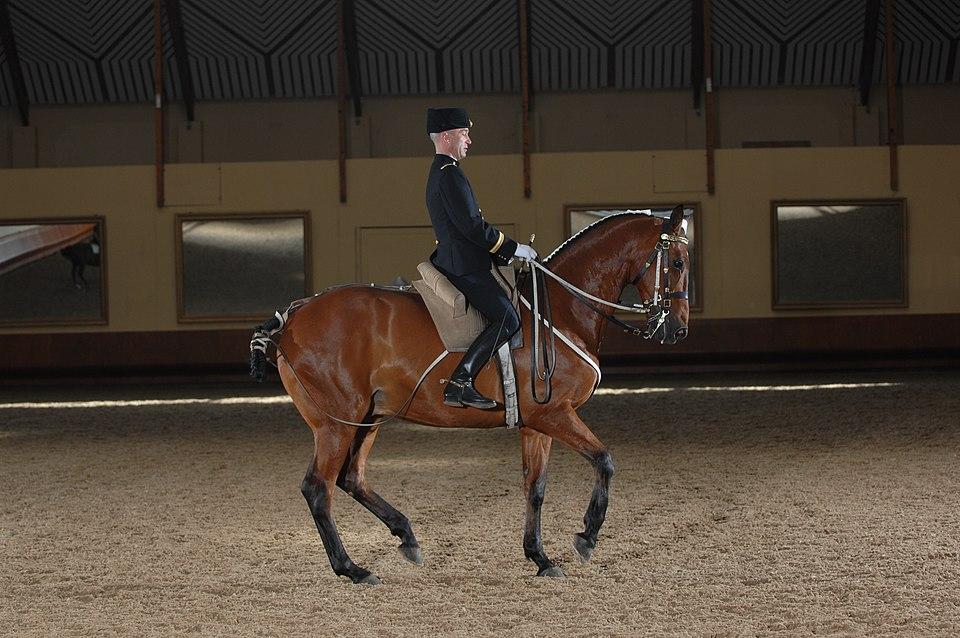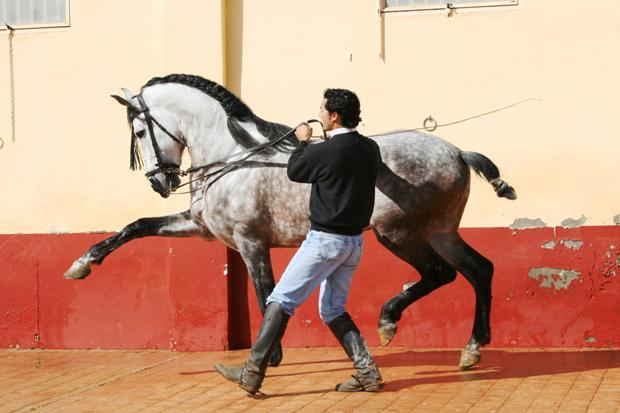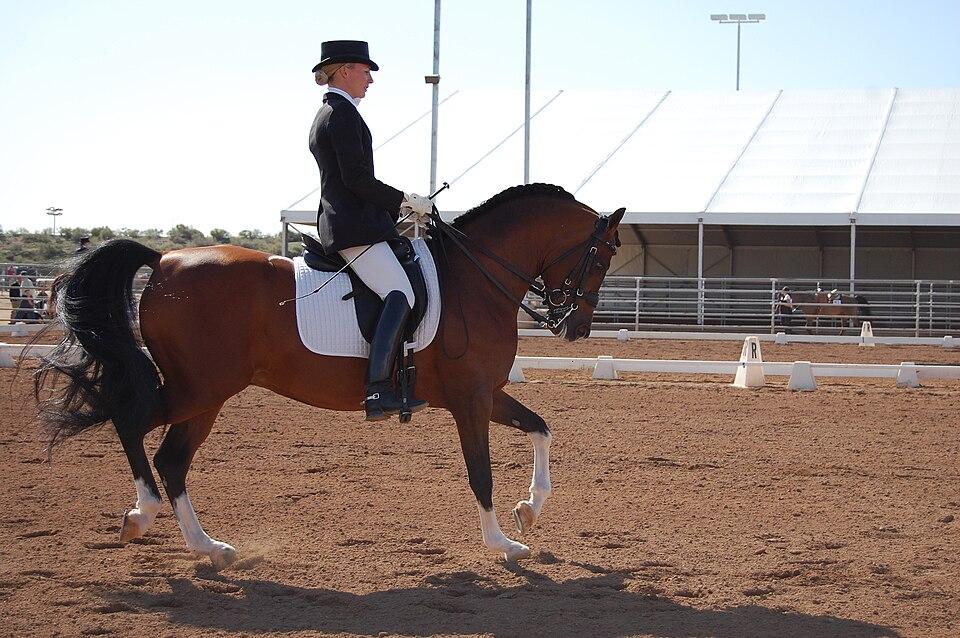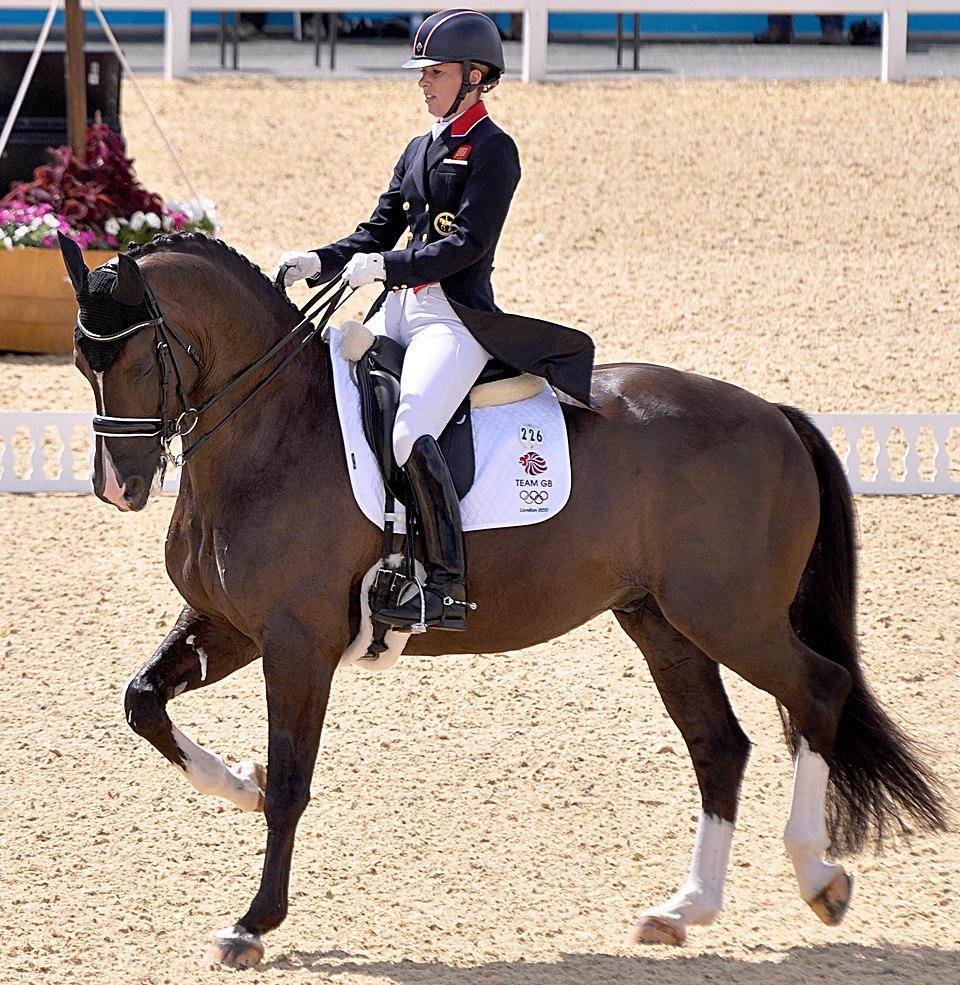
High-level dressage horses often have an instantly recognisable silhouette: a relatively elevated and rounded neck, a high poll and a posture that changes according to the degree of collection.
This shape is sometimes seen as an aesthetic signature of dressage. Yet it also has a genuine functional dimension.
The head and neck form an important part of the horse's balancing system. Their position influences locomotion, back movement, the activity of certain muscles and, under some conditions, the distribution of forces between the limbs.
The arched neck sought in dressage is therefore not simply a pose.
But its appearance alone cannot determine whether a horse is working correctly.
The neck actively contributes to the horse's balance
The head and neck represent a substantial mass positioned at the front of the body.
The horse can alter their position during locomotion, contributing to the control of balance.
A scientific review of equine neck function describes the head and neck as a major mechanism for longitudinal and lateral balance, involving the visual, vestibular and proprioceptive systems. (pubmed.ncbi.nlm.nih.gov)
The neck is therefore not simply carried passively above the shoulders.
Its movements are coordinated with those of the rest of the body and contribute to stabilising the horse as it walks, trots, canters, turns or changes its balance.
This function also helps explain why deliberately changing neck position can have consequences elsewhere in the body.
A mobile, muscular and elastic structure
The horse's neck consists of seven cervical vertebrae surrounded by numerous muscles and connective tissues.
Its function also relies on the nuchal ligament, an important elastic structure that helps support the head and neck.
A biomechanical review published in 2025 describes neck movement during locomotion as resulting partly from gravitational and inertial forces, controlled by muscular activity and assisted by cycles of stretching and elastic energy return in the nuchal ligament. (pubmed.ncbi.nlm.nih.gov)
Neck carriage therefore results from a complex system involving the skeleton, muscles, ligaments, inertia and neuromotor control.
This is very different from the idea that the shape of the neck is simply determined by rein tension.
Why does the neck become more elevated in dressage?
The position of the neck changes with the horse's training and the type of work being performed.
The Fédération Équestre Internationale's dressage rules specify that when a horse is correctly on the bit, the neck should be more or less raised and arched according to the stage of training and the degree of extension or collection of the gait. The poll should remain supple and form the highest point, while the nose should generally remain slightly in front of the vertical. (inside.fei.org)
This distinction is essential.
Dressage does not seek one fixed neck position that should be maintained at all times.
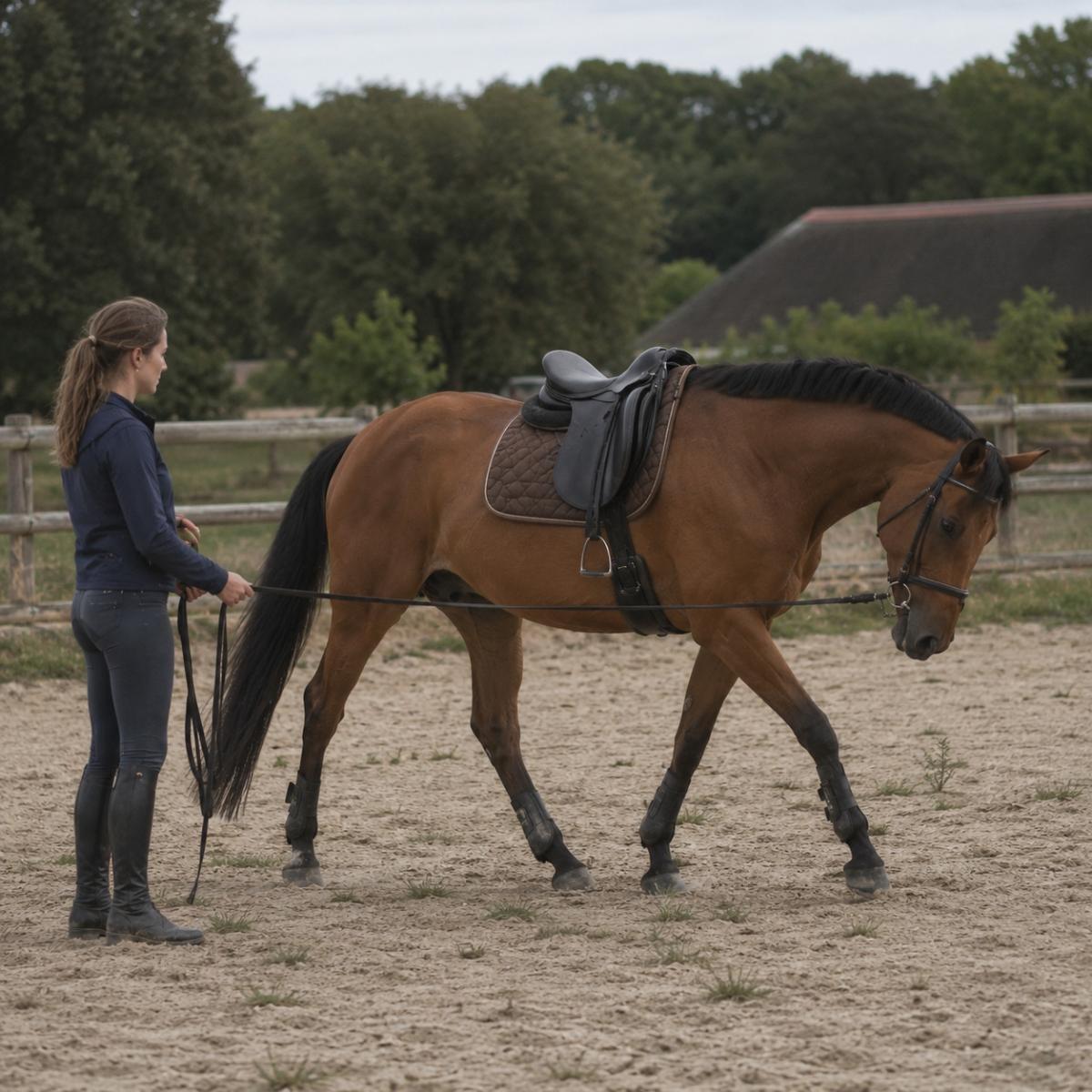
During stretching, the horse may carry its head and neck much lower and farther forward.
As the work becomes more collected, the neck is generally carried higher.
The visible arch therefore depends on the movement being performed and the horse's stage of training.
Collection changes the horse's entire silhouette
The arched neck becomes particularly noticeable during collected work.
Collection is often explained with a simple formula: the horse “carries more weight on the hindquarters and lightens the shoulders”.
This provides a useful general picture, but the actual biomechanics are more complex.
As the horse changes its degree of collection, stride length, joint movement, trunk position and the distribution of forces can also change.
Experiments involving dressage horses have shown that different head and neck positions can themselves alter some aspects of load distribution between the limbs. (pubmed.ncbi.nlm.nih.gov)
An elevated neck should therefore not be interpreted simply as the automatic consequence of “transferring weight backwards”.
It forms part of a global reorganisation of posture and locomotion.
A high poll does not mean a rigid neck
In the posture sought in dressage, an elevated neck should not become a fixed structure.
The FEI instead calls for a supple poll, soft and steady contact and a neck free from excessive restriction. (inside.fei.org)
The horse must remain able to make subtle adjustments to the position of its head and neck during movement.
This is particularly important because the neck contributes to balance.
A visually elevated posture produced at the cost of considerable rigidity does not therefore necessarily represent the desired function.
The aim is not simply to produce a high neck, but a neck that remains functional in that position.
The neck and back do not function independently
Neck position can influence movement of the back.
A study involving eight horses compared several head and neck positions at walk and trot. When the head was maintained in an elevated position at walk, some flexion-extension, rotational and lateral movements of the back were reduced compared with a free or lower position. (pubmed.ncbi.nlm.nih.gov)
Research involving high-level dressage horses has also shown that different head and neck positions modify certain movements of the trunk and hindlimbs. (pubmed.ncbi.nlm.nih.gov)
This does not mean that there is one neck position that guarantees a “correct back”.
Instead, it shows that the head, neck and trunk belong to the same locomotor system.
Strongly altering one part can therefore affect others.
An arched neck has a genuine muscular component
Training progressively changes the horse's muscular capabilities.
The neck is no exception.
Several muscles contribute to its movement and stabilisation, including the splenius, trapezius and brachiocephalicus.
An electromyographic study involving five horses compared the activity of these muscles in different head and neck positions. The researchers found that position significantly altered the activity of certain cervical muscles. (pubmed.ncbi.nlm.nih.gov)
In positions where the nose remained in front of the vertical, muscles of the upper neck such as the splenius and trapezius were more active than in the hyperflexed position examined.
Hyperflexion, by contrast, substantially increased brachiocephalicus activity.
Not all visually “rounded” neck positions therefore correspond to the same muscular function.
The silhouette develops through training
A horse trained over several years can gradually develop different musculature from that of an untrained horse.
These changes concern the neck, but also the trunk and limbs.
It would nevertheless be too simplistic to claim that a dressage horse automatically develops “the topline, abdominal muscles and back” according to the same pattern.
Adaptation depends on numerous factors, including the exercises performed, intensity and duration of training, conformation, age, recovery, nutrition and individual characteristics.
The powerful neck seen in some Grand Prix horses therefore reflects both their original conformation and several years of training.
It is not created simply by maintaining the head in a particular position.
Conformation strongly influences the appearance of the neck
Not every horse can present exactly the same silhouette.
Neck length, thickness and attachment to the thorax, wither conformation, head and body proportions and muscular development vary considerably between individuals.
Two correctly trained horses may therefore have visibly different necks.
Populations heavily selected for dressage, such as the Hanoverian, KWPN and Oldenburg, have undergone selection involving conformation and locomotor qualities, among other characteristics.
The Pura Raza Española (PRE) and Lusitano come from different breeding histories and have different conformational characteristics.
These differences necessarily influence the appearance a horse's neck can take during work.
Can some breeds develop a rounded outline more easily?
This claim requires caution.
Some conformations may make a particular posture appear more natural or easier to achieve visually.
That does not mean that a Hanoverian, KWPN, PRE or Lusitano will automatically be easier to collect or bring into correct contact than a horse from another population.
Conformation is only one part of the equation.
At the individual level, other factors include locomotion, physical capacity, health, training level, learning and quality of training.
Breed can therefore contribute to certain conformational characteristics, but it cannot by itself predict the quality of a horse's posture or way of going.
A rounded neck does not necessarily mean the horse is on the bit
This is probably one of the most important distinctions.
A horse can display a perfectly rounded neck in a photograph without genuinely being on the bit.
The visible position of the neck alone does not reveal the quality of contact, locomotion or balance.
FEI rules define a horse on the bit through several interconnected criteria: neck carriage appropriate to the horse's training and degree of collection, light and consistent contact, a supple poll, a steady head and the absence of resistance to the rider. (inside.fei.org)
A particular silhouette is therefore only one element of a much broader picture.
A very closed neck can create a misleading impression
A horse can also carry its nose behind the vertical while presenting a strongly rounded neck.
Visually, this can create an even more dramatic impression of “roundness”.
It does not, however, automatically indicate a greater degree of collection.
Research involving high-level dressage horses has shown that the precise degree of neck flexion was not consistently correlated with trunk and limb movements associated with collection. (pubmed.ncbi.nlm.nih.gov)
In other words, increasing neck flexion does not mechanically increase the quality of collection.
This distinction helps explain why judges and trainers cannot assess a horse's function solely from the angle of its head and neck.
Hyperflexion is not simply a very rounded neck
Hyperflexion refers to positions in which dorsoventral flexion of the head and neck becomes particularly pronounced, with the nose potentially carried well behind the vertical.
It has been the subject of extensive scientific and equestrian debate, particularly in connection with the term rollkur.
Its effects are not limited to appearance.
As biomechanical and electromyographic studies have demonstrated, strongly modifying head and neck position can alter muscular activity, back movement and certain locomotor parameters.
A systematic review and meta-analysis published in 2024 examined 58 studies evaluating dorsoventral hyperflexion. Among studies from which conclusions regarding welfare could be drawn, the majority raised concerns, while evidence for potential performance benefits remained largely inconclusive. (pubmed.ncbi.nlm.nih.gov)
It is therefore important to distinguish clearly between the arched neck sought in dressage and a hyperflexed position.
They are not synonymous.
An extremely high neck is not necessarily better
The opposite extreme also exists.
A very elevated neck can create an impression of grandeur and a lighter forehand, but this does not automatically mean the horse is working better.
In a study of elite dressage horses, an extremely elevated head and neck position increased some hindlimb movements but also increased lumbar extension during stance. The authors suggested that maintaining this position for prolonged periods could represent a risk. (pubmed.ncbi.nlm.nih.gov)
Another study found that this extremely elevated position produced the greatest changes in force distribution and temporal coordination between the limbs among the positions examined. (pubmed.ncbi.nlm.nih.gov)
Higher is therefore not necessarily better, just as rounder does not necessarily mean more collected.
Neck position changes during a training session
A correctly trained horse is not expected to maintain exactly the same neck shape throughout an entire session.
Training may alternate between more elevated postures and periods in which the horse is invited to stretch its neck forward and downward.
This variation is consistent with the functional role of the neck and the different objectives of individual exercises.
Even in competition, the required neck height varies according to the degree of collection.
During an advanced movement such as passage or piaffe, the expected silhouette differs from that of a horse working in a stretching posture.
The ability to change posture without losing balance or quality of contact is therefore more informative than a neck maintained constantly in a single shape.
Why do Grand Prix horses have such spectacular necks?
Several factors combine.
These horses often have conformation resulting from generations of selection for sport or collected work. Their musculature has developed over several years of training. They are also presented in exercises requiring a much greater degree of collection than would be expected from a young horse.
Passage, piaffe, canter pirouettes and other advanced movements further emphasise this elevated silhouette.
The visual impression therefore results from a combination of conformation, selection, training, muscular development, neck position and the demands of the movement being performed.
It cannot be attributed to a single factor.
The arched neck is both a consequence and a tool
The relationship between the neck and the rest of the body works in both directions.
Changes in balance and training level influence how the horse can carry its neck.
But the position of the neck can itself influence locomotion, back movement and muscular activity.
It would therefore be too simplistic to describe an arched neck solely as “the result of correct training”.
It forms part of an interactive biomechanical system in which head and neck position and the function of the rest of the body influence one another.
This is precisely why the horse's posture needs to be evaluated as a whole.
A characteristic silhouette, but not proof on its own
The arched neck has become one of the most recognisable features of the dressage horse.
It can be explained by the anatomy of the neck, its role in balance, muscular adaptations to training, the horse's conformation and the increasing demands of collection.
But a rounded neck is neither a definition of dressage nor automatic proof of correct work.
A correctly trained horse should be capable of changing its posture according to the exercise while maintaining coordination, balance, contact and freedom of movement.
Ultimately, it is less the exact shape of the neck at any single moment than the way it integrates with the function of the horse's entire body that explains its role in dressage.
Sources and references
- Zsoldos & Licka – The equine neck and its function during movement and locomotion
- Clayton – Biomechanics of the Head and Neck
- Fédération Équestre Internationale – Dressage Rules
- Fédération Équestre Internationale – Dressage Judging Manual
- Rhodin et al. – The influence of head and neck position on kinematics of the back in riding horses at the walk and trot
- Rhodin et al. – The effect of different head and neck positions on the caudal back and hindlimb kinematics in the elite dressage horse at trot
- Weishaupt et al. – Effect of head and neck position on vertical ground reaction forces and interlimb coordination in the dressage horse
- The effect of three different head-neck positions on the average EMG activity of three important neck muscles in the horse
- Hyperflexing the horse's neck: a systematic review and meta-analysis