Discover the Hanoverian, a German warmblood renowned for its strength, elegance, and excellence in dressage, jumping, and eventing.
By the Chevaux du Monde editorial team · Published on · Updated on
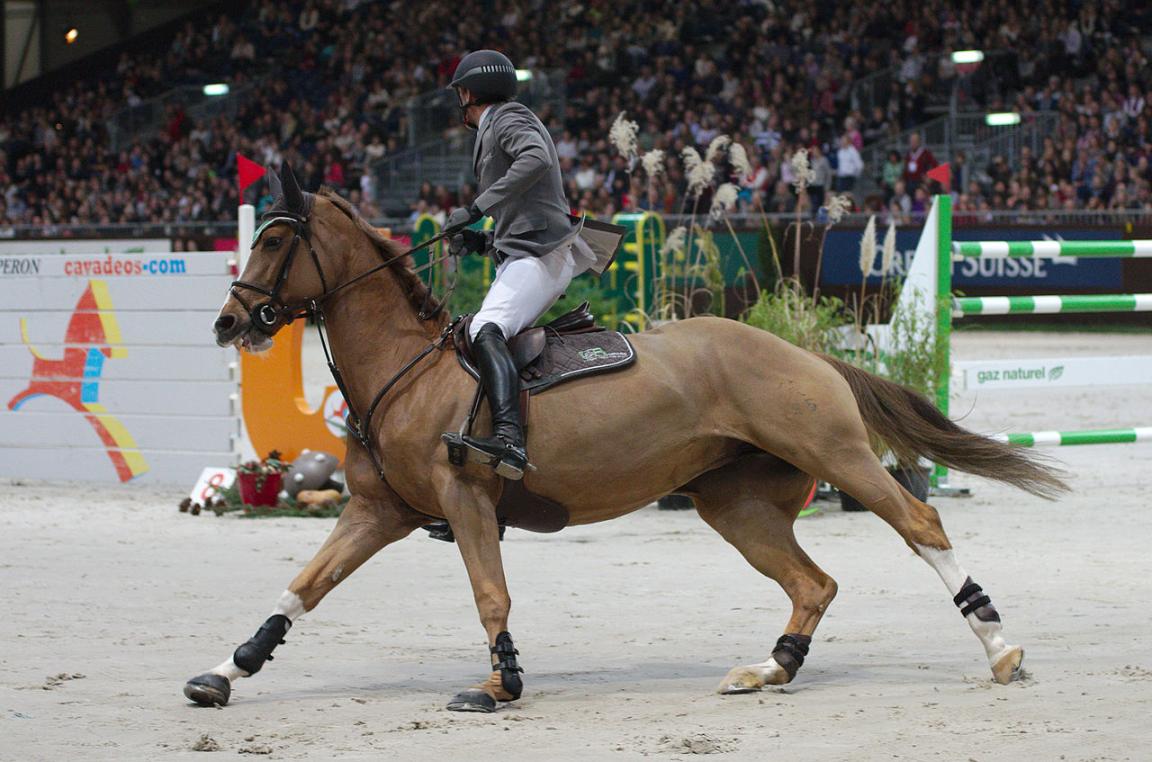
Type: Riding Horse
Continent: Europe
Country: Germany
Weight: 600 – 640 kg
Height: 155 – 175 cm
The Hanoverian is a German sport horse originating in the former Kingdom of Hanover, a territory now largely incorporated into the state of Lower Saxony. Its historical breeding area extended across a broad agricultural region surrounding Hanover, Celle and Verden rather than being limited to the city of Hanover itself.
The establishment of the Celle State Stud in 1735 was a major step in organising regional horse breeding. The provision of selected stallions and the gradual recording of matings and foals helped structure the local mare population. At the time, breeders sought a horse capable of meeting the needs of agriculture, transport and the cavalry.
The Hannoveraner Verband, based in Verden, now maintains the studbook and organises foal registration, mare inspections, stallion licensing, performance testing and specialised breeding programmes. The name Hanoverian therefore refers both to a historic German horse population and to a modern studbook focused on equestrian sport.
The principal breeding area remains Lower Saxony, with Verden serving as the administrative and commercial centre and Celle retaining its historic importance in stallion selection. The region supports a dense network of breeders, breeding stations, inspections, shows and facilities devoted to training and marketing horses.
Hanoverians are also bred outside Germany. Partner and daughter societies apply the genealogical and breeding rules of the Hannoveraner Verband in several countries. Registration, identification and inspection tours may therefore be organised beyond the German heartland, provided the horses meet the requirements of the Hanoverian breeding programme.
This international organisation has enabled Hanoverian bloodlines to spread widely while maintaining a connection with the German studbook. Breeding animals registered abroad are assessed according to rules concerning pedigree, conformation, performance and reproductive eligibility.
In France, the Hanoverian is one of the foreign breeds covered by an agreement allowing horses to be entered in the central SIRE database from information supplied by the relevant issuing body. This arrangement supports the administrative traceability of imported Hanoverians and horses produced through breeding programmes affiliated with the German studbook.


The Hanoverian is one of Europe’s major sport horse populations. The Hannoveraner Verband emphasises the influence of its breeding animals and established dam lines on numerous other riding-horse studbooks. This influence has spread through the international use of stallions, semen, broodmares and successful competition horses, as well as through the admission of Hanoverian breeding animals to other programmes.
Registration as a Hanoverian is not based solely on the concept of a completely closed breed. The breeding programme can accept animals from certain recognised populations when their pedigree, conformation, health and performance meet the studbook’s objectives. Thoroughbred and Trakehner horses played an important role in the breed’s historical development, while more recent exchanges have taken place with other European sport horse studbooks.
This controlled openness allows breeders to introduce useful qualities, but it also requires rigorous assessment. Conformation inspections, performance tests, competition results and the achievements of descendants all contribute to estimating the breeding value of individual horses.
The population includes families and lines with a stronger orientation towards dressage, show jumping or eventing. The Hannoveraner Verband operates specialised breeding programmes to identify horses and families that consistently produce athletes with above-average ability.
The Hanoverian Jumper Breeding Program, established in 1993, aims to strengthen the production of horses with specific show-jumping ability. Related systems now recognise mares and families with strong individual or progeny performances in dressage and eventing.
The Hanoverian breeding system assigns considerable importance to established female families. A successful dam line may repeatedly produce licensed stallions, high-quality broodmares and competition horses across several generations. Studying these families gives breeders information that cannot be obtained from the sire line alone, particularly regarding consistency of type, rideability, soundness and performance.
The success of particular stallions can lead to their extensive use and to a rapid increase in the number of descendants carrying the same ancestry. Long-term management must therefore consider the diversity of both male and female lines, levels of relatedness and the representation of individual breeding animals.
The objective is not simply to maintain a large number of registered horses. It is also necessary to prevent a limited group of ancestors from gradually accounting for an excessive proportion of the population’s genetic background. Controlled access to suitable outside bloodlines can contribute to genetic diversity when it is supported by careful evaluation.
The Hannoveraner Verband traces the beginnings of organised horse selection in the region to the sixteenth century. Local populations were shaped by economic and military requirements. Horses needed to work on farms, pull vehicles and serve under saddle.
Breeding was closely connected with agriculture. Farmers raised mares and young horses as part of their economic activity, while the qualities required of the population changed according to developments in farming, transport and warfare.
The Celle State Stud was founded in 1735 during the reign of George II, Elector of Hanover and King of Great Britain. Its network of stallions gave regional breeders access to selected sires. The recording of matings and births gradually strengthened the genealogical organisation of the population.
The stud’s influence extended beyond the horses kept directly at Celle. Stallions were distributed through breeding stations so that farmers in different parts of the region could use them with local mares. This system contributed to the development of a more consistent regional horse while retaining a broad female base.
During the early nineteenth century, English Thoroughbred and English half-bred stallions were increasingly used to add refinement and improve qualities under saddle. After 1870, the population was consolidated while retaining established native lines, with selection primarily directed towards carriage and military horses.
The horse of this period was not identical to the modern Hanoverian sport horse. It needed sufficient substance, strength and durability for practical work while remaining mobile and versatile enough for transport and cavalry use.
The Hanoverian studbook was founded in 1888 and became the predecessor of the modern registry. The systematic recording of pedigrees made it possible to organise selection more consistently and to assess the influence of breeding animals across generations.
In 1922, breeders formed the Verband Hannoverscher Warmblutzüchter. This organisation created a central and uniform system for managing registered breeding activity. Between the two World Wars, agricultural use continued to exert a strong influence on the desired model. Hanoverians still needed the strength and versatility required for farm work, driving and riding.
Agricultural mechanisation and the decline in military demand profoundly altered breeding objectives. The traditional working horse lost much of its economic role, while recreational riding and competitive equestrian sport expanded. Hanoverian breeding was consequently reorganised to produce a lighter, more refined and more athletic riding horse.
Trakehner and Thoroughbred breeding animals were used to refine the population and improve athleticism, stamina, movement and riding type. This transformation did not represent a complete break with the former regional horse. Breeders retained established dam lines and sought to combine their substance, frame and durability with the qualities required for modern sport.
Selection increasingly incorporated inspections and performance tests. Stallions and mares were assessed not only on pedigree and appearance but also on movement, rideability, jumping ability and other functional characteristics. Competition results and the performance of offspring provided further information about hereditary quality.
This approach encouraged a closer connection between the studbook and equestrian sport. Successful horses demonstrated the potential of particular lines, while breeding values and progeny records helped breeders look beyond the achievements of a single individual.
During the second half of the twentieth century, performance in dressage and show jumping became increasingly important. The Hanoverian Jumper Breeding Program was launched in 1993 to identify and promote families producing jumpers of above-average quality. Selection has since become more structured around aptitude for dressage, show jumping and eventing.
The Hanoverian is now represented in international competition across all three Olympic equestrian disciplines. The studbook nevertheless serves a broad range of riders and breeders, since not every registered Hanoverian is intended for elite sport. Many are used as amateur competition horses or leisure partners.
The breeding programme seeks a horse that is willing, balanced, attentive and able to cooperate with its rider. Rideability is considered during performance testing and through the horse’s work under saddle. It is important both for high-level competition and for recreational use.
A useful riding horse must respond to the rider’s aids without losing its willingness to move forward. The desired combination includes energy, concentration, trainability and sufficient emotional stability to work consistently in changing environments.
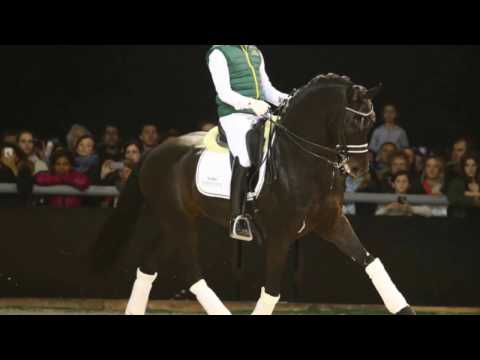
A dressage horse needs energy, concentration, balance and the ability to respond precisely to subtle aids. It must remain receptive while developing strength, collection and increasingly demanding movements.
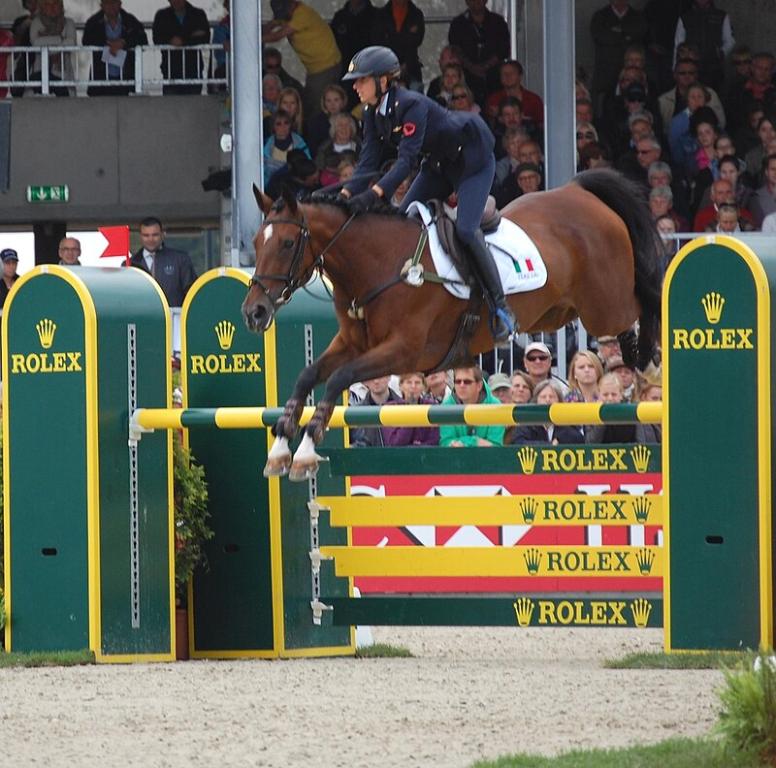
A horse selected for show jumping also needs quick reactions, determination and a degree of independence when assessing an obstacle. Excessive hesitation is undesirable, but the horse must remain controllable and capable of adjusting its balance and stride.
In eventing, courage, stamina and the ability to remain responsive in a stimulating environment are particularly important. These qualities must be combined with carefulness over obstacles and sufficient relaxation for dressage work.
These breeding objectives do not guarantee identical behaviour in every Hanoverian. Temperament also depends on the individual, its bloodlines, selection, education, living conditions, health and previous experiences. Some high-performance lines may produce sensitive, powerful or highly reactive horses that require an experienced rider.
Training methods and management can strongly influence how the horse’s inherited tendencies are expressed. Regular turnout, appropriate social contact, coherent handling and progressive work may all affect behaviour and learning.
The horse’s actual temperament, training level and intended use must therefore be assessed individually. Registration in the studbook alone cannot establish that a Hanoverian is suitable for a beginner or for any particular discipline.
The future of the Hanoverian depends on a breeding strategy capable of combining sporting performance, health, longevity, functional conformation and rideability. Competition results remain important, but they need to be considered alongside inspections, performance tests, veterinary examinations and information about the quality of a breeding animal’s offspring.
Specialisation for dressage, show jumping and eventing enables breeders to make more targeted mating decisions. However, it should not lead to the neglect of qualities required in every ridden horse: a sound back and limbs, regular locomotion, balance, willingness to learn and the physical ability to sustain work over time.
Genomic tools and tests for inherited conditions can improve mating decisions. Their use must remain proportionate and informed. Identifying a clinically healthy carrier does not necessarily mean excluding that horse from breeding, but it makes it possible to avoid a mating that could produce an affected foal.
Monitoring relatedness and preserving less common dam lines will also be essential for maintaining diversity within the studbook. Excessive dependence on a small number of fashionable stallions could reduce the variety of pedigrees available to future breeders, even within a numerically large population.
Growing expectations concerning equine welfare are also likely to increase attention to rearing conditions, the growth of young horses, the age at which training begins, workload management and the durability of sporting careers. Athletic ability should be evaluated together with the horse’s capacity to remain physically and mentally sound.
Warmblood Fragile Foal Syndrome (WFFS) is an inherited disorder documented in several European sport horse populations, including the Hanoverian. It causes severe connective-tissue abnormalities, including extremely fragile skin, mucosal lesions and excessive joint laxity. Affected foals are generally unable to survive normally.
The mutation follows an autosomal recessive mode of inheritance. A horse carrying only one copy can be clinically healthy. However, mating two carriers gives each pregnancy a theoretical 25% risk of producing an affected foal, a 50% probability of producing a clinically healthy carrier and a 25% probability of producing a non-carrier. The WBFSH recommends testing breeding animals so that informed mating decisions can be made.
A clinically healthy carrier does not necessarily need to be excluded from breeding. Mating a carrier with a tested non-carrier prevents the production of a foal affected by this mutation. This strategy allows breeders to control the medical risk without abruptly removing potentially valuable bloodlines from the breeding population.
Research has traced the distribution of the WFFS-associated variant in Hanoverian and related Warmblood lines. Prevalence estimates must nevertheless be interpreted carefully because they depend on the animals sampled, the period studied and the structure of the population. A percentage observed in one dataset should not automatically be applied to every Hanoverian population worldwide.
Osteochondrosis has also been studied in sport horses, and several investigations have focused specifically on Hanoverian populations. It is a complex developmental joint disorder influenced by both genetic and environmental factors. Growth rate, nutrition and exercise may contribute to its expression, and the findings do not mean that every Hanoverian is affected or exposed to the same level of risk.
As with any sport horse, careful attention should be paid to the growth of the young horse, nutritional balance, hoof quality, muscular development and the progression of training. Veterinary and radiographic findings requested for breeding, competition or purchase should be interpreted according to the horse’s age, intended use, clinical condition and medical history.
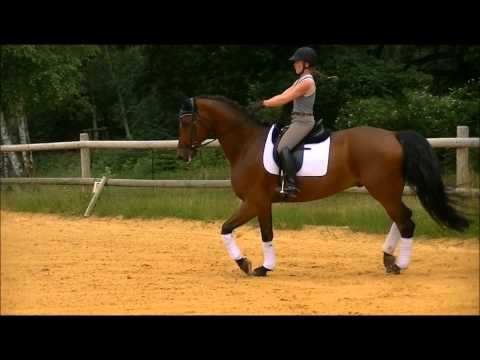
A regular, ground-covering and relaxed four-beat walk with active hind legs.
An elastic, balanced and ground-covering trot with active impulsion and the ability to carry increasing weight on the hindquarters.
A rhythmic, uphill and powerful canter with balance, scope and the ability to lengthen or shorten the stride.
Born in 1983
Ridden by Isabell Werth, Gigolo is one of the most decorated dressage horses in history. He won team gold medals at the 1992 Barcelona, 1996 Atlanta, and 2000 Sydney Olympic Games, and was individual World Champion in The Hague 1994.
Born in 1994
A Hanoverian dressage horse also ridden by Isabell Werth, he became individual World Champion in 2006 (Aachen) and won team silver at the 2008 Beijing Olympics.
Born in 1994
Hanoverian gelding ridden by Anky van Grunsven, double Olympic individual gold medalist in dressage (Athens 2004, Beijing 2008), known for his impulsion and precision.
Born in 1993
Champion en saut d’obstacles monté par Meredith Michaels-Beerbaum, triple vainqueur de la Coupe du monde FEI et grand gagnant de nombreux Grands Prix internationaux.