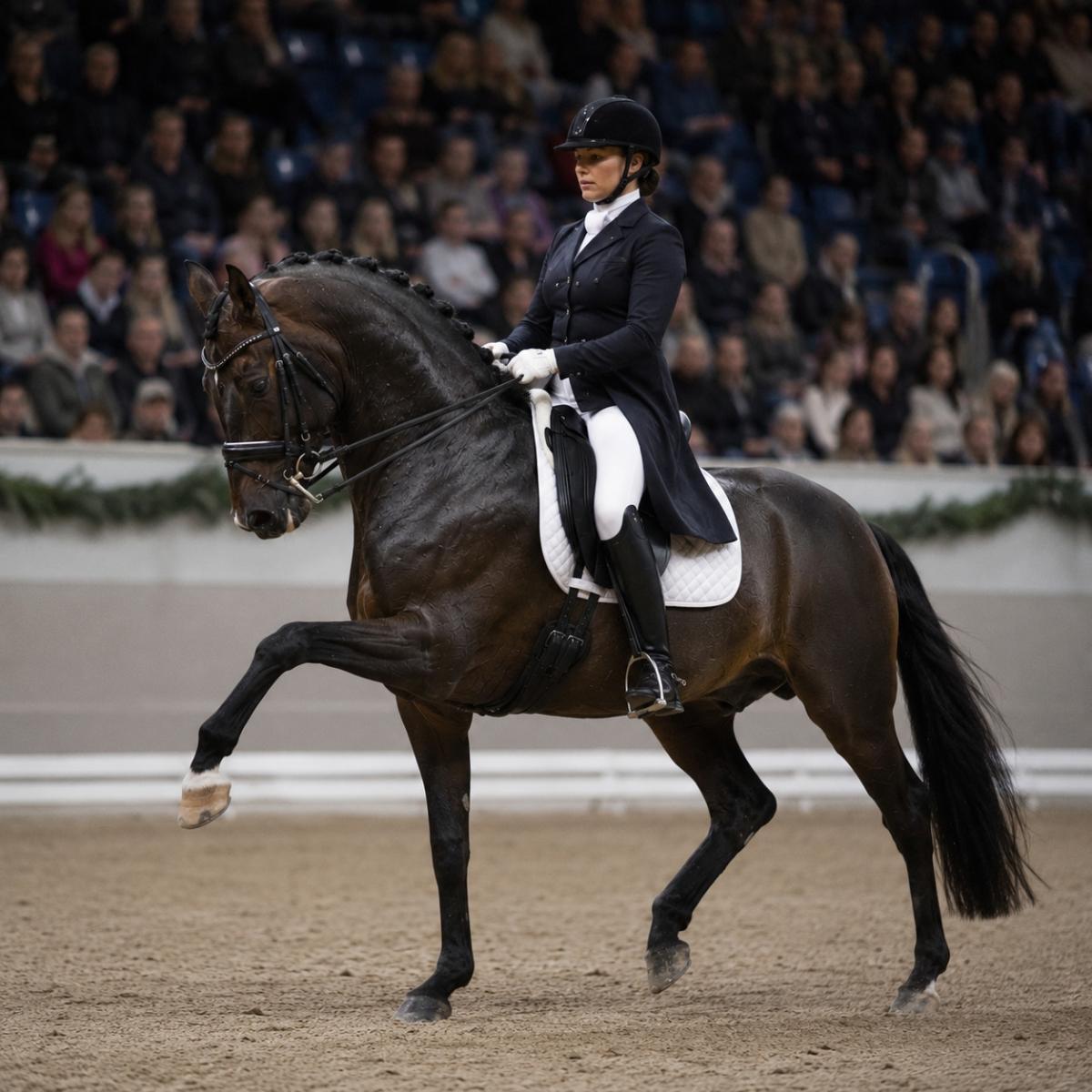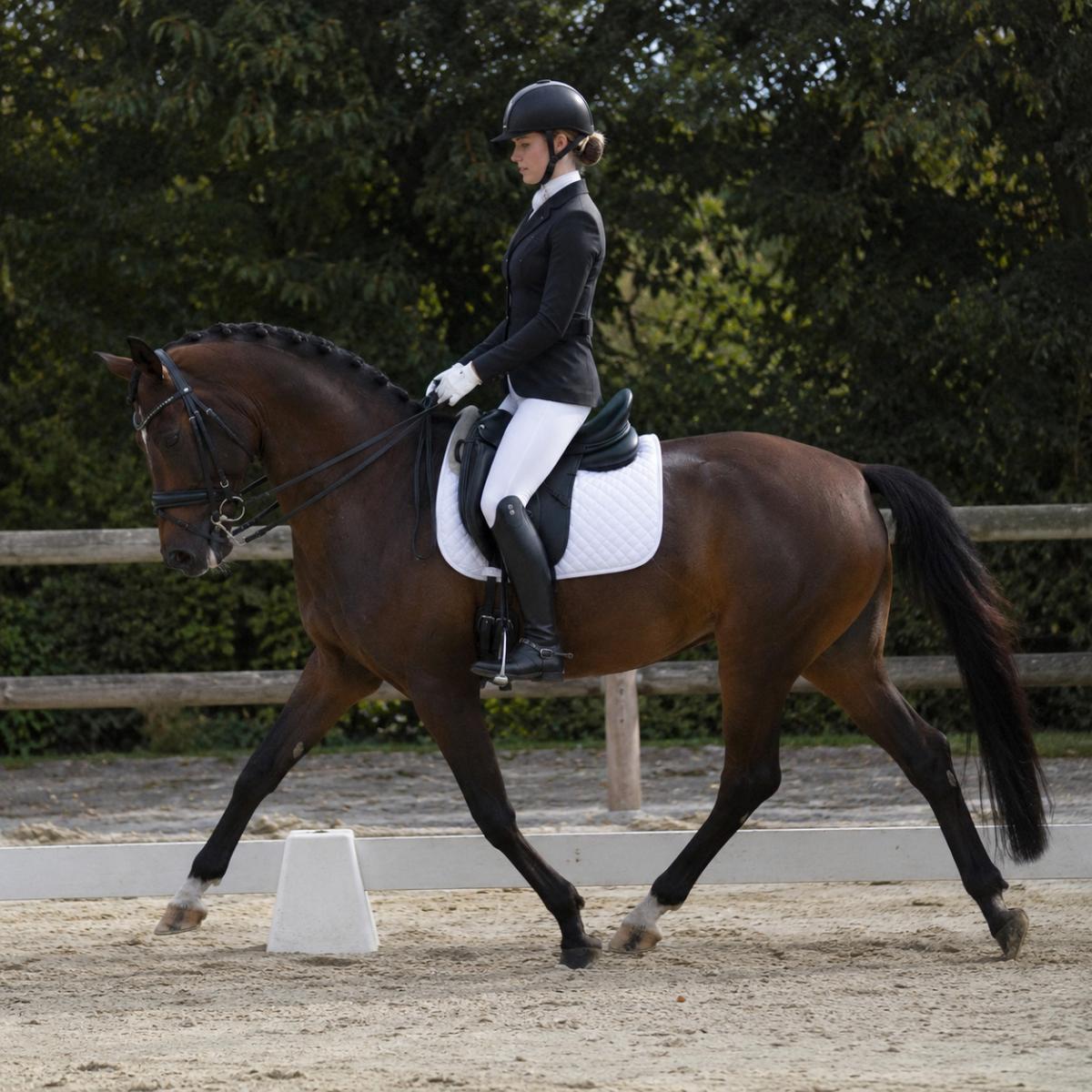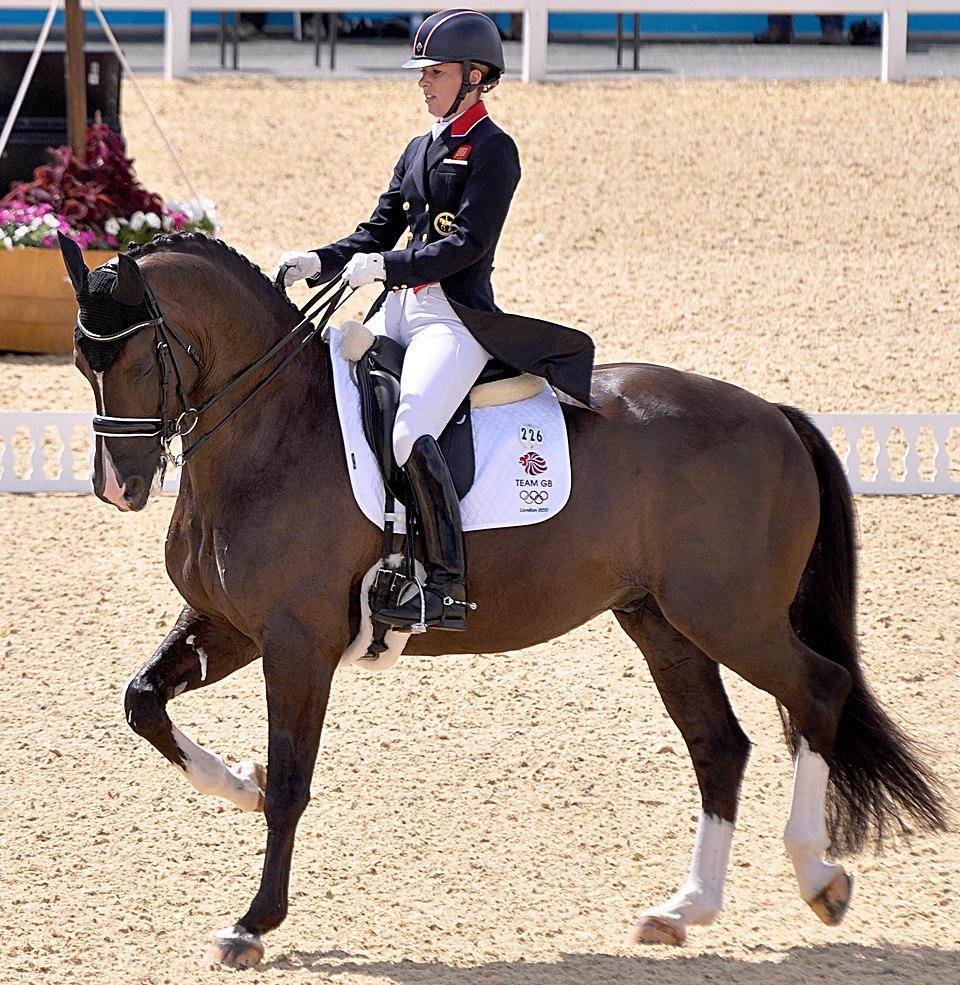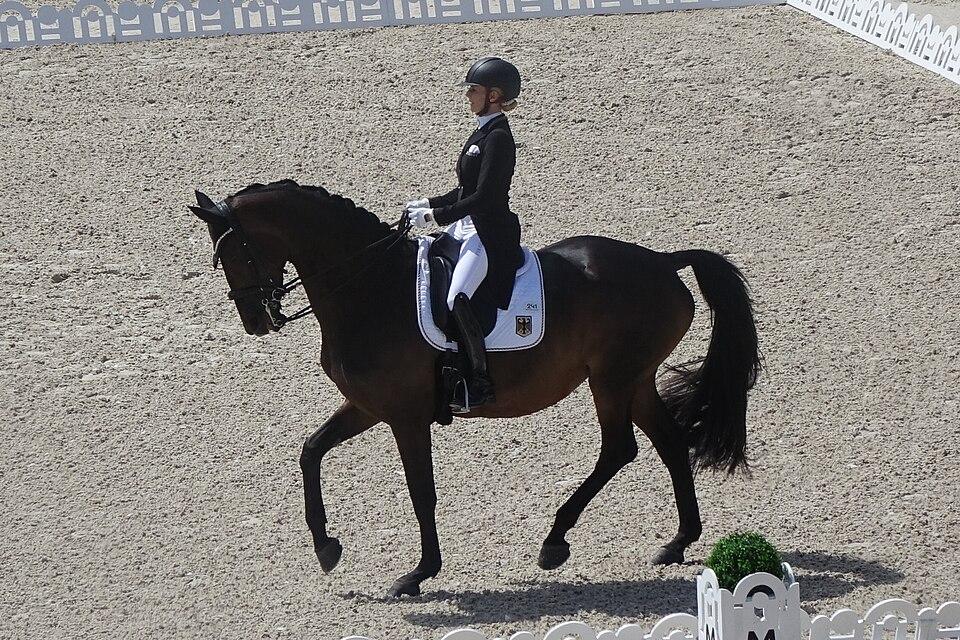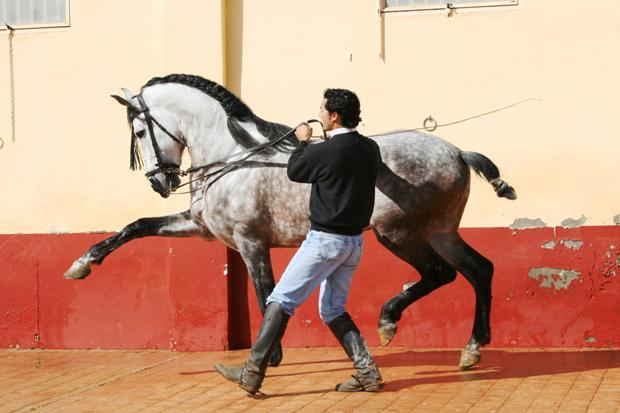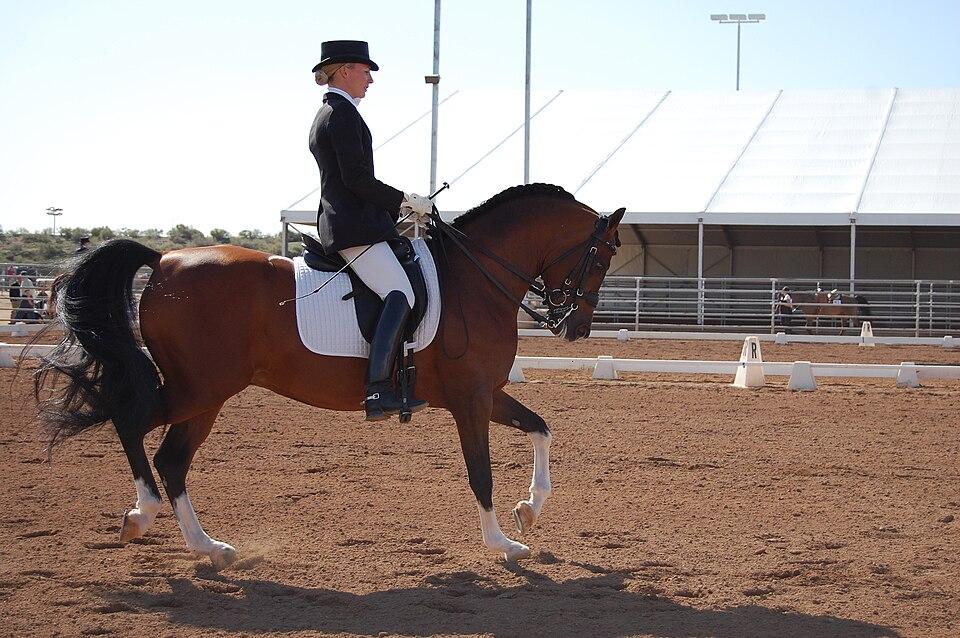
Dressage produces some of the most spectacular movement seen in equestrian sport. During extended trot, the limbs appear to reach far in front of the horse; in passage, the strides become slower, elevated and highly cadenced; and in piaffe, the horse maintains considerable limb activity while making very little forward progress.
To a spectator, these movements can easily create the impression that the horse has simply been taught to lift its legs very high.
The biomechanics are much more interesting.
There is no single mechanism responsible for this elevation. The visible trajectory of the limbs depends on the horse's conformation, individual locomotor characteristics, speed, type of trot, joint coordination, forces applied to the ground, training and, to some extent, genetic selection.
Two horses can therefore show spectacular forelimb action for different locomotor reasons. More importantly, high leg elevation alone is not necessarily a sign of good dressage.

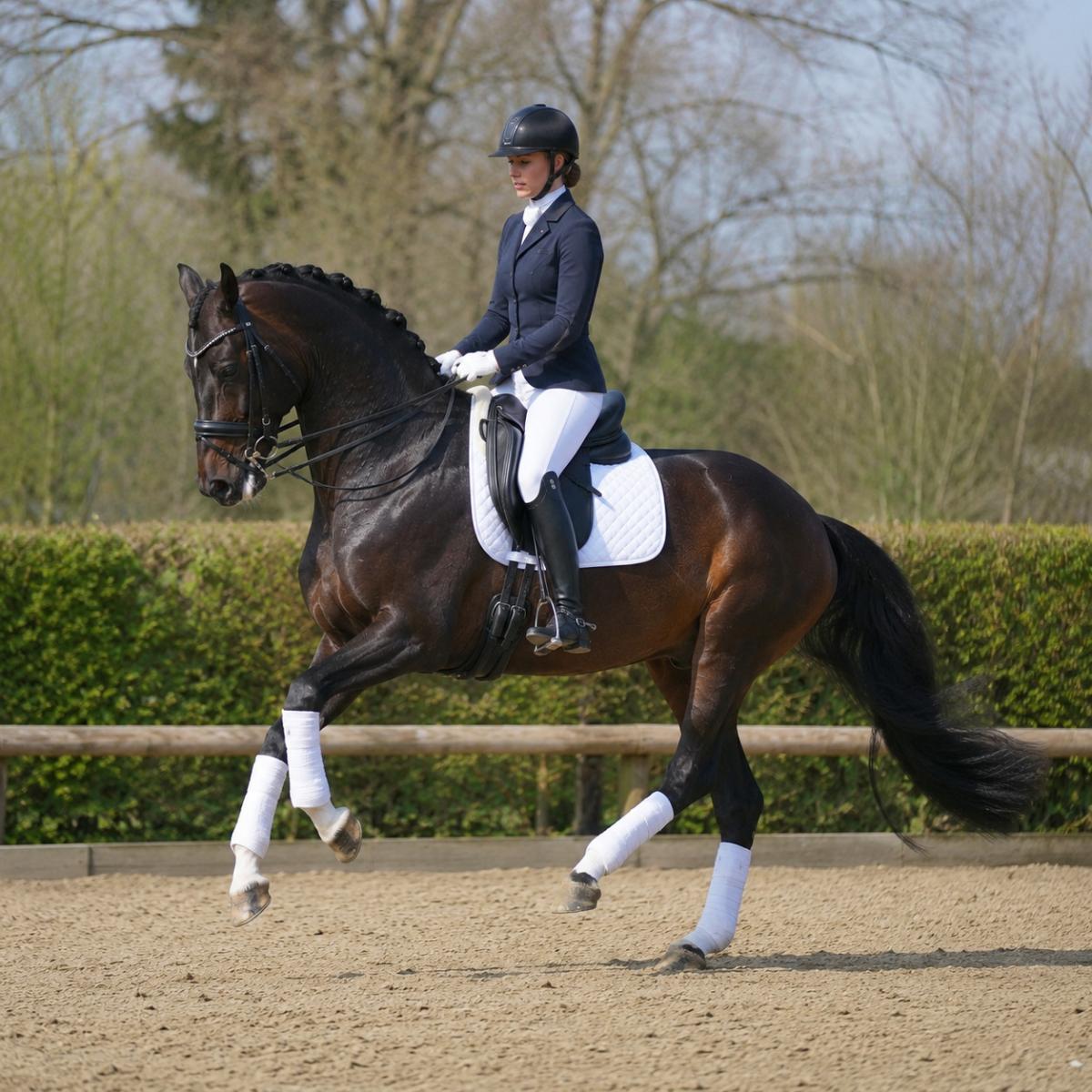
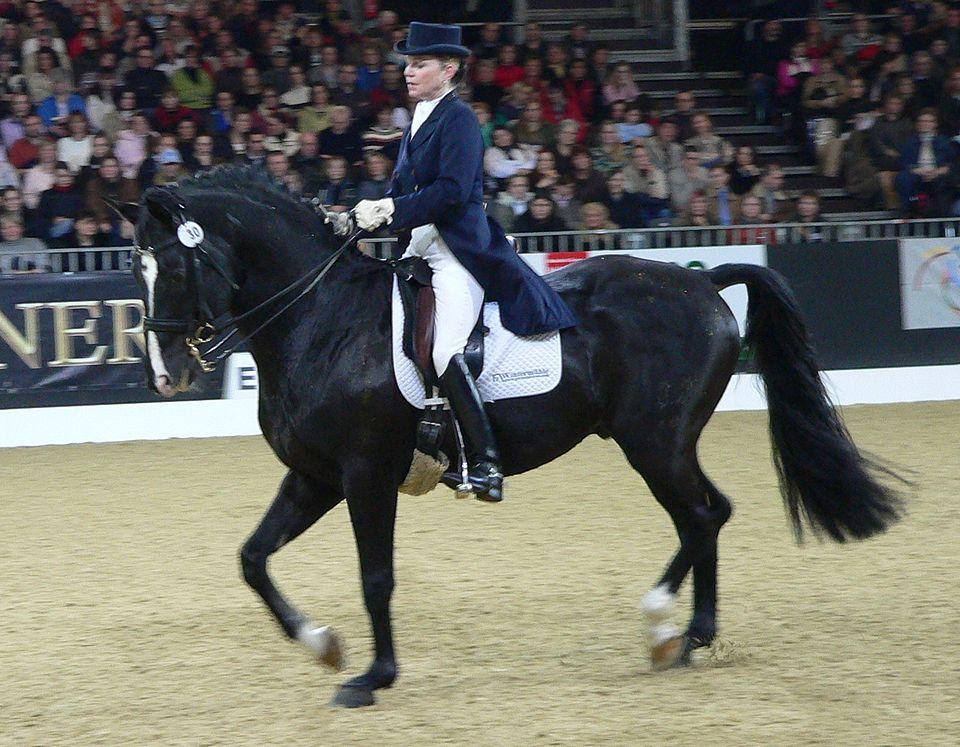
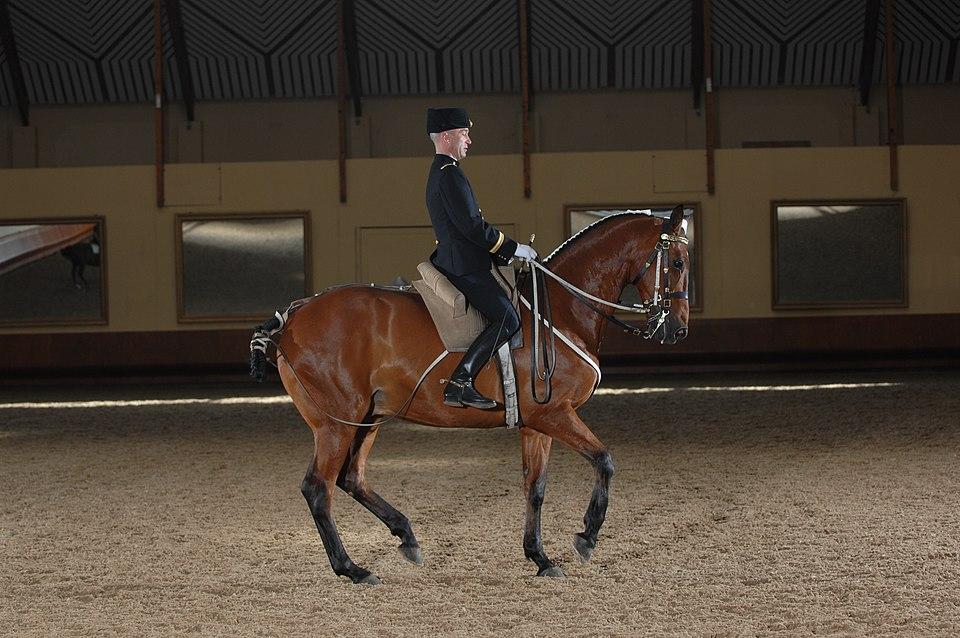
Philippe Limousin and Rock'N Roll Star performing extended trot at the 2016 Grand National Dressage, Haras de Jardy, France. Photograph by Eponimm, 10 April 2016 — CC BY-SA 4.0 — Wikimedia Commons.
Lifting the legs is not the purpose of dressage
Dressage is not simply about teaching a horse to raise its knees artificially.
The qualities sought involve the horse's entire locomotor system: regularity, balance, elasticity, impulsion, straightness, the ability to modify the stride and, at advanced levels, collection.
The height reached by a hoof is therefore only one visible part of a much more complex system.
A horse can show spectacular forelimb action while lacking balance or coordination. Conversely, a less visually extravagant gait may be regular, efficient and entirely appropriate for the exercise being performed.
Leg elevation should therefore always be interpreted in the context of the entire stride.
The legs do not move independently of the rest of the horse
A limb does not simply rise because a muscle “pulls it upwards”.
The trajectory of the hoof results from a sequence of movements involving the shoulder, elbow, carpus and fetlock in the forelimb, and the hip, stifle, hock and fetlock in the hindlimb.
Movement of the trunk and pelvis also contributes.
Kinematic analyses show considerable variation between individual horses in the way these joints contribute to locomotion.
What a spectator perceives as a leg being lifted very high is therefore the final result of a coordinated chain of joint and body movements.
The hindlimbs are important, but they are not the horse's only “engine”
Equestrian terminology frequently describes everything as “coming from the hindquarters”.
This expression can describe some of the sensations riders seek, but it is not a complete biomechanical explanation.
The hindlimbs contribute to propulsion and play an important role in collected movements. The forelimbs, however, also generate and absorb considerable forces.
In a study of passage involving six Grand Prix dressage horses, hindlimb impulse increased and the relative distribution of impulse shifted towards the hindquarters compared with trot. Nevertheless, the forelimbs continued to play a major mechanical role.
Locomotion therefore results from the interaction between all four limbs, the trunk and the movement of the centre of mass.
Collection changes the organisation of the stride
Collection is particularly important for understanding some of the elevated movements seen in dressage.
It is sometimes described as a simple transfer of the horse's weight towards the hindquarters.
Measurements reveal a more complex situation.
As collection increases, several parameters may change simultaneously: speed, stride length and duration, joint movement, stance duration and force distribution.
In passage, for example, Grand Prix horses moved 43.2% more slowly than during the trot used for comparison, while stride frequency decreased by 23.6%. Stride impulse increased and the vertical movement of the centre of mass became more pronounced.
This combination contributes substantially to the impression of bounce and elevation.
The horse is therefore not simply “lifting its legs higher”: the organisation of the entire stride changes.
Passage is a particularly good example
Passage is probably one of the clearest examples.
It retains the diagonal organisation of trot, but forward progression becomes much slower and the movement appears considerably more vertical.
Measurements in high-level dressage horses have shown increased limb impulse during passage compared with trot, affecting both forelimbs and hindlimbs. The relative distribution of impulse also shifted towards the hindquarters.
The visual result is a horse that appears to rise more with each stride.
The pronounced elevation of the limbs is therefore only part of what the spectator sees: the movement of the entire body is being reorganised.
Piaffe uses a different locomotor organisation
Piaffe can also appear highly elevated, but its biomechanics differ from those of passage.
The horse reduces forward progression almost to zero while maintaining alternating diagonal activity.
Biomechanical studies have shown that piaffe has an unusual organisation: some of its kinematic characteristics resemble those of walking gaits, while ground reaction forces and centre-of-mass mechanics retain characteristics associated with running gaits.
It has therefore been described as a biomechanically hybrid gait.
High limb elevation during piaffe should consequently not be interpreted in exactly the same way as high elevation during passage.
Extended trot is spectacular for different reasons
The extended trot, shown in the photograph above, illustrates particularly well why “lifting the legs” is an incomplete description.
Unlike passage, the horse is attempting to cover considerably more ground.
In one study of six trained dressage horses, average stride length increased from approximately 250 cm in collected trot to 355 cm in extended trot, alongside an increase in speed.
Another study involving twenty dressage horses found that medium or extended trot increased fetlock extension in both the forelimbs and hindlimbs compared with collected trot.
The spectacular movement of extended trot therefore results largely from increased stride length and range of motion, with a mechanical organisation different from that of passage.
Two movements can consequently appear highly expressive while being produced in quite different ways.
High forelimb action does not prove that a horse is collected
This distinction is essential.
Forelimb elevation is easy to see and naturally attracts the eye. Yet it cannot, by itself, be used to assess collection.
Collection involves the entire locomotor pattern: stride duration and length, activity, balance, organisation of support phases and coordination between the limbs.
A horse may display extremely high knee action without showing the other characteristics associated with collection.
Conversely, improving collection does not necessarily mean that the forelimbs should become increasingly spectacular.
High action and collection are not synonymous.
Conformation influences the way a horse moves
Horses do not all have identical body proportions.
The length of skeletal segments, joint orientation, shape of the trunk, pelvic conformation and characteristics of the limbs can influence how an individual moves.
Even among horses belonging to relatively homogeneous populations, kinematic analyses reveal individual differences in hoof trajectories and joint movement.
There is therefore no single ideal locomotor pattern that every horse can reproduce in exactly the same way.
Conformation contributes to how each individual expresses its gaits.
Genetics really does play a role
The genetic influence on locomotion is not merely an assumption made by breeders.
Research on horse populations has demonstrated that several characteristics of movement have a heritable component.
This means locomotor characteristics can respond to selective breeding.
European sport-horse stud-books have selected horses over multiple generations using criteria that include gait quality, conformation and dressage performance.
This helps explain why certain populations frequently produce horses with particularly expressive movement.
But breed does not determine the movement of every individual
The Hanoverian, KWPN and Oldenburg are strongly represented in modern dressage.
The Pura Raza Española and Lusitano have different selection histories and are also associated with collected work.
This does not mean that every individual within a breed moves in the same way.
Studies comparing breed groups can identify population-level differences, but relatively small experimental samples should not be transformed into universal rules about entire breeds.
Individual variation remains considerable.
Training also changes locomotion
Genetics provides some of the horse's starting characteristics, but a dressage horse is also a trained athlete.
Throughout its education, the horse learns to modify stride length, rhythm, balance and degree of collection in response to the rider's aids.
Its musculoskeletal system also adapts to exercise.
It would nevertheless be too simplistic to attribute elevated movement solely to developing “the back, abdominal muscles and hindquarters”.
Locomotion results from the coordinated action of many muscles, joints, tendons and elastic structures.
Training therefore influences strength, coordination, motor control and the ability to reproduce particular locomotor patterns, rather than simply developing a few isolated muscle groups.
Extravagant movement can also alter mechanical loading
Spectacular locomotion is not mechanically neutral.
During medium or extended trot, fetlock extension increases compared with collected trot.
A small study involving four horses also observed greater fetlock extension and hock flexion during extended trot. The researchers suggested that repeated use of extravagant movement could potentially increase loading of the suspensory apparatus, while emphasising the limitations created by the very small sample.
This does not mean that extended trot is inherently dangerous.
It simply demonstrates that increasing the amplitude or expression of a gait is accompanied by real changes in mechanical loading.
Physical preparation, training volume and recovery therefore remain important.
Why is so much expression sought in dressage horses?
The answer lies partly in sport and partly in breeding.
Dressage values gaits that demonstrate regularity, elasticity and impulsion, together with the ability to shorten or lengthen the stride while maintaining quality.
Over successive generations, the selection of horses intended for dressage has therefore favoured certain locomotor characteristics.
Training, meanwhile, develops the horse's ability to transform its stride on request.
The Grand Prix horse performing an elevated passage or crossing the diagonal in extended trot is consequently the product of an interaction between its individual physical potential and years of training.
Can spectacular movement become excessive?
This is one of the debates surrounding contemporary dressage.
Selection and competition can encourage the search for extremely expressive horses.
Visual amplitude, however, should not become the only criterion used to evaluate movement.
Spectacular forelimb action can coexist with deficiencies in rhythm, coordination or balance.
Similarly, greater range of motion can increase some mechanical demands without necessarily improving the overall quality of locomotion.
The relevant question is therefore not whether a horse raises its legs too high based solely on their height, but how that action fits into the horse's complete locomotor pattern.
Expressive movement proves neither welfare nor mistreatment
Images of highly expressive dressage horses can provoke opposite interpretations.
For some spectators, they represent athleticism and high-quality training. For others, the movement appears artificial.
Biomechanics suggests a more cautious interpretation.
A photograph showing a foreleg raised very high cannot, on its own, determine the quality of the movement, the horse's physical condition or its welfare.
Conversely, the fact that horses naturally possess certain locomotor abilities does not mean that every method used to amplify them is automatically acceptable.
The complete picture matters: movement, regularity, behaviour, health, physical preparation, training methods and living conditions.
So why do dressage horses appear to lift their legs so high?
Because what we see is the result of several overlapping factors.
Genetics and conformation influence the horse's basic locomotion. Selective breeding can reinforce certain characteristics across generations. Training develops strength, coordination and the horse's ability to modify its stride.
Each exercise then transforms that locomotion in a different way.
In passage, speed decreases while stride duration and vertical movement increase.
In piaffe, forward progression almost disappears while the horse maintains substantial diagonal activity.
In extended trot, speed and stride length increase considerably.
All three movements can look spectacular, but the mechanisms producing that appearance are not identical.
That is ultimately what makes the movement of dressage horses so interesting: behind the apparently simple observation that “the horse lifts its legs very high” lies a complex interaction between anatomy, forces, movement, genetics and learning.
Image credits
Philippe Limousin and Rock'N Roll Star — extended trot at the 2016 Grand National Dressage
- Subject: Philippe Limousin and Rock'N Roll Star performing extended trot at the 2016 Grand National Dressage
- Location: Haras de Jardy, Hauts-de-Seine, France
- Photographer: Eponimm
- Date: 10 April 2016
- Original source: photographer's own work
- Wikimedia Commons file page: Philippe Limousin – trot allongé – Grand National 2016.JPG
- Download original image: open the original 3,000 × 2,000 JPG
- Licence: Creative Commons Attribution-ShareAlike 4.0 International — CC BY-SA 4.0
Modification: no modification to the original image in this version of the article.
Sources and references
- Weishaupt et al. – Kinetics and kinematics of the passage
- Ground reaction forces of elite dressage horses in collected trot and passage
- Clayton & Hobbs – A Review of Biomechanical Gait Classification with Reference to Collected Trot, Passage and Piaffe in Dressage Horses
- Clayton – Comparison of the stride kinematics of the collected, working, medium and extended trot in horses
- Walker et al. – Comparison of limb kinematics between collected and lengthened trot in dressage horses
- The effect of collection and extension on tarsal flexion and fetlock extension at trot
- Genetic analysis of kinematic traits at the trot in Lusitano horse subpopulations with different types of training