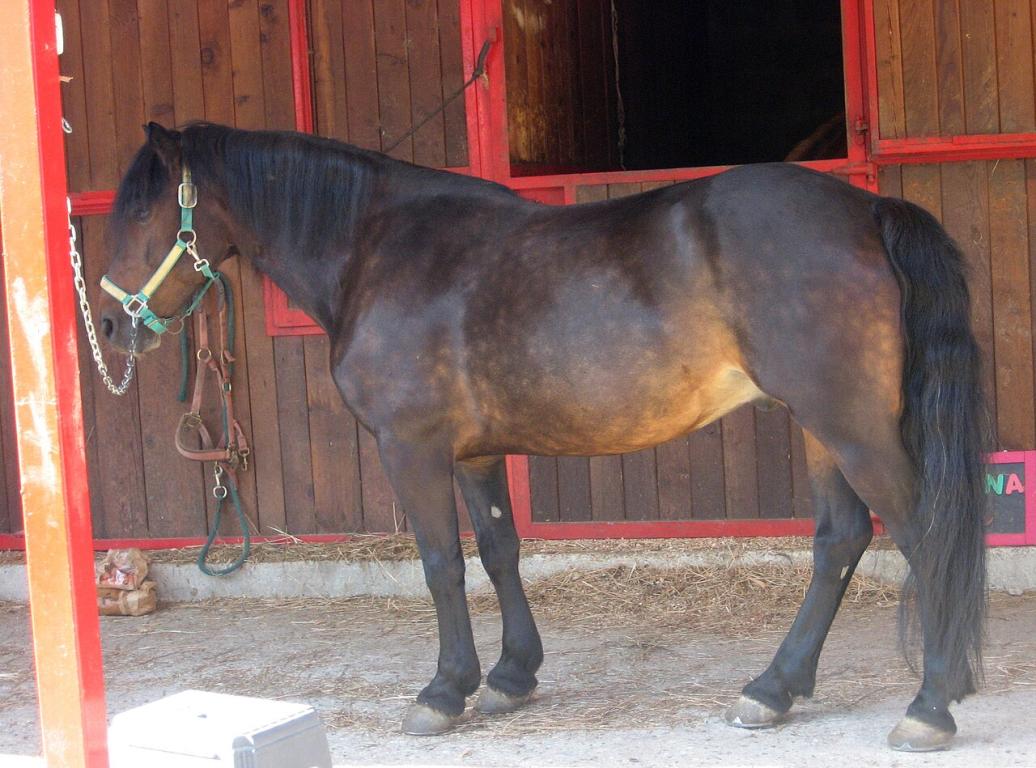
Discover the Kentucky Mountain Saddle Horse, an American breed renowned for its exceptionally smooth gait, gentle temperament, and versatility.
By the Chevaux du Monde editorial team · Published on · Updated on
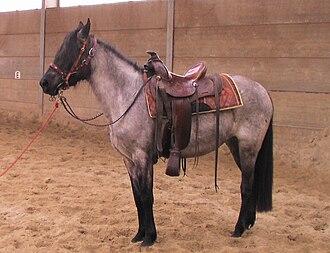
Type: Gaited Horse
Continent: America
Country: United States
Weight: 400 – 500 kg
Height: 142 – 163 cm
The Kentucky Mountain Saddle Horse is a breed that originated in the mountainous regions of eastern Kentucky, within the Appalachian Mountains of the United States. Its development dates back to the 19th century, when farmers and rural families needed a horse capable of working on the farm, traveling long distances, and carrying its rider in maximum comfort.
Developed in a sometimes challenging mountain environment, this horse gradually earned a reputation for its hardiness, endurance, calm temperament, and above all its exceptionally comfortable natural four-beat gaits. These qualities made it an ideal companion for daily travel across the rugged terrain of rural Kentucky.
The breed likely descends from several lines of gaited horses brought by European settlers, which were then selectively bred over multiple generations. Local breeders focused on preserving the individuals best suited to the practical needs of the region's inhabitants.
For much of its history, the Kentucky Mountain Saddle Horse was bred traditionally without an official registry. The breed was eventually formally recognized with the creation of the Kentucky Mountain Saddle Horse Association (KMSHA) in 1989, helping preserve the historical and genetic characteristics of the Kentucky Mountain Saddle Horse.
The Kentucky Mountain Saddle Horse is historically associated with the mountainous regions of eastern Kentucky, within the Appalachian Mountains of the United States. It was in this rural area that the breed developed during the 19th century, through selective breeding by local farmers and families seeking a horse that was versatile, enduring, and comfortable to ride.
Today, Kentucky remains the breed's primary breeding center. Numerous breeders and owners continue to preserve traditional bloodlines while participating in breeding programs established by the Kentucky Mountain Saddle Horse Association (KMSHA).
As the popularity of gaited horses has grown in the United States, Kentucky Mountain Saddle Horse breeding has gradually expanded into several neighboring states, including Tennessee, Virginia, West Virginia, Ohio, Indiana, and Missouri. These regions offer favorable conditions for breeding and trail riding activities.
Although its historical homeland remains Kentucky, the breed can now be found throughout many parts of the United States. It is particularly popular among trail riders, recreational riders, and enthusiasts of trail riding, who appreciate a horse capable of covering long distances in comfort.
Unlike some better-known American breeds, the Kentucky Mountain Saddle Horse remains relatively uncommon outside its country of origin. A small number of breeding programs exist in Canada and certain European countries, but the vast majority of the global population is still concentrated in the United States.


The Kentucky Mountain Saddle Horse plays an important role in preserving the genetic heritage of natural gaited horses in North America. The breed is particularly valued for its ability to pass on smooth and comfortable four-beat gaits, which are highly sought after by trail and recreational riders.
One of the breed's most significant genetic contributions is the transmission of its natural ambling gait, commonly known as the Single-Foot. This inherited ability produces a smooth, stable, and comfortable movement that minimizes vertical motion for the rider. As a result, this trait remains one of the primary selection criteria for breeding stock.
Over generations, breeders have also emphasized horses with a calm temperament, good docility, strong willingness to cooperate with humans, and excellent versatility. These behavioral traits are now considered an important part of the breed's genetic heritage.
Compared with some major international horse breeds, the Kentucky Mountain Saddle Horse has a relatively limited population. Breeding programs therefore place particular emphasis on maintaining genetic diversity in order to reduce the risks associated with inbreeding and to preserve the overall health of the breed.
Unlike breeds such as the Arabian Horse or the Thoroughbred, the Kentucky Mountain Saddle Horse has not had a major influence on the development of numerous other horse breeds. Its genetic importance lies primarily in the preservation of traditional American gaited horse bloodlines and in maintaining functional traits well suited to trail riding and recreational equitation.
The history of the Kentucky Mountain Saddle Horse is closely tied to the mountainous regions of eastern Kentucky, in the heart of the American Appalachian Mountains. As early as the 19th century, farmers and families living in these isolated rural areas needed a versatile horse capable of working on the farm, carrying its rider over long distances, and navigating rugged terrain with ease.
Unlike many breeds developed for competition or military purposes, the Kentucky Mountain Saddle Horse was primarily selected for its everyday usefulness. Breeders favored horses with a calm temperament, good endurance, exceptional sure-footedness, and above all a comfortable natural gait that allowed riders to travel long distances without excessive fatigue.
The breed's ancestors likely descended from various gaited horses brought by European settlers, which were later crossed with local bloodlines. Over generations, Appalachian breeders retained individuals displaying the best functional qualities, gradually establishing the characteristics that define the Kentucky Mountain Saddle Horse today.
For much of its history, the breed was raised traditionally within Kentucky's rural communities. Bloodlines were passed down locally, and selection was based primarily on performance, reliability, and practical usefulness rather than formal standards or administrative registration.
As interest in these gaited horses grew, the Kentucky Mountain Saddle Horse Association (KMSHA) was established in 1989 to preserve the breed's historical characteristics and oversee its development. The creation of an official registry made it possible to establish breeding standards, track pedigrees, and promote the breed nationwide.
Since the late 20th century, the Kentucky Mountain Saddle Horse has gained popularity among enthusiasts of trail riding, recreational riding, and trail competitions. Its dependable nature, comfortable gaits, and versatility have helped the breed gain recognition far beyond its original homeland.
Today, breeders continue to emphasize the qualities that have shaped the historical reputation of the Kentucky Mountain Saddle Horse: comfort, docility, endurance, hardiness, and natural gaits. Preserving these foundational characteristics remains one of the primary goals guiding the breed's modern development.
The Kentucky Mountain Saddle Horse is renowned for its gentle nature, natural calmness, and remarkable emotional stability. Historically developed as a family and utility horse in the mountains of Kentucky, it was expected to be handled daily by riders of all experience levels.
This breed is generally appreciated for its sociable nature and willingness to cooperate with its rider. The Kentucky Mountain Saddle Horse often develops a strong relationship of trust with humans and is known for being attentive and responsive to its handler's requests.
Thanks to its intelligence and balanced temperament, the breed is considered relatively easy to train. Its willingness to learn and cooperative attitude make it a valued partner for both experienced riders and those seeking a dependable leisure horse.
Selected for generations to travel across the rugged terrain of the Appalachian Mountains, the Kentucky Mountain Saddle Horse is generally known for its excellent sure-footedness. This quality, combined with its calm demeanor, makes it particularly well suited for trail riding and long outdoor excursions.
Although it possesses good energy levels and considerable endurance, the Kentucky Mountain Saddle Horse is not typically regarded as a nervous or difficult breed. It often displays an ideal balance between responsiveness, willingness to work, and calmness.
Its stable temperament, patience, and comfortable gaits make the breed accessible to a wide range of riders. It is especially popular among recreational riders, trail riding enthusiasts, families, and those seeking a comfortable horse for extended hours in the saddle.
The Kentucky Mountain Saddle Horse is attracting increasing interest from riders seeking a comfortable, reliable, and versatile horse. Its natural four-beat gaits, which are particularly enjoyable over long distances, meet a growing demand for trail riding and recreational equestrian activities.
The growing popularity of disciplines focused on rider comfort continues to strengthen the appeal of American gaited horses. In this context, the Kentucky Mountain Saddle Horse possesses significant advantages thanks to its calm temperament, ease of handling, and ability to perform well on a wide variety of terrains.
One of the breed's main challenges is maintaining sufficient genetic diversity. As population numbers remain relatively limited compared to major international breeds, breeding organizations continue their efforts to reduce inbreeding and preserve the overall health of the breed.
Many breeders place particular emphasis on preserving the breed's historic characteristics, including its natural gaits, docile temperament, hardiness, and strong suitability for trail riding. This approach helps maintain the unique identity of the Kentucky Mountain Saddle Horse as the equestrian industry continues to evolve.
Although the majority of the breed's population remains concentrated in the United States, the Kentucky Mountain Saddle Horse is gradually attracting interest from riders and breeders in other countries. International expansion remains modest, but the breed's reputation for comfortable gaits could encourage wider distribution in the years ahead.
Thanks to its qualities as a family horse, trail horse, and recreational riding companion, the Kentucky Mountain Saddle Horse enjoys promising future prospects. Its development is likely to remain focused on promoting its traditional strengths rather than pursuing specialization in high-level competitive disciplines.
The Kentucky Mountain Saddle Horse is generally regarded as a hardy, resilient, and long-lived breed. Developed in the mountainous regions of Kentucky, it was selected over many generations for its ability to work and travel long distances under sometimes challenging conditions. This selection process helped preserve the breed's overall soundness and durability.
Thanks to a breeding tradition focused on functionality rather than extreme physical traits, the Kentucky Mountain Saddle Horse typically enjoys good overall health. Its balanced conformation and strong limbs allow it to perform efficiently in trail riding and recreational activities.
The main genetic condition documented in the breed is Multiple Congenital Ocular Anomalies (MCOA). This disorder is associated with the Silver gene, which is relatively common in certain Kentucky Mountain Saddle Horse bloodlines.
Affected horses may develop various eye abnormalities, with severity ranging from mild to significant. Some cases have little impact on vision, while more severe forms can result in noticeable visual impairment. Modern genetic testing allows breeders to better manage this risk when planning matings.
Like many breeds with a relatively limited population, the Kentucky Mountain Saddle Horse is monitored for genetic diversity. Breed organizations and breeders work to reduce the risks associated with inbreeding in order to maintain the health and vigor of the population.
Like all horses used regularly for trail riding and work, the Kentucky Mountain Saddle Horse may be susceptible to conditions affecting the joints, tendons, or ligaments. Proper management of training, hoof care, and nutrition generally helps reduce these risks.
Although the breed has a strong reputation for durability, maintaining good health depends on a balanced diet, regular veterinary care, appropriate dental maintenance, and suitable exercise management. These measures help preserve both the horse's athletic abilities and longevity.
The Single-Foot is the signature natural gait of the Kentucky Mountain Saddle Horse. It is a smooth and regular four-beat gait in which each hoof contacts the ground independently. This gait provides an exceptionally comfortable ride with minimal vertical movement for the rider, making it ideal for long-distance trail riding and extended hours in the saddle.
Some Kentucky Mountain Saddle Horses are also capable of performing a form of rack, a fast four-beat gait characterized by a regular cadence and excellent stability. This gait allows the horse to increase speed while maintaining the smoothness and comfort associated with gaited breeds.
In addition to its distinctive gait, the Kentucky Mountain Saddle Horse possesses a relaxed, energetic, and ground-covering Flat Walk. This gait is commonly used for everyday travel and highlights the breed's calm temperament, natural balance, and smooth way of going.