Discover the Austrian Warmblood, a sport horse bred for dressage and show jumping: history, conformation, temperament and breeding.
By the Chevaux du Monde editorial team · Published on · Updated on
Type: Riding Horse
Continent: Europe
Country: Austria
Height: 164 – 168 cm
Name: Österreichisches Warmblut — Arbeitsgemeinschaft für Warmblutzucht in Österreich
Founded: 1964
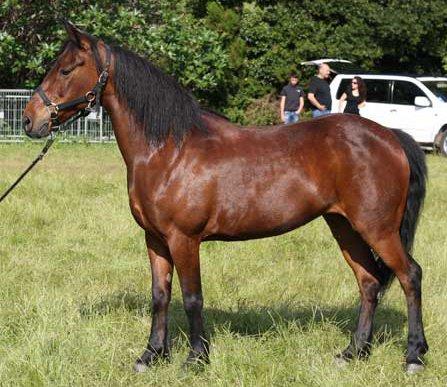
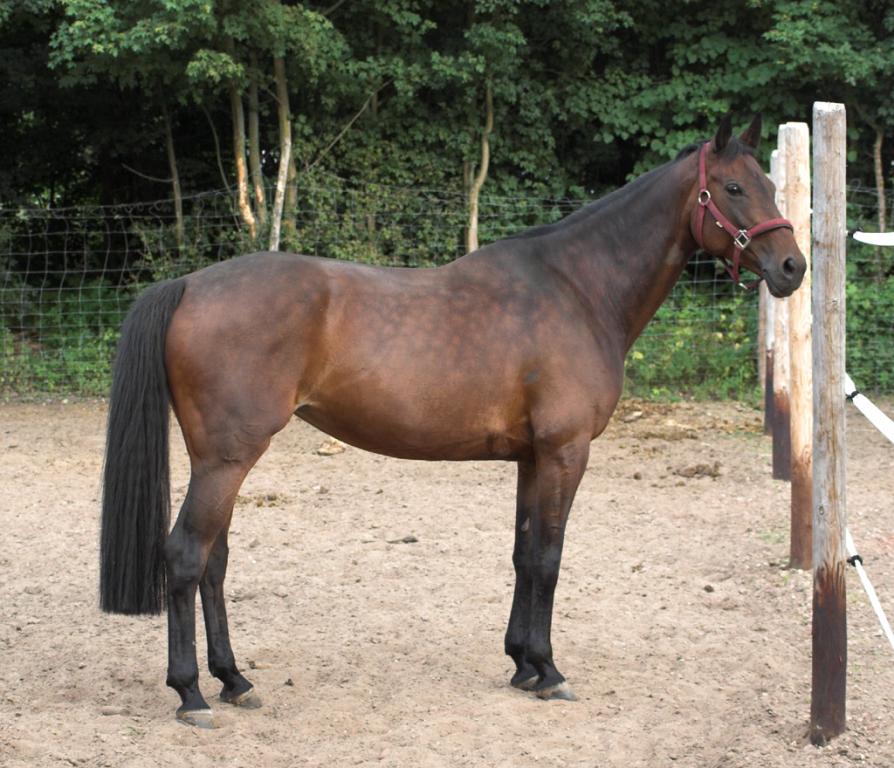
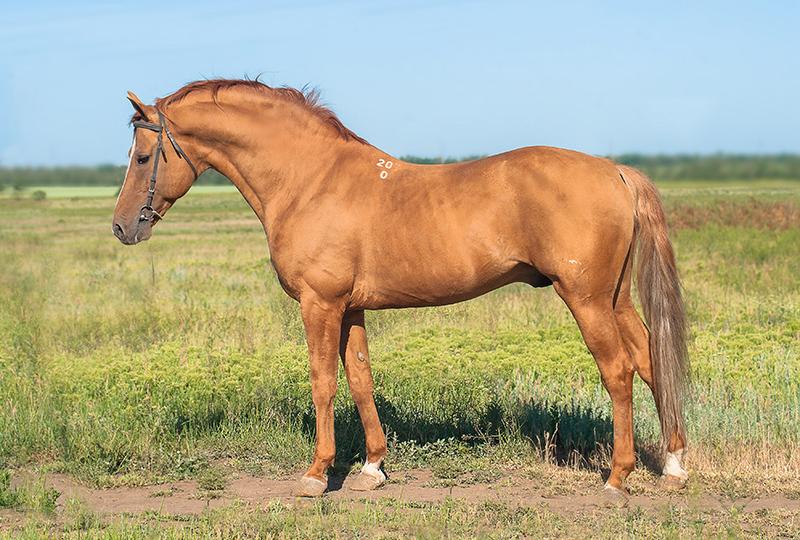
The Austrian Warmblood, known as Österreichisches Warmblut in German, is a sport horse bred in Austria. It is better understood as a population defined by an open breeding programme than as an ancient, genetically isolated breed.
Its historical mare base descends partly from former Austro-Hungarian riding and cavalry horses. Nonius, Furioso-North Star, Gidran and Shagya bloodlines contributed to this regional foundation.
The modern population subsequently received influence from several European sport-horse studbooks. Registration depends on pedigree, compliance with the breeding programme and the approval of breeding animals, rather than simply on birth within Austria.
The Austrian Warmblood is bred in several Austrian federal states by breeders affiliated with regional associations. These organisations are responsible for activities including foal identification, mare evaluations and breeding events.
The equestrian centre at Stadl-Paura in Upper Austria plays an important role in national selection. It hosts stallion approvals, performance tests and various breeding-horse presentations.
Because the registry is open to breeding animals that meet its requirements, pedigrees may originate from several recognised European studbooks. Nevertheless, the Austrian Warmblood has a more limited international presence than the major German or Dutch sport-horse populations.


The genetic value of the Austrian Warmblood lies partly in the continuity of maternal families developed within the country's breeding system. These families connect the modern sport horse with the former riding and cavalry populations of the Austro-Hungarian monarchy.
The breeding programme permits the use of breeding animals from other recognised populations when they meet the required pedigree, conformation, health and performance criteria. This openness allows breeders to introduce qualities sought for dressage or show jumping.
It also makes it important to preserve an Austrian identity through the monitoring of maternal families, the evaluation of breeding animals and the maintenance of sufficient diversity. The Austrian Warmblood should therefore not be described as a genetically homogeneous or isolated population.
Austrian riding-horse breeding developed from populations used by the military, government services and private owners throughout the Habsburg monarchy. Exchanges between the Empire's different regions encouraged the spread of bloodlines such as the Nonius, Furioso-North Star, Gidran and Shagya.
Following the dissolution of Austria-Hungary and the decline of military and agricultural uses, breeders gradually redirected their programmes towards civilian riding and equestrian sport.
During the twentieth century, the search for a more modern type led breeders to use breeding animals from several European studbooks. The objectives became similar to those of other warmblood populations: producing horses for dressage, show jumping and leisure riding.
The Arbeitsgemeinschaft für Warmblutzucht in Österreich, or AWÖ, was founded in 1964 to coordinate the selection of the Austrian sport horse. It brings together the regional organisations participating in the breeding programme.
Mare and stallion approval procedures, performance testing and the registration of offspring progressively shaped the modern studbook. The Austrian Warmblood now belongs to the international network of sport-horse studbooks.
The breeding programme seeks a willing, balanced, attentive and cooperative horse. Rideability, learning ability and willingness to work complement its athletic qualities.
Dressage-oriented bloodlines may be selected for expressiveness, balance and quality of movement. Show-jumping lines are more likely to be selected for responsiveness, courage and jumping technique.
Temperament nevertheless depends on the individual, its bloodline, selection history, living conditions, training and the rider's experience. Membership of the studbook therefore does not guarantee an identical temperament in every horse.
The Austrian Warmblood operates within a market dominated by studbooks with large populations and substantial selection resources. Its future depends on its ability to promote its best horses, breeders and maternal families in national and international competition.
Selection must maintain a balance between athletic performance, health, fertility, soundness, temperament and rideability. Producing horses suitable for amateur riders also represents an important market alongside elite sport.
Pedigree verification, the carefully managed use of foreign bloodlines and genetic monitoring of breeding animals will be essential to prevent an excessive concentration of ancestry and preserve the coherence of the Austrian breeding programme.
Breeding animals are evaluated according to their conformation, movement, abilities and performance. Correct limbs, locomotor quality, fertility and the capacity to withstand athletic use all contribute to selection.
Available sources do not support attributing a specific disease affecting the entire Austrian Warmblood population. As with other European sport horses, monitoring should focus particularly on the musculoskeletal system, tendons, joints, back and hooves.
The use of several European bloodlines makes genetic screening and pedigree-health checks important when selecting breeding animals. Training should remain progressive and be supported by appropriate nutrition, regular care and sufficient recovery periods.
A natural four-beat gait, slow and regular. The Austrian Warmblood exhibits a long, free-moving walk with good hind limb engagement, making it a smooth and comfortable gait, appreciated in both dressage and leisure riding.
A two-beat diagonal gait with suspension. The Austrian Warmblood's trot is often supple, rhythmic, and expressive. Its elastic movement and steady impulsion are highly valued in dressage competitions.
A three-beat gait with a moment of suspension. The Austrian Warmblood demonstrates a well-balanced, uphill canter with good impulsion. This gait is developed for show jumping and fluid transitions in dressage.
Born in 1994
International-level dressage horse, Laredo competed in the Grand Prix (Big Tour) under a German rider. He was one of the first Austrian Warmbloods to gain recognition on the European sport scene.
Born in 1995
Grey mare who competed in international show jumping (CSI) for the Polish team. She was among the first Austrian mares to represent the breed in FEI competitions.
Born in 1997
Bay mare born in 1997, represented Italy in high-level show jumping. Bred from Austrian sport horse bloodlines, she illustrates the international potential of the breed.