Discover the Arabian Horse, a legendary breed renowned for its exceptional endurance, distinctive beauty, and influence on modern horse breeds.
By the Chevaux du Monde editorial team · Published on · Updated on
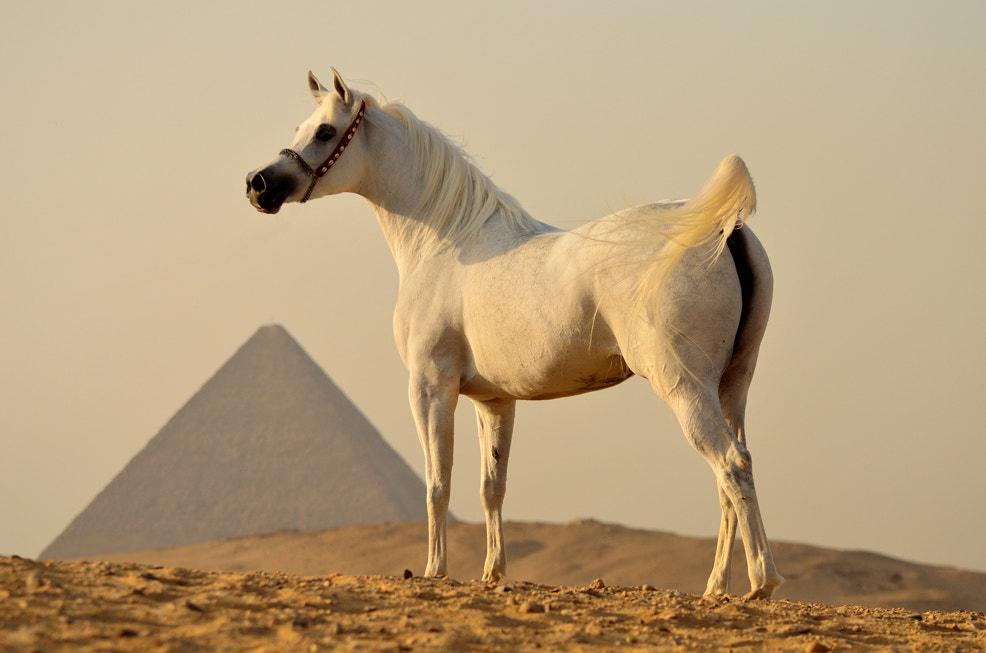
Type: Riding Horse
Continent: Asia
Country: Saudi Arabia
Weight: 360 – 500 kg
Height: 145 – 155 cm
The Arabian Horse originated in the Arabian Peninsula, a vast region that today includes several Middle Eastern countries, notably Saudi Arabia, Jordan, Syria, Iraq, Yemen, and Oman. Selected over centuries by Bedouin tribes, it was bred in particularly harsh desert environments that fostered the development of its exceptional endurance, resilience, and hardiness.
The Bedouins placed great importance on the quality of their horses, which they used for travel, trade, and warfare. This rigorous selection process produced a horse that is fast, enduring, intelligent, and deeply connected to humans.
Considered one of the oldest horse breeds in the world, the Arabian Horse has played a significant role in the history of horse breeding. Thanks to its remarkable physical and genetic qualities, it contributed to the development and improvement of numerous modern breeds, including the Thoroughbred, the Anglo-Arabian, and several European sport horse breeds.
Its cultural legacy, distinctive elegance, and worldwide genetic influence make the Arabian Horse one of the most prestigious and widely recognized horse breeds in the equestrian world today.
The Arabian Horse has long been associated with the Arabian Peninsula, the historical homeland of the breed. Countries such as Saudi Arabia, Jordan, Syria, Iraq, Yemen, and Oman played a major role in the development and preservation of Arabian bloodlines over the centuries.
Today, several Middle Eastern countries continue to maintain significant Arabian Horse breeding programs. The Gulf States, particularly Saudi Arabia, the United Arab Emirates, and Qatar, invest heavily in breeding, selection, and competitions dedicated to the breed.
The Arabian Horse is widely bred throughout Europe, where several countries operate well-established breeding programs. Poland is especially renowned for its historic bloodlines and prestigious studs. France, Spain, Germany, and the United Kingdom are also home to numerous specialized Arabian Horse breeders.
The United States is home to one of the largest Arabian Horse populations outside the Middle East. Canada also contributes to the preservation and promotion of the breed through specialized breeding operations and numerous events dedicated to Arabian horses.
Thanks to its international popularity, the Arabian Horse is now bred in many regions of the world, including South America, Australia, South Africa, and several Asian countries. This global distribution reflects the breed's historical significance and genetic importance in modern horse breeding.


The Arabian Horse is considered one of the most influential breeds in the history of horse breeding. For centuries, its qualities have been used to improve numerous breeds around the world. Its genetic contribution played a major role in the development of the Thoroughbred, the Anglo-Arabian, the Shagya Arabian, and many modern sport and riding horses.
The Arabian Horse is particularly valued for its ability to pass on exceptional endurance, outstanding stamina, and remarkable recovery after exercise. These qualities have made it a highly sought-after breeding horse in programs aimed at producing horses capable of performing over long distances and under demanding conditions.
Breeders have frequently introduced Arabian bloodlines to bring greater refinement, responsiveness, physical resilience, and efficient movement to other horse populations. Its influence can be seen in many modern breeds developed for sport, endurance, and recreational riding.
The Arabian Horse possesses one of the oldest genetic heritages among domestic horse breeds. Its preservation is important for maintaining equine genetic diversity and safeguarding traits that were carefully selected over centuries in the harsh desert environments of the Arabian Peninsula.
Thanks to the quality of its bloodlines and its historical influence, the Arabian Horse remains a major reference in international horse breeding. Its genetic contribution continues to be sought after to improve performance, hardiness, and longevity in many breeds around the world.
The Arabian Horse is considered one of the oldest horse breeds in the world. Its origins date back several millennia to the Arabian Peninsula, where nomadic peoples gradually selected horses capable of surviving in particularly harsh desert environments. This selection process favored endurance, resilience, intelligence, and a strong bond with humans.
For centuries, Bedouin tribes bred Arabian Horses with great care. The finest horses were retained for breeding, and their pedigrees were passed down orally from generation to generation. Mares held a central role in these breeding traditions, as they were believed to transmit the breed's most desirable qualities.
Beginning in the Middle Ages and especially between the 16th and 18th centuries, many Arabian Horses were imported into Europe. Their elegance, endurance, and speed impressed European breeders. These imports played a significant role in improving local horse populations and were instrumental in the development of the Thoroughbred.
The Arabian Horse has had a profound influence on international horse breeding. Its bloodlines have contributed to the development of numerous modern breeds, including the Anglo-Arabian, the Shagya Arabian, the Trakehner, and various sport horse breeds. This genetic contribution is one of the reasons for the breed's outstanding reputation worldwide.
During the 19th century and early 20th century, several countries established breeding registries to preserve the purity of Arabian bloodlines. These stud books improved pedigree tracking and breeding management. Today, recognized stud-book organizations cooperate internationally to maintain breed standards and preserve the integrity of the Arabian Horse.
The Arabian Horse is now bred on every continent. It remains highly valued for endurance riding, halter competitions, recreational riding, and breeding programs. Its remarkable history, genetic influence, and global reputation make it one of the most prestigious breeds in the equine world.
The Arabian Horse is renowned for its exceptional intelligence and strong learning ability. Highly aware of its surroundings, it quickly understands what is expected of it and often develops a close relationship with its rider or handler. This sensitivity generally requires an approach based on trust, respect, and clear communication.
Selected for centuries for endurance and long-distance travel, the Arabian Horse naturally possesses a lively, alert, and energetic temperament. It is often curious and responsive while remaining willing to work when properly trained and managed.
Historically raised in close contact with Bedouin families, the Arabian Horse is well known for its attachment to people. Many individuals actively seek human interaction and develop particularly strong bonds with those who care for them regularly.
In addition to its physical abilities, the Arabian Horse is valued for its mental toughness. It frequently demonstrates perseverance, courage, and an excellent ability to cope with prolonged effort. These qualities contribute significantly to its success in endurance competitions.
The Arabian Horse is highly sensitive to both rider aids and its environment. It may display caution or nervousness when faced with unfamiliar situations, but it is generally described as cooperative, willing, and eager to work with its rider when provided with appropriate guidance and training.
Thanks to its balance of energy, intelligence, and sociability, the Arabian Horse adapts well to a wide range of activities. It can excel in competition, trail riding, recreational riding, and even certain forms of equine-assisted therapy when properly trained.
The Arabian Horse remains one of the most recognized and widely bred horse breeds in the world. Thanks to its prestigious history, distinctive elegance, and athletic qualities, it continues to attract breeders and enthusiasts across all continents.
Endurance riding is one of the primary factors supporting the breed's continued development. The Arabian Horse's natural qualities, including exceptional endurance, stamina, and rapid recovery ability, have made it one of the world's leading breeds in this discipline. This specialization is expected to continue supporting its popularity in the years ahead.
Many breeding organizations and breed associations place great emphasis on preserving traditional bloodlines and maintaining genetic diversity. This effort is essential to safeguard the characteristics that have made the Arabian Horse famous while reducing the risks associated with overly narrow selection criteria.
Advances in equine genetics now allow for improved monitoring of bloodlines and certain hereditary diseases. Breeders have access to increasingly sophisticated tools for selecting breeding stock that combines performance, health, and genetic diversity, contributing to the breed's long-term improvement.
The Arabian Horse is expected to maintain its important role in international horse breeding. Its genetic contribution continues to be valued for enhancing endurance, resilience, and other functional qualities in many breeds. This ongoing influence helps ensure the breed's long-term relevance and importance within the equestrian world.
The Arabian Horse is renowned for its hardiness, longevity, and ability to maintain strong performance even under challenging climatic conditions. Descended from horses selected for centuries in the desert regions of the Arabian Peninsula, it generally possesses excellent physical resilience when provided with proper nutrition and care.
Like many purebred populations with well-documented bloodlines, the Arabian Horse can be affected by certain inherited genetic conditions. The most well-known are SCID (Severe Combined Immunodeficiency), CA (Cerebellar Abiotrophy), and LFS (Lavender Foal Syndrome). Modern genetic testing allows breeders to identify carriers and significantly reduce the risk of passing these disorders to future generations.
The Arabian Horse generally demonstrates efficient feed utilization and an excellent ability to adapt to demanding environments. However, like all horses, it may develop metabolic, digestive, or musculoskeletal disorders if its nutrition, management, or living conditions are not properly adapted to its needs.
Individuals competing in endurance events or undergoing intensive training programs may be exposed to exercise-related injuries, particularly involving the tendons, ligaments, muscles, and joints. Progressive conditioning and regular veterinary monitoring typically help reduce these risks.
Breed organizations and breeders increasingly emphasize genetic screening and the preservation of genetic diversity. These efforts help maintain the overall health of the population while preserving the historic qualities that have made the Arabian Horse one of the world's most respected breeds.
Born in 1956
Legendary Arabian stallion born in Poland and later exported to the United States. He won numerous halter and performance championships and had a major influence on Arabian Horse breeding worldwide through his exceptional offspring.
Born in 1969
Widely regarded as one of the most influential sires in the history of endurance riding. His descendants won numerous international endurance competitions and left a lasting mark on the discipline.
Born in 1793
Famous Arabian horse ridden by Napoleon Bonaparte during several military campaigns. He notably participated in the battles of Austerlitz, Jena, and Waterloo.
Born in 1909
A stallion born in Poland who became one of the most influential Arabian sires of the 20th century. His bloodlines can be found in numerous modern Arabian Horse pedigrees around the world.
Born in 1967
One of the most decorated Arabian Horses in American history, excelling in both halter and performance competitions. He also became a major sire whose descendants had a significant impact on the breed.