Why is the Ardennes horse so strong? Discover this powerful draft horse from the Ardennes and its many uses.
By the Chevaux du Monde editorial team · Published on · Updated on
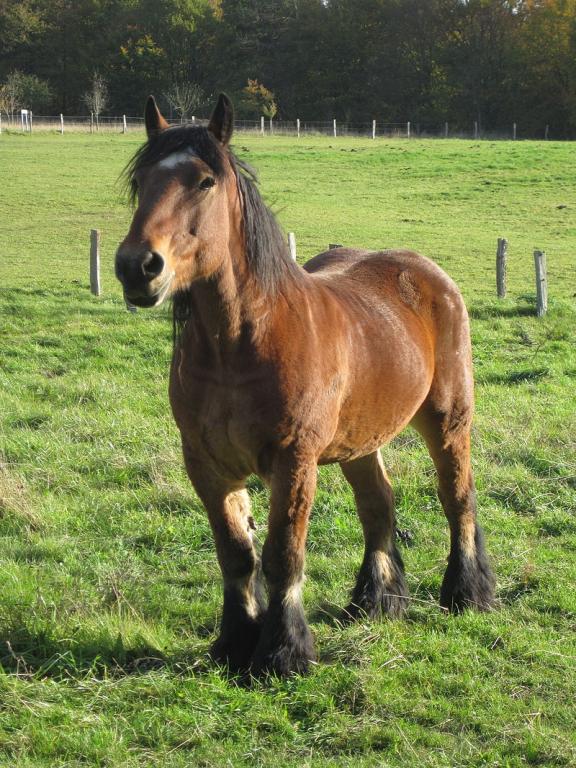
Type: Draft Horse
Continent: Europe
Country: France
Weight: 700 – 1000 kg
Height: 152 – 165 cm
The Ardennais Draft Horse originated in the transboundary Ardennes region shared by France, Belgium and Luxembourg. On the French side, its historical breeding area lies mainly in the present-day Grand Est region, particularly in the departments of Ardennes, Meuse, Moselle, Marne, Haute-Marne and Aube.
This geographical origin explains why several national populations bear the Ardennais or Ardennes name. They share a common historical background but are now managed through separate studbooks. The French Ardennais Draft Horse should therefore not automatically be confused with the Belgian, Luxembourgish or Swedish populations, whose standards and breeding objectives may differ.
The Ardennais is frequently described as one of Europe’s oldest draft-horse breeds. Some accounts link it directly to horses described by Julius Caesar or even to prehistoric populations. These associations primarily belong to the breed’s historical tradition: the available evidence does not establish a continuous documented genealogy extending back to Antiquity.
It is nevertheless well established that horses were selected in the Ardennes for centuries under demanding environmental conditions. The terrain, climate, soils and agricultural requirements favored a horse that was compact, powerful, enduring and relatively low to the ground.
The modern type became clearly established during the nineteenth and early twentieth centuries, when farming, military, industrial and transportation requirements created demand for horses capable of producing considerable draft power. Selection progressively increased the mass and strength of the regional population.
The principal French breeding area remains the Grand Est region, which encompasses the breed’s historical territory and a substantial proportion of its breeders. The Ardennais is particularly associated with departments near the Belgian and Luxembourgish borders, although breeding has spread to other parts of France.
The Union des Éleveurs des Chevaux de Race Ardennaise represents the breed in France and participates in implementing its breeding program. Identification and the technical maintenance of the studbook are carried out with the French Institute of Horse and Riding.
Horses belonging to or derived from the Ardennais lineage are bred in Belgium, Luxembourg, Sweden and several other European countries. Historical exports also contributed to the establishment or improvement of foreign draft-horse populations.
This international distribution does not correspond to a single worldwide registry. Each organization applies its own registration requirements and breed standard. Comparisons involving height, weight or population numbers must therefore identify the national population concerned.


The Ardennais belongs to a historical group of draft horses from northeastern France and neighboring regions. It has close connections with the Trait du Nord and the Auxois, two populations in which Ardennais breeding animals have been used.
Its influence also extends beyond France. Ardennais horses contributed to the development of draft populations in Northern and Central Europe. Its genetic history is consequently broader than that of the present-day French studbook alone.
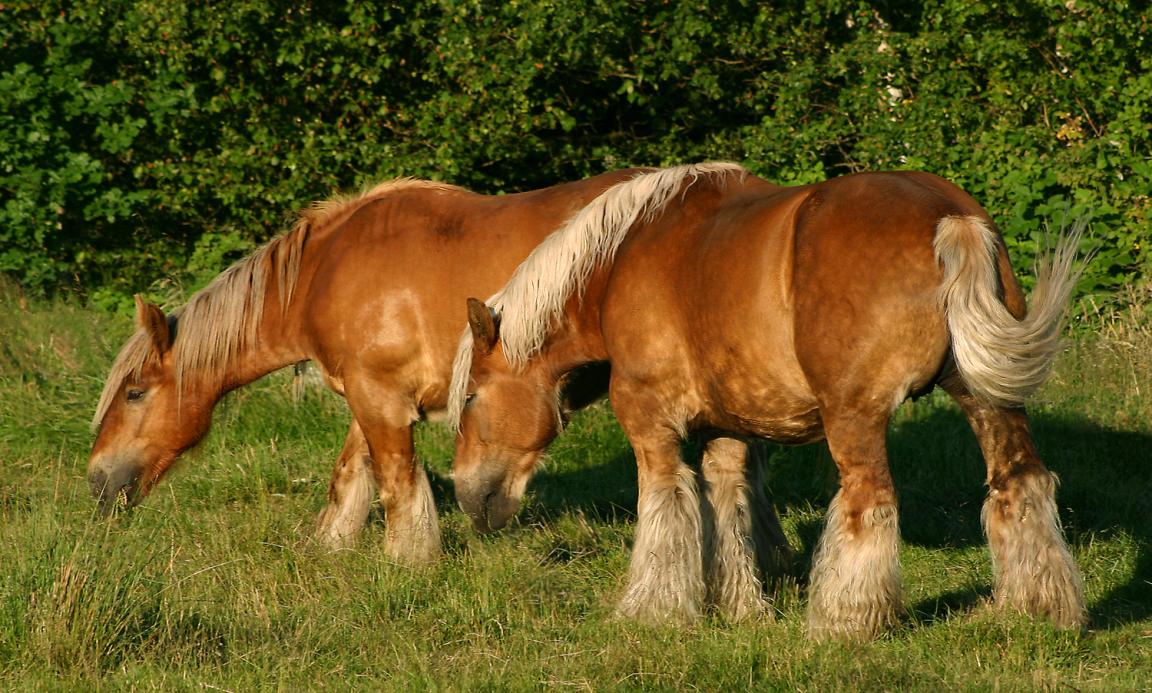
The Ardennais Draft Horse is distinguished by its compact proportions, substantial body depth, strong bone and relatively low center of gravity. These characteristics have a specific functional purpose: generating considerable pulling power while retaining the ability to move over varied terrain.
Preserving this functional type is an important genetic and zootechnical objective. Excessive emphasis on body mass could reduce mobility, endurance and limb quality, whereas excessive refinement could erode the characteristics that distinguish the breed.
As with many local breeds of limited population size, genetic diversity depends on the representation of different families and on the number of breeding animals actually used. An apparently stable population can conceal the intensive use of a relatively small number of stallions.
Monitoring pedigrees and coefficients of relationship helps prevent excessively close matings. The Cupidon tool developed by the French Society for Working Equids provides indicators intended to support mating choices compatible with preserving genetic diversity among French working-equid breeds.
Horses historically bred in the Ardennes were smaller and less massive than modern animals. Their reputation rested on hardiness, endurance and the ability to travel through a region characterized by difficult terrain and a demanding climate.
Accounts directly identifying these horses with populations from Antiquity are not supported by continuous records. They nevertheless reflect the long history of horse breeding in the Ardennes and the important role played by horses in the region.
Ardennais horses were regularly requisitioned for military purposes. Their endurance and ability to cope with limited resources were valued, although their compact stature also imposed limitations in some heavy-cavalry roles.
During the Napoleonic Wars, Ardennais horses were used for transportation and military campaigns. A historical study published by the University of Liège reports that some Ardennais and Breton horses returned from the Russian campaign despite the exceptionally harsh conditions. This does not support the frequently repeated legend that the Ardennais was the only breed to survive that campaign.
During the nineteenth century, agricultural and industrial requirements encouraged the production of a more powerful horse. Crossbreeding was used to varying degrees according to the period and territory, but breeders eventually concentrated on establishing a compact and heavily muscled regional type.
By the late nineteenth and early twentieth centuries, the Ardennais had become a medium-heavy draft horse used for agriculture, transportation and the movement of artillery. Its increased mass did not entirely eliminate the mobility and endurance inherited from the earlier regional type.
The regulations governing the French Ardennais studbook were published in 1924. This development helped distinguish the French population and formalized the selection of breeding animals. Breeding structures and practices subsequently continued to develop separately in France, Belgium and Luxembourg.
After the Second World War, tractors and motor vehicles rapidly replaced horses on farms, in transportation and in military operations. The Ardennais population declined sharply, and selection temporarily moved away from some of the breed’s traditional working functions.
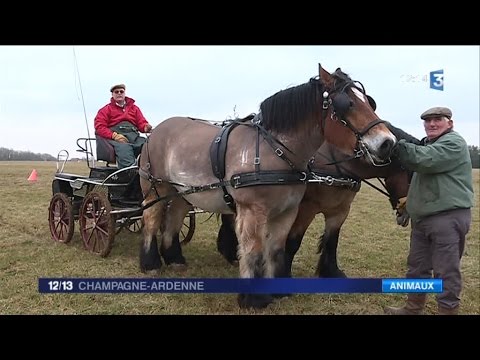
From the late twentieth century onward, driving, forestry work, tourism, working-horse competitions and renewed interest in animal traction encouraged the selection of more active horses. Breeders now place renewed emphasis on mobility, manageability and working ability.
The Ardennais is generally selected to be willing, consistent and cooperative at work. A draft horse must accept the harness, respond accurately to the driver’s commands and maintain a controlled effort near equipment, vehicles and other horses.
Its reputation for steadiness does not imply a lack of energy. A functional Ardennais should be capable of engaging its body mass, maintaining an active pace and responding promptly when required. The strength and energy of some individuals make consistent training essential.
Respectful ground manners, standing quietly, lifting the feet, backing and responding to voice commands should be established progressively. For driving and agricultural work, training must include methodical habituation to harness, noises, moving objects and pressure from the traces.
It would be unwise to assume that every Ardennais is easy to handle or suitable for a novice simply because of the breed’s reputation. Behavior depends on the individual, its bloodlines, education, living conditions, health and the experience of its handler or driver.
The mass of a draft horse magnifies the consequences of insufficient training. Before a horse is used for driving or practical work, its actual level of education and its reactions to unfamiliar situations should therefore be carefully assessed.
The future of the Ardennais Draft Horse depends on preserving an animal genuinely capable of working. Forestry extraction, management of natural areas, specialized agricultural traction, vineyard work, municipal services and tourist driving can provide uses consistent with its conformation and history.
These modern activities require a horse that is mobile, enduring, manageable and properly trained, rather than merely very heavy. Selection should therefore pay particular attention to movement, hoof quality, limb conformation, respiratory capacity and recovery after exertion.
Training the people who work with these horses is another essential consideration. Renewed use of animal traction requires the preservation of skills relating to the education of young horses, harness adjustment, driving, pair work and the safe operation of modern horse-drawn equipment.
Cooperation among French, Belgian and Luxembourgish breeders can also facilitate the exchange of technical knowledge and improve understanding of the available bloodlines. Such cooperation should nevertheless respect the objectives of each studbook and avoid treating all Ardennais populations as completely identical.
Long-term conservation also requires a variety of viable uses. Leisure driving, breed presentations and heritage activities can improve public awareness, but they may not be sufficient on their own to preserve the practical working abilities that shaped the Ardennais.
Degenerative interphalangeal osteoarthropathy has been studied in Ardennais horses, particularly within a Belgian population. This joint disorder can develop in young horses and affect the distal limb joints. A longitudinal study identified degenerative signs in a substantial proportion of the examined Ardennais horses. That result concerns the studied sample and should not be presented as a prevalence rate applying to the entire French Ardennais population.
Monitoring limb alignment, hoof shape and the movement of young horses is consequently important. Lameness, persistent stiffness, hoof deformation or a change in the hoof-ground angle warrants veterinary examination. Trimming cannot by itself correct an established joint disorder, but regular hoof care can help prevent additional mechanical strain.
Chronic progressive lymphedema is also documented in several heavily feathered draft breeds. It causes progressive swelling of the lower limbs, thickening of the skin, folds, nodules and sometimes secondary infections. The most detailed published studies concern populations such as the Belgian Draft Horse and do not justify assigning the same prevalence to the French Ardennais.
The lower limbs should nevertheless be examined regularly beneath the feathering. Persistent swelling, crusting, lesions, abnormal skin folds or sensitivity require veterinary investigation. Prolonged dampness, parasites and secondary infections can aggravate existing skin and lymphatic lesions.
PSSM1 is a hereditary muscle disorder documented in several draft-horse populations. Available evidence does not provide a reliable prevalence for the entire French Ardennais population. When the disorder is suspected within a bloodline, testing for the relevant GYS1 variant can be discussed with a veterinarian to support diagnosis and breeding decisions.
Body weight also requires careful management. Excessive mass increases the mechanical load placed on the hooves, joints and locomotor system. A diet matched to the horse’s actual workload, regular exercise, suitable surfaces and attentive hoof care are essential to preserving functional health.
A regular, ground-covering and energetic walk allowing the horse to maintain continuous effort without losing mobility.
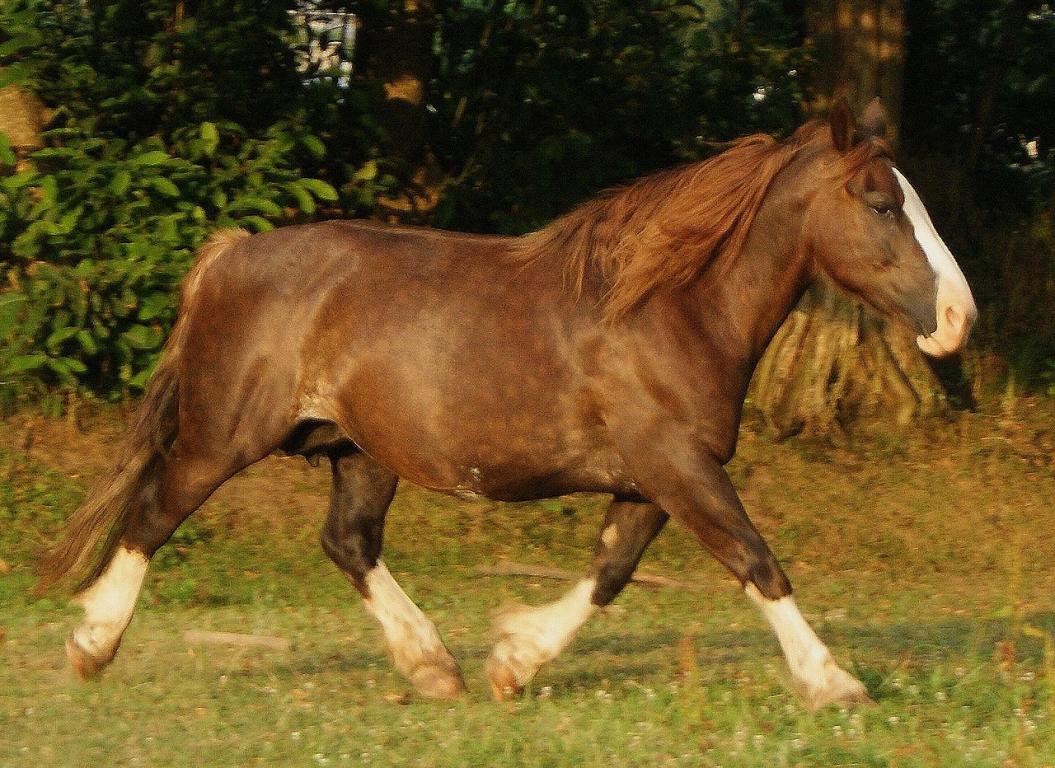
An active and balanced trot for a draft horse, with sufficient impulsion and limbs moving correctly in line.
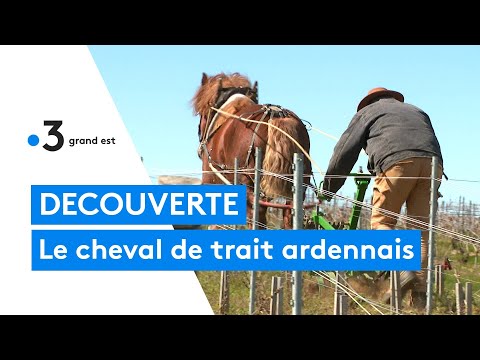
The Ardennes draft horse, long threatened with extinction, has been making a comeback in recent years thanks to the work of enthusiasts. (Re)Discover this breed. Leila Salhi - Paul-Antoine Boudet - Alexis Dumoulin - Aurore Scherschell - Laura Klein