Akhal-Teke

The Akhal-Teke, a 3,000-year-old breed from Turkmenistan, captivates with its unique golden coat and legendary endurance. Discover one of the oldest horse breeds in the world.

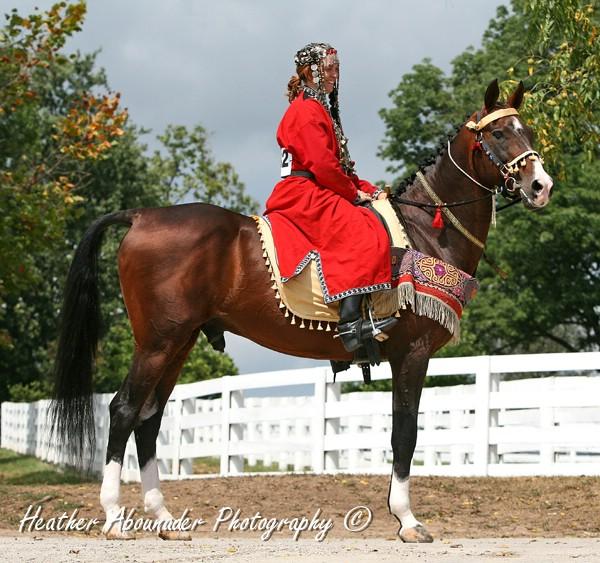
Akhal-Teke stallion presented in traditional costume. - CC BY 2.0 - Heather Moreton
Akhal-Teke stallion presented in traditional costume. CC BY 2.0 – Heather Moreton Source

General Characteristics

Region of Origin

Continent: Asia

Country: Turkmenistan

Measurements

Weight: 452 – 465 kg

Height: 155 – 163 cm

Coat Colors

  • Chestnut / Sorrel
  • Black
  • Bay
  • Dun / Yellow dun

Disciplines and Aptitudes

  • Dressage
  • Endurance Riding
  • Equestrian Show
  • Racing
  • Cavalry / Military
  • Eventing

Stud Book

Name: International Association of Akhal‑Teke Horse Breeding

Origin

A Horse Born in the Heart of the Turkmen Desert

Country of origin: Turkmenistan, with a historical presence in northern Iran, southern Kazakhstan, Russia and Uzbekistan.

The Akhal-Teke takes its name from two fundamental references: the Ahal valley, at the foot of the Kopet-Dag mountains, and the Teke tribe, one of the main ethnic components of the Turkmen people. This horse is today considered a national symbol of Turkmenistan — it appears at the center of the country's national emblem, represented by the stallion Ýanardag, crowned world champion of the breed in 1999.


One of the Oldest Riding Horses in the World

The oldest traces of horses similar to the Akhal-Teke date back to the 4th and 3rd centuries BC in Central Asia. Some researchers link them directly to the horses of the Scythians and Parthians, renowned for their fast and mobile cavalry. Greek, Roman, Chinese and Arab chronicles all mention these exceptional horses — the Chinese called them "heavenly horses" or "divine horses".


A Cultural Symbol Recognized by UNESCO

The Akhal-Teke holds a central place in Turkmen culture and identity. In 2023, UNESCO inscribed the art of Akhal-Teke horse breeding and the traditions of horse ornamentation on the Intangible Cultural Heritage of Humanity list. The breed is closely linked to wedding ceremonies, festive races and traditional Turkmen rituals.

Breeding Area

The Historical Heartland: the Ahal Region

The Akhal-Teke is traditionally bred in the Ahal region, in southern Turkmenistan, where extreme climatic conditions — intense heat, drought and arid terrain — shaped its legendary hardiness and endurance. Breeding there still relies on ancestral methods, combining life in the open desert with rigorous selection by Turkmen breeders.


A Still Limited International Presence

Today, breeding farms exist abroad, notably in Russia, Germany, Switzerland, the United States and France, often run by dedicated enthusiasts. Approximately 600 individuals are recorded across European territory — a figure that illustrates the rarity of the breed outside its homeland.


A Unique Traditional Diet

Turkmen breeding methods are inseparable from the breed's diet. Traditionally, the Akhal-Teke's ration consists of:

  • Dried alfalfa
  • Barley and grains in moderate quantities
  • Balls of mutton fat — a source of protein and energy in a resource-poor environment
  • Fried dough

This highly energetic, low-fiber diet is at the origin of the breed's characteristic leanness and its frugal metabolism, capable of covering great distances on very small rations. Animals were traditionally hand-fed by the owner's family — a direct bond that also explains the breed's strong attachment to humans.

Morphology and Physical Traits

Icon Neck
Neck
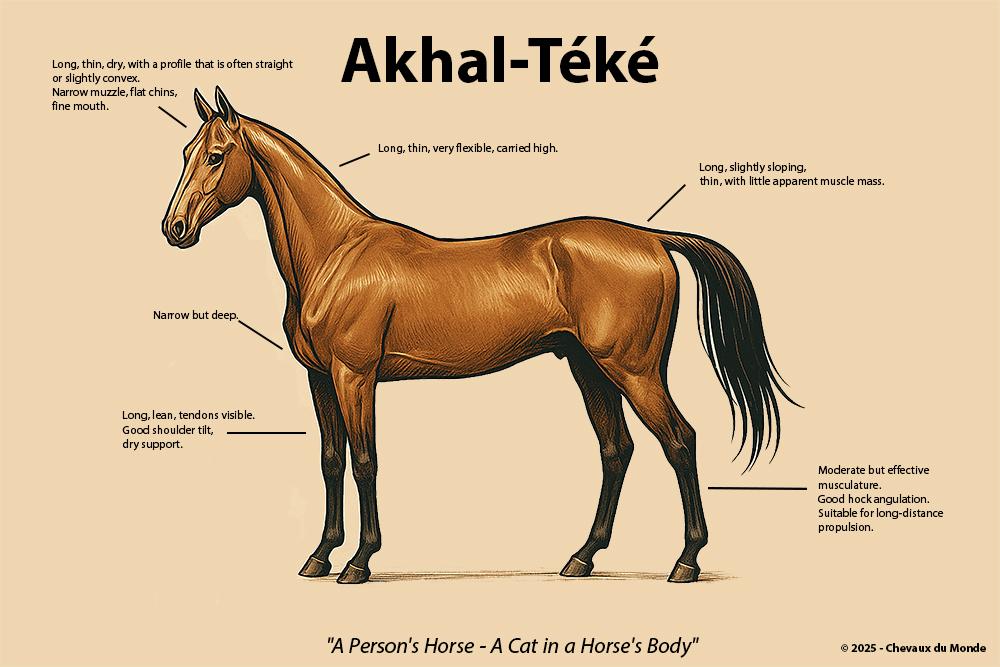
Long, thin, highly flexible, carried high. Often slightly arched and well set, with short hair and a sparse mane.
Icon Hooves
Hooves
Small, hard, well-shaped. Suited to dry, hard desert terrain; require little shoeing.
Icon Head
Head
Long, narrow, dry, often with a straight or slightly convex profile. Narrow muzzle, flat cheeks, fine mouth.
Icon Ears
Ears
Long, fine, mobile, often close at the base, enhancing the profile's elegance.
Icon Eyes
Eyes
Large, almond-shaped, expressive. Lively gaze, sometimes slightly slanted, giving an oriental look.
Icon Body
Body
Narrow, lean and dry. Thin skin, well-defined but not bulky muscles. Built for endurance.
Icon Chest
Chest
Narrow but deep. May appear underdeveloped compared to Western sport horses.
Icon Withers
Withers
High and pronounced, often prominent, which may complicate saddling.
Icon Back
Back
Long, straight to slightly hollow, dry, sometimes lacking in support.
Icon Loin
Loin
Long, supple, narrow. May lack strength for certain sports.
Icon Croup
Croup
Long, slightly sloped, fine, with little visible musculature.
Icon Tail
Tail
Low-set, thin, sparse like the mane. Matches the breed’s general elegance.
Icon Forelegs
Forelegs
Long, dry, with visible tendons. Good shoulder slope, clean stance.
Icon Hind legs
Hind legs
Moderate but efficient musculature. Good hock angulation. Suited for long-distance propulsion.
Icon Joints
Joints
Dry and well-defined. Flexible yet strong, better suited for endurance than high-impact work.
Icon Topline
Topline
Long and elegant, flowing without abrupt transitions. The whole gives an impression of fluidity.
Icon Underline
Underline
Tucked-up, clean, with no heaviness. The belly is not sagging.
Icon Bone structure
Bone structure
Fine yet dense. The bones are strong despite their finesse. This is not a heavy breed.
Icon General musculature
General musculature
Delicate, discreet but functional. The horse may appear lean, but it is dry and enduring.
Icon Overall silhouette
Overall silhouette
Very slender, “greyhound-like” profile, often compared to the Arabian but more rectilinear. Graceful and aerial, with a distinctive "gliding" gait.

Genetic Importance

A Founding Breed of World Equitation

The Akhal-Teke holds a major place in the genetic history of the horse, as one of the oldest known purebred breeds, with origins going back more than 3,000 years. Its remarkably preserved lineage has influenced many Oriental and European breeds.


Influence on the Thoroughbred

Professor Vitt, historian of the Thoroughbred breed, demonstrated that Byerley Turk — one of the three founding stallions of the Thoroughbred — was most likely an Akhal-Teke. The Turkmen horse thus directly contributed to the creation of the world's fastest breed.


Influence on the Arabian Horse

Turkmen stallions also played a role in the formation of the modern Arabian horse, notably through crossbreeding carried out during the Arab conquests of Central Asia in the 7th-9th centuries.


A Unique Genetic Variant

According to a genetic analysis of 5,427 subjects published in 2019, the Akhal-Teke displays great allelic diversity and carries a genetic variant called HMS2 N, which has never been detected in any other horse breed in the world.

History

Ancient Origins — Over 3,000 Years of History

The Akhal-Teke is considered one of the oldest horse breeds in the world, with origins going back more than 3,000 years in Central Asia. Bred by the nomadic tribes of Turkmenistan, particularly the Tekes, it descends directly from the ancient Turkmen horses used for warfare, racing and long-distance travel across the deserts.


A Horse Shaped by Natural and Human Selection

The harsh climatic conditions of the Karakum Desert caused severe natural selection of the most resistant individuals over millennia. Turkmens wrapped their horses in thick felt blankets year-round — a practice believed to have contributed to the fineness of the coat, the sparseness of the mane and the metallic sheen characteristic of the breed.


The Metallic Coat — A Unique Characteristic in the World


An Optical Phenomenon, Not a Pigmentation

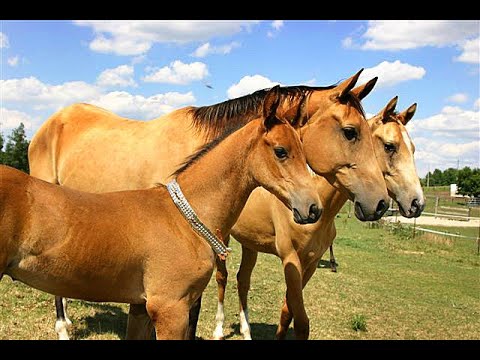
The metallic sheen of the Akhal-Teke's coat is its most famous and most photographed characteristic. This golden, silver or copper-toned reflection depending on the coat color is not due to a particular pigmentation, but to the microscopic structure of the hair itself.

Unlike other breeds, Akhal-Teke hairs have a very thin cortex with little or no opaque central core (reduced medulla). This structure acts as a natural prism that refracts and reflects light similarly to an optical fiber — creating this distinctive brilliant effect.


Not All Coat Colors Shine Equally

The metallic sheen is particularly visible on certain coat colors:

  • Buckskin / Palomino / Cremello — spectacular golden reflections, the most photographed
  • Chestnut — warm copper reflections
  • Gray — silver reflections
  • Bay and black — less visible but present sheen

Not All Akhal-Tekes Have the Metallic Coat

Contrary to popular belief, not all Akhal-Tekes display this metallic sheen. It is linked to specific bloodlines and particular breeding conditions. The most brilliantly coated individuals come from the purest Turkmen bloodlines.


The Golden Horse in Culture and Mythology

This luminous appearance has greatly contributed to the breed's mythical reputation throughout the ages. Some historians believe that the "heavenly horses" mentioned in Chinese chronicles of the Han Dynasty (2nd century BC) directly refer to the Akhal-Teke and its brilliant coat. The expression "golden horse" is still today synonymous with Akhal-Teke in many Central Asian cultures.


Near Extinction During the Soviet Era

During the Soviet era, the breed nearly disappeared twice:

  • In the 1930s, during the campaign against nomadism and the rise of motorization
  • In the 1950s, when Soviet authorities ordered the mass slaughter of Turkmen horses

The breed was saved thanks to a handful of passionate breeders. The stud-book was officially closed in 1932 to preserve the purity of the breed, then reorganized in 1981 with the creation of a separate stud-book for half-breeds.


An Endurance Record That Entered Legend

In 1935, Akhal-Tekes achieved a feat that remains in the annals of equestrian history: a journey of 4,152 km in 84 days, crossing the Karakum Desert — including a stretch of 360 km in three days without drinking. This performance illustrates better than anything the legendary endurance of the breed.

Behavior and Character

A Lively and Intelligent Temperament

The Akhal-Teke is renowned for its lively, intelligent and sensitive temperament, the heritage of centuries of breeding in arid and demanding conditions. Extremely receptive to its environment, it often develops a very strong bond with a single rider — it is frequently described as a "one-person horse", capable of building a deep but exclusive bond of trust.


A Loyalty That Cuts Both Ways

This loyalty can make it an exceptional partner, provided the relationship is built on respect and gentleness. Conversely, a rough or inconsistent approach can lead to mistrust and reactivity. Its intelligence allows it to learn quickly, but it can become independent, even stubborn, if it does not understand the purpose of an exercise or feels misunderstood.

This assertive temperament, sometimes described as "a cat in a horse's body", makes it unique, but requires a calm, patient and experienced rider.


A Horse That Dislikes Routine

The Akhal-Teke needs variety in its work and environments. Monotonous exercises can quickly demotivate it. It is highly responsive to aids, making it an ideal mount for experienced riders, but not recommended for beginners.


Daily Life

Naturally hardy, the Akhal-Teke prefers to live outdoors year-round, with daily visits and shelter from weather extremes. Its strong bond with its owner means it does not cope well with prolonged isolation.

Future Perspectives

Growing International Interest

The Akhal-Teke is attracting growing interest worldwide, particularly due to its unique aesthetic, its metallic coat sheen and its sporting abilities still largely unexplored outside its homeland. Breeding farms are developing in Europe, North America and Russia, driven by enthusiasts seeking to preserve the purity of its bloodlines.


Major Challenges for the Breed's Survival

Several threats weigh on the breed's future:

  • Low global population — approximately 6,600 individuals recorded
  • Inbreeding due to a limited gene pool
  • Genetic isolation between Turkmen and Western populations
  • Under-reporting to the stud-book — as not all breeders register their horses, the real figure is likely underestimated

The Key Role of the Turkmen Government

Breeding, increasing population numbers and international recognition of the breed are stated priorities of the Turkmen government. The development of international partnerships and awareness of its heritage value are the essential levers for its long-term preservation.

Health

Hardiness Forged by the Desert

In terms of health, the Akhal-Teke is generally considered a robust and resilient horse, capable of withstanding extreme climatic conditions — intense heat, drought, wide temperature variations. This resistance is the direct result of its historical selection in the deserts of Central Asia.


Life expectancy: 20 to 25 years.


Specific Vulnerabilities to Be Aware Of


Inbreeding Risks

Due to a limited gene pool (~6,600 individuals worldwide), cases of inbreeding have been observed, increasing the risk of hereditary disorders and loss of genetic diversity.


Thin Skin and Cutaneous Sensitivity

Some individuals have very thin and sensitive skin, with a tendency toward skin irritations and difficulties healing. This characteristic requires particular attention to equipment — saddles, blankets and halters.


Stress Sensitivity

The Akhal-Teke has a particular sensitivity to stress, which can result in rapid weight loss or digestive disorders if the environment is not suited to its temperament. A stable environment and regular interactions with its owner are essential to its well-being.


Congenital Ataxia

A rare form of congenital ataxia (neurological instability) has been documented in certain bloodlines. Although this remains exceptional, it is recommended to check the genetic background before any purchase.


Diet and Health

Diet plays a central role in the Akhal-Teke's health. Its lean physique and frugal metabolism mean it does not need large quantities of food — but food quality is paramount. An excess of carbohydrates or grains can trigger metabolic imbalances. Experienced breeders recommend a diet based on quality hay, moderate amounts of barley and regular veterinary monitoring tailored to its atypical morphology.

Gaits and Dressage Figures

FLOATING GAIT

The Akhal‑Teke displays unique, supple, elastic, and silent gaits, shaped by its selection in Turkmenistan’s arid plains. Its walk is long and steady, the trot smooth with natural elevation, and the canter – often described as “flowing” – appears like a glide. This fluidity gives the impression it touches the ground without sound. While its gaits may not seem spectacular, they are energy-efficient, making it an exceptional endurance horse.

Famous Horses

Absinthe (often called "Absent")

Born on 01/01/1952

- Individual gold medal in dressage at the 1960 Rome Olympics; diplomas in Tokyo 1964 and Mexico 1968

- Influential sire after his sport career, father of over 60 foals, several successful in dressage

- Still honored as one of the USSR’s most famous horses, with a statue in his name

Ýanardag

Born on 01/01/1991

- World Champion of the breed in 1999, depicted on the national emblem, stamps, and other Turkmen symbols

Gend Jim

Born on 01/01/1987

-Stallion born in 1987, gifted by President Niyazov to French President François Mitterrand in 1993

Illustration | Breed Standard

Akhal-Teke - Morphology - Standard of the breed

Related Videos

THE AKHAL-TEKE • A HORSE OF HISTORY

THE AKHAL-TEKE • A HORSE OF HISTORY

Join us for the fascinating history and heritage of an endangered breed, the Akhal-Teke from Turkmenistan. An athletic and versatile breed as you will see, the horse is also known for the metallic sheen to it's coat, and you'll discover how that was developed by early breeders and owners.

Sources

Breeds to Discover