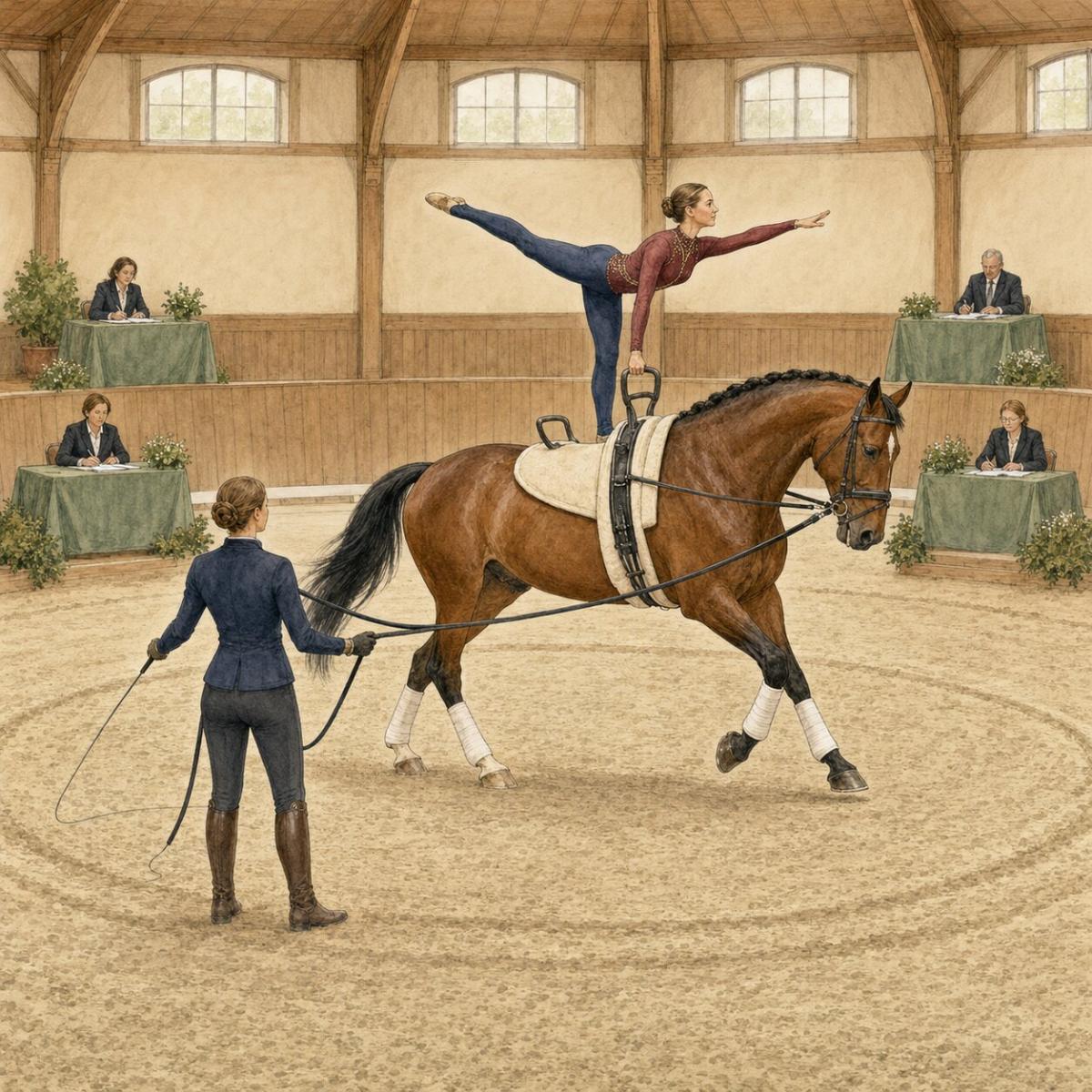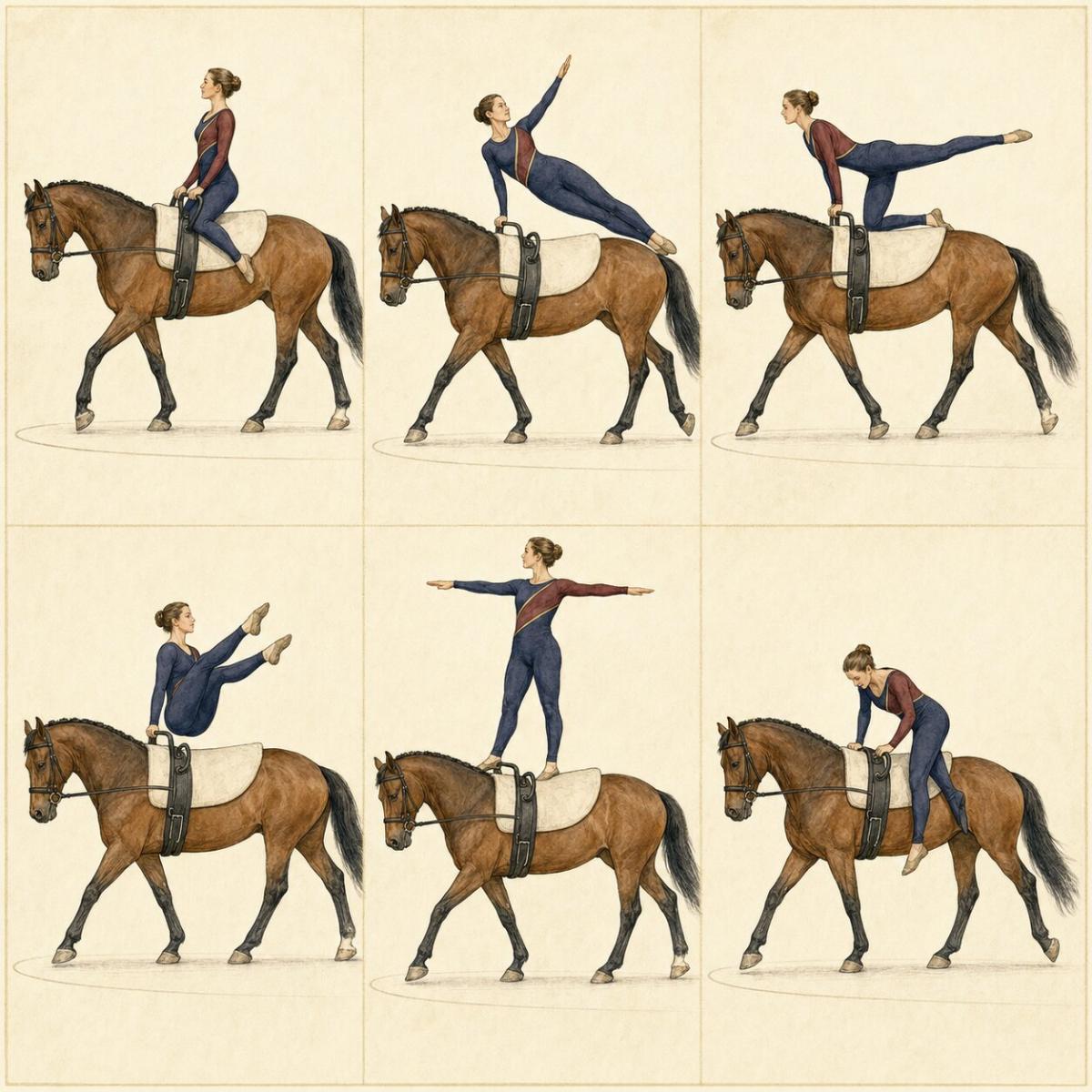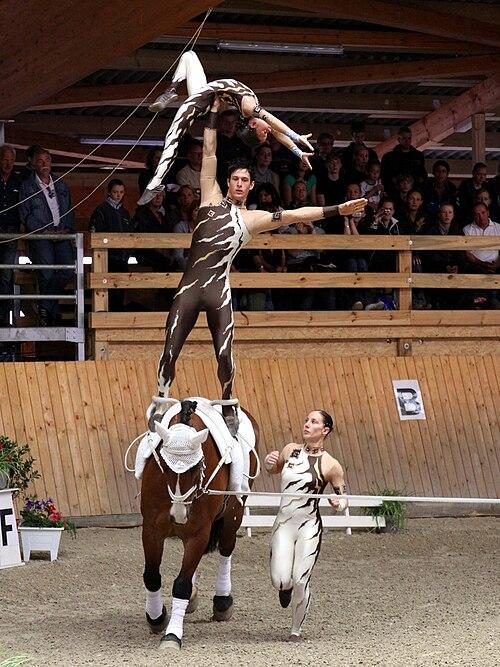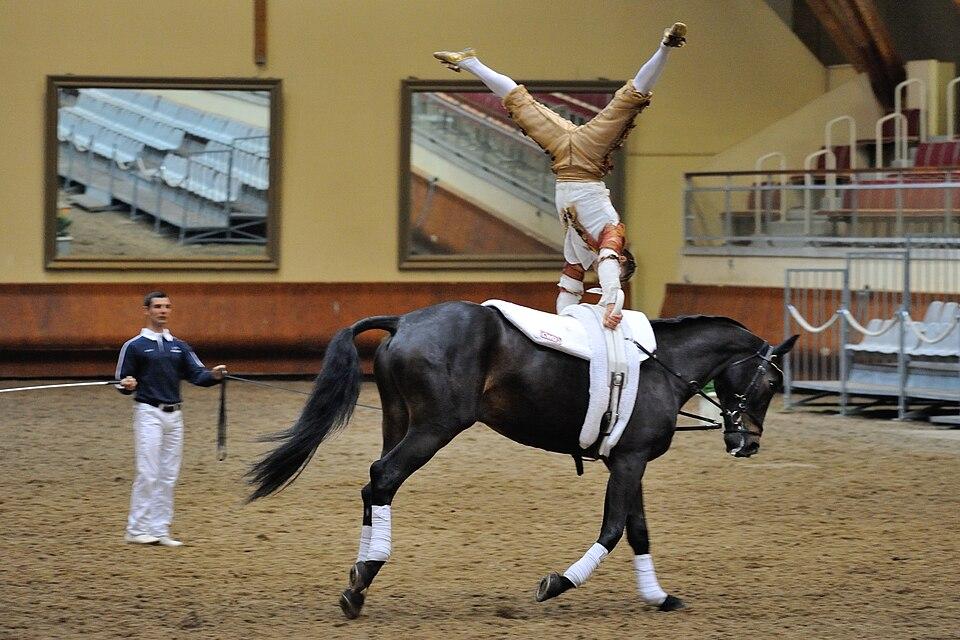
Equestrian Vaulting and Cossack Trick Riding: What Are the Differences?
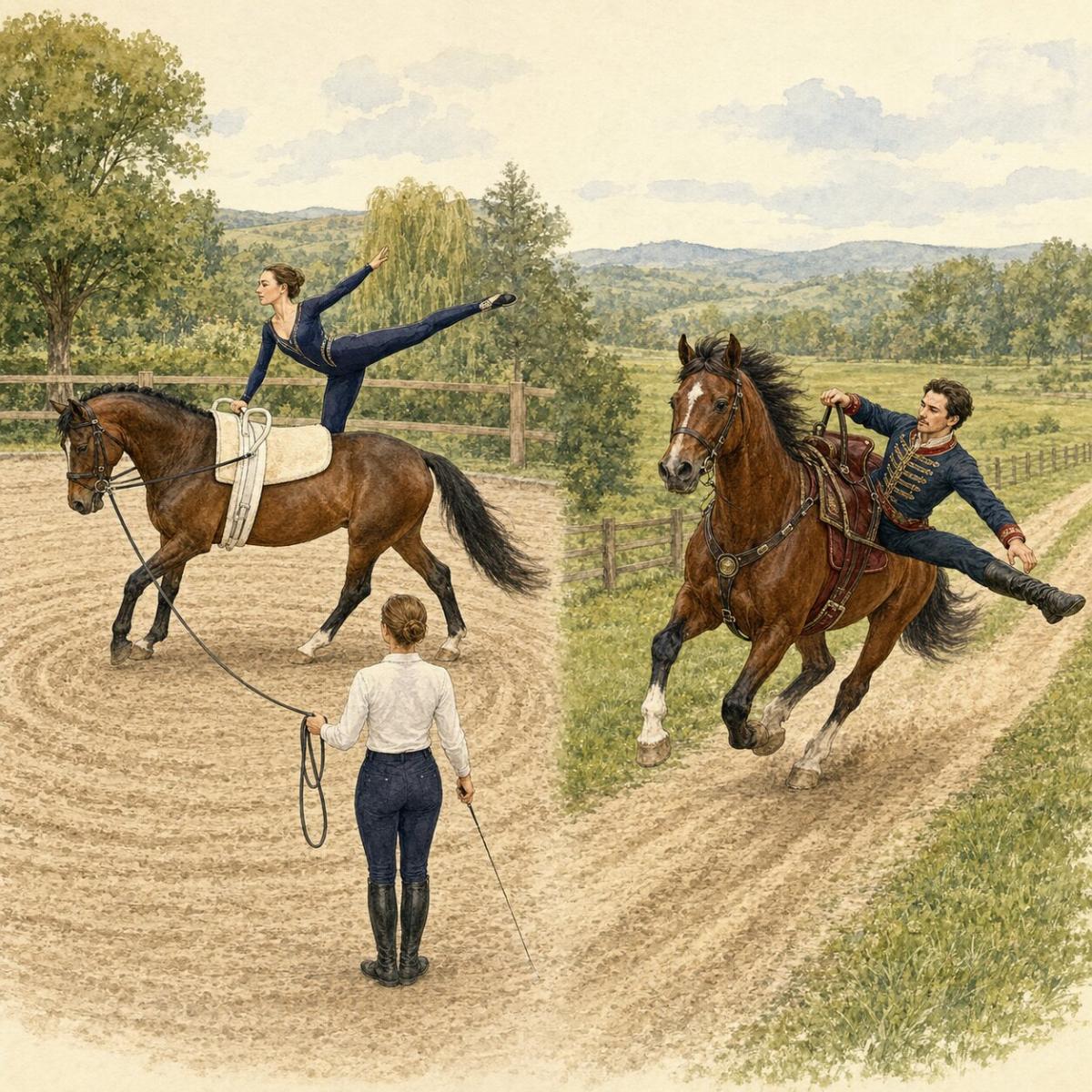
Discover the differences between equestrian vaulting and Cossack trick riding, including speed, trajectory, equipment, exercises and origins.
Read articleEquine encyclopedia
Discover the main vaulting horse breeds, valued for their calm temperament, balance, regular gaits, and ability to work harmoniously with vaulters. Compare their origins, conformation, and abilities, from beginner sessions to competition.
A selection of breeds with illustrated and detailed profiles.
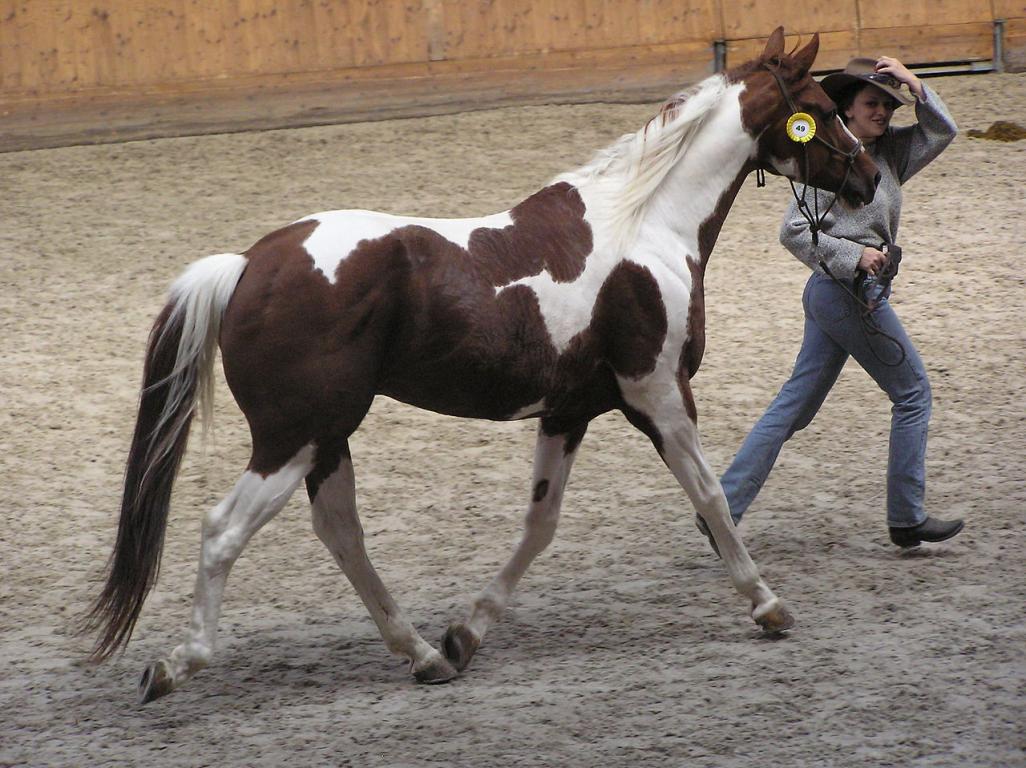
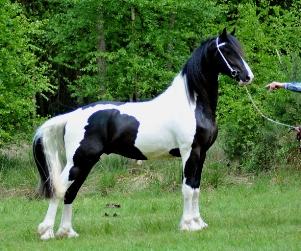
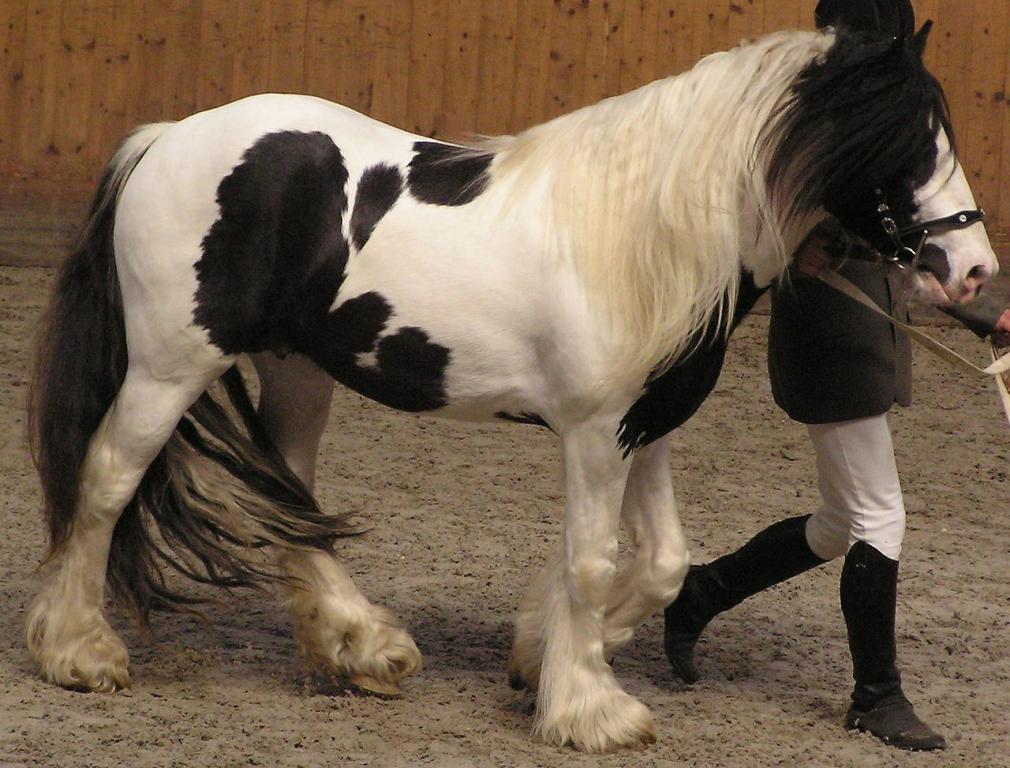
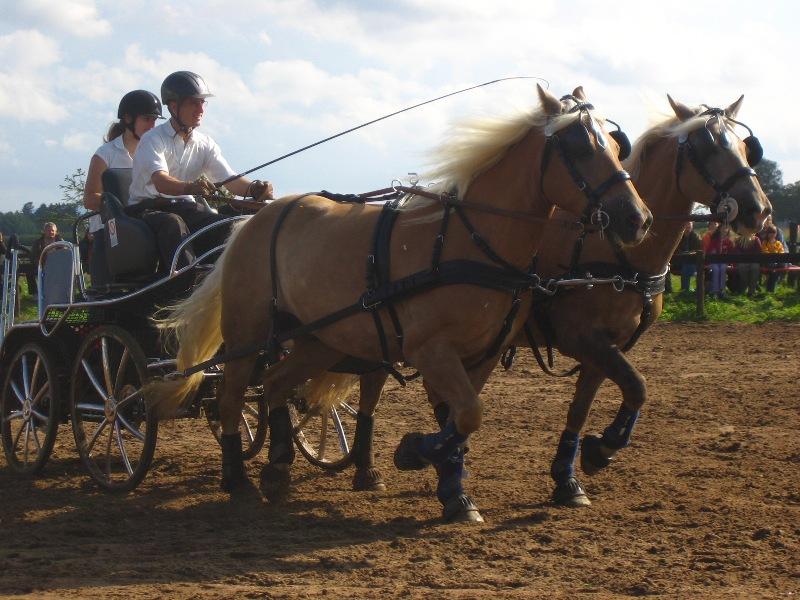
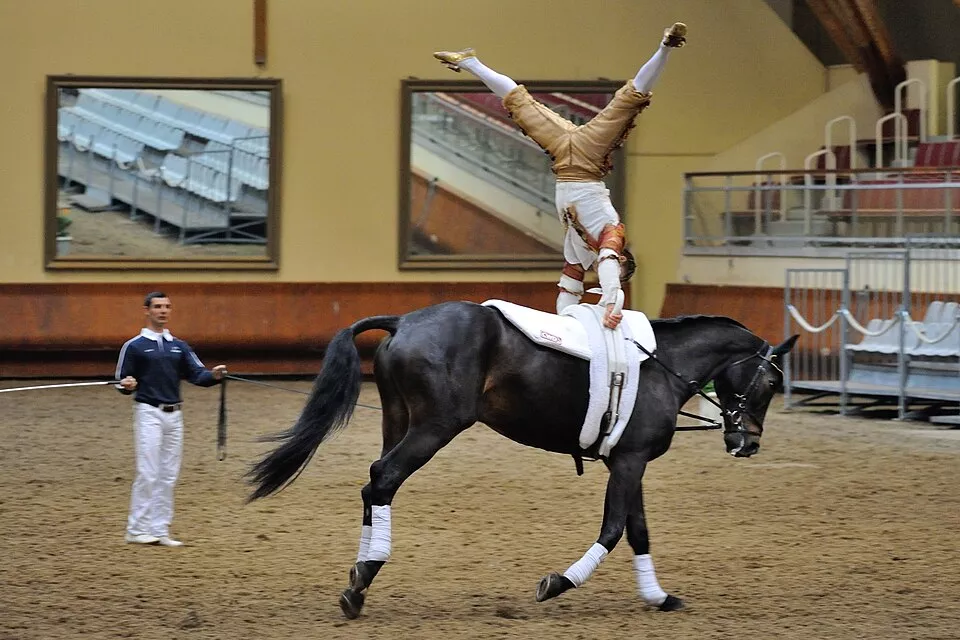
Vaulting horses are valued for their calm temperament, regularity, balance, and ability to maintain a steady gait on a circle. They must remain attentive to the lunger while accepting the movements and exercises performed on their back.
In vaulting, power or expressive gaits alone are not enough. The horse should provide predictable movement, a sufficiently broad and stable back, and a reliable temperament. These qualities directly support the vaulters’ safety and the fluidity of their routines.
Depending on the level of practice, riding horses, sport horses, ponies, and some sturdier breeds may be suitable. The choice depends less on breed alone than on training, physical condition, temperament, and the horse’s experience on the lunge.
7 results

Explore the subject through a selection of articles about equestrian vaulting.