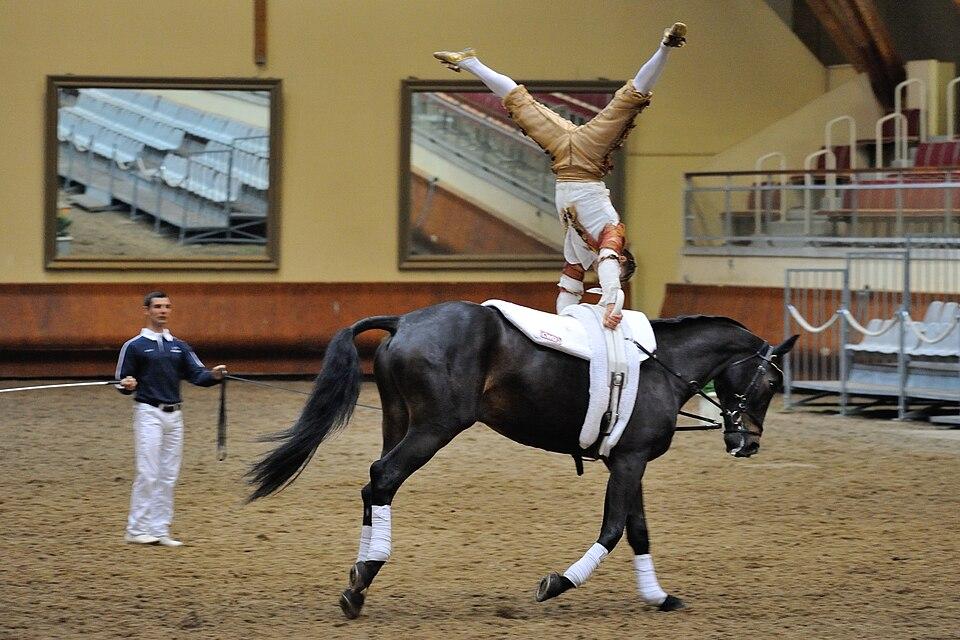
Equestrian vaulting is a discipline in which one or more vaulters perform gymnastic and acrobatic exercises on a moving horse. The horse usually moves at walk or canter on a circle while being guided by a lunger. Vaulting therefore relies on close cooperation between the horse, the vaulter and the lunger.
Combining equestrian sport, gymnastics and artistic expression, vaulting develops balance, coordination, flexibility and physical strength. It can be practised as an introduction to horses, a recreational activity or a competitive discipline.
What Is Equestrian Vaulting?
Equestrian vaulting, also known as vaulting on horseback, involves performing movements and choreographed routines on a horse controlled on a lunge line. The horse travels around the lunger on a circle while maintaining a regular and controlled gait.
The vaulter can adopt several positions, including sitting, kneeling, standing or supporting their body on the handles of the vaulting surcingle. Some exercises are static, whereas others involve mounts, dismounts, transitions or dynamic movements.
According to the French Equestrian Federation, vaulting can be performed at walk or canter and places particular demands on the vaulter’s balance and physical abilities. Beginners usually start with simple exercises before progressing towards more complex movements and competitive routines.
How Does Vaulting Differ from Traditional Riding?
In vaulting, the athlete does not directly control the horse with reins. This responsibility belongs to the lunger, who stands at the centre of the circle. The vaulter can therefore concentrate on balance, posture and the execution of each movement.
Vaulting can help develop:
- balance on a moving surface;
- coordination between different parts of the body;
- flexibility and muscular strength;
- an understanding of the horse’s rhythm;
- confidence in the horse and the team.
However, vaulting is not simply gymnastics performed on a horse. The quality of a performance also depends on the horse’s rhythm, balance and behaviour, as well as the harmony between everyone involved.
The Three Main Partners in Equestrian Vaulting
A vaulting session or performance depends on three closely connected partners: the horse, the lunger and the vaulter. Each one has a specific role.
The Vaulting Horse
The vaulting horse is the central partner in the discipline. It must be sufficiently calm, balanced and experienced to maintain a regular gait while the vaulters move on its back.
A suitable vaulting horse is generally valued for:
- a calm and cooperative temperament;
- regular and comfortable gaits;
- the ability to work confidently on a lunge line;
- tolerance of movement on and around its back;
- suitable physical condition and balance on a circle.
Breed or height alone does not determine whether a horse is suitable for vaulting. Temperament, conformation, training and experience are equally important. Ponies may also be used for introductory sessions and appropriate competition classes.
The horse is not merely a moving platform. Its comfort, movement and willingness directly influence the safety and quality of the performance.
The Lunger
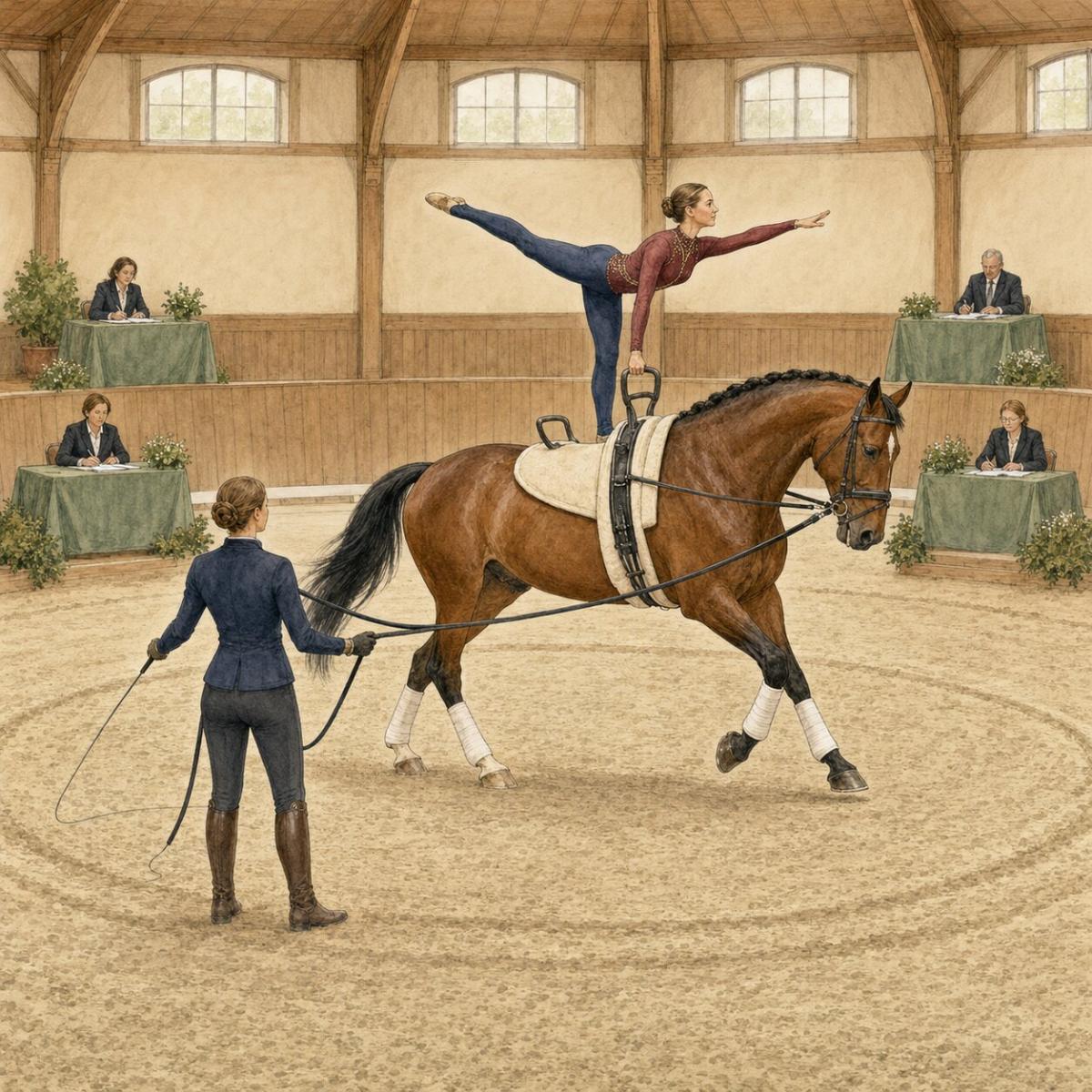
The lunger stands at the centre of the circle and guides the horse using a lunge line. Voice commands and, when appropriate, a lunge whip may also be used to communicate with the horse from a distance.
The lunger’s responsibilities include:
- maintaining a regular gait and rhythm;
- controlling the size and shape of the circle;
- monitoring the horse’s movement and behaviour;
- anticipating potential difficulties;
- helping to protect the vaulters;
- adapting the work to the horse’s physical and mental condition.
A sudden change in speed or direction can affect the vaulter’s balance. The lunger must therefore know the horse well and understand the routine being performed.
The Vaulter
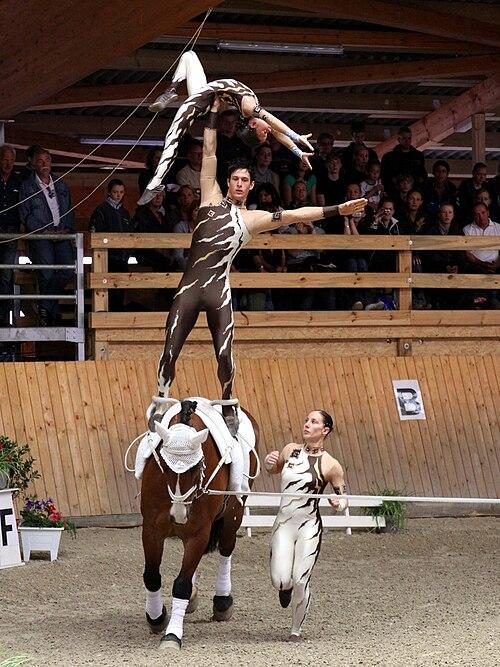
The vaulter performs exercises on the horse. Depending on the class and level, vaulters can compete individually, in a pas-de-deux or as part of a squad.
Training usually begins with simple exercises intended to develop confidence, balance and stability. More experienced vaulters progress to movements requiring greater strength, accuracy, flexibility and coordination.
In competition, successfully completing a difficult movement is not enough. The vaulter must also demonstrate control, fluidity and harmony with the horse’s movement.
What Equipment Is Used for Equestrian Vaulting?
A vaulting horse does not normally wear a conventional riding saddle. Instead, specialised equipment provides the vaulter with secure handholds and an appropriate surface on which to perform.
The Vaulting Surcingle
The vaulting surcingle is secured around the horse’s body. It is fitted with rigid handles that the vaulter can hold during mounts, transitions and exercises.
Depending on the equipment and applicable rules, the surcingle may include additional forms of support. It must be fitted correctly to remain stable without causing discomfort or excessive pressure.
The Vaulting Pad
A wide vaulting pad is placed beneath the surcingle. It provides a suitable surface for the vaulter’s movements and helps protect the horse’s back.
The equipment must be carefully positioned and checked before every session. Incorrectly fitted equipment can create pressure points or restrict the horse’s movement.
The Lunge Line and the Lunger’s Equipment
The lunge line allows the lunger to communicate with and guide the horse from the centre of the circle. A lunge whip may also be used as an aid, but it should never replace appropriate training and clear communication.
The exact equipment permitted can vary according to the competition level, class and relevant national or international rules.
How Does an Equestrian Vaulting Session Work?
The structure of a vaulting session depends on the athletes’ experience, the horse’s training and the objectives of the lesson. Training should always be progressive and properly supervised.
Physical Preparation and Warm-Up
A session generally begins with a warm-up for both the horse and the vaulters. The horse may first be worked on the lunge so that its movement, responsiveness and condition can be assessed.
Meanwhile, the vaulters prepare with mobility, flexibility and strength exercises. Warming up helps prepare the body for the physical demands of vaulting and reduces the risk of injury.
Ground Training and Practice on a Vaulting Barrel
Before attempting a new exercise on the horse, vaulters can practise it on the ground or on a vaulting barrel. This piece of training equipment imitates the approximate shape of a horse’s back and is generally fitted with handles similar to those of a surcingle.
A vaulting barrel allows athletes to repeat positions and transitions without placing unnecessary strain on the horse. It helps them understand the movement, improve their posture and develop sufficient control before progressing to a moving horse.
The International Equestrian Federation describes this progression as an important part of vaulting training. Exercises can first be developed on the ground, then practised on a barrel and finally transferred gradually to the horse.
First Exercises at Walk
Beginners usually start at walk, which makes it easier to become familiar with the horse’s movement. They learn how to mount, sit correctly, release the handles and change position progressively.
Early sessions mainly develop:
- confidence;
- relaxation;
- balance;
- mobility;
- awareness of the horse’s rhythm.
The difficulty of the exercises should increase gradually according to the ability of both the vaulter and the horse.
Progressing to Canter
At a more advanced level, exercises can be performed at canter. The vaulter must then adapt to a larger and more powerful movement while maintaining precision, balance and control.
Progressing to canter requires sound technical preparation and a suitably trained horse. Complex movements should first be practised away from the horse so that mistakes and unnecessary strain on its back are minimised.
Cooling Down After the Session
A vaulting session should finish with a gradual return to a calmer level of activity. The horse must be allowed to recover before the equipment is removed and its general condition is checked.
This is also an opportunity to look for unusual heat, sensitivity, discomfort or reactions around the areas where the pad and surcingle were positioned.
What Exercises Are Performed in Equestrian Vaulting?
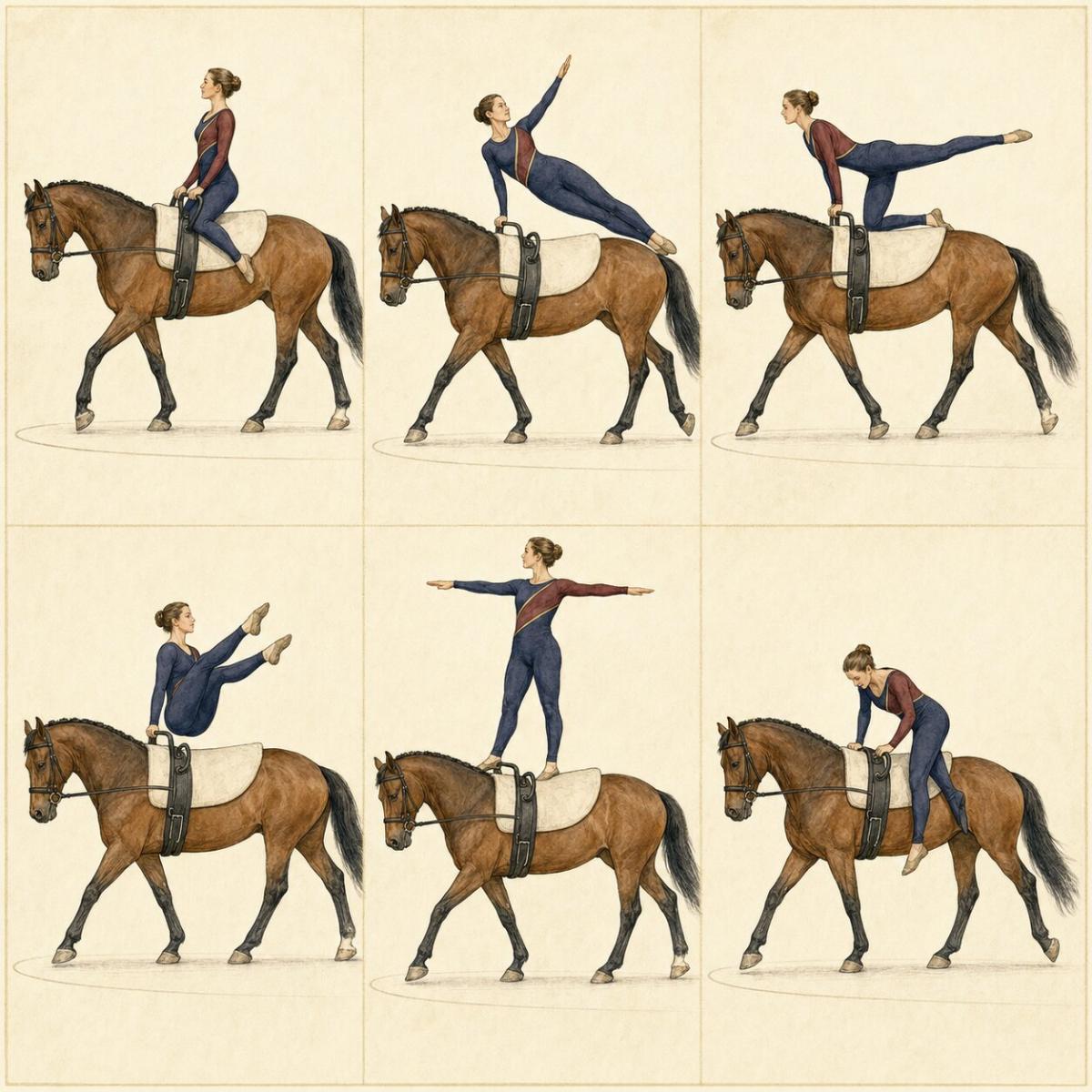
Vaulting includes both static and dynamic exercises. Their difficulty depends on the number of contact points, body position, range of movement and number of vaulters working on the horse.
Well-known vaulting exercises include:
- the basic seat;
- the flag;
- the mill;
- the scissors;
- the stand;
- mounts and dismounts.
Some exercises form the technical foundations of the discipline. They can be used to assess posture, balance, flexibility and the vaulter’s ability to move in harmony with the horse’s stride.
Advanced exercises should never be attempted without proper preparation and supervision. Their introduction must consider the vaulter’s experience and the horse’s welfare.
Equestrian Vaulting Competitions
Vaulting can be enjoyed recreationally, but it is also an organised competitive discipline. Classes may be held for individual vaulters, pas-de-deux pairs and squads.
Compulsory Exercises
Compulsory exercises are defined by the rules of the relevant class. They allow judges to compare athletes completing the same movements.
Judges assess elements such as body position, technical control and the vaulter’s ability to remain balanced with the horse’s movement.
The Freestyle Test
The freestyle test is a choreographed routine generally performed to music. It combines technical difficulty, execution and artistic composition.
The selected movements should form a coherent routine suited to the abilities of the vaulters and the horse. Transitions, musical interpretation and the overall harmony of the performance can all contribute to the final score.
The Technical Test
At certain levels of individual competition, vaulters may also perform a technical test. This combines specified technical elements with an individually designed routine.
Competition formats and judging criteria vary according to the category and applicable rules. They can also be revised between sporting seasons.
How Is the Horse Assessed?
The horse’s performance forms an important part of the evaluation. Judges consider aspects such as the quality and regularity of the canter, balance and the horse’s behaviour throughout the test.
A highly difficult routine therefore cannot fully compensate for a performance in which the horse is irregular, tense or struggling to maintain its balance.
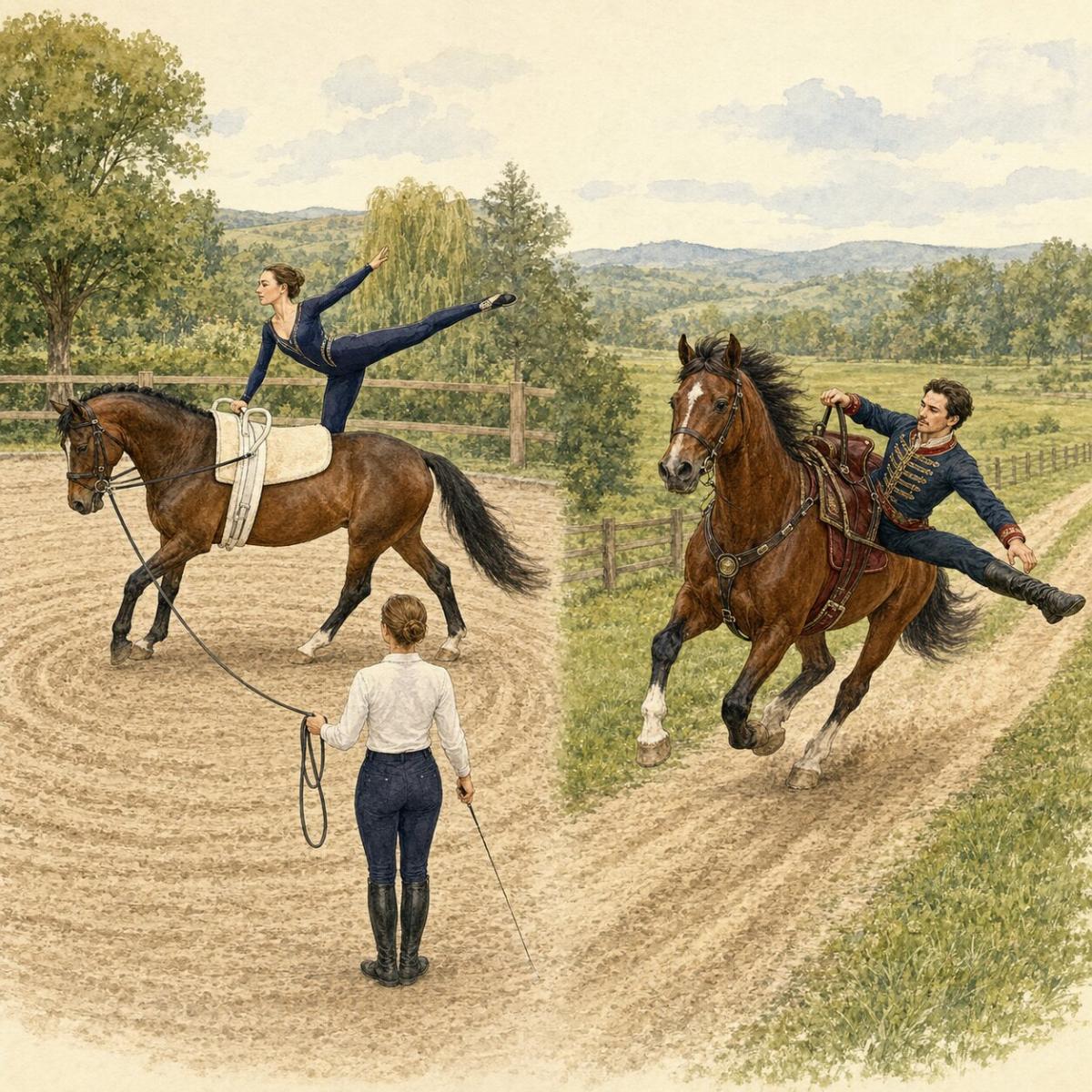
Equestrian Vaulting and Cossack Vaulting: What Is the Difference?
Equestrian vaulting should not be confused with Cossack vaulting or trick riding.
In equestrian vaulting, the horse is controlled on a lunge line and travels on a circle at a regulated gait. The exercises are performed within a gymnastic, artistic or competitive framework.
Cossack vaulting is generally performed on a horse travelling rapidly along a straight line. It includes spectacular movements carried out above, beside or beneath the rider’s normal position and has strong connections with military horsemanship and equestrian traditions.
Both practices involve acrobatic movements on horseback, but their format, speed, equipment and purpose are different.
Horse Welfare in Vaulting
Vaulting must respect the horse’s physical and mental abilities. The animal requires suitable preparation for lunge work and for the movements performed on its back.
Important considerations include:
- the fit of the surcingle and vaulting pad;
- the quality and condition of the surface;
- the duration of work on the circle;
- the horse’s muscular preparation;
- the weight and number of vaulters;
- the difficulty of the movements;
- recovery after training.
Repeated work on a circular track can be physically demanding. Exercises should therefore be varied, performed in both directions and included within a balanced training programme.
The horse should remain willing, regular and free from evident signs of discomfort. Competitive performance must never take priority over its health and welfare.
Why Practise Equestrian Vaulting?
Vaulting develops abilities that can also benefit riders in other equestrian disciplines. In particular, it improves body awareness and the ability to follow the movement of a horse.
For beginners, it can offer an introduction to horses based on balance, confidence and controlled movement. For experienced athletes, it becomes a physically demanding discipline combining fitness, equestrian skill and artistic expression.
Vaulting also encourages teamwork. Even an individual performance depends on cooperation between the vaulter, the lunger and the horse.
Frequently Asked Questions About Equestrian Vaulting
Do You Need Riding Experience to Start Vaulting?
Previous experience in traditional riding is not always required. Introductory sessions can be adapted to complete beginners when led by a qualified instructor.
Is Equestrian Vaulting Dangerous?
Like any activity involving horses and gymnastic movements, vaulting carries risks. Progressive training, correctly fitted equipment, an experienced horse and qualified supervision can help reduce them.
Can Vaulting Be Performed on a Pony?
Yes. Suitable ponies can be used for introductory sessions and certain classes. Their suitability depends on their height, conformation, temperament, training and the size of the vaulters.
Is Vaulting Performed at Walk or Canter?
Vaulting can be performed at walk or canter, depending on the participants’ level and the class concerned. Walk is particularly suitable for introductory training, while advanced competition places greater emphasis on canter work.
What Is the Difference Between a Vaulter and a Lunger?
The vaulter performs the exercises on the horse. The lunger stands at the centre of the circle and controls the horse’s gait, rhythm and direction.
Is Equestrian Vaulting an Individual or Team Sport?
It can be both. Depending on the competition format, vaulters may perform individually, as a pas-de-deux or as part of a squad.
Vaulting as a Combination of Sport, Art and Horsemanship
Equestrian vaulting combines the athletic abilities of the vaulter, the skills of the lunger and the qualities of the horse. Its training follows a progressive process, beginning with ground preparation and barrel practice before exercises are introduced at walk and, when appropriate, at canter.
Whether practised recreationally or competitively, vaulting develops balance, coordination and confidence. Above all, a successful performance depends not only on the difficulty of its movements but also on the harmony between the horse, the vaulter and the lunger.