Discover the Falabella, Argentina’s miniature horse: history, conformation, coat colors, temperament, uses, breeding and conservation.
By the Chevaux du Monde editorial team · Published on · Updated on
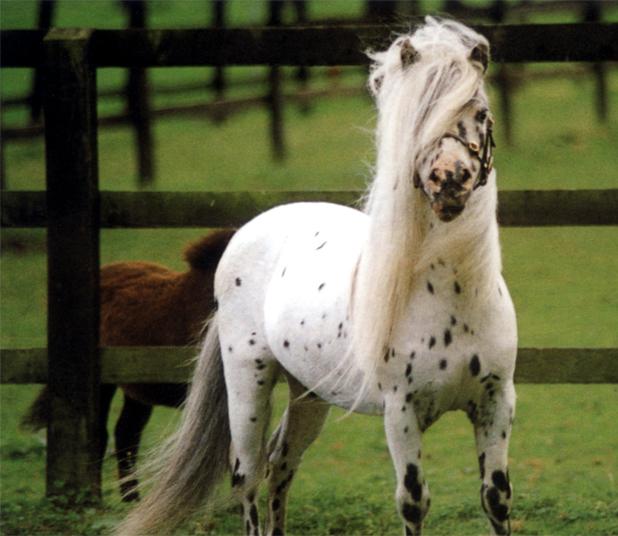
Type: Miniature Horse
Continent: South America
Country: Argentina
Weight: 45 – 80 kg
Height: 70 – 86 cm
The Falabella is a miniature horse breed originating in Argentina. Its development is associated with the Falabella family and their breeding establishment in Buenos Aires Province.
The breed descends from small equines selected over several generations. Historical accounts mention local horses of Criollo ancestry as well as the introduction of various small breeding animals. However, details concerning the earliest crosses vary between sources and should be treated with caution.
Despite its very small size, the Falabella has traditionally been bred to retain the general proportions of a horse rather than the stockier conformation of certain pony breeds.
The historical birthplace of the Falabella is Argentina, where the Falabella family conducted its breeding program and organized the recording of its bloodlines.
During the twentieth century, horses were exported to North America and Europe. Falabella breeding populations are now found in the United States, Canada, the United Kingdom and several European countries.
Its international distribution does not mean that every miniature horse is a Falabella. Membership of the breed depends on documented ancestry tracing back to recognized Argentine bloodlines. Specialized registries verify pedigrees and may require DNA parentage testing.


The Falabella represents a heritage population produced through long-term selection for small stature. Its conservation depends on pedigree traceability and the preservation of authenticated bloodlines.
Genomic research into miniature size in horses indicates that small stature is a complex trait to which several genomic regions may contribute. These findings should not, however, be interpreted as describing a mechanism exclusive to the Falabella.
A relatively small international population requires careful management of breeding combinations. The pursuit of increasingly small size should not take priority over health, fertility, correct limb conformation and genetic diversity.
DNA parentage testing helps secure the accuracy of pedigrees, but it does not replace a breeding strategy designed to limit inbreeding.
The history of the Falabella is closely associated with a family of breeders established in Argentina. Starting with small horses found in the region, several generations of the Falabella family pursued a breeding program intended to establish reduced stature while retaining harmonious conformation.
Historical genealogies report several influences, including local horses of Criollo type and small breeding animals from other populations. Part of this account is derived from breeding tradition, however, and is not always supported by independent historical records.
During the twentieth century, Julio César Falabella helped formalize the breeding program, record pedigrees and introduce these horses outside Argentina. The Asociación de Criadores de Caballos Falabella subsequently maintained records for bloodlines originating from the Argentine breeding establishment.
Falabella horses were exported to the United States and other countries from the mid-twentieth century onward. Established in 1973, the Falabella Miniature Horse Association maintains an international registry and requires documented ancestry for the registration of purebred horses.
The Falabella is commonly kept as a companion, show or light-driving horse. Its small size can make certain handling tasks easier, but it does not remove the need for proper equine training.
Progressive training can prepare it for in-hand courses, performances or supervised equine-assisted activities. Like other horses, it requires social contact with other equines, regular exercise and an environment suited to its behavioral needs.
Temperament varies according to the individual, bloodlines, selection, living conditions and quality of training. The experience of the handler also influences behavior. Its small size should therefore not lead handlers to tolerate behavior that would be corrected in a larger horse.
The future of the Falabella depends on cooperation between registries, pedigree verification and the preservation of sufficient genetic diversity within a population distributed across several countries.
Breeding programs should favor healthy, functional and correctly conformed horses rather than pursuing records for extreme smallness. Promotion through light driving, showing, equine-assisted activities or companionship may support the breed when these activities respect its size and physical capabilities.
Available scientific evidence does not establish a hereditary disease exclusive to the Falabella with a precisely documented prevalence. However, it shares certain health considerations with other miniature horses.
The small size of the head may leave insufficient room for the teeth in some individuals, making regular dental examinations important. Body condition should also be monitored because a diet exceeding the horse’s energy requirements can quickly result in excess weight.
The hooves require regular trimming despite their small size. Horses displaying deformities, pathological dwarfism or functional disorders should be excluded from breeding programs. Feeding, vaccinations, parasite management and veterinary care must be tailored to each individual.
The Falabella is too small to carry a rider under conditions compatible with its welfare. Physical activities should focus on in-hand work and driving with correctly fitted equipment.
Born in 1937
Founding stallion of the Falabella breed, born in 1937. He lived for 42 years and appears in the majority of purebred pedigrees. He became an international symbol of the Argentine miniature horse and played a major role in establishing the breed’s current morphological standards.
![[ANIMALS] Falabella, a miniature horse #CCVB](https://img.youtube.com/vi/doArxOXFv5w/hqdefault.jpg)
Today, Audrey introduces you to the Falabellas! A miniature horse, the Falabella generally measures around 70 cm, but be careful, it retains all the characteristics of a real horse, far from the image of a stuffed animal that it can give off! It owes its name to the Falabella family who have run the main breeding operation since the end of the 19th century, and have made it known in many countries.