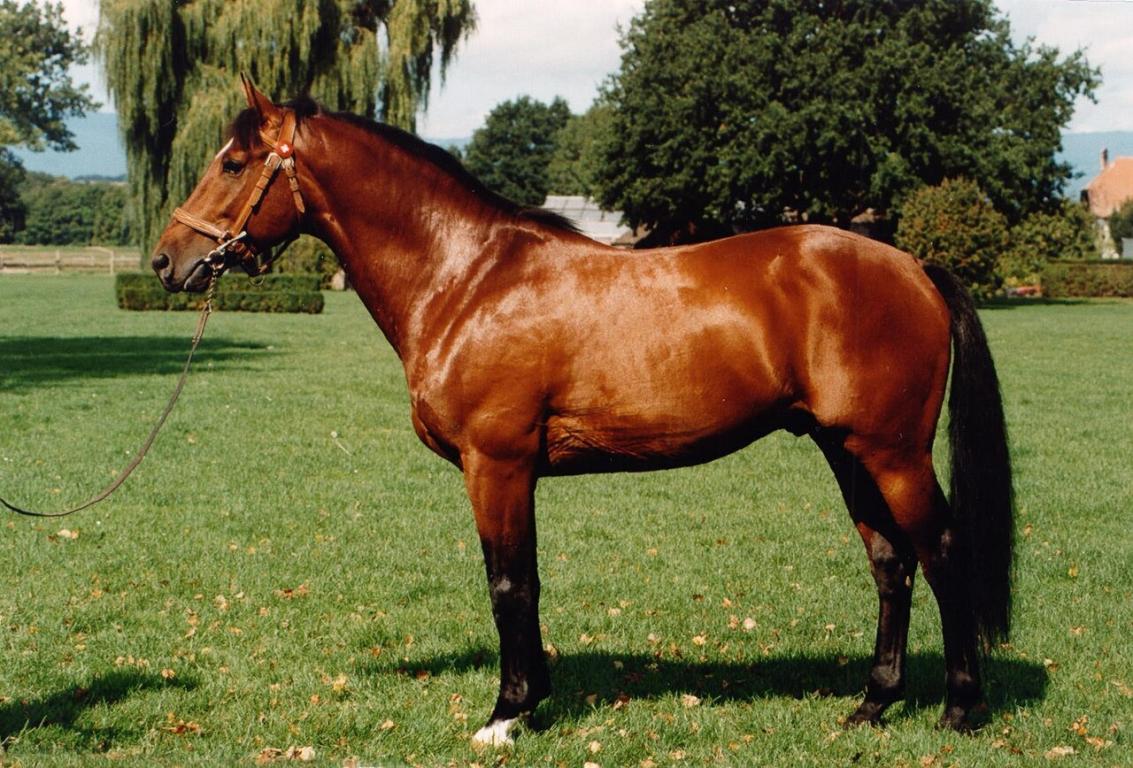
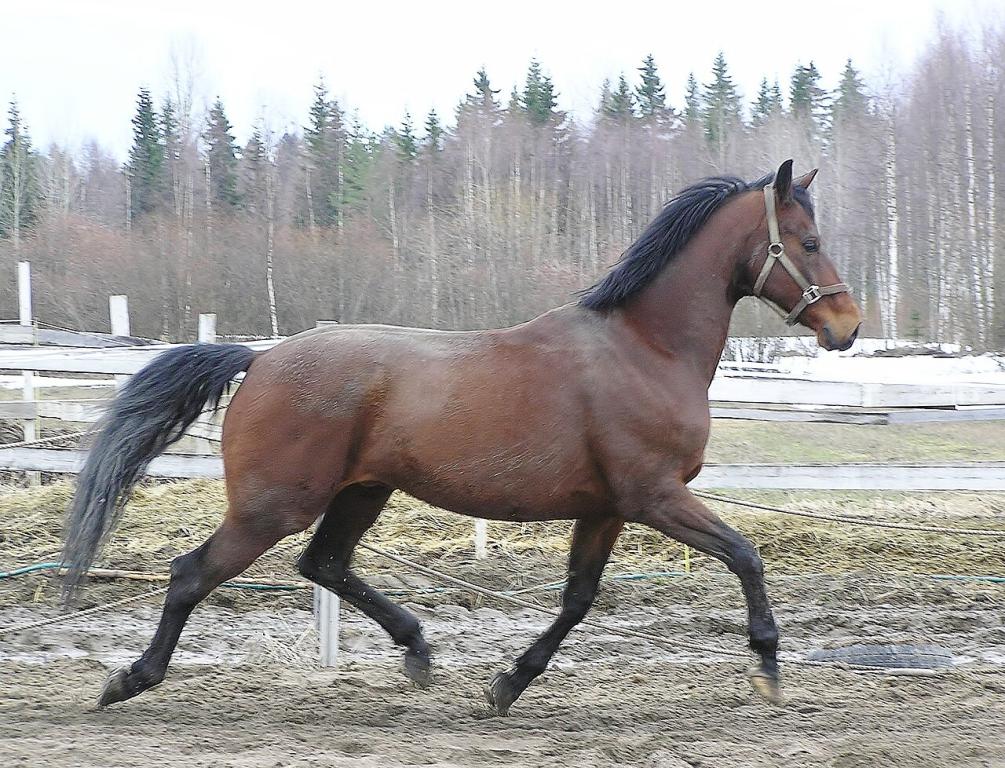
Discover the AQPS, also known as the French Chaser, a French horse selected for jump racing and developed from half-bred lines strongly influenced by the Thoroughbred.
By the Chevaux du Monde editorial team · Published on · Updated on
Type: Riding Horse
Continent: Europe
Country: France
Weight: 450 – 550 kg
Height: 155 – 170 cm
The name AQPS stands for Autre Que Pur-Sang, meaning Other Than Thoroughbred. It refers to racehorses that are not registered as Thoroughbreds, while still being strongly influenced by the Thoroughbred. The name is therefore an administrative and zootechnical term: it distinguishes these horses from Thoroughbreds while recognizing their orientation toward flat racing and especially jump racing.
The AQPS is a French horse population developed in regions with a strong jump racing tradition, particularly in western and central France. Its breeding is linked to areas where half-bred and saddle horses were long selected to produce solid, enduring horses capable of jumping.
The AQPS comes from French lines of half-bred horses and saddle horses, crossed and selected under strong Thoroughbred influence. Historical contributions from the Selle Français and the Anglo-Arab also played a role in its development. The goal was not to create a versatile leisure horse, but a horse capable of performing in jump racing, with more frame and substance than some Thoroughbreds.
The AQPS has its own identity, with a French studbook opened for births from 2006 onward. It should therefore not be presented as a simple recent crossbreed: it is a French racehorse recognized within a specific genealogical framework, even though its history remains closely linked to the Thoroughbred and former French sport-horse lines.
The AQPS is mainly bred in France, in regions historically linked to jump racing. Its breeding is especially associated with areas where galloping horses have long been selected for their ability to race, jump, and maintain effort over demanding courses.
Western France is one of the important areas for AQPS breeding, particularly around regions with strong equestrian traditions such as the Pays de la Loire, Normandy, and territories close to major racing circuits. These areas have a network of breeders, training facilities, and specialized sales connected to the racehorse industry.
The AQPS is also strongly associated with central France and Burgundy, regions known for breeding jump racing horses. The Nièvre, in particular, is often linked to AQPS breeding and to horses intended for hurdle races and steeplechase.
The AQPS breeding area does not correspond to a single, very closed birthplace, as is the case for some local breeds. It is better understood as a French network of jump racing horse breeding, with lines selected for soundness, jumping ability, gallop, and stamina.


The AQPS has particular genetic importance because it represents a French population selected for jump racing, without being a Thoroughbred in the strict sense. It retains the major influence of the Thoroughbred, used for speed and galloping ability, while preserving part of its origin from French saddle horses and half-bred lines
.
The genetic value of the AQPS lies in its role as a link between French sport-horse lines and racing lines. Historical contributions from the Selle Français, the Anglo-Arab, and half-bred horses helped shape a model sought after for jump racing: more frame, stamina, and sometimes more substance than some racehorses very close to the Thoroughbred type.
AQPS selection mainly targets functional qualities: jumping ability, stamina, soundness, racing mentality, and the ability to perform over obstacle courses. Its genetic interest is therefore not only morphological, but also linked to the transmission of sporting qualities suited to steeplechase and hurdle racing.
Since the opening of the French AQPS studbook for births from 2006 onward, this population has had its own genealogical framework. This makes it possible to trace origins, organize selection, and preserve the AQPS identity without confusing it with the Thoroughbred, even though the latter remains central to its genetics.
The AQPS, or Autre Que Pur-Sang, is part of the French history of racehorses developed from half-bred lines and saddle horses. Before being recognized within its own genealogical framework, this type of horse was mainly selected to produce horses capable of racing at the gallop, with a strong orientation toward jump racing.
The history of the AQPS is closely linked to the English Thoroughbred, used to bring speed, blood, and galloping ability. This influence was combined with French sport-horse and half-bred lines, including contributions related to the Selle Français and the Anglo-Arab. The aim was to produce horses capable of performing in jump racing, often with more frame and substance than some Thoroughbreds.
Over time, the AQPS became particularly associated with hurdle races and steeplechase. Selection favored stamina, jumping ability, racing mentality, and endurance under effort. This specialization explains why the AQPS is now mainly known as a French jump racing horse.
The modern genealogical recognition of the AQPS is recent: the French AQPS studbook concerns births from 2006 onward. This step made it possible to better regulate origins, distinguish the AQPS from the Thoroughbred, and give this racehorse population an official identity.
Today, the AQPS remains closely linked to the world of gallop racing, especially jump racing. Its history is therefore not that of an ancient local breed with a single birthplace, but of a specialized French selection built around sporting performance, bloodlines, and a recent genealogical framework.
The AQPS is generally described as an energetic, responsive, and willing horse, selected for jump racing. Its temperament must allow it to respond quickly to the rider’s aids, maintain impulsion at the gallop, and approach obstacles with confidence.
Its character is especially valued for courage, mental resilience, and the ability to stay committed during effort. In hurdle races or steeplechase, the AQPS must show determination, emotional balance, and a good ability to combine speed, jumping, and recovery.
Because it is strongly influenced by the Thoroughbred, the AQPS can be sensitive, energetic, and sometimes quite lively. This is not necessarily a fault: in racing, this responsiveness is useful, provided it is properly managed through suitable training and regular handling.
Behaviour can vary depending on family lines and education. Some AQPS horses are known to be practical, generous, and close to humans, especially when well prepared from a young age. After a racing career, some may be retrained for sport or sport-oriented leisure, but this depends greatly on the individual horse, its mindset, and its level of training.
The future prospects of the AQPS remain closely tied to the world of jump racing. The breed continues to have real value for producing horses capable of competing in hurdle races and steeplechase, with a profile sought after for gallop, soundness, jumping ability, and stamina under effort.
One important challenge is to preserve the identity of the AQPS despite the strong influence of the Thoroughbred. The studbook makes it possible to trace lines and maintain a distinct population, even though the Thoroughbred remains central to selection. The breed’s future therefore depends on a balance between sporting performance and the preservation of an identifiable AQPS type.
Selection is likely to continue favoring horses that perform well in jump racing, with particular attention to physical soundness, racing mentality, and jumping quality. This orientation can strengthen the AQPS’s reputation as a specialized French horse, but it also makes the breed dependent on the economic and regulatory health of the racing industry.
The main weakness is not a clearly documented threat of disappearance, but dependence on a very specialized sector. If jump racing breeding changes, if numbers decline, or if selection criteria become too concentrated around a few lines, genetic diversity could become an area of concern.
To date, the AQPS is not known to have a major hereditary disease specific to the breed in accessible official sources. It is therefore better to avoid attributing a precise genetic condition to it unless it is clearly documented by the studbook, France Galop, or a specialized veterinary source.
The health of the AQPS should mainly be understood through its primary use: jump racing. This discipline places strong demands on the limbs, tendons, joints, back, and cardio-respiratory system. The main risks are therefore linked to intense athletic effort, repeated jumping, possible falls, and high-level training.
As a jump racing horse, the AQPS requires particular attention to the limbs, conformation, tendons, joints, and hooves. Regular veterinary monitoring, progressive training management, suitable shoeing, and proper recovery are essential to reduce the risk of sporting injuries.
The AQPS has a strong Thoroughbred influence, which may be associated with a sensitive temperament and the metabolism of a sport horse. A well-balanced diet, monitoring of body condition, and stress management are important, especially for horses in training or being retrained after racing.