Is the Dongola a unique desert horse? Discover this elegant Nubian breed, its history and its role in African cavalry traditions.
By the Chevaux du Monde editorial team · Published on · Updated on
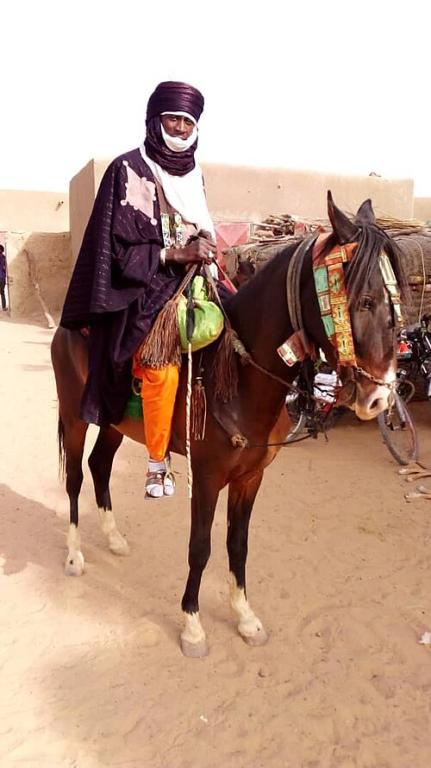
Type: Riding Horse
Continent: Africa
Country: Sudan
Weight: 400 – 500 kg
Height: 147 – 157 cm
The Dongola horse originates from the region of Nubia, located between northern Sudan and southern Egypt, along the Nile Valley. Its name comes from the city of Dongola, which for several centuries was an important center of trade and horse breeding in this region.
The environmental conditions of this area — desert climate, high temperatures, and limited food resources — favored the selection of horses that were resilient, frugal, and capable of traveling long distances.
The Dongola is considered an ancient horse type of Northeast Africa, mentioned in several European hippological descriptions from the 18th and 19th centuries. Horses from this region were valued for their endurance and riding ability, particularly in local cavalry forces and for travel across desert regions.
The horse population of Nubia was likely influenced by different horse types introduced over the centuries, including Oriental and Arabian horses, which helped shape a horse that is elegant, light, and well adapted to arid environments.
With changes in breeding practices and crossbreeding with other regional horse populations, the Dongola is today rarely considered a strictly defined distinct breed, but rather an old regional horse population that contributed to the history of horses in Sudan and Nubia.
The Dongola horse is historically associated with the region of Nubia, located along the Nile Valley, primarily in northern Sudan. The city of Dongola, from which the breed takes its name, lies in this area and was once an important center of horse breeding and trade.
In these regions, horses were raised by local populations for travel, riding, and military purposes, benefiting from the seasonal grazing areas along the river.
The traditional breeding area also extended across historical Nubia, a territory that today covers parts of northern Sudan and southern Egypt.
In these regions, horse breeding was often integrated into local ways of life, with horses used for:
The natural conditions — arid climate, sandy soils, and limited vegetation resources — contributed to the selection of hardy and resilient horses.
Unlike some horse breeds that spread widely, the Dongola remained mainly localized in Northeast Africa. Its distribution beyond this region remained relatively limited, although horses from Nubia were occasionally exported or described in European hippological literature during the 19th century.
Today, the Dongola is rarely identified as a distinct breed in modern breeding programs, and local horse populations in Sudan and Nubia are often the result of crossbreeding and regional evolution.


The Dongola represents an ancient horse population from the region of Nubia, located between northern Sudan and southern Egypt. Although the breed is not currently structured by a modern stud-book, it is part of the historical populations that contributed to the diversity of horses in Northeast Africa.
For several centuries, these horses were bred under demanding natural conditions, which favored the transmission of environmental adaptation traits, particularly heat resistance, the ability to travel long distances, and the capacity to utilize limited food resources.
The Dongola provides an interesting example of natural selection in a desert environment. Horses capable of surviving and working in the arid regions of Nubia gradually passed on genetic traits related to:
These characteristics are typical of horse populations adapted to Sahelian and desert regions.
Several historical sources suggest that horses from Nubia, including the Dongola, may have been influenced by the introduction of Oriental horses, particularly Arabian horses, which arrived in the region at different periods.
These influences may have contributed to maintaining certain morphological and functional traits in the Dongola such as:
However, the exact extent of these influences remains difficult to document precisely, due to the absence of ancient genealogical records.
Even though the Dongola is no longer widely structured as a modern breed, it represents an important regional genetic heritage for understanding the evolution of horses in Sudan and Nubia.
Horse populations from this region contributed to the development of horses adapted to extreme climatic conditions, and some lineages likely played a role in the evolution of other African horses used for riding and transport in desert regions.
The Dongola horse takes its name from the city of Dongola, located in the historical region of Nubia, in northern Sudan, along the Nile Valley. Since antiquity, this region has been an important area of commercial and cultural exchange between Sub-Saharan Africa, Egypt, and the Middle East.
Local populations bred horses adapted to desert and semi-arid conditions, capable of traveling long distances in difficult environments. These horses were used for riding, transport, and warfare, contributing to their reputation as resilient and enduring horses.
During the Middle Ages, Nubia and the Nile Valley played a strategic role in trade routes linking inner Africa to Mediterranean regions. Horses raised in this region, including the Dongola, were used in local cavalry forces and transport systems along the Nile.
Contacts with other regions likely introduced various genetic influences, particularly Oriental and Arabian horses, helping shape an elegant and relatively light riding horse.
The Dongola is mentioned in several European hippological works from the 18th and 19th centuries, when explorers and travelers described horses from Nubia and Sudan.
These horses were often considered high-quality mounts for cavalry and long-distance travel, and some authors described them as having a slender silhouette and strong endurance, well suited to desert conditions.
During the 20th century, traditional breeding systems in the region evolved. Local horses were often crossed with other horse populations, particularly Arabian horses and other introduced riding horses.
This evolution gradually reduced the existence of a clearly identifiable Dongola type. Today, the Dongola is sometimes regarded as an old regional horse population rather than a strictly defined modern breed.
Even though the breed is no longer widely recognized as a distinct population, the Dongola remains an important testimony to the history of horses in Northeast Africa. It illustrates the role horses played in the societies of the Nile Valley, particularly for:
The Dongola is generally described as a calm, resilient, and reliable horse, characteristics typical of horse populations raised in the desert and semi-arid regions of Northeast Africa. For generations, these horses were selected for their ability to work over long distances, often under difficult conditions.
This utilitarian selection favored individuals with a balanced temperament, capable of remaining focused and enduring during prolonged travel.
The behavior of the Dongola is closely linked to its adaptation to a demanding environment. Accustomed to hot climates, limited food resources, and varied terrain, it is known for its strong physical and mental endurance.
This adaptability usually results in:
In traditional breeding systems of Nubia and Sudan, horses often lived close to local communities and were used daily for riding, transport, and sometimes cavalry.
This proximity encouraged the development of horses that are docile and relatively easy to handle, capable of cooperating with their rider in various situations.
The Dongola is generally considered a willing and enduring horse, more oriented toward practical riding and travel than toward modern equestrian sports disciplines.
Its behavior is often described as:
These traits correspond to the traditional selection of horses capable of accompanying human populations during long and sometimes demanding journeys.
The Dongola is today rarely considered a clearly defined horse breed within modern breeding systems. Unlike many European or Middle Eastern breeds, it does not have an official stud-book or structured breeding program.
In several regions of Sudan and Nubia, current horse populations often result from crossbreeding between various local and imported horse types, making the identification of a pure Dongola population more difficult.
One of the main trends observed is the progressive dilution of the historical characteristics of the Dongola. Crossbreeding with other horses, particularly Arabian horses and modern riding horses, has gradually altered the morphology and abilities of local horse populations.
This evolution may lead to:
In the context of preserving equine genetic heritage, certain local populations in Northeast Africa could attract increasing interest from researchers and conservation programs.
Horses from these regions often possess valuable adaptive characteristics, including:
These traits may represent a valuable genetic heritage for studying equine adaptation to extreme environments.
The Dongola may also retain importance from a historical and cultural perspective. Horses from Nubia played a role in the history of Nile trade routes and African cavalry traditions.
The preservation of this heritage could involve:
In the short term, it is unlikely that the Dongola will become a structured international breed comparable to modern breeds with active stud-books.
However, documenting and conserving traditional horse populations of Sudan and Nubia may help improve our understanding of the history and diversity of African horses, and preserve certain characteristics inherited from the Dongola type.
The Dongola is generally considered a hardy and resilient horse, resulting from long adaptation to the difficult climatic conditions of Nubia and northern Sudan. For generations, horses capable of surviving and working in arid, hot, and resource-poor environments were favored for breeding.
This natural selection favored individuals with:
Horse populations from this region often show physiological adaptations related to their native environment:
These characteristics are common among horses raised in extensive systems in desert or semi-desert regions.
Dongola horses are traditionally raised on dry and sandy soils, which favors the development of strong and durable hooves. In their native environment, they often require little shoeing.
Their limbs are generally dry and well adapted to long-distance travel, which helps limit certain locomotor issues under traditional breeding conditions.
As with many hardy horse types, certain issues may appear when the Dongola is raised in conditions very different from its natural environment.
For example:
To date, there are no specific genetic diseases clearly documented for the Dongola horse in modern scientific literature. This is partly because the breed is not included in structured genetic breeding programs, unlike many European horse breeds.