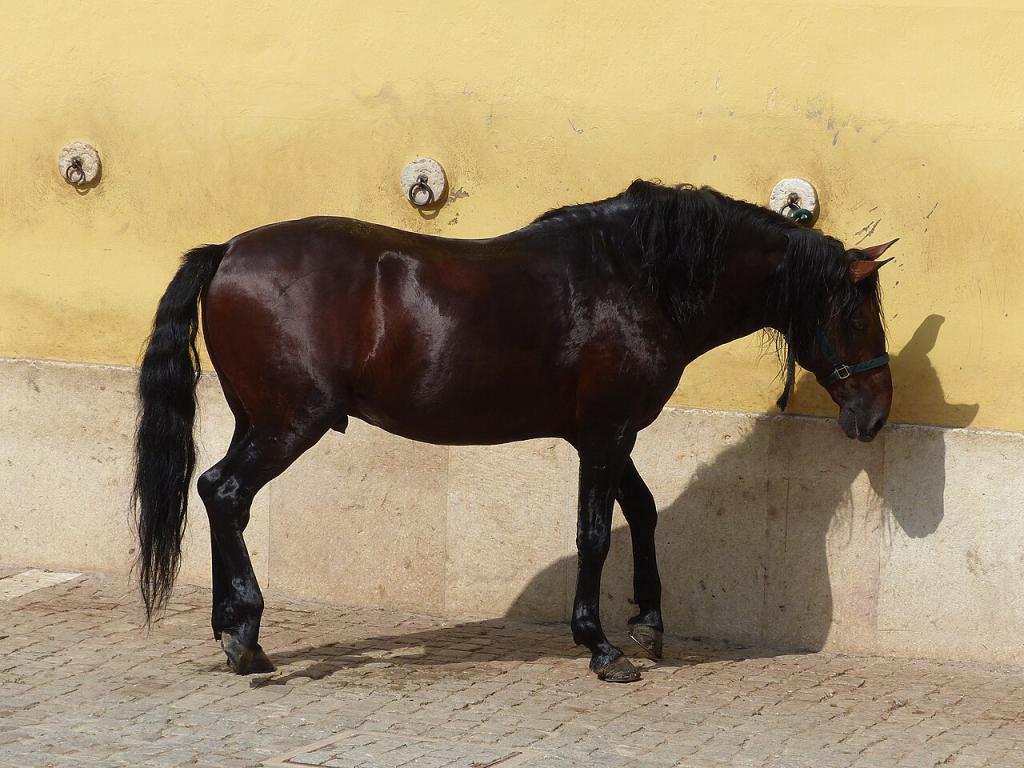
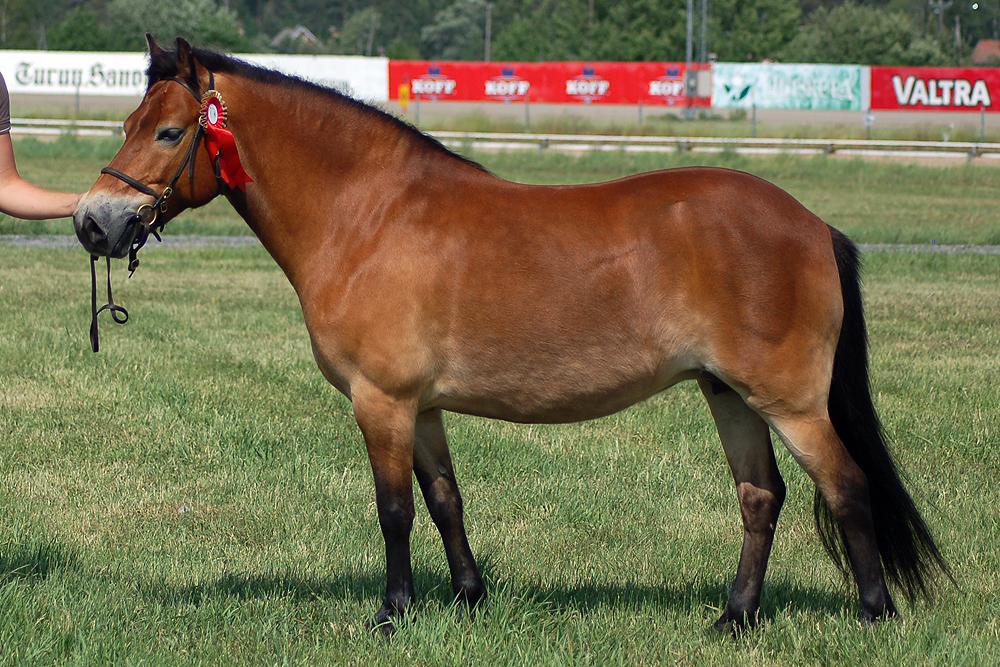
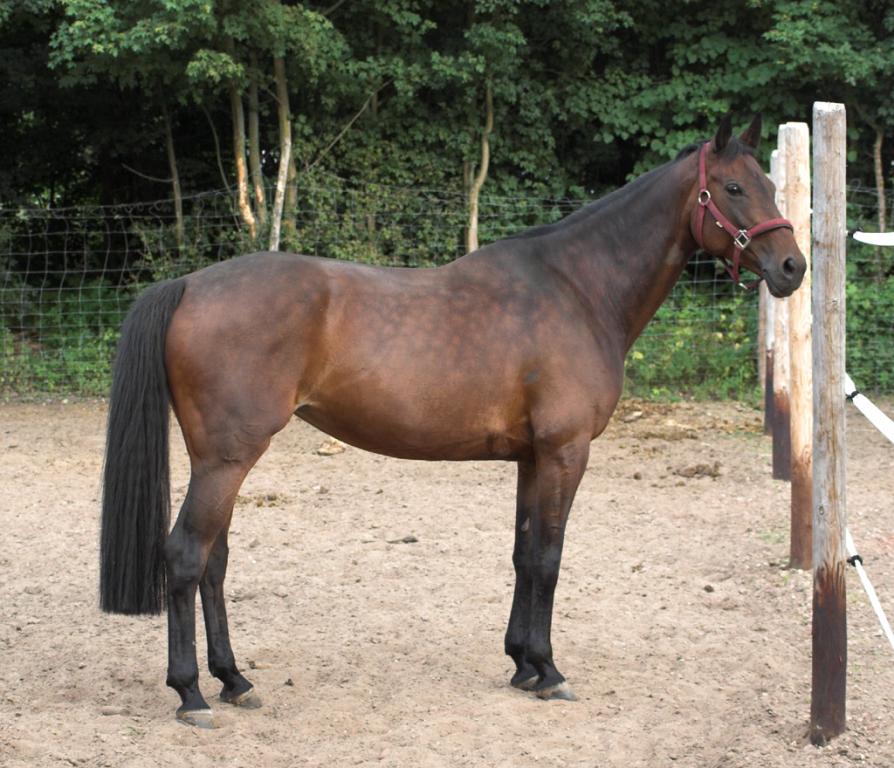
Discover the Hispano-Bretón, a robust Spanish draft horse descended from the Breton and adapted to the mountainous regions of northern Spain.
By the Chevaux du Monde editorial team · Published on · Updated on
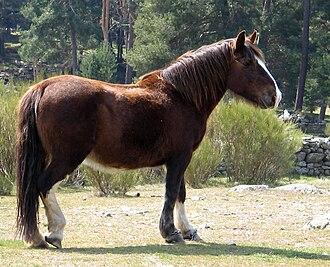
Type: Draft Horse
Weight: 702 – 715 kg
Height: 145 – 154 cm
Name: Libro de Registro Genealógico de la Raza Equina Hispano-Bretona
Founded: 2005
The Hispano-Bretón is a draft horse breed originating from northern Spain. Its development is mainly linked to mountainous and rural regions where breeders needed a powerful, hardy horse capable of working on difficult terrain.
The breed was formed through crosses between Breton stallions, imported from France, and local Spanish mares. The aim was to produce a horse that was more massive, more powerful in traction, and better suited to agricultural and mountain work than local horses alone.
The Hispano-Bretón is mainly associated with several areas of northern Spain, including Castile and León, Cantabria, Aragon, Navarre and La Rioja. These regions share marked relief, traditional rural farms and a horse-breeding culture focused on solid, functional horses.
Thanks to its local origins and the influence of the Breton horse, the Hispano-Bretón adapted to demanding breeding conditions: mountain climate, extensive pastures, movement over uneven terrain and traction work. This adaptation explains its compact build, strong bone structure and reputation as a resistant horse.
The Hispano-Bretón is mainly bred in northern Spain, especially in rural and mountainous areas where robust draft horses were long used for agricultural work, transport and extensive farming.
Castile and León is one of the most important areas for the breed, particularly in provinces with a strong tradition of mountain horse breeding. This region is often cited as one of the main strongholds of the Hispano-Bretón.
Cantabria is also a major area associated with the breed. Its relief, pastures and extensive breeding systems suit the profile of the Hispano-Bretón: a hardy, powerful horse adapted to difficult terrain.
The breed is also present in other northern and north-eastern Spanish regions, including Aragon, Navarre and La Rioja. These territories contribute to the conservation of the breed and to its roots in Spanish rural areas.
The breeding of the Hispano-Bretón is often linked to extensive or semi-extensive systems, with horses raised in pasture areas, sometimes at altitude or in rugged environments. This management helps preserve its hardiness, resistance and adaptation to the local climate.


The genetic importance of the Hispano-Bretón comes mainly from its crossbred origin: it combines the influence of the Breton horse, known for its power and mass, with local Spanish mares adapted to the mountainous environments of northern Spain.
The breed was developed to strengthen qualities such as traction power, body mass, solid bone structure and well-developed musculature. It is therefore an example of genetic improvement aimed at producing a more robust draft horse, better suited to rural uses.
The Hispano-Bretón also has genetic value linked to its adaptation to Spanish mountain regions. Its hardiness, ability to live in extensive breeding systems and resistance to local conditions make it an important resource for preserving horse lines adapted to their territory.
As a local Spanish breed, the Hispano-Bretón contributes to the genetic diversity of European draft horses. Its conservation helps preserve a specific genetic heritage, shaped by the combination of French draft horses and local equine populations from northern Spain.
The Hispano-Bretón developed in northern Spain from crosses between Breton draft horses, imported from France, and local Spanish mares. The goal was to obtain a horse that was more powerful, more massive and better adapted to rural work in mountainous regions.
The breed developed in territories where breeders needed a robust horse, able to move over difficult terrain and provide good traction power. The Hispano-Bretón’s type therefore reflects selection focused on solidity, strong bone structure and adaptation to mountain environments.
The contribution of the Breton horse played a central role in the history of the breed. It helped increase the body mass, muscular power and overall size of local horses that were already adapted to the climate and breeding conditions of northern Spain.
Like many European draft horses, the Hispano-Bretón lost part of its traditional role with agricultural mechanization. Its use gradually shifted toward the conservation of a local breed, driving, rural leisure activities, heritage presentations and the maintenance of extensive breeding in its regions of origin.
Today, the breed is supervised through a stud book and by breeders’ organizations involved in its selection and preservation. This official recognition helps maintain the identity of the Hispano-Bretón as a distinct Spanish draft breed, linked to the equine heritage of northern Spain.
The Hispano-Bretón is generally described as a draft horse with a calm, docile and manageable temperament. Its character is consistent with its traditional use as a working horse: it needs to be stable enough to move through rural, sometimes mountainous environments, while remaining easy to handle.
The breed is associated with qualities of strength, resistance and a willing attitude to work. The Hispano-Bretón is not selected for speed or nervousness, but rather for its ability to provide steady effort, remain controllable and adapt to tasks requiring power.
Its breeding system, often linked to extensive pastures and rural areas of northern Spain, favors hardy horses that are relatively autonomous and accustomed to outdoor conditions. This hardiness contributes to its image as a solid horse, enduring within its traditional environment.
Like many draft horses, the Hispano-Bretón is valued for a rather steady and reliable temperament. This quality is important for driving, rural work, breeding management and leisure uses. However, it remains a powerful horse: its education, handling and management must be adapted to its size and strength.
Available sources do not describe a very specific behavioral trait unique to the breed, such as marked nervous sensitivity or a distinctive psychological characteristic. It is therefore better to use cautious wording: calm, docile, hardy, hard-working and suited to draft uses.
The future of the Hispano-Bretón depends mainly on its ability to remain a living breed, still bred in its regions of origin and recognized as part of Spanish equine heritage. Like many local draft horses, its preservation relies on the monitoring of the stud book, the selection of breeding animals and continued promotion among breeders.
An important challenge will be to preserve sufficient genetic diversity. The breed is based on crosses between Breton horses and local Spanish mares, but its population must continue to be monitored to avoid excessive concentration of certain bloodlines. The role of breeders’ associations and official programs therefore remains essential.
With the gradual disappearance of traditional agricultural uses, the Hispano-Bretón may find a place in more modern activities such as driving, trail riding, rural leisure, local festivals and heritage breed presentations. This diversification can help make the breed more visible and more attractive.
The breed still has strong potential as a symbol of the mountainous regions of northern Spain. Its hardiness, powerful build and connection with extensive breeding systems can be promoted as part of rural heritage, equestrian tourism and the conservation of local breeds.
The main challenge for the future of the Hispano-Bretón will be to maintain a sufficient number of motivated breeders. Without clear outlets and without cultural or sporting promotion, a local draft breed can quickly become fragile. Its future will therefore depend as much on genetic selection as on its ability to regain a visible role in today’s equestrian world.
To date, the official sources available on the Hispano-Bretón do not report any major hereditary disease specific to the breed. It is therefore better to avoid naming a precise condition unless it is clearly documented by a stud book, breed association or reliable veterinary source.
The Hispano-Bretón is generally presented as a hardy horse, adapted to extensive breeding conditions in northern Spain. Its draft-horse build, strong bone structure and adaptation to mountain environments suggest good resistance in its traditional setting, provided it receives appropriate care.
Like many draft horses, the Hispano-Bretón requires particular attention to body weight, limb alignment, joints and hooves. Its powerful build can create mechanical strain if diet, exercise or hoof care are not properly managed.
The main health issue is mostly linked to the preservation of genetic diversity. As a local breed managed through a stud book, careful monitoring of breeding animals is important to limit risks related to a small population or excessive concentration of certain bloodlines.
The health of the Hispano-Bretón relies on the standard care expected for a draft horse: controlled diet, regular hoof care, dental checks, vaccination, reasoned deworming and joint monitoring. Appropriate management is especially important to prevent excess weight and preserve mobility.