
Horses of the world · Spain
Spanish horse breeds
Spain has an exceptionally varied equestrian heritage. Alongside the celebrated Pura Raza Española are saddle horses, working breeds, island populations and hardy small equines shaped by mountains, marshes and the Atlantic regions.
History and diversity
An equestrian heritage far broader than the Andalusian horse
The words Spanish horse often bring to mind an elegant animal with a powerful neck and expressive, elevated movement. That image owes much to the Pura Raza Española, but it does not represent the country’s full equine diversity. The Iberian Peninsula includes dry plains, Pyrenean mountains, the Cantabrian coast, Andalusian wetlands and Mediterranean islands.
These environments, together with farming needs, transport and local riding traditions, encouraged very different types to survive. Some breeds were selected for riding and dressage; others for draught work, extensive grazing or their ability to thrive in demanding landscapes. The small northern breeds therefore differ greatly in both build and history from southern horses of Iberian tradition.
A long history
Spanish horse breeding has military, agricultural, aristocratic and popular roots, many of which remain visible in regional traditions.
Many different types
Saddle horses, mountain breeds, hardy ponies, draught horses and wetland populations form a remarkably varied group.
A living heritage
Studbooks and conservation programmes help preserve breeds with small populations or limited breeding areas.
A common source of confusion
Andalusian horse or Pura Raza Española?
The names are closely connected in everyday language, but they are not always interchangeable when official recognition and recorded ancestry are concerned.
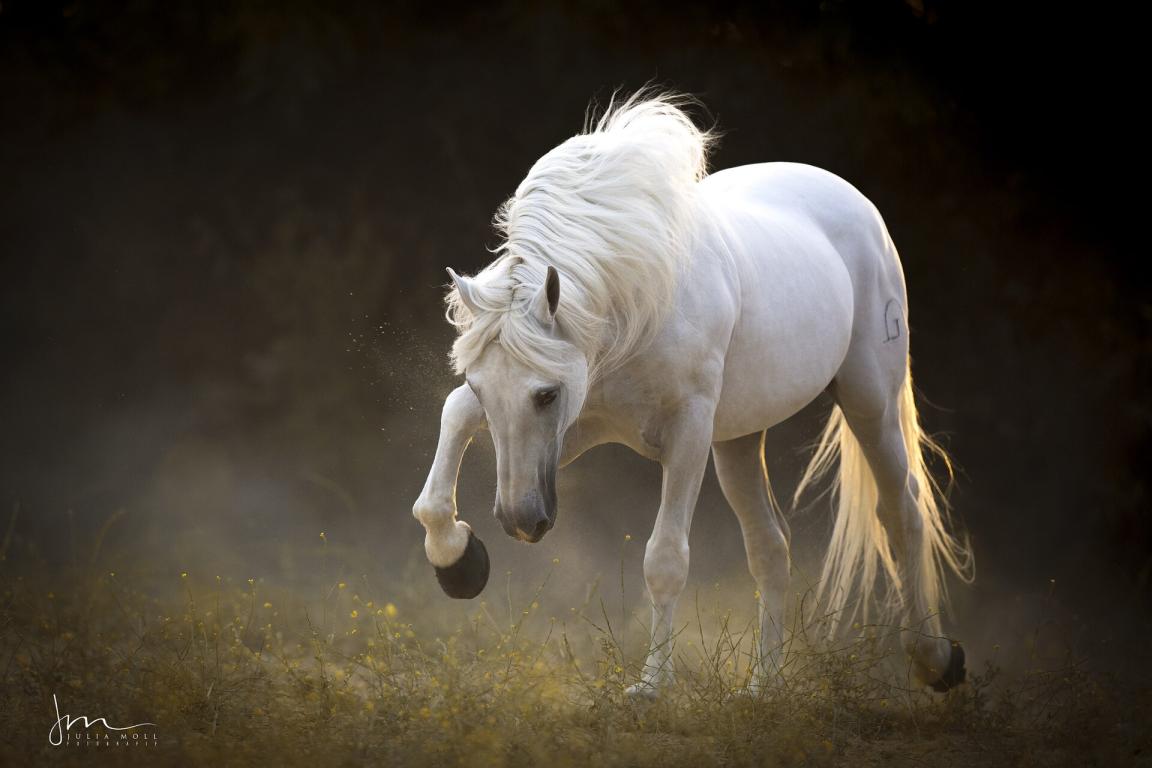 PRE
Pura Raza Española
PRE
Pura Raza Española
An official breed name, not simply a type of horse
Andalusian horse is the familiar international name for the traditional Spanish horse associated with Andalusia. Pura Raza Española, or PRE, identifies a breed governed by an official standard and studbook. A horse born in Andalusia, or one displaying an Iberian type, is not automatically a registered PRE.
ANCCE identifies the sixteenth century, the reign of Philip II and the Royal Stables of Córdoba as a decisive period in the development of the horse now recognised as the PRE. The breed is known for harmony, manoeuvrability and aptitude for dressage, high school, working equitation and equestrian displays.
Read the complete PRE profileEncyclopedia profiles
List of Spanish horse breeds
Select a breed to explore its origin, conformation, coat colours, uses and history, together with studbook and population information where available.
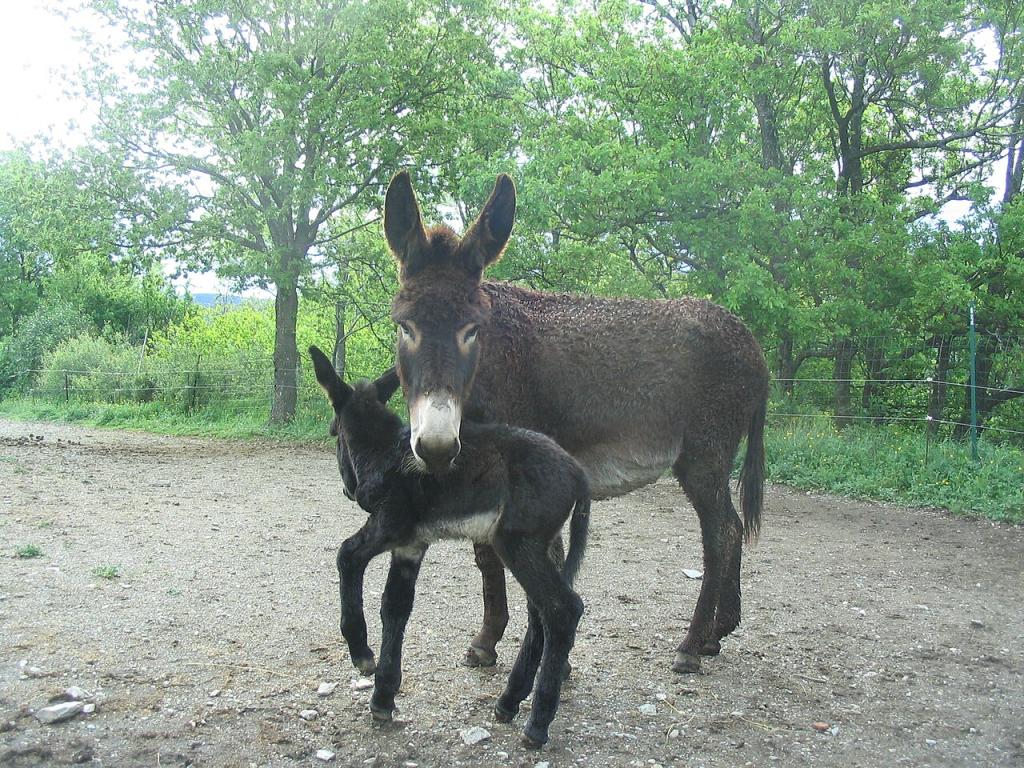
Ase Català
- Category
- Donkey
- Coat
- Black, Mealy / Pangare
- Uses
- Driving, Trail Riding, Draft Work, Equine Therapy, Leisure, Pack horse / Pack animal
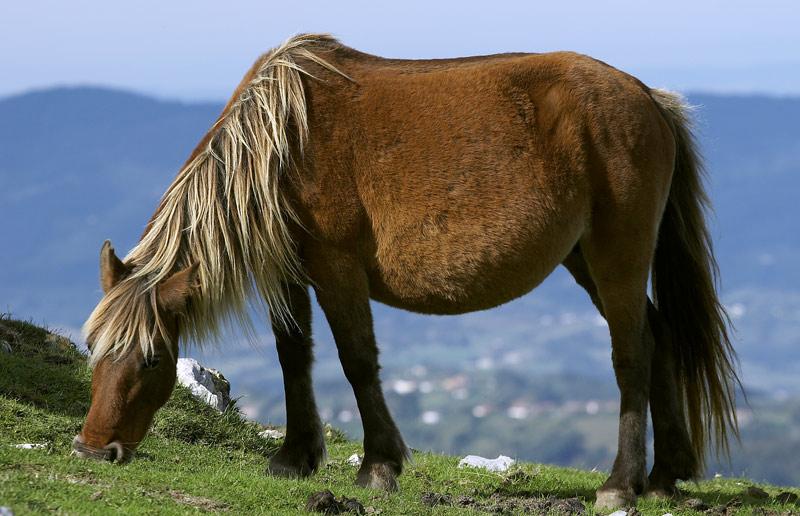
Asturcón
- Category
- Pony
- Coat
- Chestnut / Sorrel, Black, Bay
- Uses
- Driving, Trail Riding, Leisure
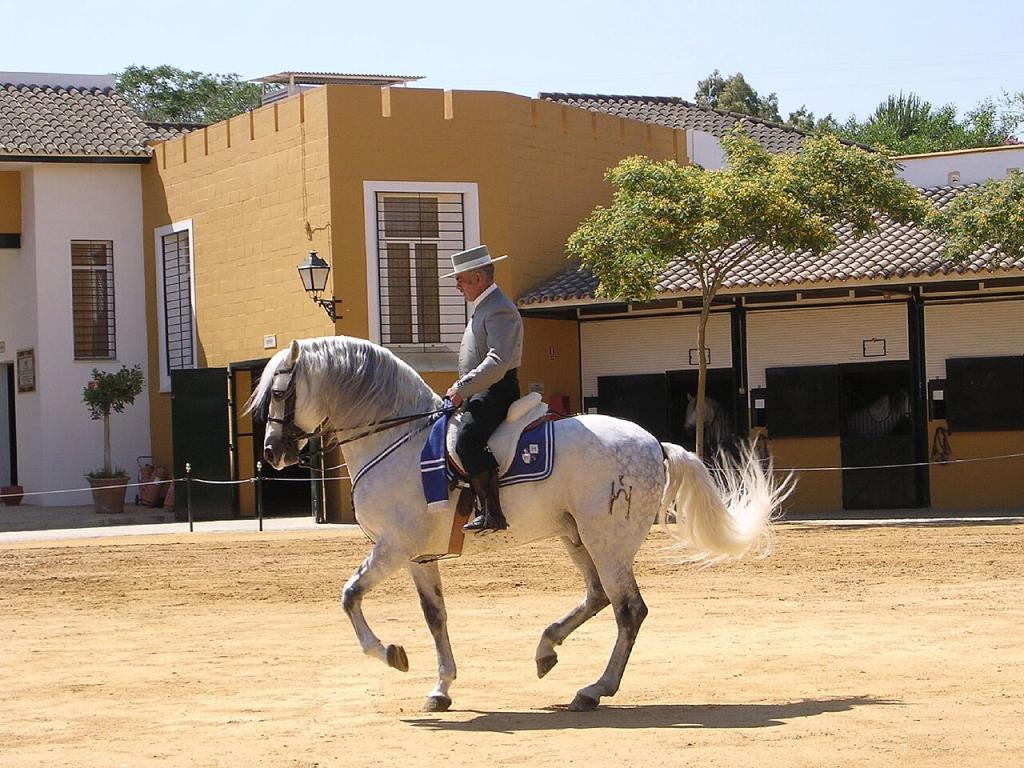
Cartujano - Carthusian Spanish horse
- Category
- Riding Horse
- Coat
- Chestnut / Sorrel, Black, Bay
- Uses
- Driving, Dressage, Trail Riding, Equestrian Show, Riding School, Leisure
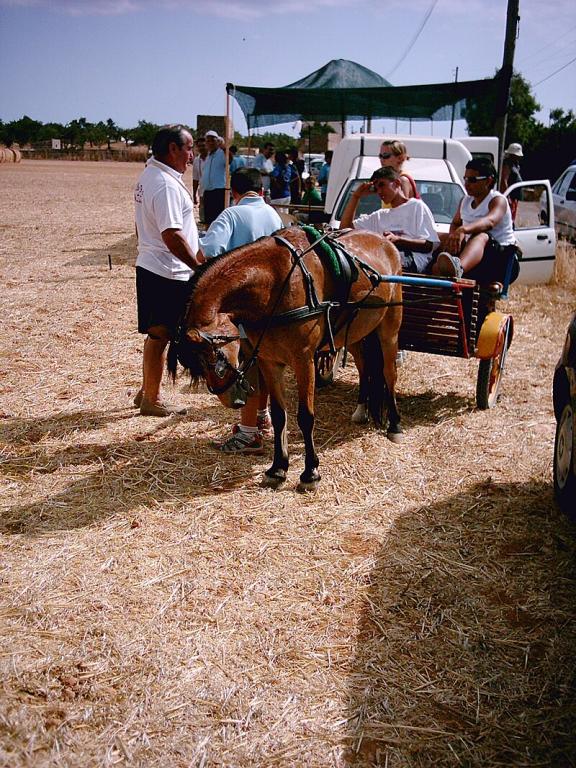
Galician Pony
- Category
- Pony
- Coat
- Chestnut / Sorrel, Black, Bay, Gray
- Uses
- Driving, Trail Riding, Cattle Work, Equestrian Show, Draft Work, Leisure
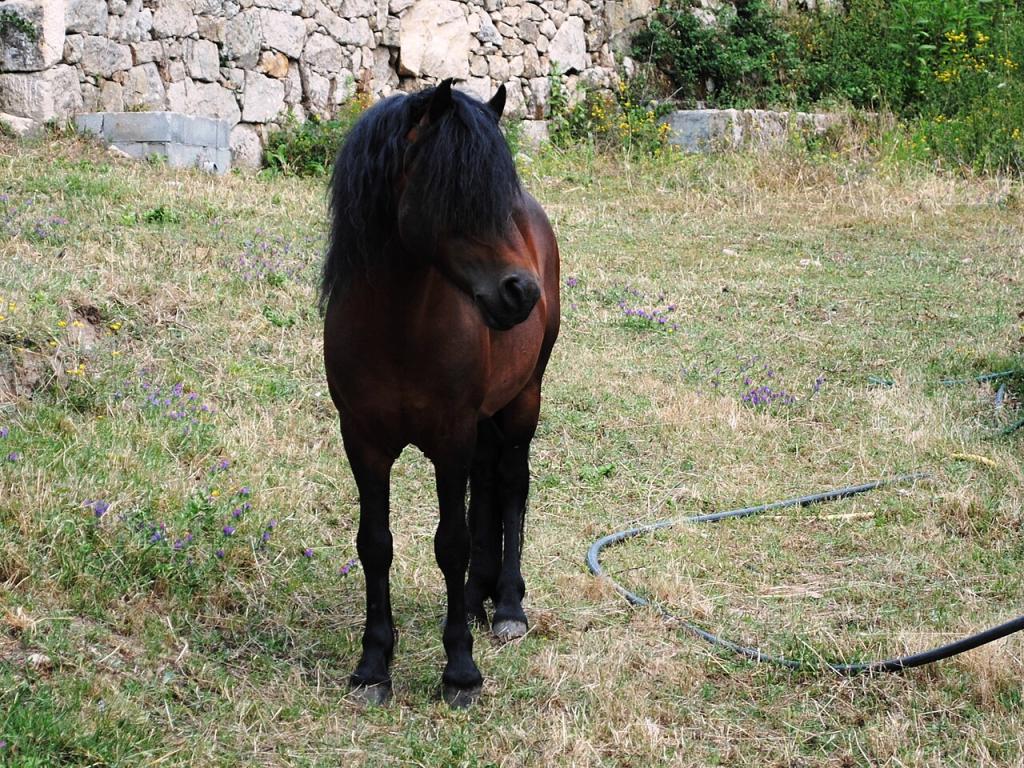
Gallega – Cabalo de pura raza Galega
- Category
- Pony
- Coat
- Chestnut / Sorrel, Black, Bay, Gray
- Uses
- Driving, Draft Work, Leisure
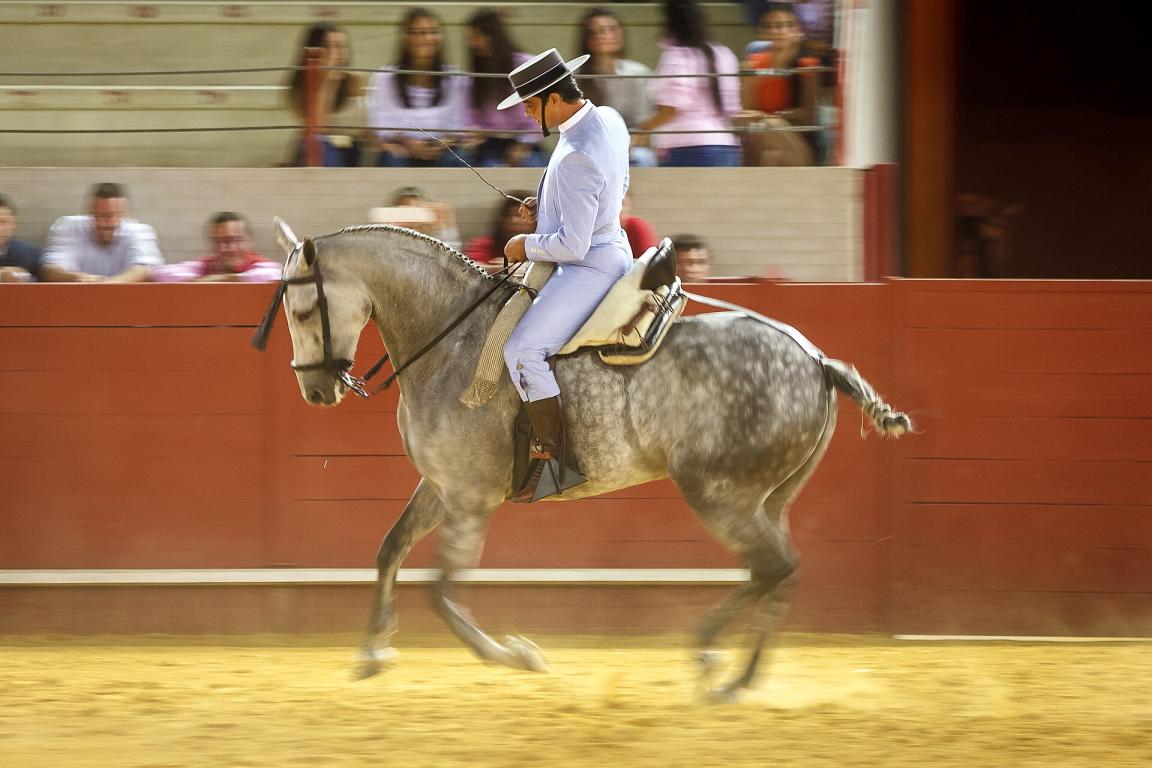
Hispano-arabe | Aralusian
- Category
- Riding Horse
- Coat
- Chestnut / Sorrel, Black, Bay, Gray, Bay dun / Yellow dun, Palomino, Cremello, Roan, Sooty buckskin, Buckskin, Smoky black, Smoky cream
- Uses
- Dressage, Show Jumping, Endurance Riding, TREC, Trail Riding, Cattle Work, Leisure, Cavalry / Military, Eventing
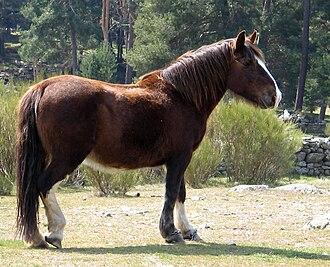
Hispano-Bretón
- Category
- Draft Horse
- Coat
- Chestnut / Sorrel, Black, Bay, Gray
- Uses
- Driving, Trail Riding, Leisure, Cavalry / Military, Pack horse / Pack animal
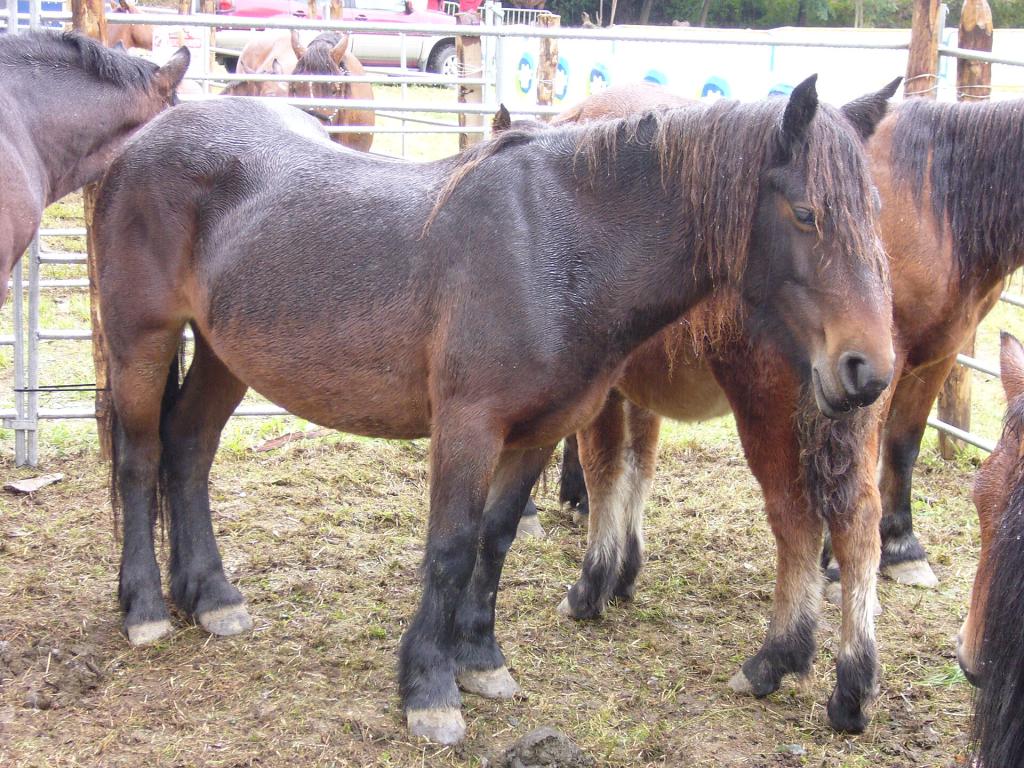
Jaca Navarra
- Category
- Pony
- Coat
- Bay
- Uses
- Trail Riding, Cattle Work, Pack horse / Pack animal
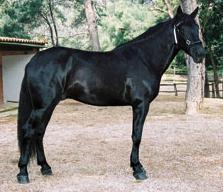
Majorquin
- Category
- Riding Horse
- Coat
- Black
- Uses
- Driving, Cattle Work, Equestrian Show, Draft Work, Leisure
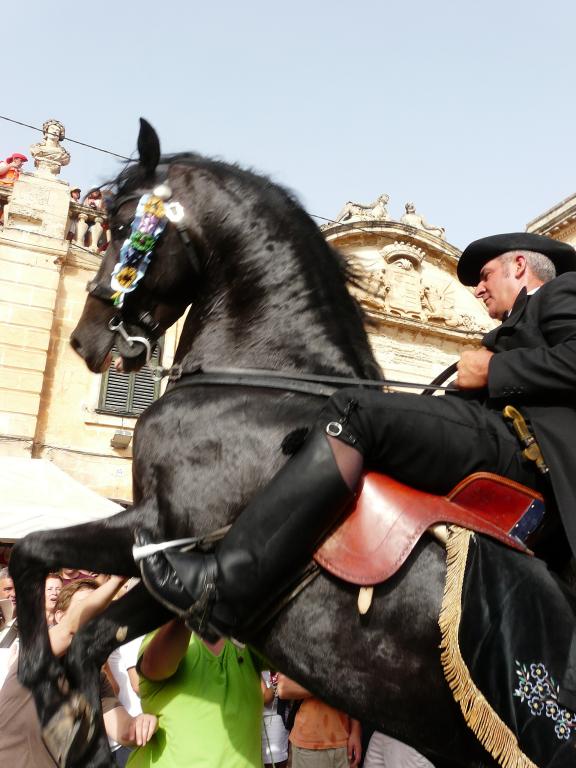
Minorquin
- Category
- Riding Horse
- Coat
- Black
- Uses
- Driving, Dressage, Trail Riding, Equestrian Show, Leisure
Pura Raza Española (PRE) - Andalusian horse
- Category
- Riding Horse
- Coat
- Chestnut / Sorrel, Black, Bay, Gray, Pearl, Perlino
- Uses
- Driving, Dressage, Cattle Work, Equestrian Show, Leisure
Geography
Breeds shaped by the regions of Spain
The distribution of Spanish breeds reflects both human history and horses’ adaptation to different terrain, climates and local uses.
Andalusia and southern Spain
The south is associated with the PRE, the Hispano-Arab and traditions such as doma vaquera. The Guadalquivir marshes are also home to hardy wetland populations such as the Marismeño.
Atlantic north
The wet, mountainous north has preserved small and robust breeds. The Asturcón, Pottok and Galician Purebred Horse represent a heritage long connected with extensive grazing.
Pyrenees and inland plateaus
Several mountain and continental breeds developed a stronger build suited to work and difficult terrain. The Burguete, Jaca Navarra and Hispano-Bretón reflect this need for hardiness and power.
Balearic Islands
Mallorca and Menorca developed distinct equine populations. The black-coated Menorquín is closely associated with the island’s festivals, while the Mallorquín has its own insular history.
Abilities
What are Spanish horses used for?
There is no single use for a Spanish horse. Aptitude depends on build, selection, the individual horse and its training.
- Dressage and high schoolThe PRE is valued for balance, expression and an aptitude for collected work.
- Working equitationManoeuvrability, responsiveness and work around livestock are central to several traditions.
- Leisure and trail ridingMany breeds are used outdoors when temperament, training and rider are suitably matched.
- Driving and draught workMore powerful types historically contributed to farming, forestry and transport.
- Extensive grazingHardy populations continue to make use of natural mountain and wetland environments.
- Festivals and traditionsHorses remain central to many regional cultural events throughout Spain.
- Equestrian sportDressage dominates the international image, although other disciplines are represented.
- Habitat managementGrazing by some populations can help maintain open landscapes and ecosystems.
Genetic heritage
Recognised breeds that can still be vulnerable
The PRE’s international fame should not obscure the vulnerability of some local breeds. A population restricted to one region, a small number of breeding animals or the decline of a traditional use can quickly reduce both numbers and genetic diversity.
Spain’s Ministry of Agriculture maintains the Official Catalogue of Spanish Livestock Breeds. It lists and classifies breeds recognised for their economic, zootechnical, cultural, environmental or social importance and linked to breeding programmes. Studbooks, breed societies, selection programmes and conservation measures therefore play an essential role.
A local breed is more than a particular outline or colour: it also preserves a record of rural practices, exchanges between communities and the landscapes that shaped it.
Frequently asked questions
Understanding Spanish horse breeds
What are the main Spanish horse breeds?
The Pura Raza Española is the most famous internationally. Spain also has many regional breeds, including the Asturcón, Menorquín, Mallorquín, Losino, Pottok, Galician Purebred Horse, Marismeño, Hispano-Arab, Burguete and Jaca Navarra.
What is the difference between an Andalusian horse and a Pura Raza Española?
Andalusian horse is a historical and widely used name for the Iberian horse associated with Andalusia. Pura Raza Española identifies a breed governed by an official standard and studbook. A horse born in Andalusia or displaying an Iberian type is not necessarily a registered PRE.
Are Spanish horses suitable for dressage?
The PRE is particularly well known in dressage for its balance, manoeuvrability and ability to collect. This does not mean that all Spanish breeds share the same build or that every individual suits the same level or rider.
Are there Spanish pony breeds?
Yes. The Asturcón and Pottok are among the peninsula’s small, hardy breeds. Their size, thriftiness and adaptation to mountain environments distinguish them from the larger Spanish horse of popular imagination.
What is the typical colour of a Spanish horse?
There is no single colour shared by every Spanish breed. Grey is prominent in the image of the PRE, but standards permit other colours. The Menorquín, by contrast, is strongly associated with black. Always consult the standard for the individual breed.
How can I tell whether a Spanish breed is endangered?
Check the current status in Spain’s official catalogue and with the body managing the breed’s studbook. Population trend, breeding numbers and genetic diversity are more informative than the fame of the breed’s name.
References
Main sources
Spanish Ministry of Agriculture, Fisheries and Food: Official Catalogue of Spanish Livestock Breeds and individual equine breed records.
ANCCE: history and characteristics of the Pura Raza Española, together with information about its conformation and studbook.