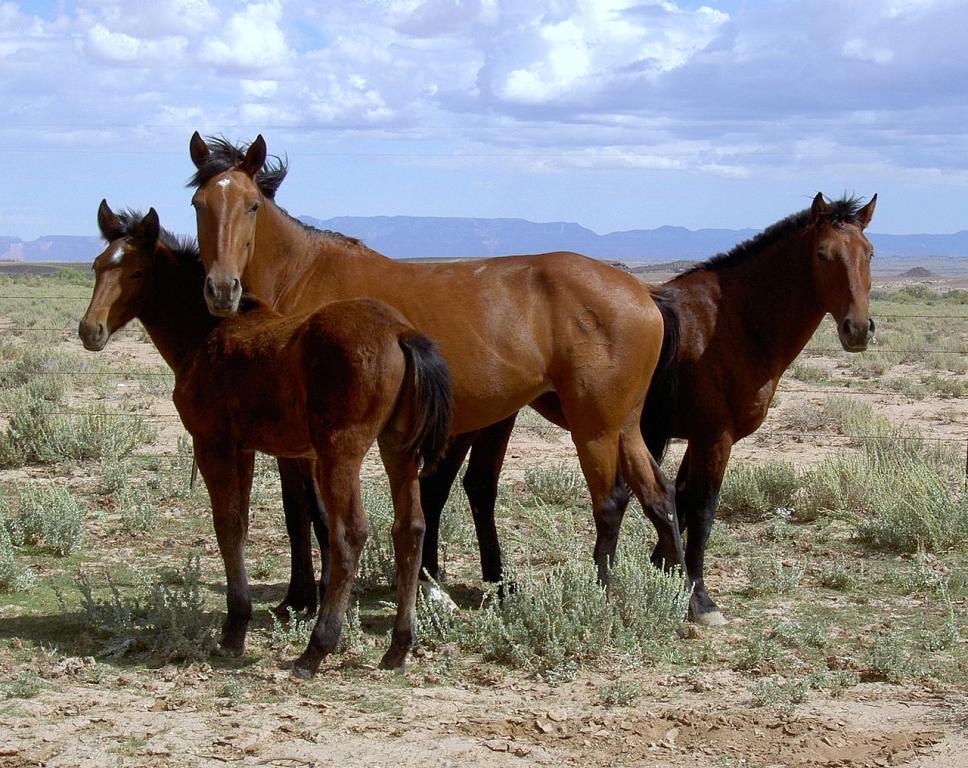
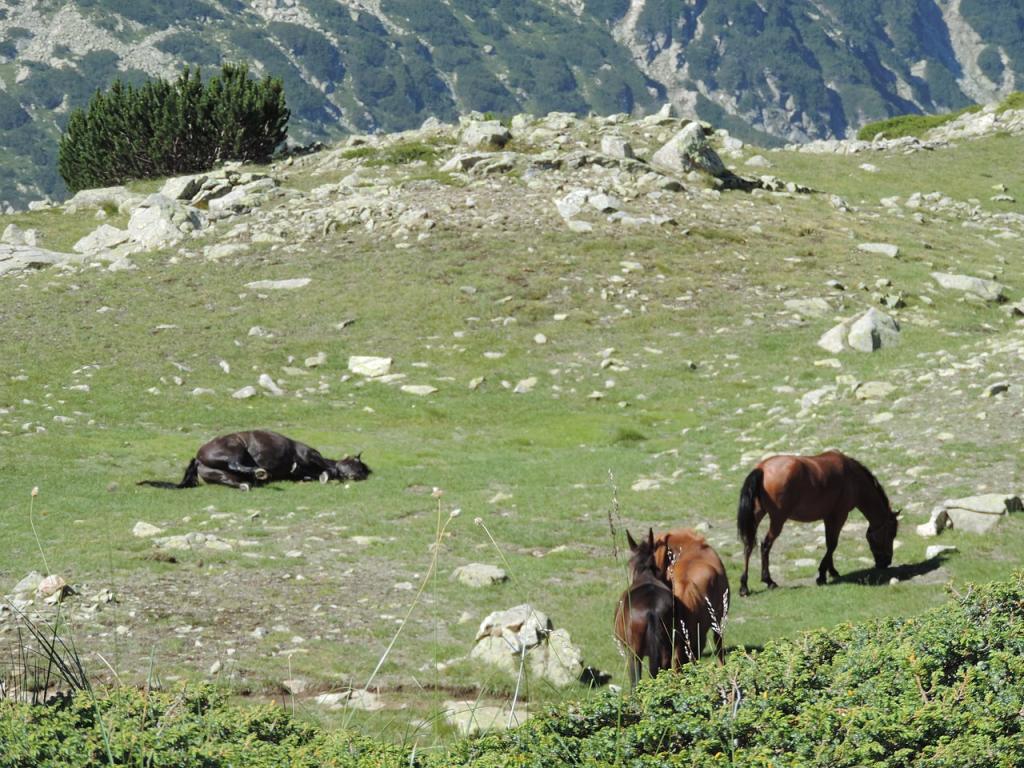
Rustic, hardy and almost wild, the Asturcón is one of the oldest breeds of the Iberian Peninsula. Discover its history, characteristics and origins.
By the Chevaux du Monde editorial team · Published on · Updated on
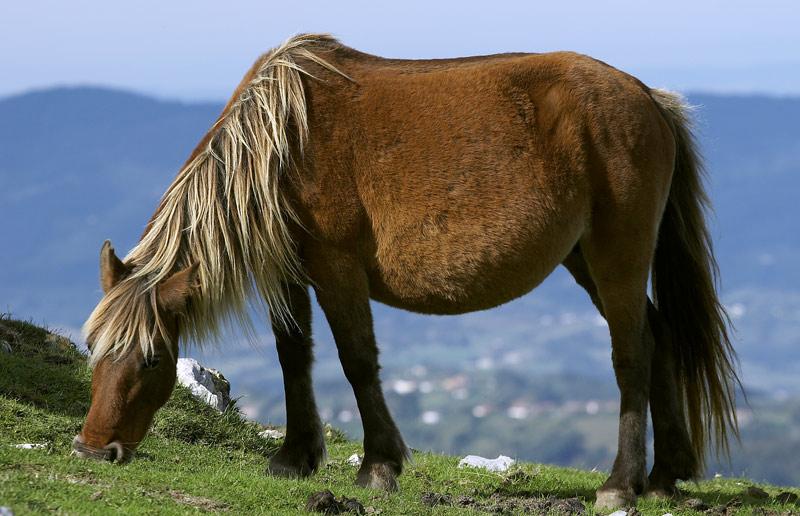
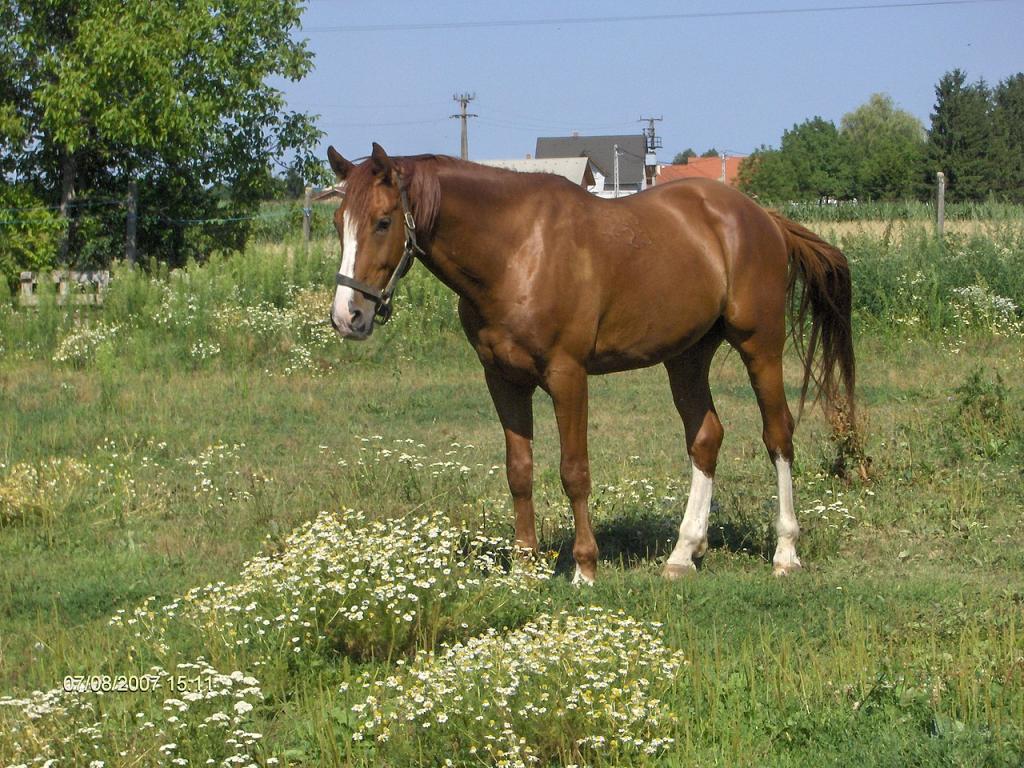
The Asturcón is a native pony breed from the Principality of Asturias, in north-western Spain. Its name refers directly to this mountainous region, which is characterised by a humid climate, upland pastures and rugged terrain.
Small horses raised in Asturian territories have been mentioned since Roman times. Over the centuries, the Asturcón adapted to the demanding conditions of the mountains of northern Spain. This environment helped preserve a small, hardy and undemanding pony capable of living in extensive farming systems.
By the late 20th century, Asturcón numbers had fallen to a very low level. An organised conservation programme began in 1979, with the creation of a breeders’ association dedicated to preserving the breed. Today, management of the stud book, monitoring of bloodlines and breeding within its traditional environment contribute to safeguarding this part of Asturias’ equine heritage.
The Asturcón remains primarily concentrated in the Principality of Asturias, its region of origin in north-western Spain. The breed can be found throughout the municipalities of Asturias, with ponies raised both on managed farms and in extensive mountain grazing systems.
The region’s mountainous terrain, humid climate and natural pastures form the environment in which this pony developed its hardiness and its ability to make use of vegetation that is sometimes difficult to access.
In 2019, the official conservation programme recorded 2,444 Asturcón ponies in Asturias, out of a national total of 2,759 registered animals. The vast majority of the population therefore remained within the breed’s historical homeland.
Extensive grazing helps maintain mountain pastures and supports agricultural activity in rural areas affected by depopulation.
The breed is also raised in several other Spanish autonomous communities. Smaller populations were recorded in Castile and León, Cantabria, Galicia, Extremadura, Catalonia, Andalusia, Madrid, the Valencian Community and the Balearic Islands.
However, this nationwide distribution remains limited compared with the core population in Asturias. The region continues to be the breed’s main centre for breeding, selection and conservation.


The Asturcón is an important genetic resource within Spain’s equine heritage. Its value lies primarily in preserving a pony population historically adapted to the mountainous, humid conditions of Asturias. Its hardiness, ability to thrive on poor-quality pastures and suitability for extensive farming systems are valuable traits that should be preserved.
When the organised conservation programme was established in 1979, the recorded population had fallen to just 23 animals belonging to four breeders. This historically small population represents a major challenge for maintaining genetic diversity and limiting inbreeding.
The conservation programme analyses the relationships between breeding animals in order to recommend suitable pairings. In particular, it aims to preserve the different founding sire lines and prevent a limited number of stallions from becoming overrepresented within the population.
The preservation of the Asturcón relies on maintaining animals within breeding herds and in their traditional environment. This in situ conservation is supplemented by ex situ conservation, particularly through the storage of semen from selected breeding animals in a germplasm bank.
The aim is therefore not to use the Asturcón extensively to improve other breeds, but to preserve its genetic identity, bloodlines and adaptations developed within its region of origin.
During the Middle Ages, the Asturcón is believed to have experienced a period of significant development, with several thousand ponies distributed throughout Asturias. Its small size, strength and adaptation to the local terrain made it a valuable working animal for agriculture, livestock farming and transport.
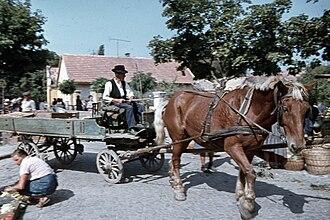
The conservation programme also reports that Asturcón ponies were exported to Ireland during the 15th century. More recently, some were used in Paris to pull small carriages. Until animal traction declined, Asturian ponies were also sought after in the Basque Country and eastern Spain for agricultural work, particularly in orange groves.
Following the Spanish Civil War, the breed’s population declined sharply. The gradual abandonment of animal traction, the mechanisation of agriculture and certain reforestation policies reduced both the land available to the breed and its traditional uses.
A few isolated populations survived in areas that were difficult to access. Groups were notably preserved in the Sierra del Sueve, in eastern Asturias, and in several mountain ranges in the western part of the region.
In 1979, when the Regional Association of Asturcón Horse Breeders was established, the monitored population consisted of only 23 animals belonging to four breeders. This critical situation marked the beginning of a structured breed recovery programme.
The organisation later became what is now the Association of Asturcón Pony Breeders, or ACPRA. It manages the stud book, monitors breeding animals, preserves the breed’s bloodlines and promotes the Asturcón.
In 2012, ACPRA was officially recognised as the organisation responsible for maintaining the stud book and implementing the breed improvement and development programme. A new conservation programme, adapted to the European and Spanish zootechnical framework, was approved in 2021.
The Asturcón remains a breed requiring active conservation. Its preservation relies on breeding within its traditional environment, monitoring genetic diversity, issuing breeding recommendations and storing reproductive material in a germplasm bank.
The official breed standard describes the Asturcón as a good-natured pony with a docile disposition. When properly handled and trained, it can be used for riding, leisure activities or light driving.
However, this docility should not be mistaken for a lack of sensitivity. Ponies raised extensively or with limited previous handling may be cautious around people and require patient, progressive training.
The Asturcón is particularly well adapted to life in the mountainous terrain of Asturias. Extensive farming has encouraged independence, adaptability and constant awareness of its surroundings.
It moves with agility over rough terrain and can make efficient use of pastures exposed to challenging weather conditions. When suitable farming conditions are provided, mares can foal and raise their young outdoors with relatively little human intervention.
Its hardiness and strong constitution can make it a suitable partner for trail riding, leisure riding and certain pony sports. As with any breed, however, behaviour varies according to the individual, its rearing conditions, previous handling and the quality of its training.
An Asturcón raised in a semi-feral herd may require more time, patience and consistency when being started under saddle than a pony handled regularly from birth.
The future of the Asturcón depends above all on preserving its genetic diversity. Although its population has increased since the critical situation observed in the late 1970s, the breed still descends from a small founder population. Controlling inbreeding, maintaining the different bloodlines and carefully selecting breeding animals therefore remain essential.
The conservation programme includes analysing genealogical relationships and developing breeding recommendations. It also aims to retain at least one breeding animal representing each founding sire line across successive generations.
Promoting the Asturcón for leisure riding, trail riding, ridden activities and pony sport can help maintain breeders’ interest and create sustainable opportunities for the breed. However, this development must respect its conformation, hardiness and traditional characteristics, without directing selection towards a type that differs excessively from the breed standard.
Conformation shows, breeder training and the publication of breeding-stock catalogues also contribute to the promotion and carefully managed improvement of the breed.
Extensive Asturcón farming can help maintain mountain pastures, limit scrub encroachment and support agricultural activity in rural areas affected by depopulation. This environmental role represents an important opportunity to strengthen the breed’s economic value and contribution to its region.
The conservation of animals in their traditional environment is supplemented by the storage of semen in a germplasm bank. This strategy provides an additional safeguard against a decline in population numbers or the potential loss of certain bloodlines.
The breed’s prospects are therefore favourable, provided that population growth is accompanied by rigorous genetic monitoring, careful diversification of its uses and the continued involvement of a sufficient number of committed breeders.
The Asturcón is a hardy breed adapted to the humid climate, mountain pastures and rugged terrain of Asturias. The official conservation programme highlights its ability to live in extensive farming systems, make use of vegetation in difficult-to-access areas and raise its foals under sometimes challenging weather conditions.
However, this natural resilience does not remove the need for veterinary care, a balanced diet, parasite control and regular hoof care.
The official sources consulted do not report any genetic disease specific to the Asturcón. It would therefore be inaccurate to attribute a particular hereditary predisposition to the breed without supporting veterinary research or a dedicated genetic study.
Like other equids, the Asturcón may be affected by common health conditions, but these should not be presented as characteristic of the breed.
The main health and genetic concern relates to the breed’s demographic history. In 1979, the conservation programme recorded only 23 animals belonging to four breeders. This small founder population may increase the risk of inbreeding if breeding pairs are not carefully planned.
The conservation programme therefore analyses genealogical relationships, monitors changes in genetic diversity and recommends breeding combinations designed to limit inbreeding.
The Asturcón is adapted to relatively modest forage resources. When kept on rich pastures or provided with a diet that is too high in energy for its level of activity, its body condition should be carefully monitored.
This precaution forms part of the general management of hardy pony breeds and does not represent a disease specific to the Asturcón.