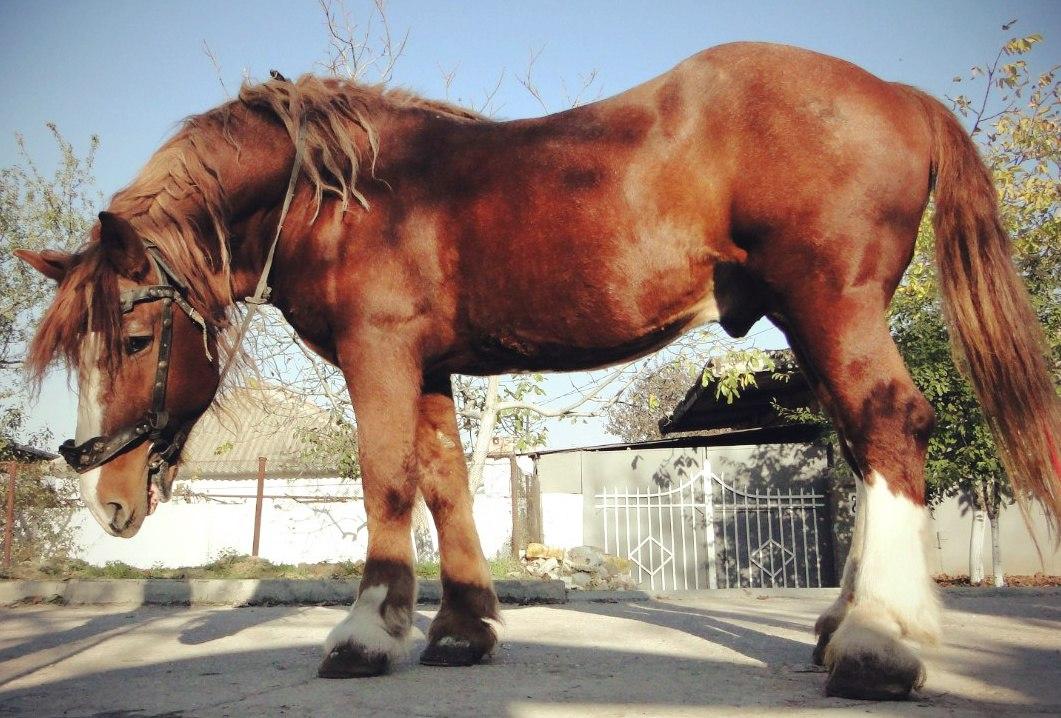
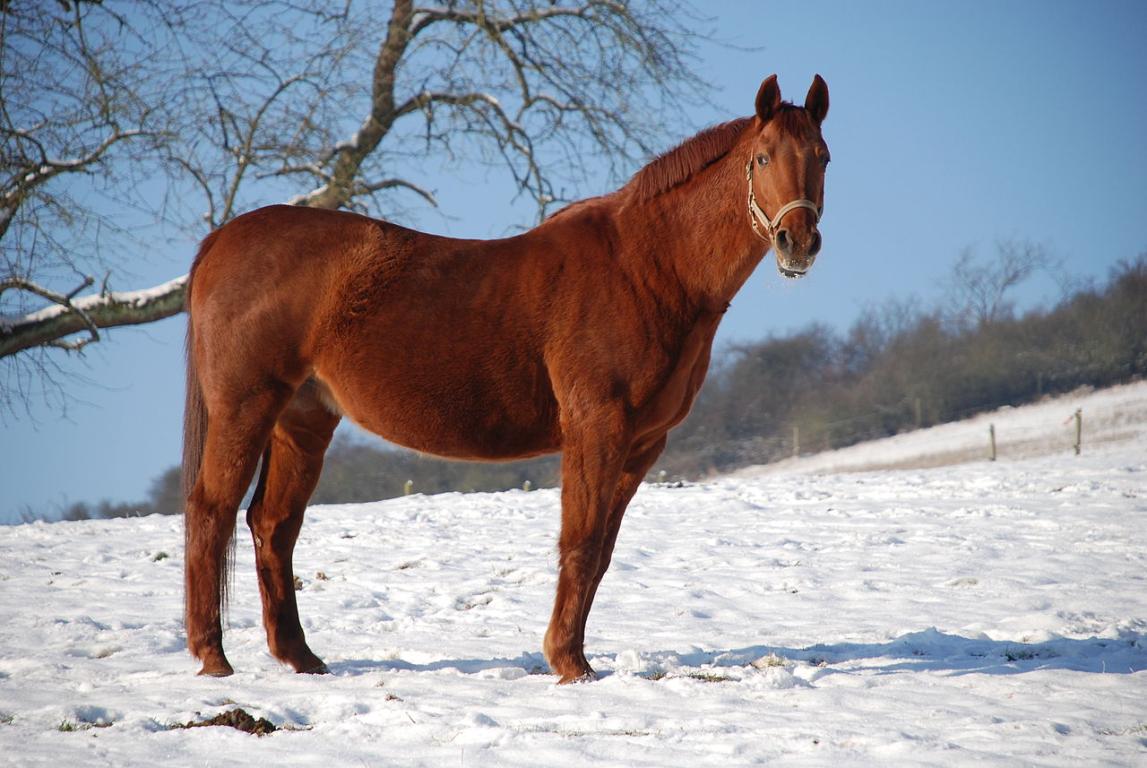
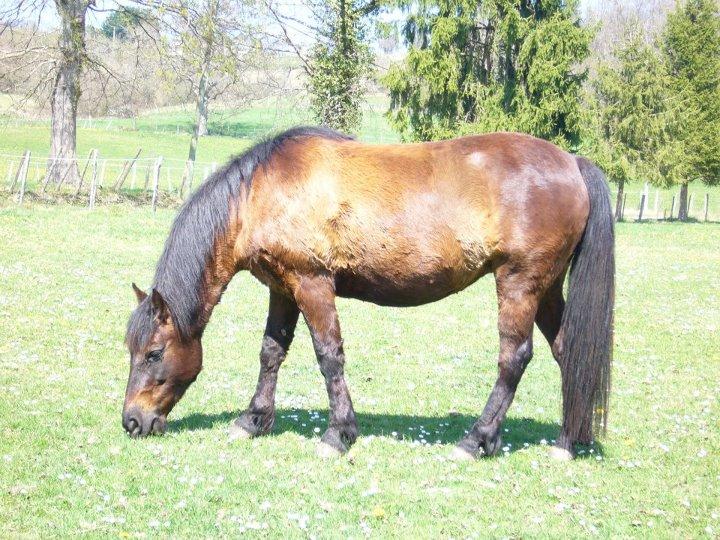
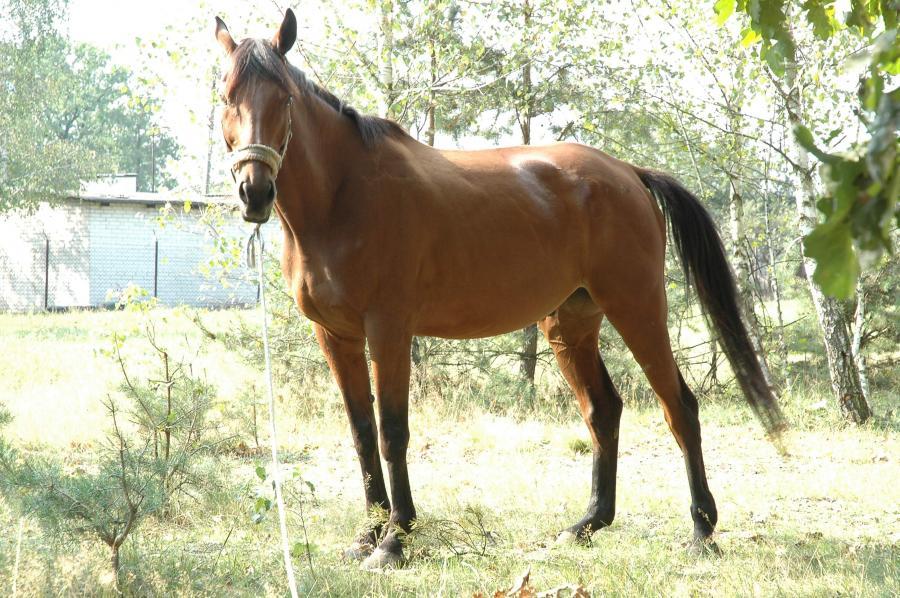
Discover the Jaca Navarra, a small rustic equine breed from Navarre, adapted to mountainous areas and preserved as part of Spain’s local heritage.
By the Chevaux du Monde editorial team · Published on · Updated on
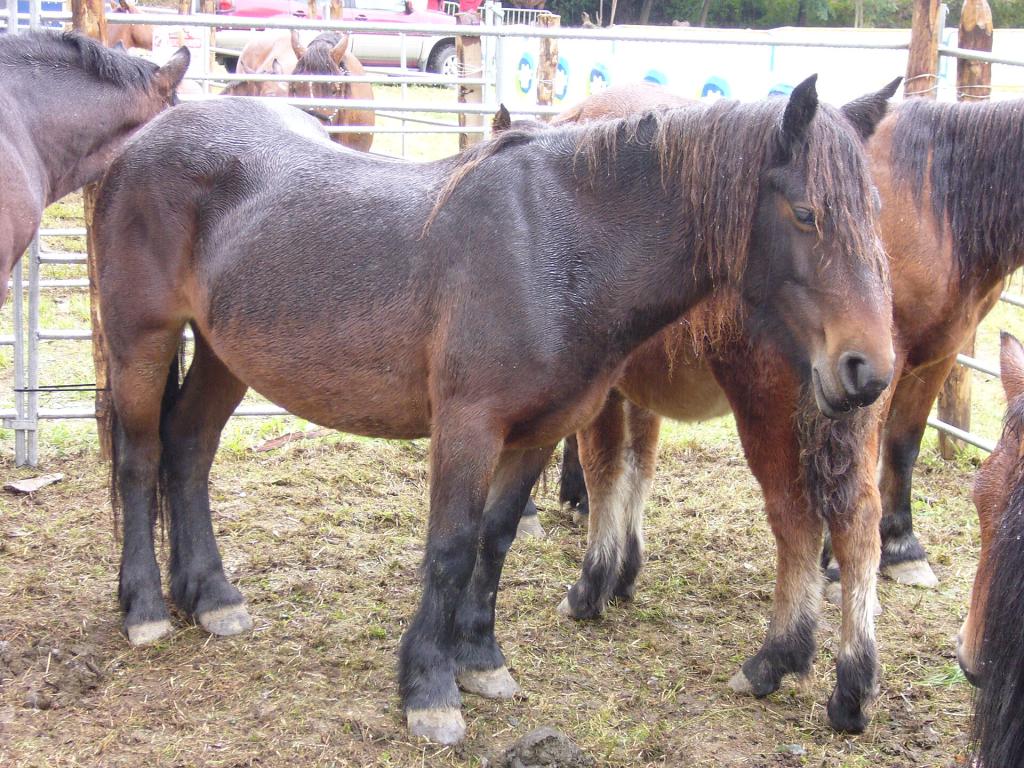
Type: Pony
Weight: 425 – 500 kg
Height: 126 – 136 cm
The Jaca Navarra is a native equine breed from the Foral Community of Navarre, in northern Spain. It is mainly associated with rural and mountainous areas of Navarre, where horses were traditionally raised outdoors, sometimes in demanding conditions.
This breed developed in a context of extensive farming, with animals able to live outside for much of the year. Its hardiness, frugality and resistance are linked to its adaptation to grazing areas, mountain terrain and the natural environments of Navarre.
The Jaca Navarra is part of Spain’s equine genetic heritage. Like several local Iberian breeds, it has been preserved thanks to the work of breeders and an official conservation programme, designed to maintain the breed, its morphological type and its genetic diversity.
The Jaca Navarra is mainly bred in the Foral Community of Navarre, in northern Spain. The breed is associated with rural areas of Navarre, especially extensive grazing lands where horses may live in semi-liberty for part of the year.
The breed is particularly adapted to mountain environments, natural pastures and areas with varied relief. Its traditional breeding system is based on fairly rustic conditions, with animals able to move across uneven terrain and make use of local forage resources.
Today, the Jaca Navarra is bred mainly as part of a local breed conservation approach. Breeders aim to maintain its morphological type, hardiness and genetic diversity. Its breeding area therefore remains strongly centred on Navarre, rather than being widely spread internationally.


The Jaca Navarra has genetic importance mainly because it helps preserve a native Spanish equine breed. It is part of the living heritage of Navarre and belongs to the local breeds whose population must be monitored to avoid genetic impoverishment.
Its genetic value also lies in its qualities of hardiness, frugality and adaptation to mountainous areas. These traits are valuable because they reflect long-term selection under extensive farming conditions, with animals able to make use of difficult natural environments.
The conservation of the Jaca Navarra contributes to maintaining the genetic diversity of Iberian equines. Although it is not mainly used as a modern improvement breed, it represents an important genetic resource for preserving traits linked to resistance, local adaptation and extensive management.
The main challenge is therefore to maintain a sufficiently varied population, with monitoring of the stud book, breeding animals and bloodlines. This helps limit the risks linked to inbreeding and preserve the breed’s own type.
The Jaca Navarra is a native equine breed from the Foral Community of Navarre, in northern Spain. It descends from a type of small local horse long adapted to mountain areas, extensive pastures and sometimes difficult rural conditions.
Its history is linked to a traditional outdoor breeding system, with animals able to live on uneven terrain and make use of limited natural resources. This selection favoured a hardy, frugal, resistant and vigorous breed, rather than a horse specialised for modern sport.
Like many local Iberian breeds, the Jaca Navarra declined with the modernisation of agriculture, the decrease in traditional uses of horses and economic changes in rural areas. This reduction in numbers made genetic preservation necessary.
The breed is now managed through a stud book and a conservation programme. The association JACANA, dedicated to Jaca Navarra breeders, plays a central role in maintaining the breed type, monitoring breeding animals and safeguarding this Navarrese equine population.
Today, the Jaca Navarra is mainly valued as a local heritage breed, useful for the conservation of domestic biodiversity, extensive farming and the maintenance of some natural areas. Its future depends primarily on committed breeders and careful management of genetic diversity.
The Jaca Navarra is described as a hardy, lively and resistant breed, adapted to outdoor living in the rural and mountainous areas of Navarre. Its behaviour reflects its traditional breeding system: it is generally a frugal, enduring and resourceful small equine, able to adapt to sometimes difficult natural conditions.
The breed is known for its vigour and rather energetic temperament. It is not a horse selected primarily for modern sport or riding-school work, but rather a local, robust animal, used to moving across varied terrain and living under extensive farming conditions.
The Jaca Navarra can be used for simple activities such as rural leisure, light trail riding or pack work, but its behaviour depends greatly on the level of handling and education it has received. Individuals raised in semi-liberty may require progressive training to become fully familiar and easy to handle.
Overall, the Jaca Navarra can be presented as a hardy, lively, resistant and mountain-adapted breed, with a naturally active temperament. It is best suited to simple and traditional uses, provided it is properly handled and educated.
The future prospects of the Jaca Navarra mainly depend on the conservation of its population. As a local native breed, its future relies on the
monitoring of the stud book, the management of breeding animals and the maintenance of sufficient genetic diversity to limit inbreeding.
The breed may also benefit from growing interest in rustic local breeds and rural heritage. Its strong identity linked to Navarre can help make it better known, especially through conservation initiatives, extensive breeding systems and the promotion of mountain territories.
The Jaca Navarra could retain an interesting role in the maintenance of natural areas, extensive grazing and the management of difficult rural zones. Its hardiness and ability to make use of poor environments are assets at a time when greater importance is being given to breeds adapted to their local environment.
A major sporting or commercial expansion of the breed should not necessarily be expected. Its future seems more closely linked to reasoned preservation, local breeding and uses compatible with its type: rural leisure, light trail riding, extensive grazing and genetic conservation.
To date, the official sources available on the Jaca Navarra do not report any major hereditary disease specific to the breed. It is therefore better to avoid mentioning a precise condition unless it is clearly documented by the stud book, the conservation programme or a reliable veterinary source.
The Jaca Navarra is mainly described as a hardy, vigorous breed adapted to extensive farming. Its traditional lifestyle in rural and mountainous areas of Navarre suggests good overall resistance, provided it receives standard care: suitable feeding, health monitoring, hoof care and regular supervision of body condition.
The main health concern is more closely related to genetic diversity. Since the breed has a limited population and is part of a conservation programme, monitoring breeding animals, bloodlines and the stud book is important to limit the risks of inbreeding and preserve the breed’s variability.
As with any small hardy equine raised outdoors, attention should be paid to the hooves, limb conformation, teeth, parasite control, body condition and the effects of an overly rich diet. Its hardiness does not mean it can be kept without care, but rather that it is well adapted to extensive conditions when they are properly managed.