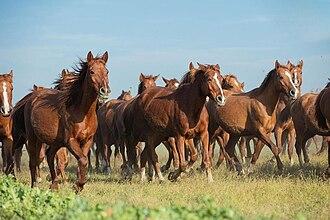
Discover the Rocky Mountain Horse, an American breed renowned for its smooth gait, gentle temperament, and distinctive chocolate-colored coat.
By the Chevaux du Monde editorial team · Published on · Updated on
Type: Gaited Horse
Continent: America
Country: United States
Weight: 410 – 545 kg
Height: 145 – 163 cm
The Rocky Mountain Horse is a saddle horse breed developed in eastern Kentucky, in the United States. Despite its name, it did not originate in the Rocky Mountains, but rather in the rural regions located in the foothills of the Appalachian Mountains. The people living in these areas sought a versatile horse capable of working on farms, traveling long distances, and providing a comfortable ride for everyday use.
The breed gradually developed during the 19th century and the early 20th century through the selection of local gaited horses known for their endurance, hardiness, calm temperament, and exceptionally smooth natural gait. Breeders primarily focused on producing horses suited to the needs of Kentucky's rural families.
The modern history of the Rocky Mountain Horse is closely linked to a foundation stallion named Old Tobe. Considered one of the most influential sires in the breed's history, he passed on many desirable traits to his descendants, including his smooth gait, good disposition, and durability. A large proportion of modern bloodlines trace directly or indirectly back to this stallion.
Today, the Rocky Mountain Horse is primarily used for trail riding, leisure riding, and outdoor recreational activities. Its reputation is based on its natural four-beat gait, which provides exceptional comfort for the rider, as well as its gentle temperament and versatility.
The Rocky Mountain Horse is primarily associated with the state of Kentucky in the eastern United States, where the breed developed within rural communities located in the foothills of the Appalachian Mountains. The counties of Estill, Rockcastle, Madison, and surrounding areas are considered the historical birthplace of the breed.
Over time, Rocky Mountain Horse breeding expanded into several southeastern American states. Significant breeding populations can now be found in Tennessee, Indiana, Ohio, Virginia, North Carolina, and Missouri. These regions provide favorable conditions for raising trail and leisure horses.
Thanks to its calm temperament and exceptionally comfortable gait, the breed has gradually spread throughout many other American states. Today, the Rocky Mountain Horse is bred across much of the United States, both by professional breeders and by private enthusiasts of gaited horses.
Although the majority of the world's Rocky Mountain Horse population remains concentrated in the United States, the breed is also found in smaller numbers in Canada and several European countries. However, these populations remain modest compared to those in its country of origin.


The Rocky Mountain Horse holds a unique place among American gaited horse breeds. It is particularly renowned for its ability to pass on a naturally smooth four-beat gait, which provides exceptional comfort for the rider. This trait is associated with a mutation of the DMRT3 gene, which is also found in several other gaited horse breeds. The preservation of this characteristic remains one of the primary goals of breed selection programs.
Developed in the rural regions of Kentucky, the Rocky Mountain Horse represents a distinctive genetic heritage shaped by generations of selection for versatility, calm temperament, endurance, and hardiness. Preserving this breed contributes to maintaining the genetic diversity of North American riding horses.
Breeders have long sought individuals capable of passing on a docile nature, ease of handling, and adaptability to a wide range of riders. These behavioral traits have played a major role in establishing the breed's reputation and remain important selection criteria today.
The relatively small foundation population of the Rocky Mountain Horse, particularly the significant influence of the stallion Old Tobe, has led breed organizations to closely monitor inbreeding levels and genetic diversity. Modern breeding programs aim to preserve the breed's historic characteristics while maintaining a healthy and genetically sustainable population.
Thanks to its smooth gait, comfort, and agreeable temperament, the Rocky Mountain Horse is occasionally used to reinforce these qualities in certain gaited horse breeding programs. However, its influence remains more limited than that of major international breeds, as the primary objective continues to be the preservation and improvement of the breed itself.
The history of the Rocky Mountain Horse began in the rural regions of eastern Kentucky, in the United States, probably during the 19th century. Despite its name, the breed did not originate in the Rocky Mountains but in the foothills of the Appalachian Mountains. Farmers and residents of these isolated areas sought a versatile horse capable of working on the farm, carrying riders over long distances, and traveling comfortably across rugged terrain.
Unlike many breeds developed for warfare, racing, or high-level sport, the Rocky Mountain Horse evolved as an everyday utility horse. Breeders favored animals with a calm temperament, good endurance, sure-footedness, and an exceptionally comfortable gait that allowed riders to travel long distances without fatigue.
One of the most important horses in the breed's history was a stallion named Old Tobe, born in the early 20th century. Widely used as a breeding stallion in Kentucky, he passed on the traits that define the Rocky Mountain Horse today: a smooth natural gait, a gentle disposition, sound conformation, and remarkable versatility. A significant proportion of modern bloodlines can be traced back to this foundation sire.
For many decades, the Rocky Mountain Horse remained primarily known within its native region. As interest in gaited horses increased, breeders established the Rocky Mountain Horse Association (RMHA) in 1986 to preserve the breed's characteristics, regulate breeding practices, and maintain an official registry of registered horses.
From the late 20th century onward, the reputation of the Rocky Mountain Horse gradually spread throughout the United States. Its riding comfort, pleasant temperament, and versatility attracted many leisure riders, encouraging the development of breeding programs in numerous states and leading to a more limited international presence.
Today, the Rocky Mountain Horse is widely recognized as an excellent horse for trail riding, leisure riding, and equestrian tourism. Its history remains closely tied to the rural traditions of Kentucky, while its natural qualities continue to attract new enthusiasts around the world.
The Rocky Mountain Horse is renowned for its gentle temperament, natural calmness, and remarkable emotional stability. For generations, breeders have selected horses that are easy to handle and pleasant to live with, helping to shape a breed that is especially valued by leisure riders.
This breed is generally described as affectionate, cooperative, and attentive to its rider. The Rocky Mountain Horse often develops a strong bond of trust with humans and is willing to work when trained with consistency and respect.
Intelligent and responsive, the Rocky Mountain Horse typically learns new tasks and exercises quickly. Its agreeable disposition makes training easier and contributes to its success in a variety of equestrian activities, particularly trail riding and leisure riding.
Thanks to its steady character and comfortable gait, the Rocky Mountain Horse is well suited to both beginner riders and more experienced equestrians. Its predictable behavior and willingness to cooperate make it a popular partner for outdoor riding and long-distance trails.
Although energetic when asked to perform, the Rocky Mountain Horse is generally not considered nervous or difficult to manage. It typically displays a balanced combination of energy, endurance, and composure, contributing to its reputation as a dependable mount.
Its calm temperament, sure-footedness, and ability to remain composed in a variety of environments explain why it is particularly sought after for trail riding, equestrian tourism, and outdoor recreational activities.
The Rocky Mountain Horse is attracting increasing interest from riders seeking a comfortable, versatile, and easy-to-handle horse. Its natural four-beat gait, particularly appreciated for trail riding, meets the growing demand for horses suited to leisure riding and outdoor activities.
Breed associations continue their efforts to preserve the historical qualities of the Rocky Mountain Horse, including its calm temperament, hardiness, comfortable gait, and versatility. Breeding programs aim to maintain these traits while avoiding excessive specialization that could alter the breed's identity.
Due to the significant influence of certain foundation sires, breeders are paying increasing attention to the management of genetic diversity. Pedigree monitoring and careful breeding strategies help reduce the risks associated with inbreeding and ensure the long-term sustainability of the population.
Although the breed remains primarily concentrated in the United States, it is attracting growing interest in several other countries, particularly for trail riding, equestrian tourism, and leisure riding. This international expansion could contribute to a gradual increase in population numbers over the coming decades.
Current equestrian trends place significant emphasis on animal welfare, versatility, and horses that are easy to manage. Thanks to its cooperative nature, durability, and exceptional riding comfort, the Rocky Mountain Horse possesses strong qualities that should help maintain its popularity and support its continued development in the years ahead.
The Rocky Mountain Horse is generally considered a hardy, resilient breed with good longevity. Selected over generations to work and travel through the rolling landscapes of Kentucky, it possesses a strong constitution and adapts well to various environments when provided with appropriate care and management.
Like many breeds that originated from a relatively limited number of foundation animals, the Rocky Mountain Horse receives particular attention regarding genetic diversity. Breed associations and breeders carefully monitor pedigrees to reduce the risks associated with inbreeding and to preserve the overall health of the population.
The primary documented genetic disorder in the breed is MCOA (Multiple Congenital Ocular Anomalies), an inherited condition linked to the gene responsible for certain Silver coat colors. This disorder can cause a range of eye abnormalities that vary in severity among affected horses. Mild cases may have little impact on vision, while more severe forms can result in significant visual impairment. Genetic testing is now available to identify carrier breeding animals.
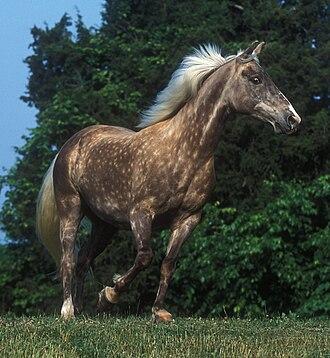
The chocolate coat with flaxen mane and tail, a hallmark of the Rocky Mountain Horse, is commonly associated with the Silver gene. Although this gene is highly valued within the breed, responsible breeders take its connection to MCOA into account when planning matings in order to reduce the risk of transmitting severe forms of the condition.
Like most riding horse breeds, the Rocky Mountain Horse may experience various health issues that are not specific to the breed, including injuries affecting the tendons, ligaments, back, or joints due to age, physical activity, or management conditions. However, no other major genetic disorder is currently recognized as being particularly common within the breed.
Modern breeding programs place significant emphasis on genetic testing, sound limb conformation, eye health, and the maintenance of genetic diversity. These practices help preserve the breed's qualities while reducing the occurrence of inherited health problems.