Baise–Guangxi

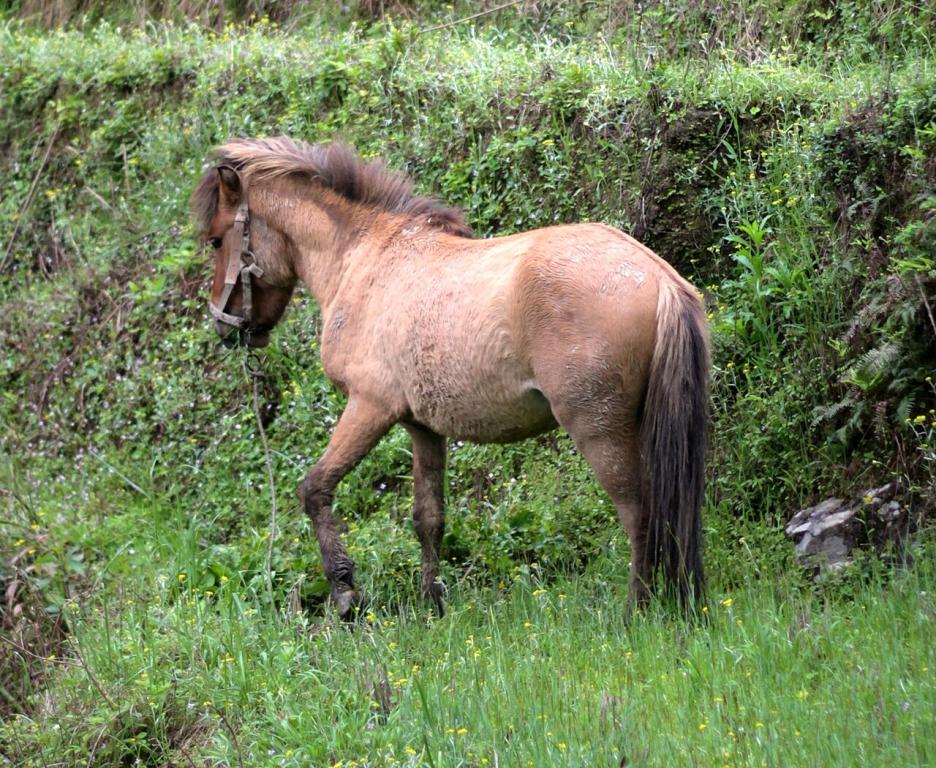
Horse along a terraced rice paddy, Longsheng, Guangxi, China - CC BY-2.0 - Elvir K
Horse along a terraced rice paddy, Longsheng, Guangxi, China CC BY-2.0 – Elvir K Source

General Characteristics

Region of Origin

Continent: Asia

Country: China

Measurements

Weight: 200 – 300 kg

Height: 112 – 117 cm

Coat Colors

  • Chestnut / Sorrel : Reddish-brown coat with matching mane and tail; no black.
  • Black : Solid black hair and mane, dark skin.
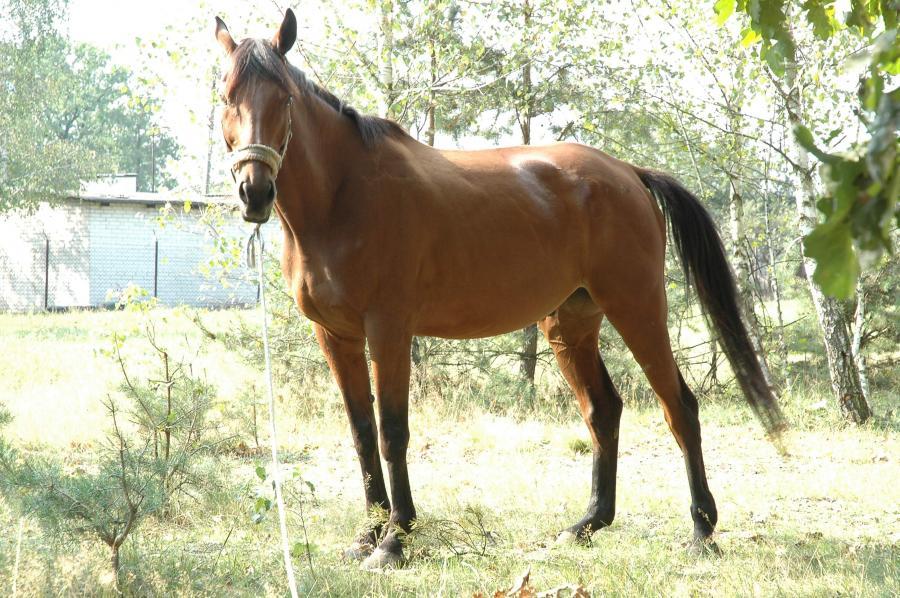
  • Bay : Brown body, black mane and tail, black lower legs/head.
  • Gray : Born dark and lightens with age; mixed dark and white hairs.

Disciplines & Skills

  • Endurance Riding
  • Draft Work
  • Pack horse / Pack animal

Origin

The Baise horse (pony) originates from southwestern China, in the Guangxi Zhuang Autonomous Region, more precisely around the Baise Prefecture.

This area is characterized by:

  • mountainous and hilly terrain,
  • a hot and humid subtropical climate,
  • poor to medium-quality soils, often rocky,
  • a dense network of narrow paths connecting villages.

These natural constraints have shaped a small, robust, sure-footed and extremely frugal horse, perfectly adapted to pack work and daily labor.


Historical origin

The presence of the Baise horse has been attested for more than 2,000 years, in continuity with the ancient indigenous horses of southern China.

It descends from old local equine populations, little influenced by Western bloodlines, unlike the horses of the northern plains.

Its selection took place without a modern stud-book for centuries, through functional, peasant-based selection.


Cultural origin

The Baise horse is closely linked to the rural and ethnic cultures of Guangxi, particularly:

  • the Zhuang (the majority ethnic group),
  • the Yao, Miao, and other mountain minorities.

In these societies:

  • the horse is a vital working tool, not a prestige animal,
  • it contributes directly to family subsistence (agriculture, transport, markets),
  • it is often passed down from generation to generation.

Traditional socio-economic role

  • Companion of the mountain farmer,
  • Pack animal for rice, wood and agricultural products,
  • Means of transportation before the development of paved roads,
  • Symbol of sobriety, endurance and reliability.

Heritage status

Today, the Baise horse is recognized as:

  • an indigenous Chinese horse breed,
  • a regional zootechnical heritage,
  • a protected genetic resource, integrated into national conservation programs.

The Baise is therefore not merely a horse: it is a living heritage of the Chinese mountains, bearing witness to an ancient balance between humans, animals and territory.

Breeding Area

Main area (historical core)

  • Guangxi Zhuang Autonomous Region (China)
  • Baise Prefecture (central city and surrounding rural districts)
  • Mountainous and hilly terrain, enclosed valleys, narrow paths
  • Hot and humid subtropical climate

This area constitutes the genetic core of the breed, where breeding is ancient, continuous and predominantly traditional.


Secondary areas of regional diffusion

  • Western and northwestern Guangxi,
  • Rural counties bordering Baise,
  • Small-scale family breeding operations,
  • Border margins with limited diffusion.

Occasional contacts with eastern Yunnan, where very similar horses are often locally assimilated.


Absence of structured exportation

  • Very limited diffusion outside China,
  • No structured breeding programs in Europe or the Americas,
  • Almost exclusive in situ presence, limiting genetic dilution.

Types of breeding environments

Mountain peasant farms:

  • Small herds (1 to 5 horses),
  • Mixed use: work, pack, rustic riding.

Semi-extensive systems:

  • Daytime grazing, shelter at night,
  • Primarily local feed (coarse forage).

Genetic conservation zones:

  • Official areas supported by Chinese authorities,
  • Objective: maintenance of breed type and genetic diversity.

Territorial challenges

  • Rural mechanization pressure → decline in numbers,
  • Local urbanization → reduction of grazing areas,
  • Strategic importance of maintaining active rural zones for the survival of the breed.

Morphology & Physical Traits

Icon Neck
Neck
Length: short to medium. Set low to medium.
Icon Hooves
Hooves
Small to medium-sized, very hard. Excellent resistance to wear on rocky and humid ground.
Icon Head
Head
Profile: straight to slightly concave. Forehead: broad.
Icon Chest
Chest
Broad and deep.
Icon Withers
Withers
Low and not prominent.
Icon Back
Back
Short and strong.
Icon Loin
Loin
Broad and powerful.
Icon Forelegs
Forelegs
Short and straight.
Icon Hind legs
Hind legs
Short and straight.
Icon Joints
Joints
Broad and resilient.
Icon Bone structure
Bone structure
Dense bone structure, clean joints.
Icon General musculature
General musculature
Thick, functional musculature (traction, pack work).
Icon Overall silhouette
Overall silhouette
Stocky pony with well-balanced proportions.

Genetic Importance

The Baise horse (pony) represents a genetic heritage of prime importance among Asian equine breeds, due to its ancient origins, geographical isolation, and strictly functional selection.


Ancient and weakly admixed genetic reservoir

Derived from indigenous equine populations of southern China, maintained in their native territory for over 2,000 years. Low introgression of foreign bloodlines, with very limited Western or northern Chinese influence. Preservation of a stable genetic background, close to primitive horses adapted to subtropical environments.


Major hereditary adaptations

The Baise horse concentrates highly valuable hereditary traits, including:

  • High tolerance to heat and humidity,
  • Remarkable feed efficiency (ability to utilize poor-quality forage),
  • Extremely hard hooves (result of natural selection on rocky terrain),
  • Overall resistance to local diseases,
  • High functional longevity.

These traits are genetically stable and transmitted over multiple generations.


Value for breeding programs

The Baise horse holds strategic interest for:

  • Controlled rustic crossbreeding programs (robustness, endurance),
  • Scientific research on climate adaptation,
  • Selection of low-input working horses for tropical and subtropical regions,
  • Studies on environmental resistance genes.

Importance for equine biodiversity

Recognized in China as a national animal genetic resource. Integrated into official genetic conservation areas in Guangxi Zhuang Autonomous Region. Its disappearance would result in an irreversible loss of equine genetic diversity in southern Asia.


Value for research and future breeding

  • Model for studying climate adaptation mechanisms,
  • Potential source of useful genes for rusticity and endurance programs in hot regions,
  • Reference breed for the development of sustainable, low-input working horses.

Heritage and cultural dimension

  • Genetic backbone of traditional mountain farming systems,
  • Result of a co-evolution between humans, horses and territory within Zhuang, Yao and Miao cultures,
  • Living element of regional zootechnical heritage.

The Baise horse represents an essential link in Asian equine biodiversity and a major asset in the context of climate resilience.

History

Ancient origins (Antiquity – Early Middle Ages)

The Baise horse (pony) traces its roots to indigenous equine populations of southern China, established for over 2,000 years in what is now Guangxi. Unlike the horses of the northern plains, often influenced by Central Asian nomadic bloodlines, the Baise developed in relative isolation, within mountainous and subtropical regions.

Selection was usage-based: only frugal, enduring and sure-footed individuals survived and reproduced.


Imperial era (Qin to Qing dynasties)

During China’s major dynasties:

  • the Baise horse was not a prestige military horse,
  • it became an indispensable peasant horse, used for pack work, local transport, light agricultural tasks, and regional trade.

It supported the daily lives of rural populations and ethnic minorities (Zhuang, Yao, Miao), playing a key role in:

  • market supply,
  • circulation of goods between valleys,
  • agriculture in difficult terrain.

The breed persisted without a written standard, maintained through community-based empirical selection.


19th – early 20th century

With China’s gradual opening and the introduction of foreign horse breeds in some regions:

  • the Baise horse remained largely unaffected by crossbreeding,
  • its mountainous distribution limiting the introduction of non-native horses.

It thus retained its primitive, compact and functional type, while other local breeds disappeared or became heavily crossbred.


Modern period (mid-20th century)

After 1949, China undertook a systematic inventory of animal genetic resources:

  • the Baise horse was identified as a distinct indigenous breed,
  • its economic role was acknowledged in rural Guangxi.

However, agricultural mechanization led to a gradual decline in traditional use, resulting in reduced numbers.


Recognition and conservation (late 20th – 21st century)

In response to the risk of disappearance:

  • the Baise horse was integrated into national genetic conservation programs,
  • an official conservation area was established in the Baise region,
  • a national standard (Chinese norm) was defined, fixing its morphological and functional characteristics.

At the same time, modern scientific studies (genetics, climate adaptation) confirmed its antiquity and genomic uniqueness.


A living history today

Today, the Baise horse is no longer merely an agricultural tool, but also a living heritage, a regional cultural symbol, and a model of equine resilience in challenging environments.The Baise thus embodies a discreet yet essential history: that of a horse shaped by mountains, climate and rural life, a faithful companion to generations of people, and today a heritage to be preserved.

Behavior & Character

The Baise horse (pony) is characterized by a calm, reliable and enduring temperament, the result of centuries of selection based on daily use in mountainous environments.


Dominant traits

  • Calm and composed: measured reactions, low emotional reactivity
  • Docile and cooperative: readily accepts handling and work
  • Courageous: does not hesitate in difficult passages (slopes, slippery ground)
  • Patient: tolerates long, repetitive tasks without nervousness

Functional intelligence

  • Excellent sense of orientation in rugged terrain
  • Strong memory of paths and work routines
  • Ability to assess danger, placing its feet cautiously

Relationship with humans

  • Close bond with humans in traditional farming contexts
  • Strong attachment to its caretaker and environment
  • Low dominance, rarely aggressive
  • Suitable for less experienced riders in rustic conditions

Behavior at work

  • Regular and consistent, rather than fast
  • Very sure-footed under saddle or pack
  • High tolerance to environmental stress (heat, humidity, rural noise)
  • Works efficiently with minimal nutritional requirements

Group behavior

  • Sociable with other horses
  • Simple, low-conflict hierarchy
  • Well adapted to small family herds

Behavioral limitations

  • Not demonstrative or spectacular,
  • Low explosiveness: not suited to modern sport disciplines,
  • May appear stubborn when perceiving danger (self-preservation instinct).

The Baise horse is a trustworthy equine, shaped for close coexistence with humans, embodying a balanced and resilient temperament, perfectly adapted to rural and mountainous realities.

Future Perspectives

Current situation and challenges

Baise horse populations remain relatively modest, with estimates of approximately 4,000 to 4,200 horses and mares living within the conservation area in Guangxi, reflecting a limited but stable population in its native range.Historically, the breed has been one of the 78 animal breeds in China included in a national genetic conservation program, meaning it is officially recognized and protected at both zootechnical and heritage levels.The existence of conservation areas such as the National Baise Horse Genetic Resources Conservation Area allows for population monitoring, line preservation, and maintenance of genetic diversity, reducing the negative effects of inbreeding and enabling long-term population tracking.


Rural modernization

As with all rustic working breeds, the progressive disappearance of horse-powered agriculture and increasing mechanization in rural areas continue to reduce the daily use of the Baise horse, potentially leading to lower birth rates and an aging population.


Risk of genetic dilution

Without rigorous lineage management, the breed could face genetic dilution through uncontrolled crossbreeding or the introduction of external horses, particularly in less regulated areas.


Tourism and leisure

The Baise horse is already used locally in the tourism sector (trekking, leisure riding, cultural immersion), which may serve as a means of economic valorization while encouraging breeding continuity and visibility.


Scientific research

Recent genomic studies, including whole-genome resequencing, confirm the genetic importance and native character of the Baise horse, attracting growing interest from researchers in animal genetics and equine biodiversity.

These studies open pathways for applied research programs, particularly in environmental adaptation, climate resilience, and equine health.

Health

The Baise horse (pony) is renowned for its robust health and great longevity, the result of natural and peasant selection in demanding mountain environments.


General robustness

  • Solid and homogeneous constitution,
  • Low incidence of chronic diseases,
  • Good resistance to climatic variations (heat, humidity, rainfall).

Locomotor system

  • Very hard, wear-resistant hooves,
  • Thick sole and strong heels,
  • Few foot problems; shoeing often unnecessary in traditional conditions,
  • Dry, resilient joints, adapted to rugged terrain.

Disease resistance

  • Good natural immunity to local diseases,
  • High tolerance to internal and external parasites under traditional management,
  • Lower sensitivity to metabolic diseases (laminitis, obesity) thanks to its frugal metabolism.

Digestive system

  • Excellent utilization of coarse forage,
  • Digestive system adapted to a poor but regular diet,
  • Low predisposition to colic in extensive breeding conditions.

Reproduction and longevity

  • Good fertility in mares,
  • Generally easy foaling,
  • High functional longevity: horses remain usable for work or rustic riding for many years.

Points of attention (modern breeding)

  • Risk of parasitic infestation if health management is neglected,
  • Possible sensitivity to modern intensive breeding diseases (stress, excessive confinement),
  • Need to avoid overly rich diets, unsuited to its rustic metabolism.

The Baise horse is a healthy and enduring equine, ideal for low-input breeding systems that respect its natural rhythm, and a remarkable example of biological resilience among indigenous equine breeds.

Breeds to discover