Discover the Mongolian Horse, the legendary mount of Genghis Khan. Hardy, tireless, and perfectly adapted to the steppes, it continues to fascinate today.
By the Chevaux du Monde editorial team · Published on · Updated on
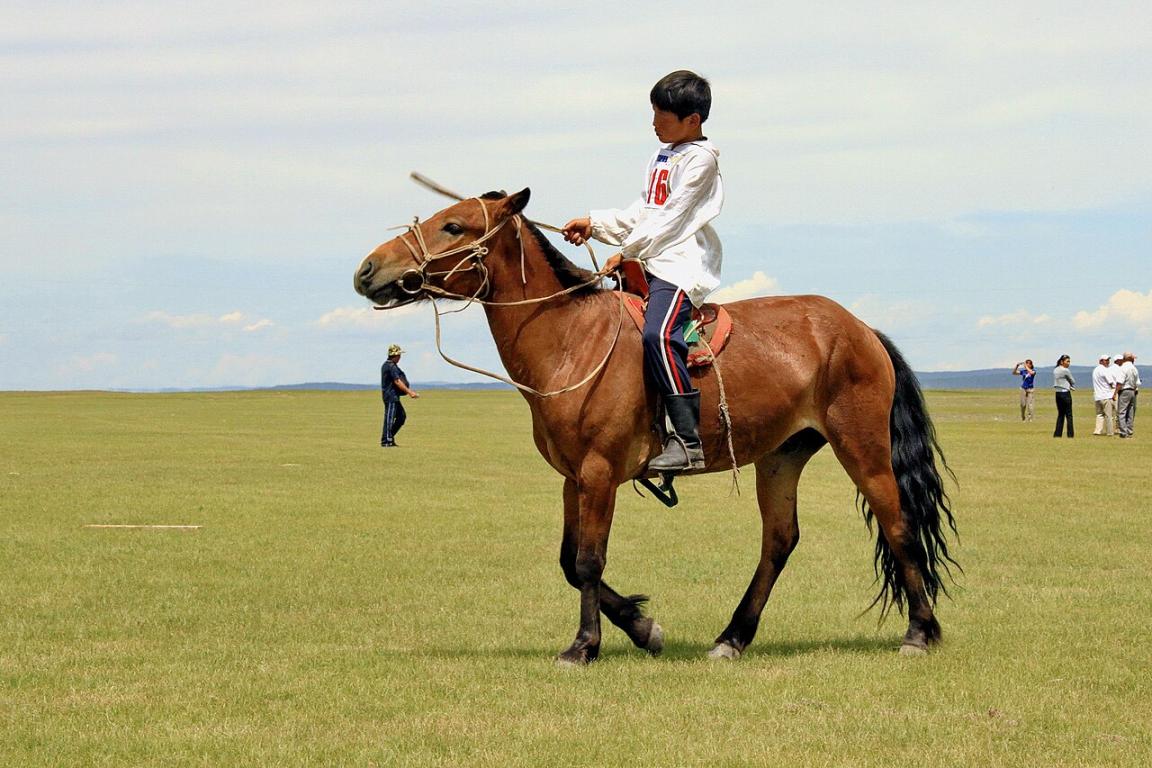
Type: Primitive Horse
Continent: Asia
Country: Mongolia
Weight: 250 – 750 kg
Height: 120 – 145 cm
The Mongolian Horse (Mongolian: Монгол морь or Адуу) is a horse breed originating from Mongolia, considered one of the oldest surviving domestic horse populations in the world. Raised for thousands of years across the vast Central Asian steppes, it developed in an environment characterized by harsh winters, dry summers, and long distances. This natural selection produced a horse that is exceptionally hardy, resilient, and capable of surviving with limited resources.
For centuries, the Mongolian Horse has played a central role in the lives of Mongolia's nomadic communities. It is used for transportation, herding livestock, hunting, daily travel, and the traditional production of fermented mare's milk. Its ability to live outdoors year-round, even under extreme climatic conditions, has made it an indispensable partner for nomadic herders.
The Mongolian Horse is inseparable from the history of Genghis Khan and the Mongol conquests of the 13th century. Mongol warriors maintained several horses and rotated between them during campaigns, allowing them to cover immense distances in remarkably short periods. The endurance, frugality, and toughness of these horses played a crucial role in the expansion of the largest contiguous land empire in history.
The Mongolian Horse is renowned for its extraordinary adaptability. It can forage for food beneath the snow during winter, withstand extreme temperature fluctuations, and travel long distances with minimal resources. This natural selection process has shaped a horse that is highly enduring, disease-resistant, and capable of thriving in conditions that would challenge many other breeds.
Today, several million horses still live in Mongolia and remain an essential part of the nation's culture. They participate in the famous races of the Naadam Festival, one of the country's most important celebrations. The Mongolian Horse remains a powerful symbol of freedom, independence, and tradition, deeply embedded in the identity of the Mongolian people.
Despite the modernization of Mongolian society, the Mongolian Horse continues to hold considerable economic, cultural, and historical importance. Conservation efforts seek to preserve the qualities that have made the breed famous: its hardiness, endurance, resilience, and remarkable adaptation to life on the steppes.
The Mongolian Horse is primarily bred in Mongolia, a country whose vast steppes, semi-desert areas, and mountainous regions have shaped the breed's characteristics for thousands of years. These demanding environments have favored the development of a horse that is exceptionally hardy, enduring, and capable of living outdoors throughout the year.
Unlike some breeds associated with a specific region, the Mongolian Horse can be found across nearly the entire country. It is particularly common in the central, eastern, and western provinces of Mongolia, where it continues to support the traditional activities of nomadic herders. Horses generally live in semi-feral conditions within large herds that roam extensive natural landscapes.
The historical breeding area of the Mongolian Horse extends beyond the present-day borders of Mongolia. Related or closely associated horse populations are also found in parts of Inner Mongolia in China and in several regions of Central Asia, where nomadic equestrian traditions have long favored horses with similar characteristics.
The breeding of the Mongolian Horse has traditionally been linked to a nomadic or semi-nomadic lifestyle. Horses graze freely throughout the year and obtain much of their food on their own. This extensive management system helps maintain their natural resilience, independence, and exceptional adaptation to extreme climatic conditions.
Today, although a small number of Mongolian Horses are raised in other countries for conservation or research purposes, the vast majority of the population remains concentrated in Mongolia. The breed remains deeply connected to the landscapes, climate, and cultural traditions of the Mongolian steppes that have shaped its identity over the centuries.


The Mongolian Horse represents a unique genetic resource among the world's horse breeds. For centuries, its development was driven primarily by the natural conditions of the Mongolian steppes rather than intensive human selection. This process helped preserve traits such as hardiness, endurance, disease resistance, and the ability to survive in particularly challenging environments.
Considered one of the oldest surviving domestic horse populations, the Mongolian Horse represents an important reservoir of genetic diversity. Its heritage contributes to the preservation of ancient bloodlines that have retained numerous adaptations developed over centuries in the regions of Central Asia.
The natural qualities of the Mongolian Horse have attracted interest from certain breeding programs seeking to improve resilience, efficient use of limited feed resources, longevity, and endurance in other horse populations. Its remarkable adaptation to extreme climates is also a subject of study for researchers and breeders working on equine resilience to environmental challenges.
The Mongolian Horse also plays an important role in research focused on the evolution and domestication of horses. Genetic studies conducted on this population help scientists better understand the ancient migrations of horses and the relationships between various breeds from Asia and Europe.
As crossbreeding with foreign breeds and changes in breeding practices continue, preserving the genetic characteristics of the Mongolian Horse remains an important challenge. Maintaining this diversity helps protect an exceptional biological heritage as well as a horse population uniquely adapted to the natural conditions of the Mongolian steppes.
The Mongolian Horse (Mongolian: Монгол морь or Адуу) is considered one of the oldest surviving populations of domestic horses in the world. Its history is closely linked to that of the nomadic peoples of the Central Asian steppes, who have bred horses for several millennia. Archaeological discoveries and genetic studies suggest that horses from this region played a major role in the development of equestrian culture across Eurasia.
Since ancient times, the Mongolian Horse has been an essential part of daily life for the Mongolian people. It has been used for transportation, livestock herding, hunting, seasonal migrations, and trade. Its ability to survive in harsh environments and travel long distances made it an indispensable partner of nomadic pastoral societies.
The history of the Mongolian Horse is inseparable from that of Genghis Khan and the Mongol Empire during the 13th century. Mongol armies relied on an exceptionally mobile cavalry capable of covering dozens of kilometers each day thanks to the remarkable endurance of their horses. Warriors often maintained several mounts and rotated between them during campaigns, allowing the Mongols to extend their rule across vast regions of Asia and Europe.
Unlike many modern breeds, the Mongolian Horse was not developed through a strict breeding program focused on appearance. For centuries, the natural conditions of the steppes played a major role in its evolution. Only horses capable of surviving harsh winters, food shortages, and long migrations reproduced successfully, gradually strengthening the breed's hardiness, endurance, and resilience.
Over the centuries, the Mongolian Horse has become one of the most important symbols of Mongolia. It holds a prominent place in traditions, historical accounts, folk songs, and national celebrations. The famous horse races of the Naadam Festival continue to demonstrate the deep bond between the Mongolian people and their horses.
Despite the country's modernization, the Mongolian Horse remains widely present throughout rural Mongolia. Millions of horses continue to live in semi-feral conditions within large herds. This remarkable historical continuity has allowed the breed to retain many ancestral characteristics and remain one of the finest examples of a horse adapted to life on the vast steppes of Asia.
The Mongolian Horse is renowned for its independent nature, developed through centuries of living in semi-feral conditions on the steppes. Accustomed to making its own decisions in a sometimes harsh environment, it possesses a strong survival instinct and a high degree of self-reliance. Despite this independence, it can form a strong bond of trust with its rider when handled with patience and consistency.
The Mongolian Horse is generally described as calm, hardy, and not easily stressed. Its traditional way of life has enabled it to develop an exceptional ability to adapt to climatic changes, long journeys, and difficult conditions. This mental stability is one of the breed's most valued qualities.
Accustomed to traveling long distances and living in challenging environments, the Mongolian Horse demonstrates remarkable endurance, both physically and mentally. It can sustain prolonged effort while remaining composed and responsive to its surroundings.
The Mongolian Horse possesses strong practical intelligence and excellent observational skills. Nomadic herders value its ability to remember routes, locate water sources, and adapt quickly to unfamiliar situations. This intelligence is closely linked to its traditional lifestyle in freedom or semi-freedom.
Like many breeds that live in herds, the Mongolian Horse has a highly developed social instinct. It is generally comfortable around other horses and maintains stable social hierarchies within the group. This characteristic facilitates management in traditional extensive breeding systems.
Thanks to its combination of calmness, endurance, intelligence, and resilience, the Mongolian Horse is regarded as an exceptionally reliable partner for long-distance travel. These qualities have greatly contributed to its reputation among nomadic peoples and help explain its historical role in major migrations and the Mongol conquests.
The Mongolian Horse benefits from a major advantage for its future: its cultural and economic importance in Mongolia. Still widely used by nomadic herders for transportation, livestock management, and traditional activities, it remains deeply integrated into the daily lives of many rural communities.
The Mongolian Horse is regarded as a true national symbol. This recognition encourages initiatives aimed at preserving the breed's historical characteristics. Government authorities, breeders, and various organizations work together to maintain the qualities of hardiness, endurance, and adaptation to extreme conditions for which the breed is renowned.
Changing lifestyles, increasing urbanization, and the growing use of motorized vehicles in certain regions may reduce the horse's traditional role. In addition, the introduction of foreign breeds to improve specific traits presents a potential risk of diluting the breed's original genetic heritage if crossbreeding is not carefully managed.
The Mongolian Horse is attracting increasing attention from researchers because of its exceptional adaptation to harsh environments. Its ancient genetic heritage also represents a valuable resource for studies on horse domestication, genetic diversity, and resilience to environmental change.
The growth of equestrian tourism, long-distance rides across the steppes, and traditional cultural events contributes to the promotion of the breed. The Mongolian Horse's qualities of endurance, frugality, and resilience make it particularly well suited to outdoor activities and the exploration of vast natural landscapes.
Thanks to its still substantial population, its major cultural significance, and the conservation efforts undertaken in Mongolia, the Mongolian Horse currently enjoys relatively positive prospects. The main challenge in the coming decades will be to preserve its historical characteristics while adapting to the country's ongoing economic and social changes.
The Mongolian Horse is considered one of the hardiest horse breeds in the world. Shaped over centuries by the often harsh conditions of the Mongolian steppes, it has developed an exceptional ability to adapt to climatic variations, limited food resources, and year-round outdoor living. This natural selection has contributed to its overall resilience and longevity.
Thanks to its traditional semi-feral lifestyle and a selection process largely based on the survival of the fittest individuals, the Mongolian Horse generally shows good resistance to many common health issues. Breeders particularly value its ability to withstand difficult weather conditions and maintain good physical condition with relatively limited resources.
Although highly resilient in its native environment, the Mongolian Horse may encounter difficulties when raised under conditions very different from those of the Mongolian steppes. Overly rich diets or management systems that do not reflect its natural needs can contribute to metabolic disorders and obesity-related problems.
In its natural environment, the main threats to the health of the Mongolian Horse come more from environmental conditions than from known genetic diseases. Particularly severe winters, known as dzud, can cause major food shortages and negatively affect herd health when resources become insufficient.
At present, no major inherited genetic disease is specifically recognized as being strongly associated with the Mongolian Horse. Unlike some highly specialized breeds, this population has retained relatively high genetic diversity, which helps reduce the occurrence of certain hereditary conditions found in other horse breeds.
Like all horses, the Mongolian Horse requires appropriate health management, including parasite control, locally recommended vaccinations, dental care, and regular monitoring of its overall condition. Although the breed is renowned for its hardiness, proper veterinary care remains essential to ensure its long-term health and well-being.