Lijiang

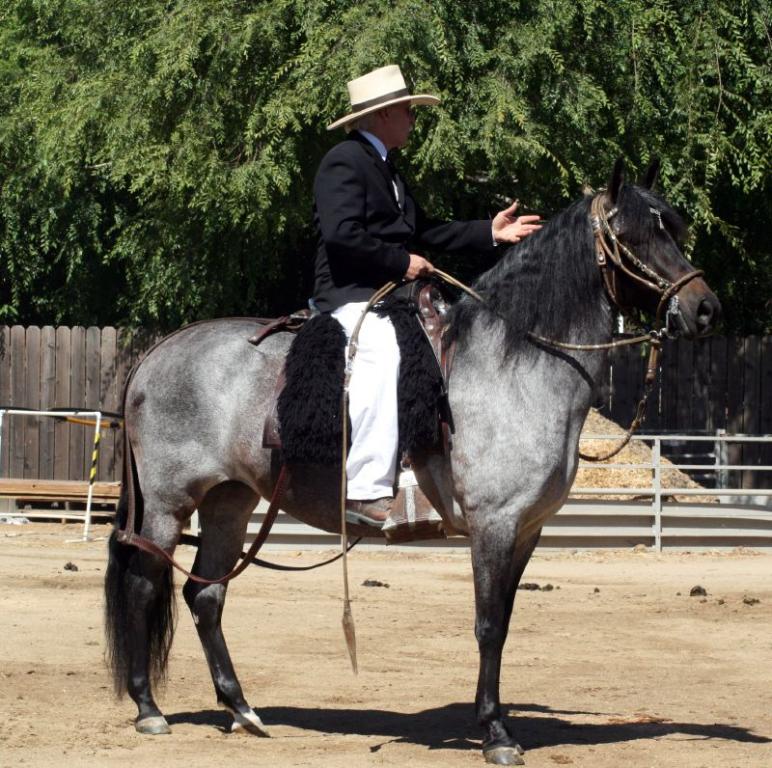
Yunnan Lijiang type pony ridden by a Naxi horse - CC BY 2.0 - Tom Thai
Yunnan Lijiang type pony ridden by a Naxi horse CC BY 2.0 – Tom Thai Source

General Characteristics

Region of Origin

Continent: Asia

Country: China

Measurements

Weight: 200 – 300 kg

Height: 110 – 130 cm

Coat Colors

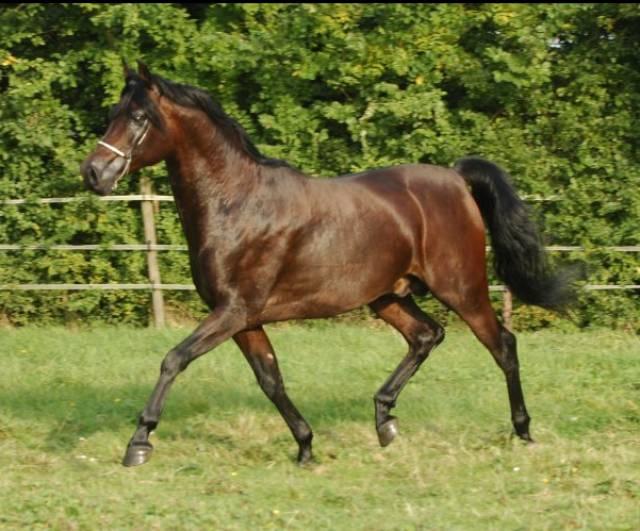
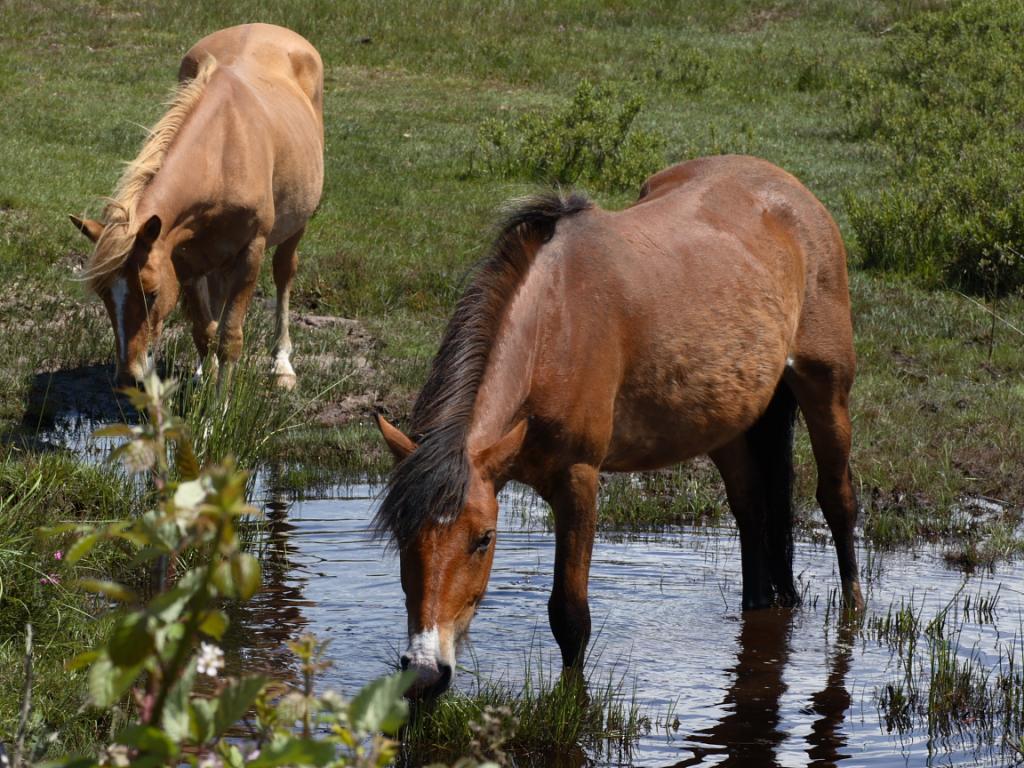
  • Chestnut / Sorrel : Reddish-brown coat with matching mane and tail; no black.
  • Black : Solid black hair and mane, dark skin.
  • Bay : Brown body, black mane and tail, black lower legs/head.

Disciplines & Skills

  • Endurance Riding
  • Riding School
  • Draft Work
  • Pack horse / Pack animal

Gallery

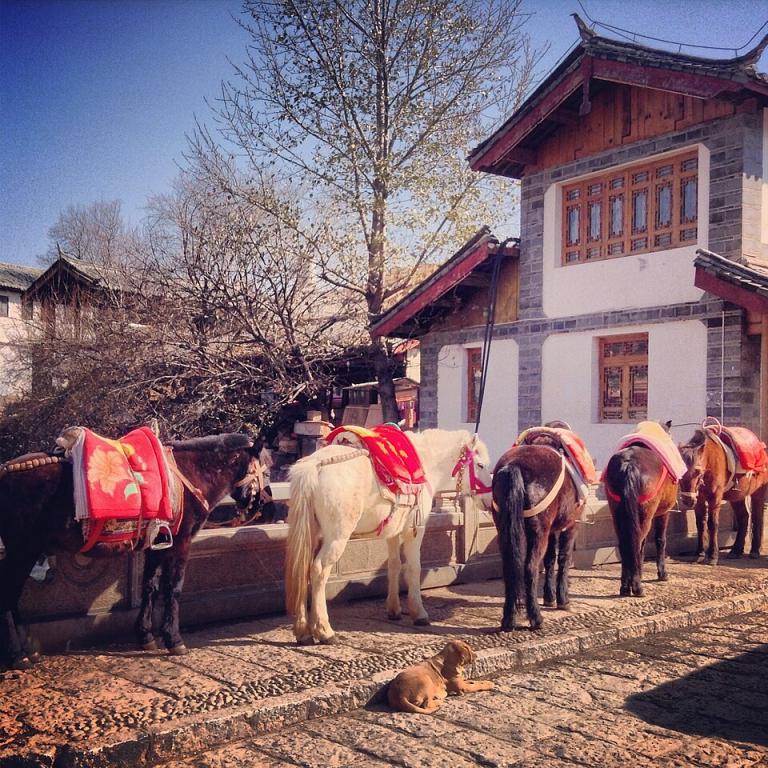
Group of ponies in Lijiang - CC BY 2.0 - rose_symotiuk
Group of ponies in Lijiang CC BY 2.0 – rose_symotiuk Source
Pony Lijiang on a mountain hiking trail - CC BY 2.0 - Chris Feser
Pony Lijiang on a mountain hiking trail CC BY 2.0 – Chris Feser Source

Origin

Geographical Origin

The Lijiang horse originates from the mountainous region of Lijiang, located in the northwestern part of Yunnan Province, in southwestern China.

This area is characterized by:

  • high altitude (often between 2,000 and 3,000 meters),
  • rugged terrain (mountains, plateaus, deep valleys),
  • a contrasted climate, with cold winters and temperate summers.

These conditions have exerted strong natural selection pressure, favoring horses that are enduring, sure-footed, and frugal.


Cultural Origin

The Lijiang horse is historically linked to the local populations of Yunnan, particularly mountain-dwelling ethnic groups (including the Naxi, among others), for whom it played an essential role:

  • transport of goods along mountain routes,
  • daily travel in areas that are difficult to access,
  • indirect participation in regional trade exchanges, especially along ancient routes linking Tibet, Sichuan, and southern China.

It is a functional horse, selected for practical abilities rather than aesthetic criteria.

Breeding Area

Main region: northwestern Yunnan

The Lijiang horse is primarily bred in the northwestern part of Yunnan Province, China, around the city of Lijiang and its surrounding rural areas.

This region is characterized by:

  • high plateaus and mountain massifs,
  • an average altitude between 2,000 and 3,000 meters,
  • a network of narrow valleys and steep paths.

These geographical conditions explain the selection of a sure-footed, enduring, and frugal horse.


Secondary areas of presence

Beyond the Lijiang basin, related or similar populations are observed in:

  • northern Yunnan (rural and mountainous zones),
  • certain border areas of southwestern Sichuan,
  • transitional regions toward the eastern Tibetan Plateau.

In these areas, the horse is used in a strictly local context, often without distinct official recognition, but with similar morphological and functional characteristics.


Traditional breeding system

Breeding of the Lijiang horse is mainly:

  • extensive or semi-extensive,
  • based on small family herds,
  • integrated into traditional agro-pastoral systems.

Horses generally live:

  • outdoors for most of the year,
  • on diets based on poor local forage,
  • with limited human intervention.

This breeding method reinforces natural selection and the stability of adaptive traits.


Limited distribution range

The Lijiang horse has a very restricted distribution range:

  • it is rarely exported outside its native region,
  • almost absent from modern Chinese breeding programs,
  • nonexistent on the international scene.

This geographical concentration explains:

  • its low global notoriety,
  • but also the preservation of its local genetic identity.

Morphology & Physical Traits

Icon Neck
Neck
Short to medium length. Thick and muscular. Low to medium set.
Icon Head
Head
Rather short and broad. Wide forehead.
Icon Ears
Ears
Short to medium. Well set, upright and mobile.
Icon Eyes
Eyes
Large and well open. Lively yet calm expression.
Icon Withers
Withers
Not very prominent. Well blended into the muscular mass.
Icon Back
Back
Short and strong.
Icon Loin
Loin
Wide and muscular.
Icon Croup
Croup
Short to moderately long. Broad, slightly sloping.
Icon Forelegs
Forelegs
Relatively short. Clean tendons. Secure, correct limbs.
Icon Hind legs
Hind legs
Relatively short. Clean tendons. Secure, correct limbs.
Icon Joints
Joints
Large and clean joints.
Icon Bone structure
Bone structure
Dense bone, strong joint solidity.
Icon General musculature
General musculature
Compact, robust and functional.
Icon Overall silhouette
Overall silhouette
Compact and well balanced.

Genetic Importance

Equine genetic reservoir of southwestern China

The Lijiang horse represents a local genetic reservoir characteristic of the equine populations of mountainous Yunnan, a region historically isolated from the major equine selection flows of northern China.

Unlike breeds:

  • influenced by the Mongolian horse,
  • or reshaped through modern crossbreeding,

the Lijiang horse preserves:

  • an ancient genetic background,
  • functional homogeneity,
  • traits inherited from local, utilitarian selection.

This genetic stability makes it a living testimony to the mountain horses of southwestern China.


Hereditary adaptations to mountainous environments

The Lijiang population concentrates several adaptive genetic traits, transmitted consistently over multiple generations:

  • Excellent endurance at altitude, linked to gradual physiological adaptation,
  • Efficient metabolism, capable of functioning on poor-quality rations,
  • Strong limbs and hooves, adapted to rocky and steep terrain,
  • General resistance to marked climatic variations.

These traits are largely polygenic, making them difficult to recreate artificially through rapid crossbreeding.


Interest for genetic conservation

From a genetic standpoint, the Lijiang horse has high heritage value:

  • It contributes to Chinese equine genetic diversity, now threatened by uniformization,
  • It represents a distinct regional lineage, complementary to steppe horses,
  • Its disappearance would lead to an irreversible loss of adaptive genes specific to subtropical mountainous environments.

It is therefore more appropriate to consider it a breed to conserve rather than transform.


Breeding and improvement potential

The Lijiang horse is not intended for the improvement of modern sporting performance.

Its breeding interest lies mainly in:

  • the contribution of hardiness,
  • improved feed efficiency,
  • transmission of durable functional qualities.

However, crossbreeding must remain strictly controlled, because:

  • genetic dilution would cause the loss of its specific traits,
  • benefits would be limited outside its native environment.

Genetic limitations and recognition

  • Absence of a structured international stud-book,
  • Few published genetic studies accessible outside China,
  • Recognition that is essentially regional and patrimonial.

This limits large-scale genetic exploitation, but reinforces its conservation value.

History

Ancient origins and regional context

The Lijiang horse is part of the ancient history of equine populations in southwestern China, a region marked by rugged terrain and relative geographical isolation.

Since Antiquity, Yunnan has served as a secondary passage zone between:

  • central China,
  • the Tibetan Plateau,
  • Southeast Asia.

Horses used in this region did not belong to imperial bloodlines, but to locally adapted populations, shaped by empirical and functional selection.


Role in mountain societies

For centuries, the Lijiang horse was a subsistence tool for local communities.

It was mainly used for:

  • transporting goods along steep mountain paths,
  • inter-village travel,
  • light agriculture and pack work.

Breeding was not centralized; each community selected the most enduring, docile, and resilient individuals, without formal standards.


Influence of regional trade routes

The Lijiang region lay near secondary trade routes, sometimes linked to exchanges between:

  • Yunnan,
  • Sichuan,
  • the eastern margins of the Tibetan Plateau.

These exchanges occasionally introduced other horses, but without disrupting the local population due to:

  • low introduction volumes,
  • severe natural selection imposed by the environment.

This explains the morphological and functional continuity observed up to the modern era.


Absence of modern standardization

Unlike many Chinese breeds catalogued in the 20th century, the Lijiang horse:

  • was not subject to strict national standardization,
  • was not integrated into state improvement programs,
  • remained classified as a local utilitarian horse.

This lack of formalization hindered recognition but preserved its functional identity.


Contemporary developments

From the second half of the 20th century onward, several factors altered its role:

  • progressive rural mechanization,
  • development of roads and motor vehicles,
  • decline of traditional equine breeding.

The Lijiang horse became less economically indispensable, surviving mainly in the most remote areas.

Behavior & Character

The Lijiang horse is distinguished by a calm, reliable, and enduring temperament, shaped by centuries of use in demanding mountainous terrain and close interaction with humans.


General temperament

  • Calm and composed
  • Low nervousness, measured reactions
  • Rarely aggressive
  • Strong emotional stability
  • Ideal for complex and unpredictable environments

Sure-footedness and practical intelligence

  • Excellent memory of routes
  • Strong ability to choose footing
  • Naturally anticipates obstacles
  • Rarely refuses, but stops if it judges a passage dangerous
  • Essential quality for mountain pack work

Relationship with humans

  • Docile without being submissive
  • Gradual attachment to the handler
  • Responds well to gentle, consistent handling
  • Low reactivity to unnecessary stimuli

Energy and endurance

  • Economical gaits
  • Steady effort over long durations
  • Not explosive, but highly resilient
  • A horse of endurance, not speed

Behavioral hardiness

  • Tolerates temporary isolation
  • Adapts well to difficult conditions
  • Low stress sensitivity to feed or climate

Compatibility

Well suited for:

  • family breeders
  • children (with supervision)
  • calm tourism environments

Poorly suited for:

  • sport riding
  • loud, fast-paced environments

Future Perspectives

Fragile but real maintenance of local populations

The future of the Lijiang horse relies mainly on the maintenance of small local populations in the rural areas of northwestern Yunnan.

The breed is not in immediate danger of extinction, but it remains:

  • numerically limited,
  • geographically concentrated,
  • poorly structured administratively.

Its continuity depends largely on the transmission of traditional rural practices.


Impact of modernization and socio-economic change

Agricultural mechanization, infrastructure development, and changing lifestyles are gradually reducing the functional use of the Lijiang horse.

Observed consequences include:

  • decreased demand for working horses,
  • reduced breeding stock,
  • risk of uncontrolled crossbreeding with more standardized breeds.

Without minimal oversight, these factors may lead to silent genetic erosion.


Potential for cultural and heritage valorization

In the medium term, the most credible prospects involve regional heritage recognition, particularly through:

  • preservation of local ethnic cultures,
  • rural and cultural tourism,
  • certain educational or living museum activities.

The horse could become a regional symbol, valued not for performance, but for identity significance.


Low probability of official standardization

It is unlikely that the Lijiang horse will:

  • benefit from a structured national stud-book,
  • undergo strict morphological standardization,
  • be integrated into national improvement programs.

This lack of standardization limits visibility but also protects its natural functional variability.

Health

The Lijiang horse is known for excellent overall health, a direct result of its hardiness, utilitarian selection, and extensive mountain breeding conditions.


General robustness

  • Low incidence of metabolic diseases
  • Good functional longevity
  • Ability to work into advanced age
  • Good recovery after effort
  • Traditionally low medical intervention

Hooves and locomotion

  • Very hard, compact, often dark hooves
  • Good natural conformation
  • Major advantage for work on rocky and humid terrain

Respiratory system

  • Good tolerance to altitude
  • Low sensitivity to chronic respiratory conditions
  • Adaptation to cool, humid air

Digestive system

  • Excellent feed efficiency
  • Effective digestion of coarse forage
  • Low colic sensitivity in extensive conditions
  • In rich or intensive environments: risk of overload → gradual adaptation recommended

Parasites and common diseases

  • Good natural resistance to internal parasites

Possible sensitivity (as with many Asian horses) to:

  • piroplasmosis (Theileria equi)
  • babesiosis

Monitoring is required in humid and warm areas.

Observed potential issues

  • Late-onset arthritis in heavily used pack horses
  • Dental wear in older horses
  • Superficial injuries related to terrain
  • Few known or documented genetic pathologies

Genetic health

  • Low incidence of identified hereditary diseases
  • Main risk: reduction of genetic diversity in cases of excessive isolation or uncontrolled crossbreeding

Breeds to discover