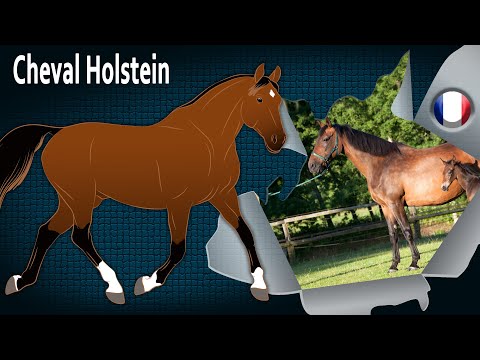
Discover the Holsteiner horse, a German breed known for its strength, elegance, and outstanding abilities in show jumping.
By the Chevaux du Monde editorial team · Published on · Updated on
Type: Riding Horse
Continent: Europe
Country: Germany
Weight: 550 – 750 kg
Height: 160 – 175 cm
The Holsteiner originated in Schleswig-Holstein, Germany’s northernmost state, located between the North Sea, the Baltic Sea, the River Elbe and the Danish border. Its name refers to the historic region of Holstein, which remains the principal heartland of the breed.
This territory includes coastal marshes, fertile agricultural land and soils whose firmness can change considerably according to weather conditions. Regional horses were historically selected for strength, soundness and the ability to travel or work in this demanding environment.
The earliest written evidence associated with the history of the Holsteiner dates to the thirteenth century. According to the history published by the North American district of the Holsteiner Verband, Count Gerhard I granted Uetersen Monastery the right to graze its horses on land in the county of Pinneberg in 1225.
Religious establishments played an important role in the beginnings of organised breeding, particularly through their ability to keep written records and follow individual animals. After the Reformation, responsibility for breeding gradually passed to local authorities and private farmers.
The Holsteiner Verband now coordinates the selection, registration and promotion of the breed. Its facilities in Elmshorn host breeding, training and horse presentation activities. The studbook remains closely connected with its region of origin while exerting considerable international influence on sport horse breeding.
The heart of the population remains in Schleswig-Holstein. Breeding has historically been based on family farms and a network of breeders with detailed knowledge of the maternal families of their mares. Foal registration and mare inspection tours maintain direct contact between the studbook and individual breeding farms.
Elmshorn is one of the breed’s principal technical and commercial centres. The Holsteiner Verband organises stallion presentations, training, sales and other activities connected with selection and marketing at its facilities there.
The success of Holsteiner bloodlines in show jumping has encouraged their international distribution. Horses registered with the studbook are bred in numerous European countries, North America and other regions where equestrian sport is well established.
Partner organisations and breeding districts may assist with the identification, inspection and registration of horses bred outside Germany. Registration conditions remain defined by the studbook rules, particularly those concerning pedigree, identification, conformation and the approval of breeding animals.
The Holsteiner population is smaller than some of Europe’s other major sport horse populations. However, its influence cannot be measured solely through registration numbers. Holsteiner stallions, dam lines and descendants are widely represented in the pedigrees of show jumpers registered with other studbooks.


Holsteiner breeding places particular importance on maternal bloodlines, traditionally identified by numbered families known as Stämme. This system enables breeders to follow mare families across numerous generations and examine their ability to produce breeding animals, sport horses and descendants corresponding to the desired type.
The value of a family is not determined by a single famous horse. It depends on the repeated expression of functional qualities among several descendants, including jumping ability, canter quality, soundness, temperament, sporting longevity and the ability of mares to pass these characteristics to their offspring.
The modern Holsteiner developed from regional mares crossed with stallions selected to meet changing requirements. External influences did not affect the population uniformly: some breeding animals had little lasting impact, while a small number of lines permanently transformed it.
Thoroughbreds were used to contribute speed, stamina, responsiveness and refinement. The Thoroughbred stallions Ladykiller xx and Cottage Son xx were among the breeding animals that exerted a major influence on the genealogy of the modern Holsteiner.
The Anglo-Arabian Ramzes also contributed to the development of important sport lines. The Selle Français stallion Cor de la Bryère, introduced in the early 1970s, profoundly influenced show-jumping selection by transmitting elasticity, a more effective jumping technique and improved use of the back over fences.
Bloodlines descending from Cor de la Bryère, Capitol, Landgraf, Ramiro, Contender, Cassini and Caretino spread far beyond their studbook of origin. Their descendants appear in the pedigrees of numerous horses registered with other European sport horse populations.
This widespread influence does not mean that every descendant automatically inherits the same abilities. Genetic transmission varies between individuals, and results also depend on the mare, the combination of bloodlines, rearing, training and the environment.
The Holsteiner is not a completely closed breed. The breeding programme may approve certain outside breeding animals when their ancestry, performance and breeding value support the objectives of the population. This openness is nevertheless more controlled than in several broadly international European sport horse studbooks.
Stallions must satisfy requirements relating to pedigree, conformation, health and performance before being admitted to the principal breeding sections. Mares are also inspected for type, conformation and movement. Official mare performance tests assess qualities including movement, rideability and jumping ability.
A pedigree study of the Holsteiner population identified a loss of genetic diversity associated with unequal contributions from the breed’s founders. Such a pattern can develop when a limited number of highly sought-after breeding animals produce a substantial proportion of the following generations.
Management of genetic diversity must therefore consider relatedness, the representation of maternal families and the repeated use of fashionable lines. Preserving less common families may remain valuable even when they are less visible in international competition.
The documented history of Holsteiner breeding is generally connected with a charter issued in 1225 granting Uetersen Monastery grazing rights for its horses. The monks bred animals suited to regional requirements, including agricultural work, transport and warfare.
These early horses did not correspond to the modern Holsteiner sport horse. They primarily needed to be sound, powerful and capable of working in the difficult terrain of northern Germany. Breeding gradually changed as military and economic requirements evolved.
As cavalry gradually replaced heavily armoured knights, military horses required greater stamina, mobility and agility. Iberian and Neapolitan horses, which were highly valued by European courts, contributed to certain stages in the development of the regional type.
The Holsteiner also developed a reputation as a carriage horse. Horses intended for harness work needed to combine strength, elegance, an elevated neck carriage and active movement. International trade and the demands of European courts consequently influenced the type sought by breeders.
Following the Reformation, breeding activities formerly associated with religious institutions increasingly passed into the hands of landowners, farmers and local authorities. During the eighteenth century, measures were introduced to encourage the use of stallions satisfying requirements for conformation, height and proven production.
Holsteiner stallions also contributed to other German populations. Twelve black stallions from Holstein were used during the establishment of the Celle State Stud in 1735 and became part of the foundations of organised Hanoverian breeding.
During the nineteenth century, the expansion of roads, transport networks and agricultural administration encouraged more systematic breeding. The Traventhal State Stud made stallions available to local breeders, while the use of English Thoroughbreds contributed to the development of the regional horse.
In 1885, Claus Hell senior formulated a breeding objective describing a refined and powerful carriage horse with strong bone and ground-covering movement that would also possess the qualities of a substantial riding horse. This objective illustrates the versatility expected before the rise of modern equestrian sport.
The Holsteiner studbook was founded in 1891 under the leadership of Georg Ahsbahs. Systematic mare registration and the allocation of numbers to maternal families enabled breeders to follow each family and its production over numerous generations.
After 1945, agricultural mechanisation and the decline of horse-drawn transport rapidly reduced demand for the former working horse. Breeders had to redirect the population towards recreational riding and competition.
The Holsteiner mare base contributed power, substance and strong hindquarters, but the new sport horse needed greater speed, elasticity, responsiveness and rideability. Thoroughbred, Anglo-Arabian and selected breeding animals from other populations were used to support this transformation.
The Thoroughbred Ladykiller xx, born in 1961 and imported to Germany during the 1960s, exerted considerable influence. His sons and descendants contributed to several major show-jumping lines, particularly through Landgraf I and Lord.
The arrival of Cor de la Bryère in 1971 was another decisive step. This Selle Français stallion contributed a more modern jumping technique, elasticity, bascule and a balanced canter. His numerous sons and descendants spread these qualities throughout the Holsteiner population and later into other studbooks.
Other lines, including those descending from Capitol I, Ramiro, Contender, Cassini I and Caretino, consolidated the population’s sporting reputation. The Holsteiner gradually became one of the most influential studbooks in the genealogy of international show jumpers.
Despite the globalisation of sport horse breeding and the international movement of breeding animals, the Holsteiner retains a strong organisational connection with Schleswig-Holstein. Knowledge of maternal families, inspection of young horses and strict stallion selection remain central to the studbook’s operation.
The modern Holsteiner is expected to display energy, willingness and a strong capacity to use its power. In show jumping, selection favours a horse that is responsive, courageous, attentive and able to make rapid decisions when approaching and clearing fences.
This athletic orientation must also be accompanied by cooperation. Power and responsiveness are only truly useful when the horse accepts the rider’s aids, can adjust its balance and remains manageable before, during and after a jump.
Some lines produce particularly energetic or sensitive horses, while others are associated with greater power, calmness or rideability. These tendencies cannot predict the temperament of an individual horse with certainty.
Behaviour also depends on education, living conditions, socialisation, pain management, training quality and previous experiences. A horse with the ability required for professional sport is not automatically suitable for an amateur rider.
Choosing a Holsteiner requires consideration of its individual temperament, training, energy level and compatibility with the rider. Observing the horse under saddle, during handling, outdoors and in different situations provides more useful information than relying on a general description of the breed.
A horse that appears calm in a familiar environment may become more reactive at competitions, while a sensitive horse may remain highly cooperative when trained consistently. It would therefore be misleading to describe all Holsteiners as easy, difficult or suitable for the same level of rider.
The future of the Holsteiner depends on maintaining its identity as a sport horse with a particularly strong aptitude for show jumping, without reducing selection to jumping power alone. The modern horse must also display efficient technique, an adjustable and balanced canter, responsiveness, carefulness, effective use of the back and sufficient rideability.
Selection must preserve sound conformation and sporting durability. An excessive emphasis on refinement, precocity or rapid performance from young horses could weaken the functional qualities required for a long career. The physical and mental development of young horses should remain appropriate for their age.
The concentration of certain bloodlines is an important concern. Pedigree and genomic tools can help breeders compare levels of relatedness, limit excessively close matings and give greater consideration to less widely represented dam lines.
Monitoring inherited disorders and locomotor conditions must complement the evaluation of sporting performance. Genetic tests do not replace examination of the horse, its offspring and its wider family, but they provide additional information for planning matings.
The Holsteiner must also continue to meet the needs of riders with different objectives. Part of the population is bred for elite sport, but many horses compete at amateur level or are used for leisure riding. Rideability, temperament and suitability for non-professional riders therefore remain economically and ethically important qualities.
Warmblood Fragile Foal Syndrome (WFFS) is an inherited condition observed in several sport horse populations, including the Holsteiner. It causes extreme fragility of the skin and connective tissues, wounds, mucosal lesions and excessive joint laxity. Affected foals are generally unable to survive normally.
The condition follows an autosomal recessive mode of inheritance. A horse carrying one copy of the variant may be clinically healthy. Mating two carriers gives each pregnancy a theoretical 25% risk of producing an affected foal, a 50% probability of producing a healthy carrier and a 25% probability of producing a non-carrier. The WFFS genetic testing guidance published by the IFCE explains how testing can prevent at-risk matings.
A healthy carrier does not necessarily need to be excluded from breeding. Mating a carrier with a horse tested as a non-carrier prevents the production of a foal affected by this mutation. This measured approach protects foals without abruptly removing bloodlines that may be valuable to the studbook’s genetic diversity.
As in other sport horse populations, locomotor health receives particular attention during breeding selection, pre-purchase examinations and sporting follow-up. Osteochondrosis is a multifactorial condition whose development may involve genetic factors as well as growth, nutrition, exercise and rearing conditions. It should not be presented as a disorder affecting every Holsteiner.
The back, joints, tendons and hooves should be monitored according to the intensity and type of work. Training that progresses too rapidly, unsuitable surfaces, excessive workload or insufficient recovery can compromise sporting durability regardless of the horse’s genetic quality.
Balanced nutrition during growth, progressive exercise, regular turnout, appropriate dental and hoof care and routine veterinary monitoring remain the principal general preventive measures.
A regular, active walk covering sufficient ground.
A balanced and elastic trot whose scope and expression may vary according to the sporting orientation of the bloodline.
A powerful, supple and balanced canter with scope, lightness and a strong ability to adjust the stride before fences.
Born in 1987
Two-time Olympic competitor (Atlanta 1996, Sydney 2000) ridden by Jos Lansink. Major sire, sire of numerous international horses.
Born in 1975
Founding stallion of a dominant Holstein line; father of Cassini I, Carthago, Cento… No sporting career but a major genetic influence.
Born in 1989
Olympic team champion (Sydney 2000) and winner of the 2002 World Cup with Otto Becker.
Born in 1985
Great winner in CSI with Franke Sloothaak, remarkable for his power and suppleness; influential stallion.
Born in 1988
Great international winner with Franke Sloothaak, excellent breeder; father of Cumano, Berlin, Eurocommerce Berlin, etc.
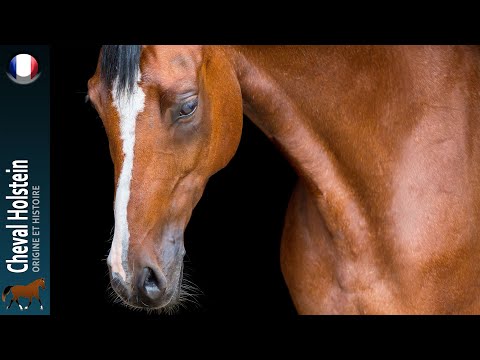
Originating in Germany, the Holstein is a sport horse, probably descended from one of the oldest breeds in the country, the Marsh Horse, which lived in a semi-wild state in the province of Schleswig Holstein. It all began in the 13th century, when the monks of the Uetersen Monastery were granted grazing rights by Gerhard I, Count of Holstein Itzehoe, with the aim of breeding horses for agricultural work and cavalry.
Schleswig-Holstein is the largest national park in Central Europe, part of which is considered a biosphere reserve. It was in the typical northern German landscape that Holstein was born.