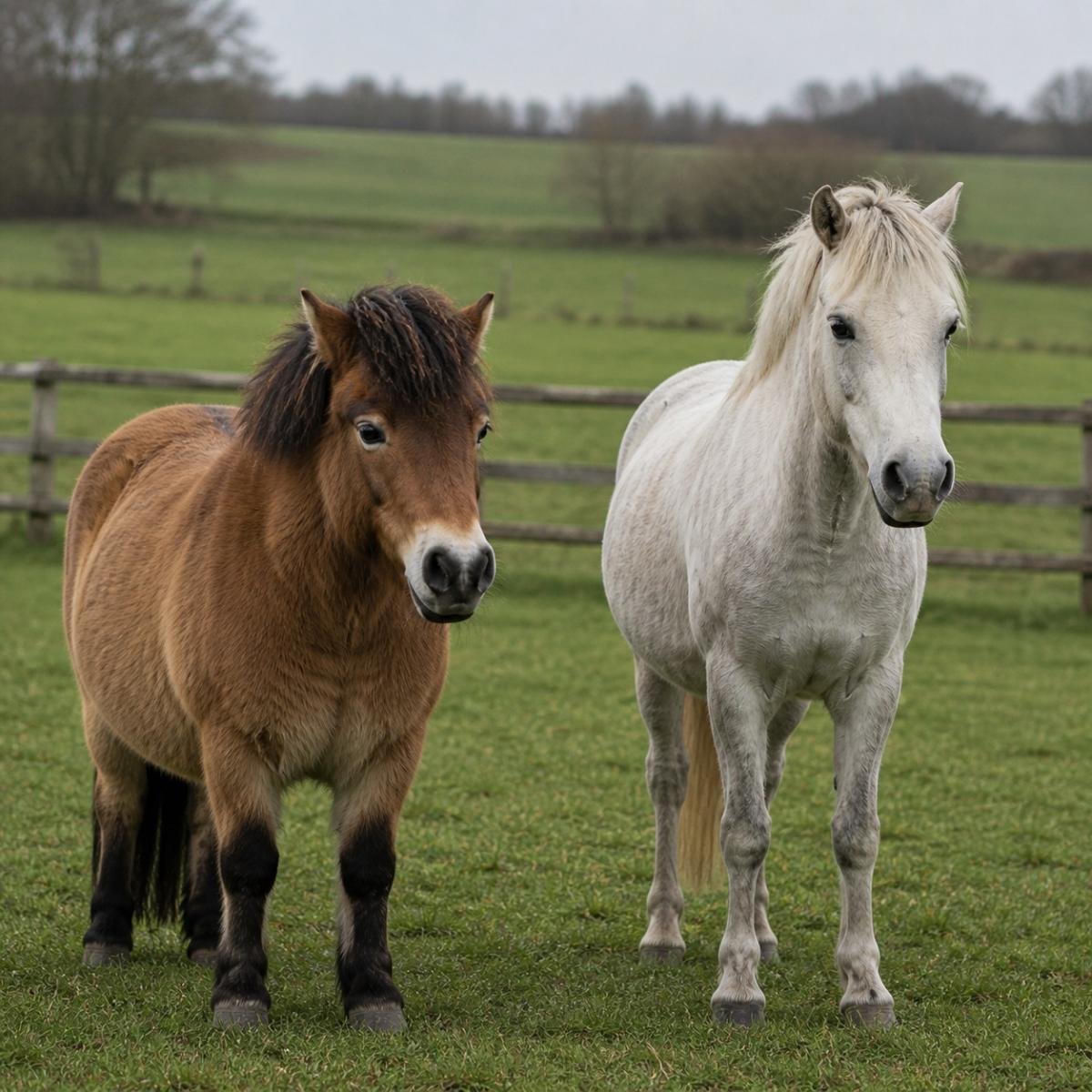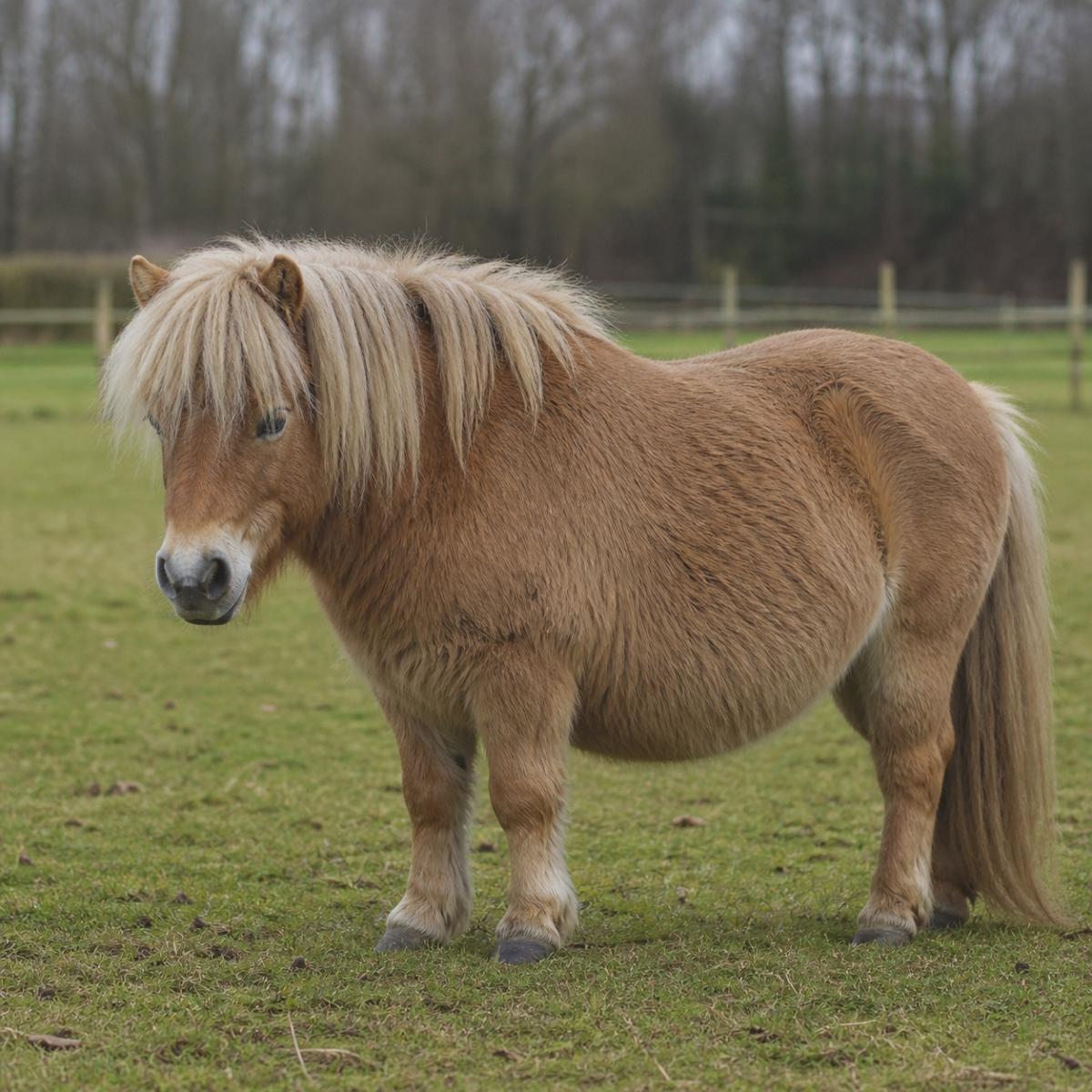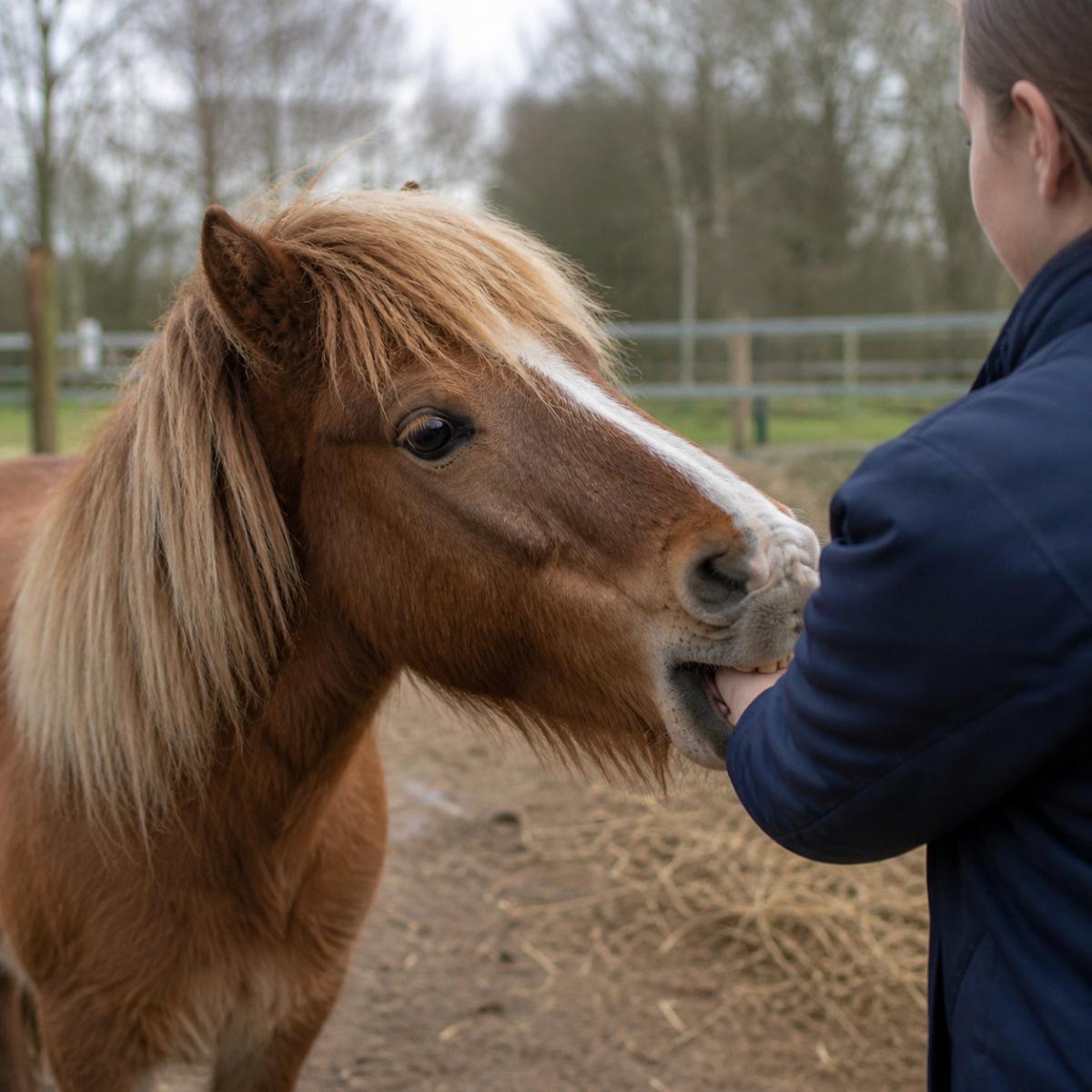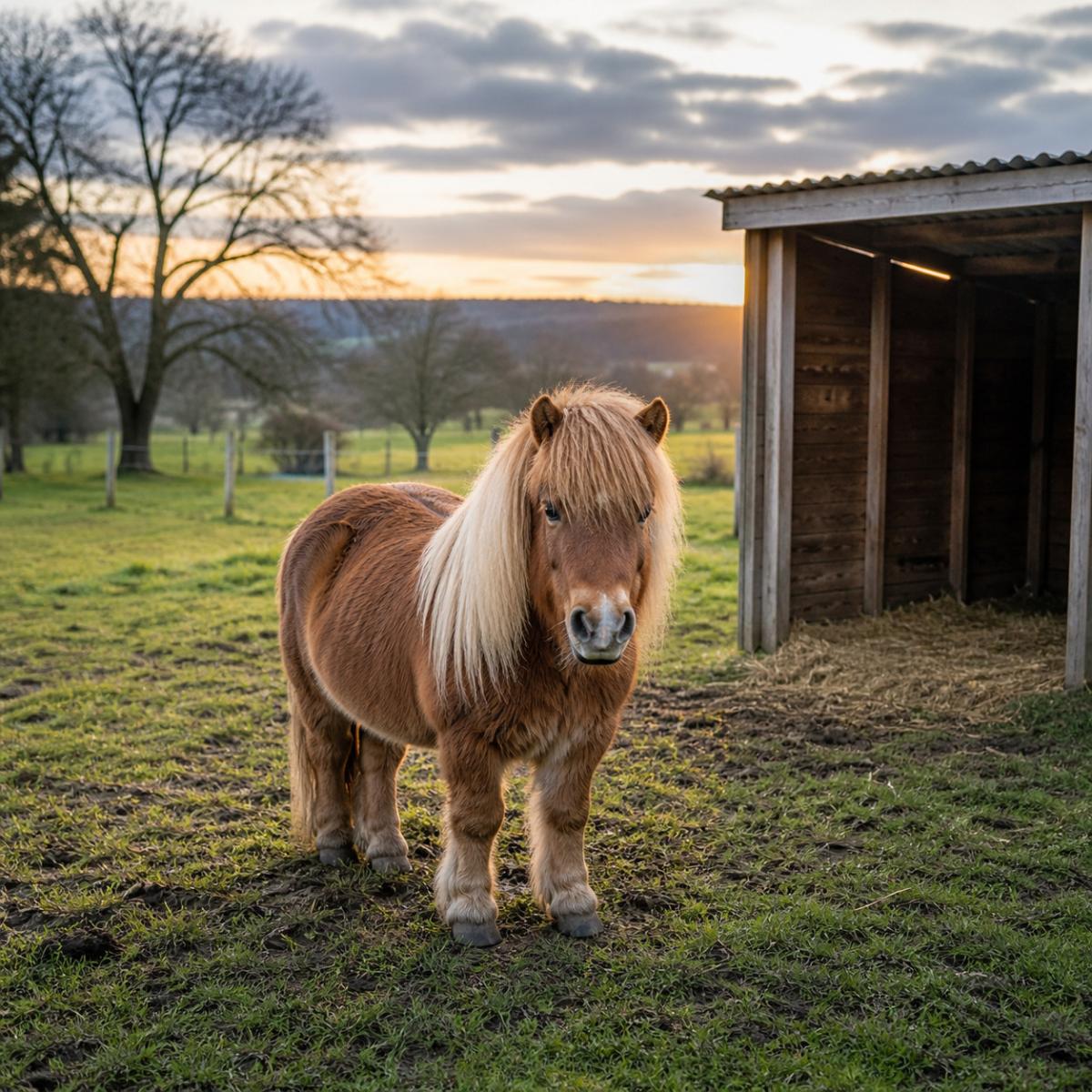


Choosing a pony for a child is not simply a matter of finding the smallest pony possible.
Size certainly matters. But for a young rider, temperament, training, experience, physical condition and suitability for the intended activities are often even more important.
A small pony that is highly reactive, inexperienced or difficult to handle may be far less suitable for a child than a slightly larger pony that is calm, experienced and well trained.
The French Equestrian Federation (FFE) emphasizes that the size of the mount should be appropriate for the rider, while the French Institute of Horse and Riding (IFCE) recommends assessing a horse or pony's physical and behavioral characteristics according to its intended use before purchase.
The best pony for a child is therefore not one particular breed.
Above all, it is an individual pony suited to that particular child, their current ability and what the family intends to do with it.
The pony's size should suit the child
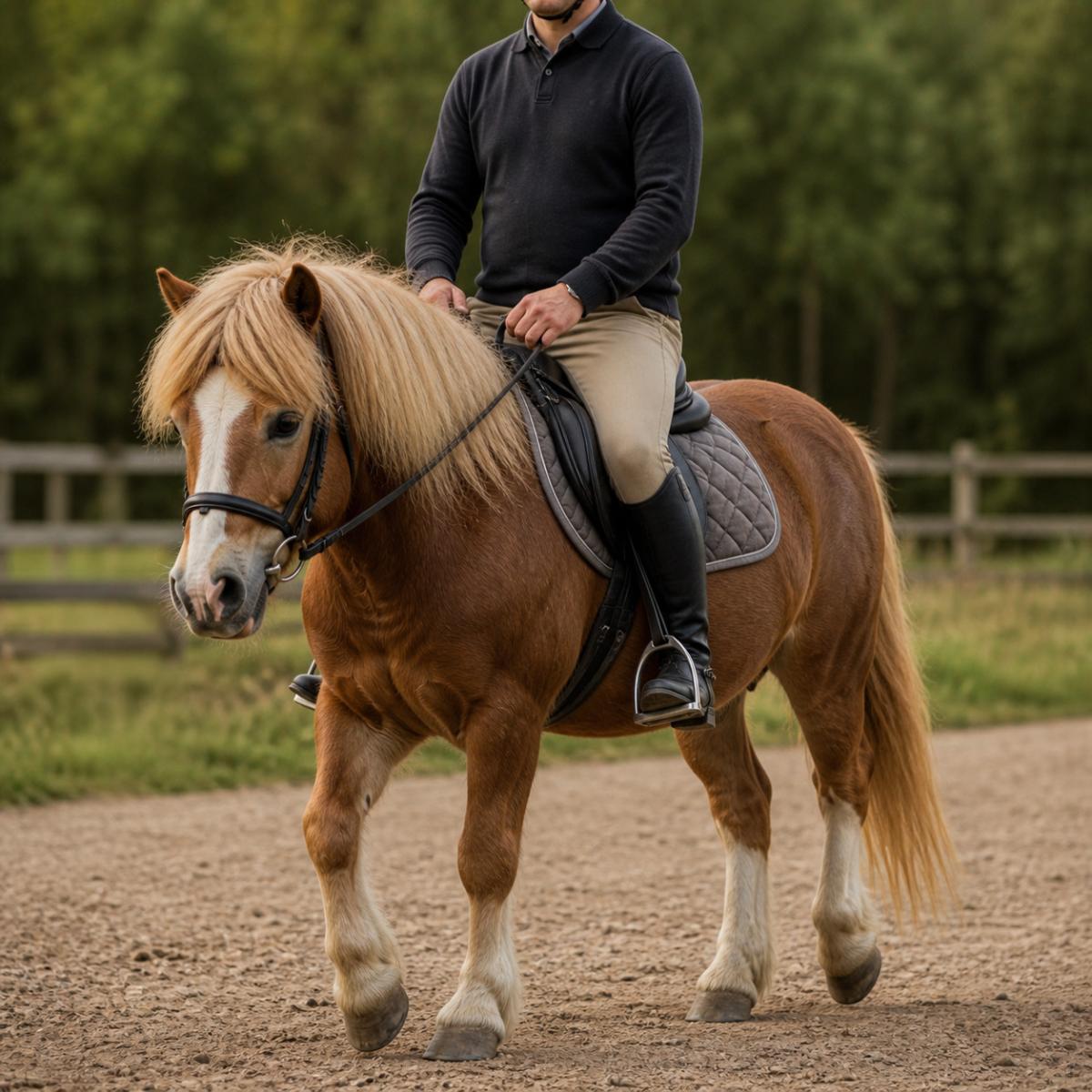
A child needs to be able to maintain a functional position on the pony and use their aids without being completely disproportionate to the mount.
The FFE provides a simple guideline: when standing beside the equid, the rider should be able to see over its back to the other side. It also notes that starting on ponies is particularly suitable for young and/or lightweight riders. (FFE — Starting Horse Riding)
This is obviously not an absolute biomechanical formula.
The proportions of both child and pony also matter.
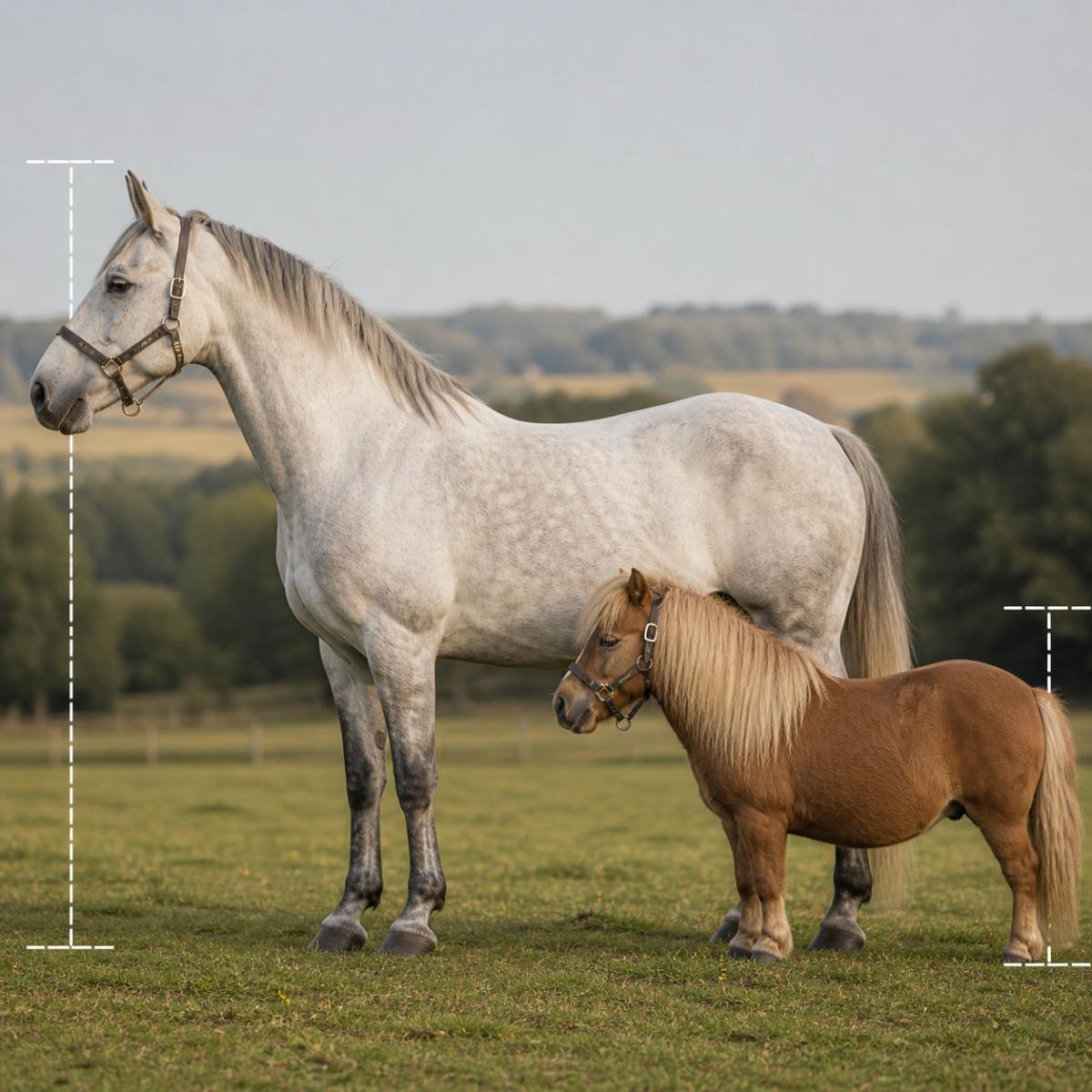
Two ponies measuring 1.30 m can have very different builds: one may be fine and narrow, while another may be particularly broad and deep-bodied.
Likewise, two children of the same age can differ considerably in height and build.
The child's age alone cannot therefore determine the appropriate pony size.
There is no mandatory pony size for each age
It is easy to find recommendations such as:
- Shetland for young children;
- a slightly larger pony for older children;
- a medium pony after that;
- a large pony for teenagers.
These categories can provide useful reference points, but they should not become an automatic timetable.
A tall eight-year-old may be better suited to a larger pony than a much smaller ten-year-old.
Riding ability also matters.
The IFCE specifically recommends that instructors choose a pony according to the child's size, particularly for riders aged 6 to 9. (IFCE Equipédia — Understanding Different Rider Groups and Adapting to Them)
It is therefore better to assess the actual child-pony combination than to select a mount according to age alone.
The child's weight also needs to be considered
Rider height is only one part of the equation.
The total load carried by the pony also depends on:
- the child's weight;
- the saddle;
- other equipment;
- the pony's conformation;
- musculature;
- physical condition;
- and the work being performed.
There is no universal formula that can determine a pony's carrying capacity from body weight alone.
The familiar 20% rule can serve as one indicator in some assessments, but it is not an absolute biological limit.
This subject is examined in detail in our article Can a Pony Carry an Adult? Weight and Limits.
With a lightweight child, carrying capacity will rarely be the only deciding factor, but it should still form part of the overall assessment.
Temperament and behavior are essential
For a beginner child, a predictable and properly trained pony has a considerable advantage.
This does not mean looking for an animal that never reacts to its surroundings.
A pony remains an equid: it can startle, become frightened, experience discomfort or react to an unusual situation.
However, some individuals have considerably more experience and show reactions that are easier for a young rider to manage.
A study examining horse-rider cooperation found that horse temperament and experience, as well as rider skills and characteristics, can contribute to the quality of the partnership. (Visser et al. — Does horse temperament influence horse-rider cooperation?)
For a child, predictable behavior and good training are generally far more valuable than choosing a breed simply because it has a reputation for being “good with children.”
A good child's pony is usually already well trained
Buying a very young pony so that it can “grow up with the child” may sound appealing.
For an inexperienced family, however, this can create two learning processes at the same time:
a young rider learning to ride and a young pony learning its job.
An experienced pony has already encountered many of the situations the child will face.
Depending on its intended use, it may already be accustomed to:
- grooming;
- having its feet handled;
- being saddled;
- being led;
- standing at the mounting block;
- arena exercises;
- trail riding;
- other horses;
- different environments;
- the normal mistakes made by riders who are still learning.
The FFE also emphasizes the importance of appropriate ponies for young children: mounts should notably be suitable in size, calm and properly trained. (FFE — Horse Riding for Young Children)
Experience is often more valuable than youth
For a first pony, there is generally no need to insist on finding a very young animal.
An adult pony with several years of experience may be much easier to assess.
Its temperament is better known.
Its level of training can be observed.
Its behavior in different situations may already be documented.
Its previous leisure or competition experience can also provide useful information.
This does not mean that an older pony is automatically suitable for children.
But an experienced, healthy pony can be particularly valuable for supporting a young rider's development.
Age should therefore be considered alongside health, experience and behavior rather than used as an isolated criterion.
A breed with a calm reputation offers no guarantee
Some breeds have particularly good reputations as family ponies.
Common examples include:
- Shetlands;
- Welsh Ponies;
- Connemaras;
- New Forest Ponies;
- Haflingers;
- Fjords;
- various sport ponies and crossbreds.
Individuals from these breeds can certainly make excellent mounts for young riders.
But no breed guarantees a temperament suitable for a child.
There can be substantial individual differences within the same population.
An equid's behavior depends on factors including temperament, experience, learning history, living conditions and interactions with humans.
A scientific review of human-horse interactions demonstrates how these interactions can influence equine behavior, physiology and welfare. (Kelly et al. — The Effect of Human–Horse Interactions on Equine Behaviour, Physiology, and Welfare)
Breed can therefore help narrow a search.
It should never replace assessment of the individual pony.
A Shetland is not automatically the best first pony
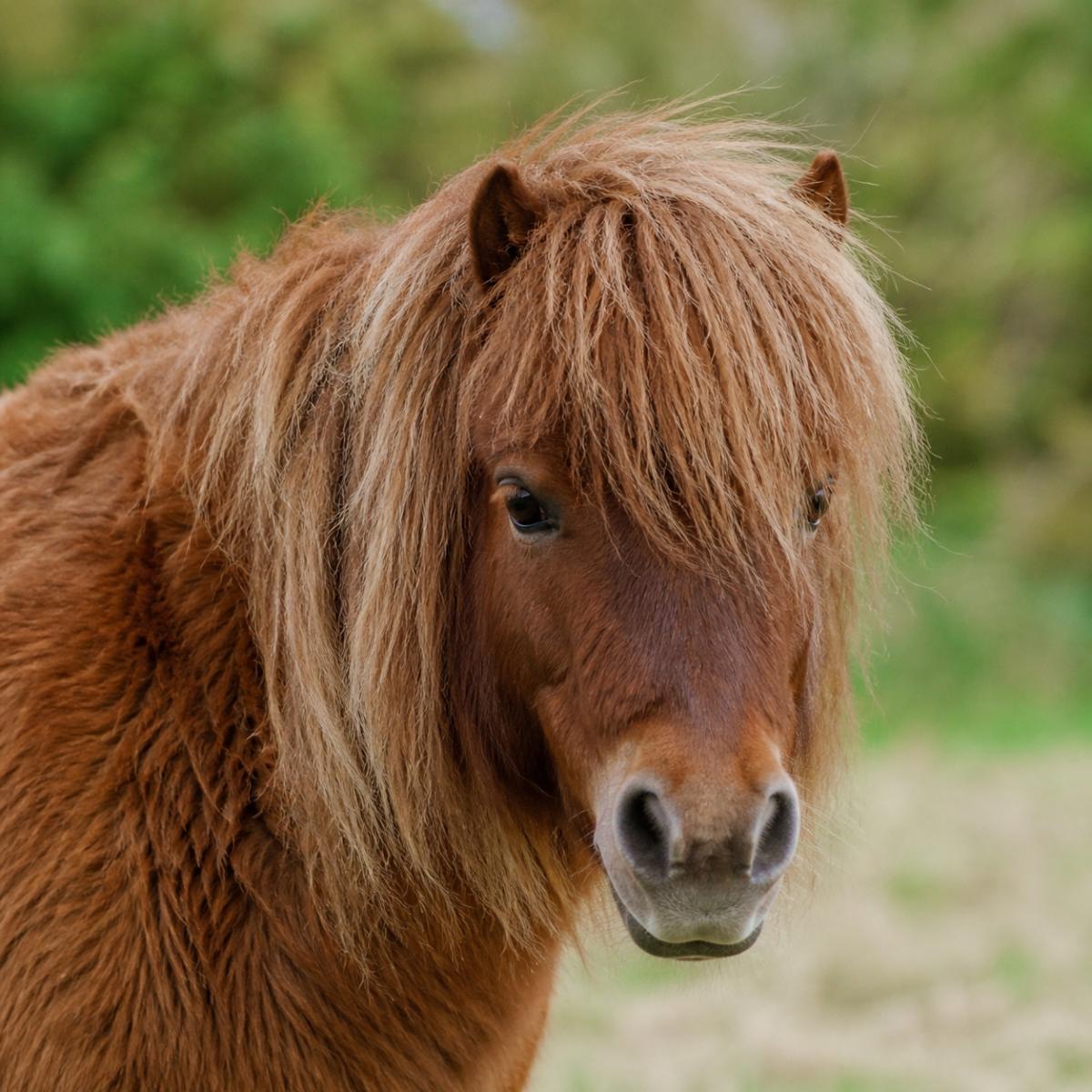
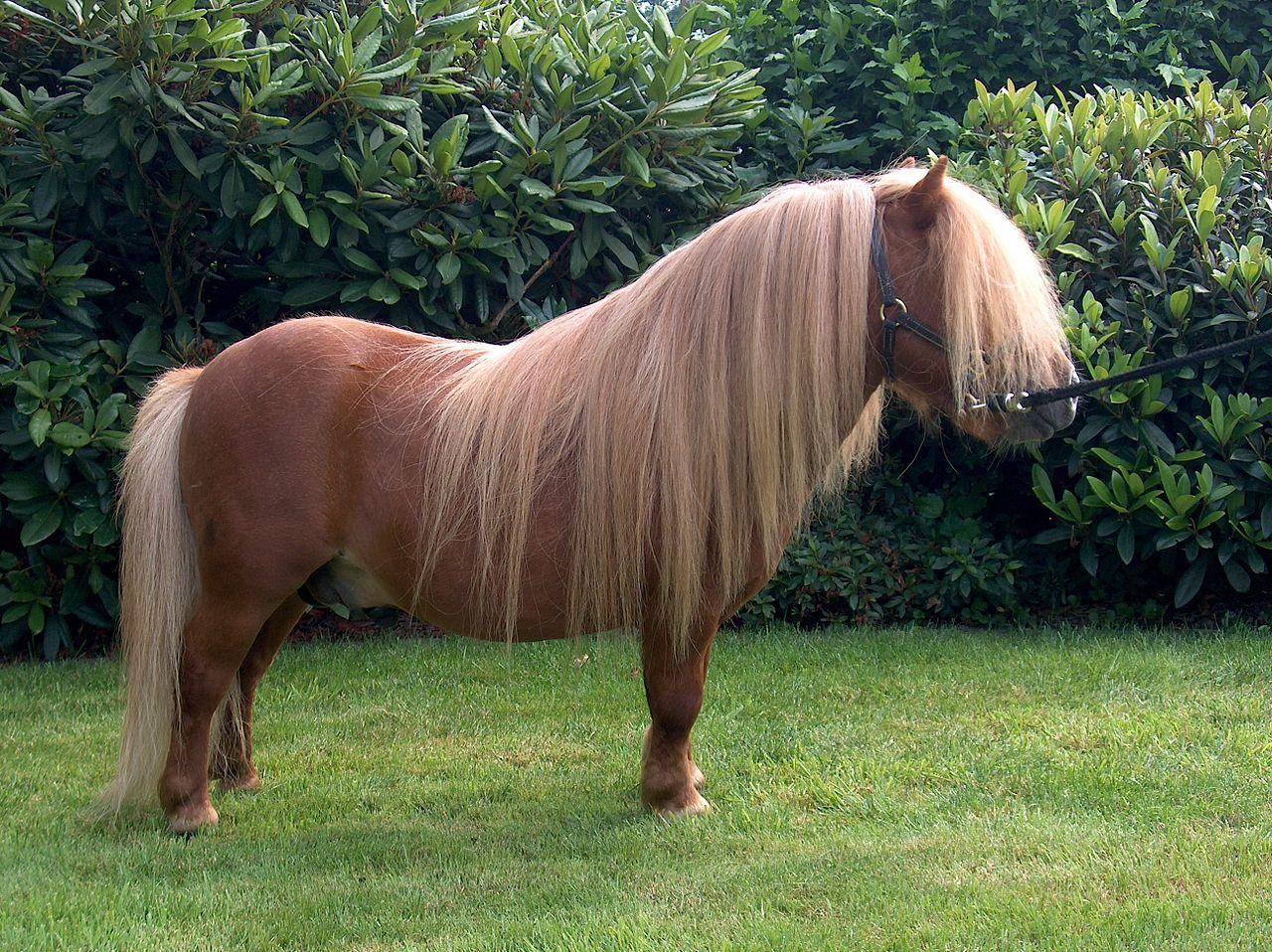
The Shetland may seem like the obvious choice for a small child.
Its small size can indeed be a major advantage for very young riders.
But a Shetland is still an individual pony with its own temperament, experiences and training history.
A well-trained Shetland accustomed to children and appropriately managed can make an excellent mount.
An individual that has learned to pull toward grass, push into its handler, bite or ignore certain cues can be particularly difficult for a young child.
As explained in our article Stubborn Pony: Understanding Its Behavior and Temperament, these behaviors should not simply be attributed to the stereotypical “pony personality.”
They develop through a combination of temperament, experience, environment and learning.
Small does not automatically mean easy.
A slightly larger pony may sometimes be the better choice
Parents may deliberately look for a very small pony because it feels safer.
Yet the child also needs to be able to develop with the mount.
A slightly larger pony that is calm, experienced and well suited to the child may be a better choice than a very small but difficult pony.
It may also remain suitable for longer as the young rider grows.
The opposite extreme should also be avoided: buying a pony that is much too large because the child will “grow into it.”
The pony needs to be suitable now, not only three years from now.
A riding-school pony can provide an excellent reference point
If the child already rides regularly at a riding school, their instructor has access to extremely valuable information: they have observed the child riding several different ponies.
The instructor may know:
- the child's actual riding ability;
- balance;
- confidence;
- ability to react to unexpected situations;
- the types of ponies they ride comfortably;
- their current size;
- the disciplines they enjoy.
This practical knowledge is often more valuable than a generic recommendation based solely on age or breed.
Before buying a first pony, the opinion of an instructor who genuinely knows the child can therefore be particularly useful.
The pony should suit the child's current ability
Buying a pony “with potential” can make sense for an experienced rider pursuing a specific sporting goal.
For a young beginner, that potential is not necessarily the most important quality.
A pony that requires considerable precision, experience or additional training may slow the child's progress and undermine confidence.
For a first pony, it may be much more useful to find an animal with which the child can:
- move forward and stop easily;
- steer;
- learn the different gaits;
- go on suitable trail rides;
- perform exercises appropriate to their ability;
- progress without constantly facing problems beyond their current skills.
The pony should help the child learn, rather than requiring the child to already be an expert in order to manage it.
The intended discipline also affects the choice
The same pony will not necessarily be ideal for every activity.
For primarily recreational and family riding, priorities might include:
- predictable behavior;
- good experience outside the arena;
- suitable movement;
- straightforward handling.
For show jumping, dressage, eventing or other competitive disciplines, physical ability and experience in the relevant discipline become more important.
Even with competitive ambitions, however, the pony's level should remain appropriate for the child.
A highly talented but technically difficult pony is not necessarily the best partner for learning.
A trail pony should have genuine experience outside the arena
The phrase “good on trails” in an advertisement can cover very different realities.
A pony may be perfectly calm when following five other horses but extremely anxious when ridden alone.
It may be accustomed to woodland tracks but unfamiliar with:
- cars;
- bicycles;
- dogs;
- agricultural machinery;
- water;
- narrow passages;
- changing terrain.
If the family primarily wants to trail ride, the pony's behavior under the conditions it will actually encounter should therefore be assessed.
The pony should be observed on the ground as well as under saddle
The child will not spend all of their time riding.
Depending on age and independence, they may also need to:
- catch the pony;
- lead it;
- groom it;
- pick out its feet;
- prepare it for riding;
- potentially load it into a trailer or horsebox;
- manage everyday situations.
A pony that is extremely pleasant to ride but difficult to handle can therefore still present significant problems.
The IFCE recommends taking time to assess behavior, conformation and physical ability when evaluating a horse or pony before purchase. (IFCE Equipédia — Assessing a Horse)
For a child, manners and training on the ground deserve particular attention.
Some behaviors deserve careful attention
During a trial, it can be useful to observe how the pony reacts:
- when being caught;
- while being led;
- during grooming;
- when different areas of its body are touched;
- when its feet are handled;
- during girthing;
- at the mounting block;
- when the child makes a small mistake;
- when another horse moves away;
- when something unusual happens.
The goal is not to demand a pony that remains completely motionless and unresponsive.
A living animal reacts to its environment.
The important question is whether those reactions remain compatible with the child's abilities and the level of supervision available.
A very calm pony is not necessarily an apathetic pony
The calmness desired in a child's pony should not be confused with a complete absence of reaction.
A good pony can be alert, curious and energetic while remaining predictable and manageable.
Conversely, an unusual lack of response should not automatically be interpreted as an excellent temperament.
Physical condition, fatigue and context should also be considered.
Scientific literature on horse-human interactions emphasizes that interpreting equine behavior requires consideration of fear, individual differences, previous experience and context. (Hall & Kay — Living the good life? Part 2: Horse-human interactions)
It is better to try the pony more than once
A single trial provides limited information.
Whenever possible, the pony should be observed and tried in several situations relevant to its future use.
A professional may ride it first.
The child can then try it in a controlled environment.
If trail riding is part of the plan, an appropriate ride outside the arena may also be useful.
Observing the pony before, during and after exercise can provide additional information.
One dramatic reaction during a single trial does not necessarily define the entire animal, but difficulties that repeatedly occur in several situations are much more informative.
A pre-purchase veterinary examination remains important
Appropriate behavior does not replace an assessment of physical health.
Before purchase, a veterinary examination can evaluate the pony in relation to its intended use.
The purpose is not to declare that a pony is “perfect.”
It is to identify medical findings that may influence its future use and assess their significance in relation to the buyer's plans.
This can be particularly important when a child is expected to build confidence and progress with the same partner over several years.
The pony's future living conditions also matter
Choosing the right individual is not enough if its future living conditions do not adequately meet its needs.
Equids require appropriate opportunities for:
- movement;
- social contact;
- access to forage;
- rest;
- expression of normal behavior.
Buying a pony therefore also means planning for:
- accommodation;
- equine companions;
- feeding;
- daily supervision;
- hoof care;
- veterinary care;
- pasture management;
- appropriate exercise.
A pony is not simply a piece of sporting equipment for a child.
It is an animal for whose daily welfare the family becomes responsible.
Buying is not always the best first step
When a child is beginning to ride, immediately owning a pony is not essential.
Continuing at a riding school for some time allows the child to ride different ponies, develop their skills and gain a better understanding of what type of mount genuinely suits them.
A part-loan or lease arrangement may also provide a useful intermediate step depending on the circumstances.
It can introduce some of the responsibilities associated with caring for a pony without immediately committing to ownership.
This period may also prevent the family from buying too early and choosing a pony that the child quickly outgrows in either size or ability.
The child should be involved in the choice, but cannot carry the responsibility alone
The relationship between child and pony matters enormously.
The young rider should feel confident and want to develop a partnership with the animal.
But a purchase cannot be based solely on:
“That's the one I like best.”
Color, mane, name or an immediate emotional connection may naturally influence the child.
Adults and professionals still need to take responsibility for assessing:
- safety;
- suitability for the child's ability;
- health;
- training;
- cost;
- living conditions;
- and whether the arrangement is realistic over several years.
An emotional connection can absolutely be part of the decision.
It simply should not replace proper assessment.
The best first pony is not necessarily the most impressive
For a child, an excellent first pony is often one that allows them to accumulate successful experiences.
A pony with which they learn to prepare their own mount.
To walk independently.
To experience their first successful canter.
To enjoy their first short trail ride.
To jump their first small fences.
To make a mistake without the situation immediately becoming dangerous.
Experiences like these gradually build the young rider's skills and confidence.
A highly talented but overly complicated pony can have the opposite effect.
The main criteria to consider
There is therefore no single perfect breed or height for every child.
When choosing a pony, it is better to assess together:
- the child's height and weight;
- their actual riding ability;
- their experience handling ponies on the ground;
- the pony's size, conformation and physical condition;
- its individual temperament;
- its level of training;
- its previous experience with children;
- its behavior both on the ground and under saddle;
- its experience in the intended discipline;
- the conditions in which it will live;
- whether the child is likely to remain appropriately matched with it for a reasonable period of time.
Breed and appearance can then contribute to the final decision, but they should not take priority over these factors.
The right pony is ultimately the right partner
Choosing a pony for a child is ultimately less about finding “the best pony breed for children” and more about finding the right partnership.
A small Shetland can be extraordinary for one young rider and completely unsuitable for another.
A Welsh Pony, Connemara, sport pony or crossbred can become an excellent partner when its temperament, experience, physical condition and abilities match the child's needs.
The best choice is generally a pony experienced enough to support the child's learning, appropriately matched to their size and ability, physically capable of the intended activity and behaviorally suitable for the young rider's current skills.
For a first purchase, help from an instructor or another experienced professional who genuinely knows the child and can assess the pony can therefore be extremely valuable.
The best pony is not necessarily the youngest, prettiest, smallest or the one with the most prestigious pedigree.
It is the one with which the child can learn, progress and develop confidence without every session becoming another problem to overcome.
Sources and references
- French Equestrian Federation (FFE) — Starting Horse Riding: Choosing an Appropriate Mount
- IFCE Equipédia — Understanding Different Rider Groups and Adapting to Them
- IFCE Equipédia — Assessing a Horse
- French Equestrian Federation — Horse Riding for Young Children
- Visser et al. — Does horse temperament influence horse-rider cooperation?
- Kelly et al. — The Effect of Human-Horse Interactions on Equine Behaviour, Physiology, and Welfare: A Scoping Review
- Hall & Kay — Living the good life? A systematic review of behavioural signs of affective state in the domestic horse. Part 2: Horse-human interactions