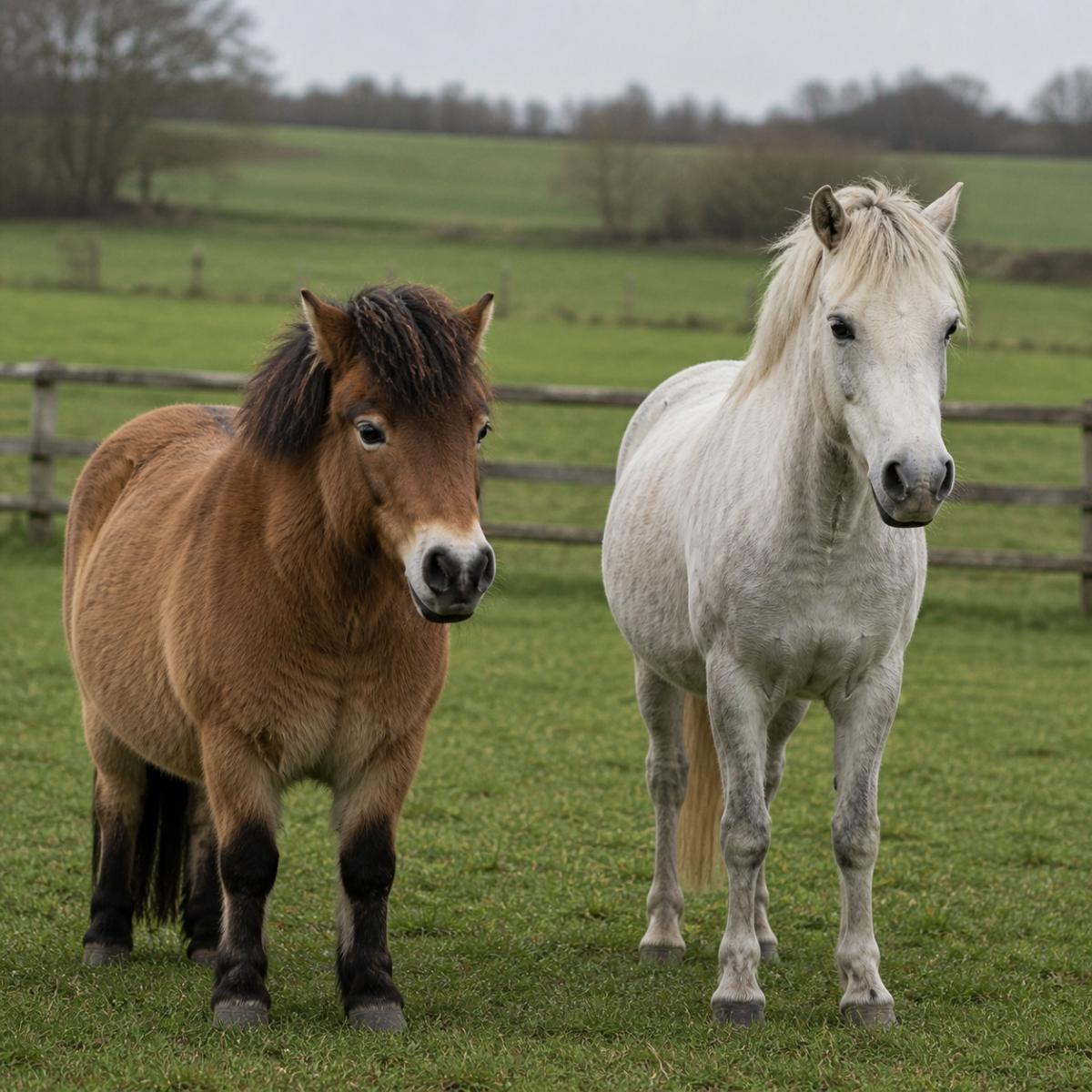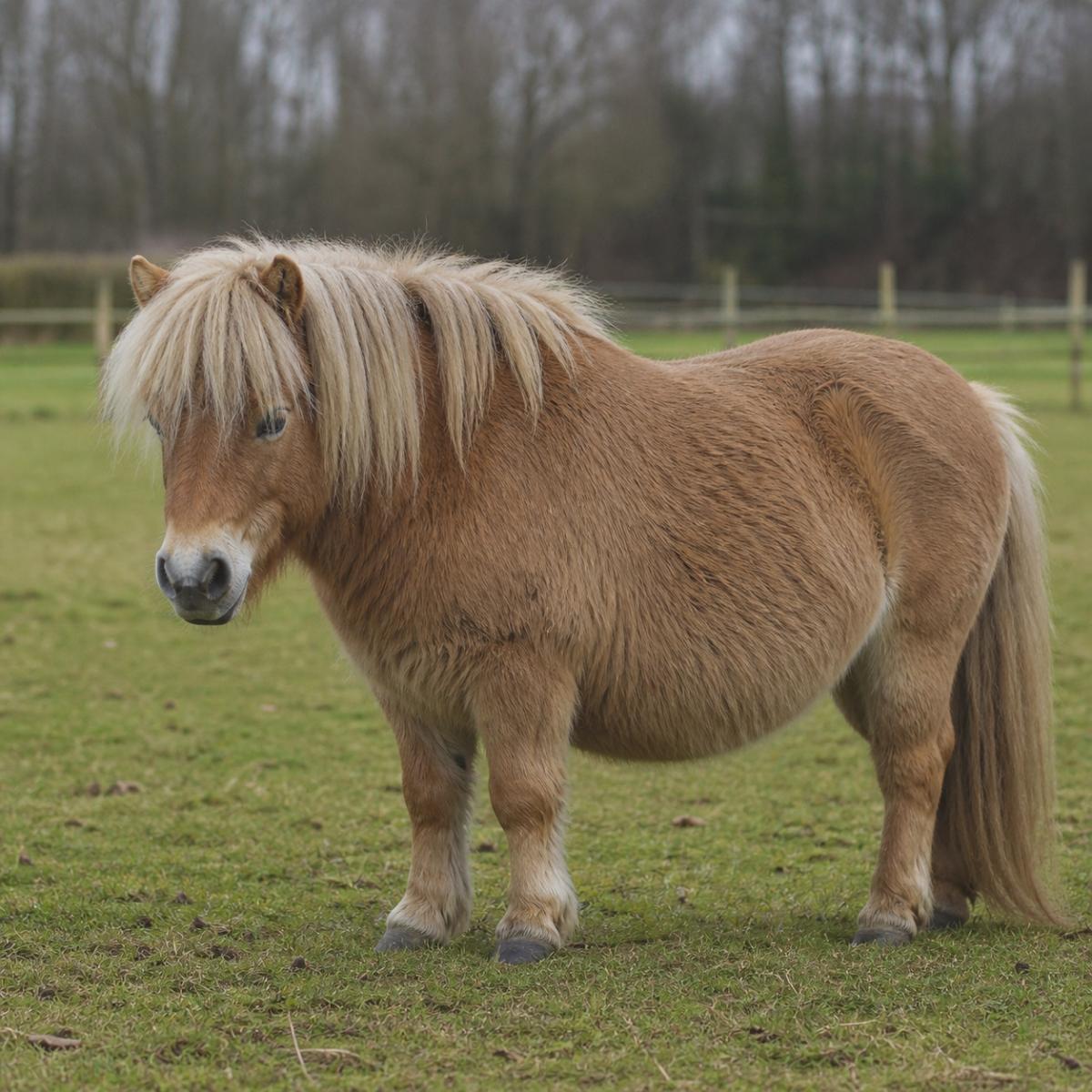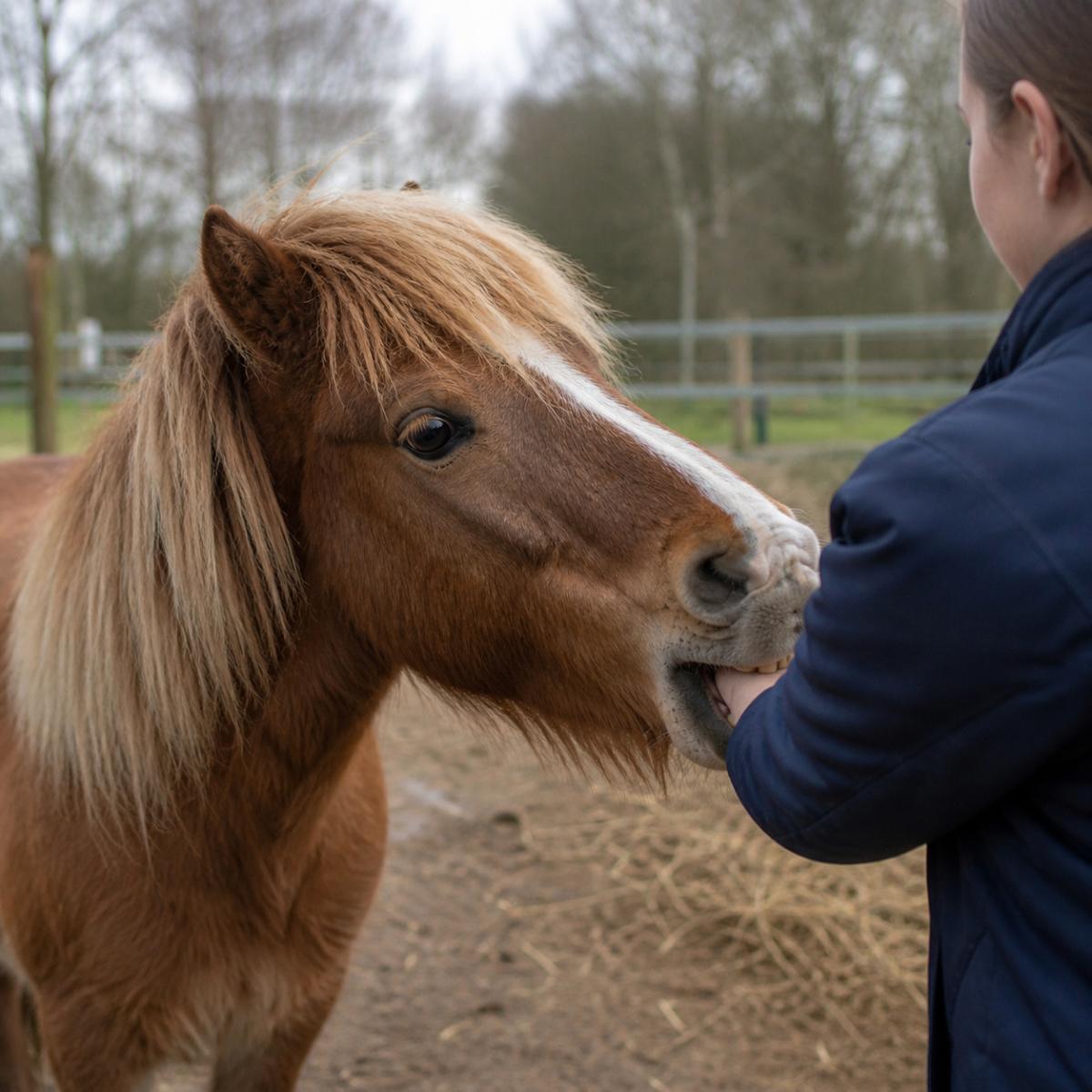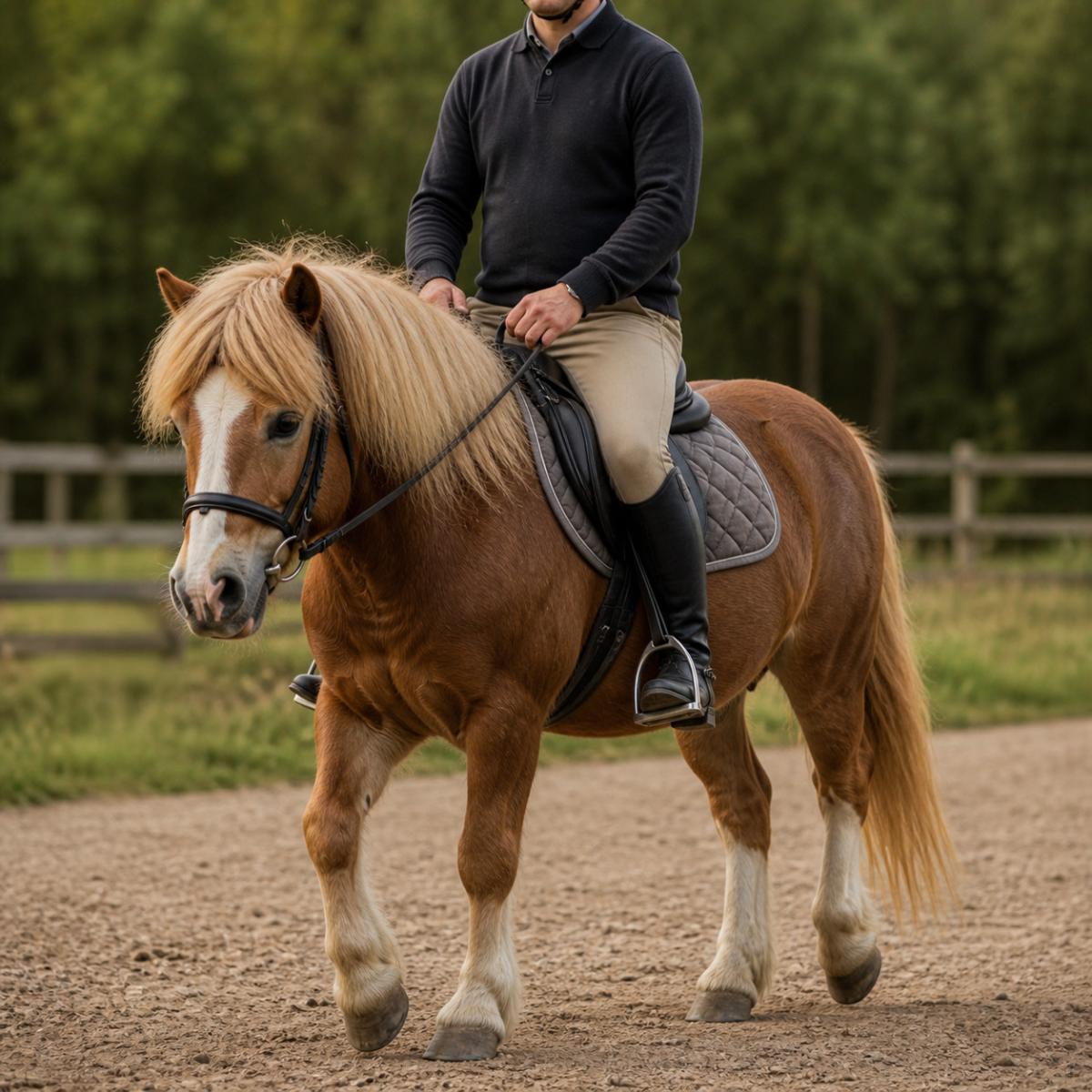
Keeping a pony at pasture all year round can be an excellent housing system, provided that “living outdoors” is not confused with simply “being left in a field.”
A well-designed pasture environment can allow a pony to move freely, forage for much of the day, interact with other equids and choose between different areas of its environment.
These opportunities correspond to several fundamental needs identified in equids.
A review of 38 studies examining horses’ needs concluded that social contact, freedom of movement and access to forage should be regarded as fundamental needs whose restriction can affect welfare. (PubMed — Basic Needs in Horses? A Literature Review)
However, living outdoors 24 hours a day does not automatically guarantee that these needs are being met.
A pasture without appropriate forage, reliable water, protection from the weather or social contact can provide a much poorer environment than a properly designed housing system.
The question is therefore not simply:
“Can a pony live outdoors all year round?”
but rather:
“Does its outdoor environment meet its needs throughout the year?”
Ponies are not all naturally more weather-resistant than horses
Ponies are often described as being systematically hardier than horses.
This is too broad a generalization.
Some pony breeds did indeed develop in cold, windy, mountainous or relatively resource-poor environments. These populations may possess characteristics particularly suited to such conditions.
However, an equid's ability to cope with outdoor living depends on many factors:
- breed and type;
- age;
- body condition;
- health;
- acclimatization;
- diet;
- coat;
- clipping;
- weather conditions;
- availability of shelter;
- and individual variation.
An elderly, ill, underweight or recently clipped pony should therefore not be managed in the same way as a healthy, acclimatized adult with a full winter coat.
The word “pony” alone is not enough to determine the weather conditions an individual can comfortably tolerate.
Horses have substantial thermoregulatory abilities
Equids can adapt to a wide range of temperatures.
Development of the winter coat, changes in metabolism, behavior and food intake all contribute to thermoregulation.
A review of winter thermoregulation reported that an acclimatized adult horse can have a very low lower critical temperature under certain experimental conditions.
But this figure should never be turned into a rule such as:
“A horse can tolerate −15°C, so it cannot be cold above that temperature.”
Air temperature is only one component of the thermal environment.
Wind, humidity, precipitation, solar radiation, coat condition, nutrition and the animal's physical condition can substantially alter heat exchange. (Cymbaluk — Thermoregulation of horses in cold, winter weather: a review)
Rain, wind and cold can be a particularly demanding combination
A pony may appear perfectly comfortable at a sub-zero temperature with a dry coat, while a considerably higher temperature combined with rain and wind can create a much greater thermoregulatory challenge.
A review focusing on horses living in Nordic climates specifically identifies cold rain combined with wind as one of the most demanding weather conditions for thermoregulation.
It recommends allowing horses to choose areas protected from sun, precipitation and wind, as well as providing a dry area and appropriate nutrition. (Mejdell et al. — Caring for the horse in a cold climate—Reviewing principles for thermoregulation and horse preferences)
The issue is therefore not simply the number shown on a thermometer.
Weather conditions need to be considered as a whole.
Shelter gives the pony a choice
The purpose of shelter is not to decide on the pony's behalf that it should stand indoors whenever it rains.
It provides the opportunity to choose its microenvironment.
In a field study involving 426 horses across 166 pastures, the use of artificial shelters varied according to weather conditions.
Horses used shelters more when temperatures became low or high, while the combination of rain and wind also increased shelter use.
Shelters were even used under some conditions within the thermoneutral zone, including in relation to insects. (Jørgensen et al. — Behavior of horses on pasture in relation to weather and shelter—A field study in a temperate climate)
A pony may therefore choose to remain in the rain at one moment and seek protection at another.
A good outdoor housing system should allow it to make that choice.
Shelter does not necessarily mean a closed stable
Suitable protection can take different forms depending on the land and climate.
It may include:
- a purpose-built field shelter;
- a sufficiently dense hedge;
- natural features of the terrain;
- trees when they genuinely provide suitable protection;
- or a combination of these features.
The quality of the protection matters more than its appearance.
It should allow the pony to obtain effective protection from the conditions to which it is exposed.
In a group, its size and layout should also allow different individuals to use it without one animal being able to exclude the others easily.
European guidance on good welfare practices for equids similarly recommends year-round protection from sun and insects during summer and from wet, windy and cold conditions during winter. It also states that shelters used by groups should be large enough to accommodate all horses. (European Commission — Turnout, shelter and pasture)
Pasture should not become a permanent mud paddock
Outdoor environments can change dramatically throughout the year.
A field that is perfectly usable in spring may become very dry during summer and deeply muddy after several weeks of rain.
Areas around:
- water troughs;
- hay feeders;
- gateways;
- entrances;
- and shelters
are particularly vulnerable to heavy traffic.
Mud is not merely an aesthetic problem.
Constantly waterlogged ground can make movement more difficult, keep the feet and lower limbs in a persistently wet environment and reduce the availability of comfortable resting areas.
European guidance therefore recommends that paddocks and pastures be sufficiently drained to avoid muddy conditions as far as possible. (European Commission — Turnout, shelter and pasture)
A dry area can be as important as the shelter itself
Building a roof in the middle of permanently muddy ground solves only part of the problem.
In year-round outdoor systems, the condition of the ground in heavily used areas deserves particular attention.
Depending on the land and available facilities, management may involve:
- drainage;
- stabilizing high-traffic areas;
- rotating paddocks;
- moving feeding points;
- maintaining gateways;
- or creating a dedicated dry area.
The aim is not to keep an entire field perfectly clean throughout winter.
It is to ensure that the pony can move, eat and rest without constantly having to stand in deep mud.
Living outdoors does not mean living on grass alone
Grass availability changes throughout the year.
Depending on the region, weather, available area, number of equids and quality of the pasture, grazing may not provide enough dry matter or nutrients during certain periods.
Conserved forage, usually hay, may then become necessary.
Cold weather can also increase energy requirements when conditions exceed the animal's thermoregulatory capacity.
The pony's body condition should therefore be monitored regularly, rather than assuming that visible grass means its nutritional requirements are being met.
The opposite problem can be just as important
For many ponies, the main challenge of pasture living is not maintaining weight during winter.
It is preventing excessive weight gain when pasture becomes productive.
As discussed in our article on why ponies gain weight, some individuals maintain body condition particularly easily and can develop substantial adiposity.
In ponies with insulin dysregulation, pasture management becomes even more important because of the risk of endocrinopathic laminitis.
A successful outdoor system may therefore have to solve two opposite problems during the same year:
providing enough forage when resources decline and controlling energy intake when they become too abundant.
Water must remain genuinely available
Having a water trough in the field does not necessarily mean that the pony has access to water.
It is important to check:
- that it works properly;
- that it remains clean;
- that the flow rate is adequate;
- that all animals can access it;
- and, during freezing weather, that the water remains available.
During summer, water consumption may increase with heat and physical activity.
During winter, freezing conditions can interrupt a system that functions normally throughout the rest of the year.
In a group, it is also important to observe whether every individual can access the water source without being displaced.
Checking water availability should therefore be part of routine pasture management.
Pasture living should not mean living alone
One of the major potential benefits of outdoor housing is the opportunity to live with other equids.
Horses are social animals.
A scientific review examining fundamental equine needs assessed the consequences of restricting social contact, movement and access to forage. It concluded that the available literature supports considering these factors fundamental to horse welfare. (PubMed — Basic Needs in Horses? A Literature Review)
Keeping a pony alone in several hectares therefore does not necessarily compensate for the absence of equine companions.
Available space and pasture quality matter, but opportunities for appropriate social interaction matter as well.
Group living also requires management
Recognizing that ponies benefit from contact with other equids does not mean that several animals can simply be placed together without further consideration.
Group composition, available space and the distribution of resources all matter.
Management should reduce the ability of one individual to control access to:
- forage;
- water;
- shelter;
- or resting areas.
Providing multiple resources or spacing them appropriately can help reduce competition.
Group stability should also be considered, as frequent changes in group composition require repeated social adjustment.
A review of group housing nevertheless concluded that group living is particularly relevant to meeting horses' physical and behavioral needs, including their need for social contact. (Hartmann et al. — Keeping horses in groups: A review)
Freedom of movement does not automatically mean enough exercise
A large pasture gives a pony the opportunity to move.
It does not guarantee that it will travel substantial distances.
The arrangement of resources can strongly influence movement.
If water, forage and shelter are concentrated in one area, a pony may spend much of its day within a relatively small part of the field.
A more thoughtful distribution of resources can encourage greater spontaneous movement.
For a leisure or sport pony, pasture living does not therefore necessarily replace appropriate physical activity.
It primarily provides freedom of movement outside formal exercise sessions.
A sport pony can live outdoors
The idea that permanent pasture living is only suitable for “hardy” ponies also deserves qualification.
A sport pony can benefit from many features of a properly managed outdoor lifestyle.
A French study published in 2024 assessed 56 international high-level sport horses and found considerable variation in their living conditions.
Horses subjected to fewer restrictions involving forage, freedom of movement and social interactions showed better welfare indicators in this study. The authors emphasized that these needs can be accommodated to a substantial extent even in horses competing at the highest level. (PubMed — Forage, freedom of movement, and social interactions remain essential fundamentals for the welfare of high-level sport horses)
The distinction is therefore not simply hardy versus sport.
As explained in our article Hardy Pony or Sport Pony: What Are the Differences?, these concepts are not mutually exclusive.
Clipping changes thermoregulation
A pony with an intact winter coat is not in the same situation as a heavily clipped pony.
Clipping removes part of the insulation provided by the coat and therefore changes how the animal exchanges heat with its environment.
Blankets may consequently be useful in some circumstances, particularly when clipping is combined with unfavorable weather.
However, a blanket should not automatically be considered a substitute for an appropriate environment.
The review by Mejdell and colleagues notes that clipping and blanketing interfere with natural thermoregulatory mechanisms and that access to protection allowing the horse to choose remains particularly valuable when weather conditions change rapidly. (Mejdell et al. — Caring for the horse in a cold climate—Reviewing principles for thermoregulation and horse preferences)
Older ponies require particular attention
As ponies age, some may have greater difficulty maintaining body condition or coping with certain environmental conditions.
Dental problems, chronic diseases, locomotor disorders or endocrine changes can also alter their requirements.
An older pony that lived comfortably outdoors for fifteen years may therefore gradually require:
- more forage;
- appropriate supplementary feed;
- additional protection;
- easier access to resources;
- or different group management.
Housing should evolve with the individual, rather than remaining unchanged simply because a particular system worked in the past.
Parasites are not an inevitable consequence of pasture living
Gastrointestinal parasites are an important consideration for grazing equids, but living outdoors does not automatically mean that a pony will carry a heavy parasite burden.
Risk depends on factors including:
- contamination of the pasture;
- stocking density;
- manure management;
- pasture rotation where appropriate;
- age;
- and individual egg shedding.
Modern parasite control should not rely solely on automatically administering frequent deworming treatments to every animal.
Monitoring may include fecal egg counts and a control strategy developed with a veterinarian according to the individual situation.
A pasture needs to be inspected like any other housing environment
A pony living outdoors still requires regular supervision.
Fences can be damaged.
Branches can fall.
Toxic plants may appear or become accessible.
A water system can stop working.
Feeders can deteriorate.
Ground conditions can become hazardous.
European guidance recommends regular inspection of fencing, removal of hazardous objects and monitoring for poisonous plants. (European Commission — Turnout, shelter and pasture)
A pony's independence never replaces human supervision.
The benefits come from the conditions provided, not simply from “pasture”
Outdoor living can provide several particularly valuable opportunities:
- freedom of movement;
- social contact;
- prolonged access to forage;
- opportunities to explore the environment;
- choice between different areas;
- a daily routine less constrained by prolonged periods of confinement.
These opportunities are consistent with factors that current research identifies as important for equine welfare.
Research has increasingly examined horse-management systems through the availability of friends, forage and freedom, emphasizing the importance of considering these dimensions together when assessing living conditions.
But none of these benefits is automatically guaranteed simply because a pony is kept inside a fenced pasture.
Stable and pasture should not be treated as simple opposites
Presenting the debate as:
pasture = natural and good
versus
stable = artificial and bad
is too simplistic.
A well-designed outdoor system can provide many behavioral opportunities.
A poorly managed pasture can instead expose a pony to isolation, insufficient forage, excessive energy intake, permanent mud, competition or inadequate protection.
Likewise, temporary stabling may be necessary for treatment, recovery or particular management requirements.
The important question is therefore not which type of building is morally superior, but what the environment actually allows the pony to do and whether its individual needs are being met.
What does a good year-round pasture system require?
A successful outdoor system needs to answer several practical questions.
Does the pony have access to an appropriate amount of forage?
Can it drink freely?
Can it seek protection from wind, precipitation, sun and insects?
Does it have access to sufficiently dry ground for standing and resting?
Can it move comfortably?
Can it have appropriate social interactions with other equids?
Can every member of the group access essential resources?
Does its body condition remain appropriate throughout the seasons?
Are its feet, skin and general health regularly monitored?
Do the fencing and ground remain safe?
If these conditions are met and adapted to the individual, living at pasture throughout the year can be an entirely appropriate housing system for many ponies.
A good pasture is a managed environment
Year-round pasture living should therefore be considered neither a miracle solution nor an inherently dangerous practice.
It can provide ponies with essential opportunities for movement, social interaction and access to forage, while allowing them greater choice within their environment.
But these advantages depend directly on the quality of management.
A pony living outdoors remains a domestic animal whose nutrition, water supply, body condition, feet, health, social relationships and environment require monitoring.
A better conclusion is therefore not:
“A hardy pony can live outside without any problems,”
but rather:
“Many ponies can live outdoors throughout the year when their environment allows them to adapt to seasonal conditions and meet their individual needs.”
The real criterion is not whether a stable is present.
It is the quality of the living conditions provided to the pony, twelve months of the year.
Sources and references
- Basic Needs in Horses?—A Literature Review
- Phelipon et al. — Forage, freedom of movement, and social interactions remain essential fundamentals for the welfare of high-level sport horses
- Mejdell et al. — Caring for the horse in a cold climate—Reviewing principles for thermoregulation and horse preferences
- Cymbaluk — Thermoregulation of horses in cold, winter weather: a review
- Jørgensen et al. — Behavior of horses on pasture in relation to weather and shelter—A field study in a temperate climate
- Hartmann et al. — Keeping horses in groups: A review
- European Commission — Turnout, shelter and pasture: Guide for good animal welfare practice for the keeping, care, training and use of horses
- Friends, forage, freedom: A cluster analysis investigating horse management styles and welfare in the UK and Ireland