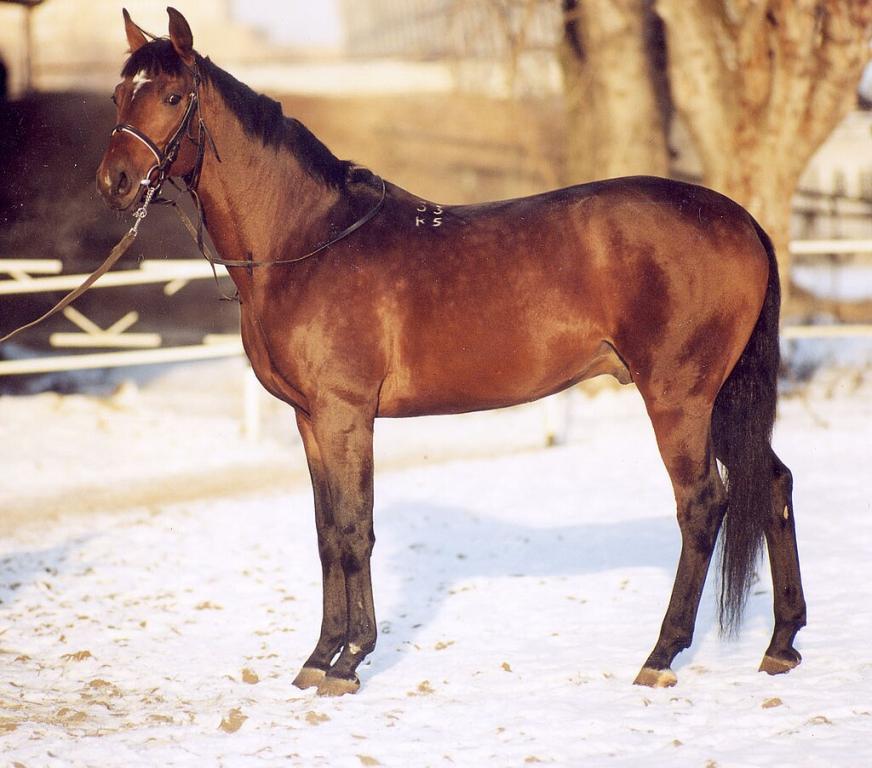
The Nokota is a rare American horse from the wild herds of North Dakota. Discover its unique history, roan coats, and hardy temperament.
By the Chevaux du Monde editorial team · Published on · Updated on
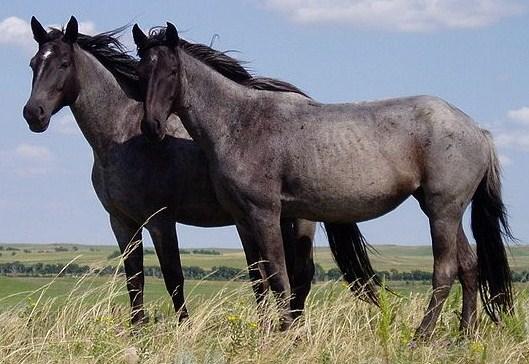
Type: Riding Horse
Continent: America
Country: United States
Weight: 400 – 500 kg
Height: 133 – 166 cm
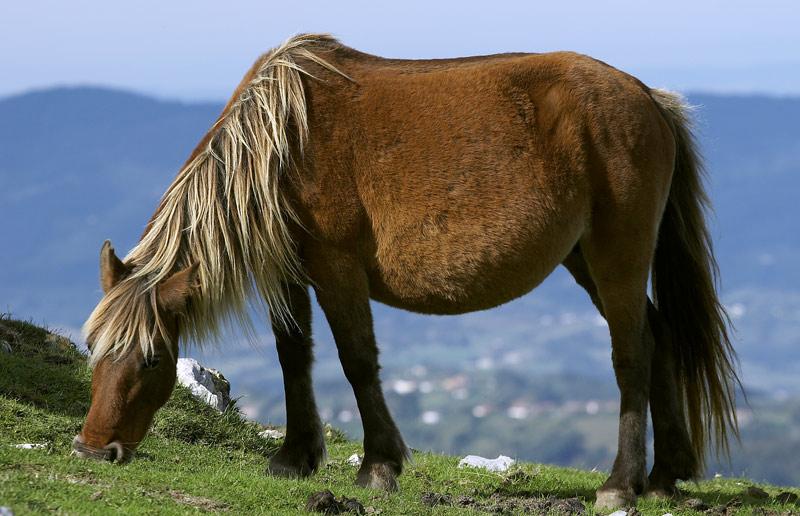
The Nokota is an American breed originating from wild horse herds living in the Badlands of North Dakota, a rugged and arid region in the northern United States. These horses survived for generations in harsh conditions, developing strong hardiness, excellent endurance, and remarkable resilience.
The Nokota partly descends from horses used by Native American tribes, particularly the Lakota, as well as horses introduced by European settlers. It is also connected to horses from the U.S. Cavalry, which were abandoned or released into the wild during conflicts and westward expansion.
In the 20th century, these horses were still living in a semi-wild state in the area that would later become the Theodore Roosevelt National Park. Threatened with disappearance, they were gradually protected thanks to the efforts of breeders and enthusiasts, notably the Nokota Horse Conservancy, which played a key role in the breed’s recognition and preservation starting in the 1990s.
Today, the Nokota is considered a living heritage of the American Great Plains, embodying the history of Native peoples, cowboys, and the wild landscapes of the Midwest.
The Nokota is primarily associated with North Dakota, particularly the Badlands region, where populations originating from wild herds still exist. This area remains the historical and genetic core of the breed.
Some Nokota horses were preserved in the area of the Theodore Roosevelt National Park, where horses lived in a semi-wild state.
This region plays a key role in the conservation and modern history of the breed.
Today, the Nokota is bred in several U.S. states, including:
These breeding programs aim to preserve:
The Nokota remains a rare and sparsely distributed breed. Some breeding operations exist outside the United States, particularly in:
However, these populations remain:


The Nokota represents a unique genetic reservoir originating from horse populations that evolved in near-wild conditions in the Badlands of North Dakota. This particular origin has allowed the preservation of natural traits often reduced or lost in highly selected breeds.
The Nokota is considered to carry genes from:
It therefore represents a living genetic heritage linked to the history of horses in North America.
From a genetic perspective, the Nokota stands out for:
These traits make it a potentially valuable horse for:
Unlike many modern breeds, the Nokota has undergone:
This contributes to a relatively well-preserved genetic diversity, a significant asset in a context where many breeds are becoming increasingly standardized.
The Nokota is one of the few American horses whose history was largely shaped in the wild, within the harsh landscapes of the Badlands of North Dakota. Unlike breeds developed through strict breeding programs, it is the result of a natural and historical mix, influenced by humans and then left to evolve freely.
Its origins trace back to horses introduced by European settlers, combined with those used by Native American tribes, particularly the Lakota, as well as horses associated with the U.S. Cavalry. Over time, some were abandoned or escaped, forming wild herds across the plains of the Midwest.
Isolated in the Badlands, these horses survived for generations under harsh conditions. Without direct human selection, they developed essential qualities such as hardiness, endurance, and strong adaptability. The Nokota thus emerged as a functional horse shaped by its environment.
In the late 19th century, future president Theodore Roosevelt encountered these horses during his time in North Dakota. The region would later become the Theodore Roosevelt National Park, where some horse populations continued to live in a semi-wild state.
During the 20th century, the Badlands horses nearly disappeared due to captures, sales, and crossbreeding. In the 1980s, dedicated breeders, notably the Kuntz brothers, began preserving these horses by acquiring individuals from the remaining herds.
These efforts led to the creation of an official registry in the 1990s and the recognition of the Nokota as a distinct breed. Today, it is considered a living heritage of American history, with a primary goal: preserving its original characteristics rather than transforming it.
The Nokota has a temperament directly inherited from its life in the wild. It is characterized by strong alertness, a high level of awareness, and a well-developed survival instinct. This makes it naturally attentive to its environment, sometimes reserved during initial interactions.
The Nokota is known for its intelligence and quick learning ability. It understands rapidly but requires a consistent and respectful approach. If handled poorly, it may become wary; when trained properly, it proves to be highly cooperative.
This is often a sensitive horse, both physically and mentally. It responds finely to aids and to the rider’s attitude. This sensitivity makes it an excellent partner for attentive riders, but it may be less suitable for beginners without proper guidance.
Accustomed to surviving in harsh conditions, the Nokota has strong mental resilience. It is generally brave, willing, and capable of sustaining effort over time, especially in outdoor environments.
Unlike some breeds heavily selected for docility, the Nokota builds a relationship with humans progressively. Once trust is established, it becomes a loyal, committed, and reliable partner.
The Nokota remains a rare breed today, with limited numbers. Its survival depends heavily on conservation efforts led by organizations such as the Nokota Horse Conservancy. However, there is a slow but steady increase in the number of breeders and registered individuals.
In a context where many sport horses show:
the Nokota is increasingly valued for its:
This could support its development in the coming years, particularly for leisure riding and outdoor activities.
Unlike many other breeds, the Nokota is not intended to become a mass-market breed.
Its primary goals remain:
Its future is therefore more closely tied to a conservation approach than to commercial expansion.
The Nokota is generally considered a hardy and resilient horse, thanks to its natural origins. Having evolved in the wild under harsh conditions, it has retained strong overall soundness and a level of adaptability greater than that of many highly selected breeds.
To date, there are no clearly identified genetic disorders known to be specific to the Nokota. Unlike some modern breeds, it does not show known predispositions to widely documented hereditary diseases.
The Nokota developed largely through natural selection, which led to the elimination of:
This contributes to the overall good health of the population.