Strength, gentleness, and a remarkable coat: discover the history and characteristics of the American Cream Draft, an iconic American horse breed.
By the Chevaux du Monde editorial team · Published on · Updated on
Type: Draft Horse
Continent: America
Country: United States
Weight: 725 – 900 kg
Height: 152 – 170 cm
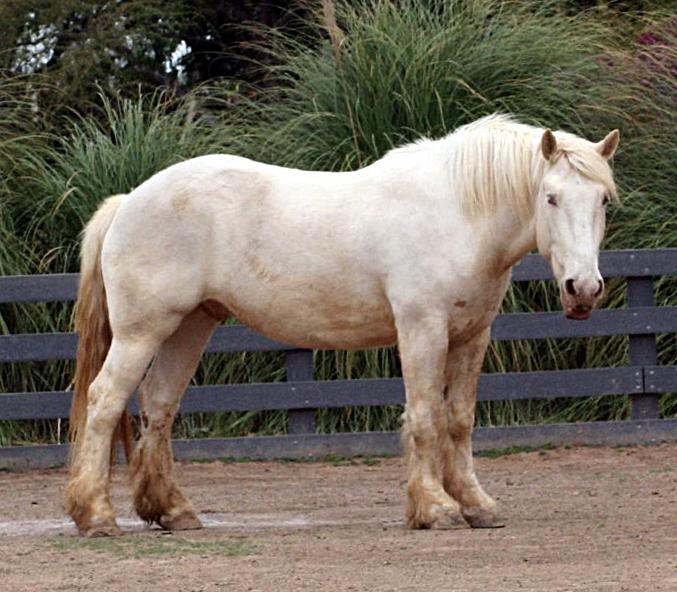
The American Cream Draft is a draft horse breed originating from the state of Iowa in the United States. Its development began in the early twentieth century from a cream-colored mare named Old Granny, which is considered the foundation ancestor of the breed. Local breeders gradually selected her descendants for their distinctive cream coat, calm temperament, and suitability for agricultural work.
Unlike many American draft breeds that originated from imported European horses, the American Cream Draft is one of the few draft horse breeds developed directly in the United States. The breed was officially recognized in 1944 with the establishment of its stud book. After suffering a significant decline due to the mechanization of agriculture during the mid-twentieth century, it is now the subject of conservation programs aimed at preserving this unique genetic heritage.
The American Cream Draft is historically associated with the state of Iowa, in the Midwestern United States, where the breed was developed in the early twentieth century. This region remains the historical center of its breeding activities.
Today, breeding of the American Cream Draft remains primarily concentrated in the American Midwest, particularly in the states of Iowa, Missouri, Illinois, Minnesota, and Wisconsin. Smaller populations can also be found in other parts of the United States.
Due to its rarity, the American Cream Draft is bred by a limited number of specialized breeders. The majority of registered horses are still located in the United States, where conservation programs aim to preserve and gradually expand the breed's population.
The American Cream Draft is generally raised in agricultural regions consisting of pastures and farmland. Its hardiness and calm temperament allow it to adapt to a variety of management systems, both for work and leisure purposes.


The American Cream Draft holds particular genetic importance due to its history and distinctive characteristics. It is the only draft horse breed developed in the United States whose cream-colored coat is an official characteristic of the breed standard.
With its relatively small population, the American Cream Draft represents a valuable genetic resource for preserving the diversity of draft horses. Its conservation helps maintain historic American bloodlines that might otherwise have disappeared following the mechanization of agriculture during the twentieth century.
The breed is renowned for its pulling power, calm temperament, docility, and ability to work under a variety of conditions. These qualities are highly valued in draft horse conservation programs and contribute to the importance of the American Cream Draft as a living genetic heritage.
The American Cream Draft is also studied for the inheritance of its distinctive coat color, which is associated with the champagne gene. This gene is responsible for the breed's cream-colored coat, pink mottled skin, and amber eyes, making it of particular interest for research into equine coat color genetics.
The history of the American Cream Draft began in the early twentieth century in the state of Iowa, United States. The breed traces its origins to a cream-colored mare known as Old Granny, which is considered the foundation mare of the breed. Her descendants quickly gained attention for their unusual color, strength, and docile temperament.
As interest in these horses grew, several Iowa breeders undertook a rigorous breeding program to establish the desired characteristics. Over successive generations, the cream coat, amber eyes, and strong drafting abilities became the defining traits of the breed.
In 1944, breeders established the American Cream Draft Horse Association and created an official stud book. This milestone marked the formal recognition of the American Cream Draft as a distinct breed and provided a framework for its continued development.
Like many draft horse breeds, the American Cream Draft was heavily affected by the mechanization of agriculture following the Second World War. The widespread adoption of tractors greatly reduced the demand for working horses, resulting in a significant decline in the breed's population.
Beginning in the late twentieth century, breeders and conservation organizations launched efforts to protect the breed. Thanks to these initiatives, the American Cream Draft avoided extinction and continues to be bred today as a draft horse, driving horse, and leisure horse.
The American Cream Draft holds a special place in the equine history of the United States. It is widely regarded as the only draft horse breed developed in the United States whose cream-colored coat is an official characteristic of the breed standard.
The American Cream Draft is renowned for its particularly calm, gentle, and cooperative nature. These qualities greatly contributed to its popularity among farmers seeking a reliable horse that was easy to handle on a daily basis.
The breed is generally described as hard-working and willing. It responds well to the requests of its handler or rider and readily performs the tasks assigned to it, whether in draft work, driving, or leisure activities.
The American Cream Draft is often appreciated for its friendly disposition and its ability to interact well with both humans and other horses. This sociable nature makes it easy to integrate into a variety of breeding and management environments.
Thanks to its balanced temperament, the breed is considered a safe, dependable, and predictable horse. Its patience and steady demeanor make it a valued partner for family activities, recreational driving, and public exhibitions.
The American Cream Draft demonstrates a good capacity for learning when trained with consistency, patience, and kindness. Its intelligence, combined with its naturally calm temperament, generally makes training and everyday management straightforward.
The American Cream Draft remains one of the rarest draft horse breeds in the United States. Despite its limited numbers, conservation efforts led by breeders and breed associations continue to maintain and gradually increase the population.
In recent years, there has been renewed interest in American heritage livestock breeds. The American Cream Draft benefits from this trend thanks to its unique history, distinctive appearance, and status as the only American draft breed officially recognized for its cream-colored coat.
Although traditional agricultural uses have largely declined, the breed now finds roles in recreational driving, historical demonstrations, rural tourism, leisure riding, and certain forms of equine-assisted activities. This diversification helps support its long-term preservation.
The main challenge remains maintaining sufficient genetic diversity within a relatively small population. Breeders continue to carefully manage breeding programs in order to limit excessive inbreeding while preserving the breed's defining characteristics.
The long-term outlook for the American Cream Draft appears generally positive. Although the breed remains rare, increasing public awareness, conservation programs, and growing interest in historic American breeds should help ensure its survival for future generations.
The American Cream Draft is generally regarded as a robust and hardy horse. Originally selected for agricultural work, it possesses good physical endurance and a strong constitution suited to prolonged effort.
Due to its relatively small population, the breed has a more limited genetic diversity than many more widespread horse breeds. Breeders therefore carefully monitor breeding programs to minimize the risks associated with inbreeding.
The American Cream Draft is known to be a potential carrier of Junctional Epidermolysis Bullosa (JEB), a rare inherited genetic disorder affecting the skin and mucous membranes. Affected foals develop severe skin lesions shortly after birth and rarely survive. Modern genetic testing allows breeders to identify carriers and significantly reduce the risk of transmission.
Like many draft horse breeds, the American Cream Draft may be predisposed to certain conditions related to its size and weight, including joint, musculoskeletal, or metabolic disorders when nutrition and management practices are not properly adapted.
A balanced diet, careful weight management, regular hoof care, and appropriate veterinary monitoring generally help maintain these horses in good health throughout their lives.