Discover the Dülmener, a rare German pony from the Merfelder Bruch: its history, conformation, temperament, breeding and conservation.
By the Chevaux du Monde editorial team · Published on · Updated on
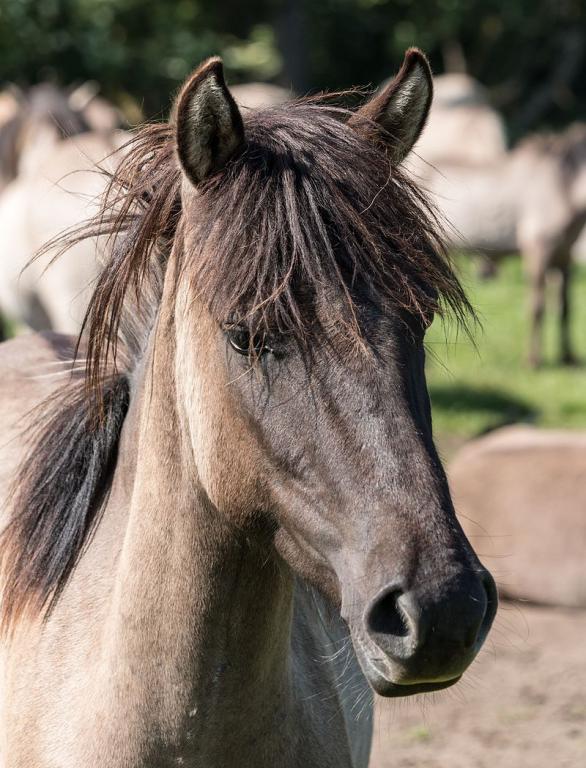
The Dülmener originated around Dülmen, in North Rhine-Westphalia, western Germany. Its history is inseparable from the Merfelder Bruch, an area of heathland, wet meadows and woodland near the village of Merfeld.
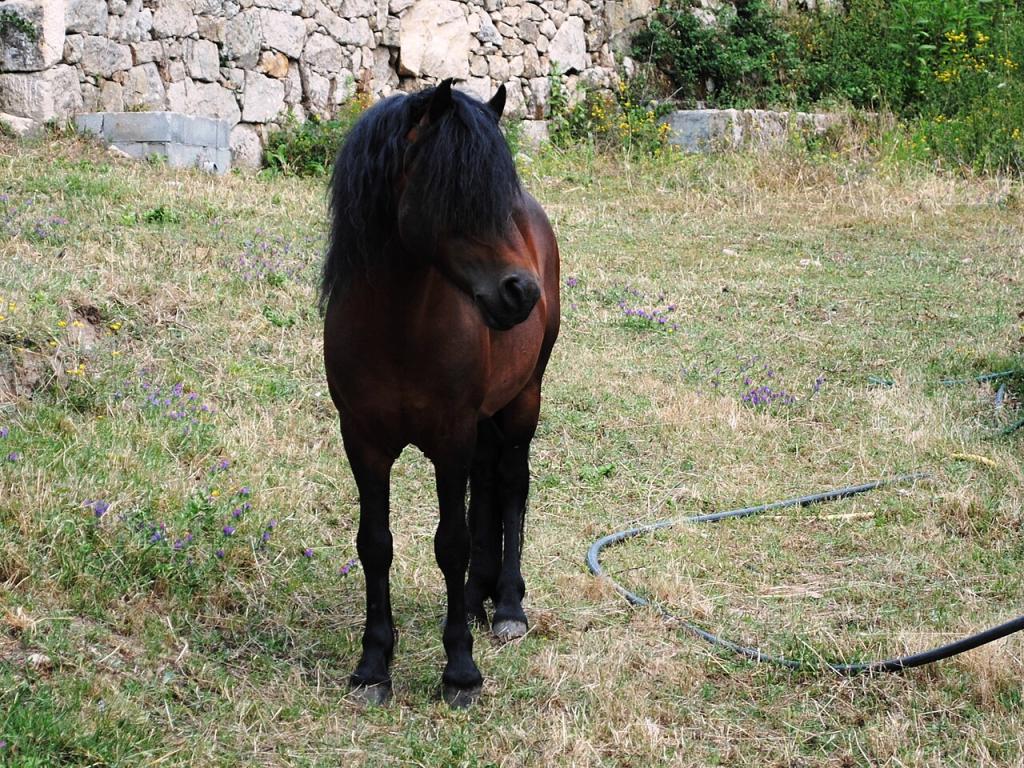
A large part of the population still lives within the enclosed Merfelder Bruch reserve. These animals live in a herd with limited human intervention. However, the Dülmener remains a domestic horse breed living under semi-feral conditions rather than a truly wild horse in the zoological sense.
The main Dülmener population lives in the Merfelder Bruch Wild Horse Reserve near Dülmen. The reserve covers approximately 350 hectares and is home to several hundred horses living outdoors throughout the year.
The site is managed by the administration of the Duke of Croÿ. The horses forage for themselves, form social groups and give birth within this extensive environment. Reproduction and population size nevertheless remain monitored.
Outside the Merfelder Bruch, a small number of Dülmener ponies are kept by private owners and breeders, mainly in Germany. The breed remains uncommon internationally.


The Dülmener represents an important genetic resource for the conservation of historic German horse populations. Its value is partly linked to the continuity of a herd-managed population living under extensive conditions in the Merfelder Bruch.
A genetic study published in the journal Animals in 2024 examined 101 horses using 29 microsatellite markers. The researchers found a high level of genetic diversity within the sample and clear differentiation from the other horse populations included in the study.
These findings are encouraging, but they do not eliminate the risks associated with a numerically limited and geographically concentrated population. Careful management of breeding animals and bloodlines therefore remains essential.
Horses living in the Merfelder Bruch were mentioned in a document dating from 1316. This record confirms their long-standing presence in Westphalia, but it does not demonstrate that the present population has remained genetically unchanged since the Middle Ages.
During the nineteenth century, land transformation and division threatened the horses living in the region. In 1856, the Dukes of Croÿ gathered the remaining animals within a reserve in the Merfelder Bruch. The enclosed area was gradually enlarged to form the present Wild Horse Reserve.
Outside blood was introduced into the population at different points in its history. The modern Dülmener should therefore not be described as the genetically unchanged descendant of a prehistoric wild horse.
Population management traditionally includes an annual roundup. Young males are separated from the herd to regulate numbers and manage reproduction. Some are subsequently sold and may be trained for domestic life.
The history and current management of the herd are presented by the administration of the Duke of Croÿ, which manages the reserve.
In the Merfelder Bruch, Dülmener ponies grow up within social groups and develop the normal behavioural and communication patterns of herd-living equids.
The breeding programme seeks a well-balanced, hardy and versatile small horse. However, an animal taken directly from the semi-feral herd is not accustomed to human handling in the same way as a foal raised through daily contact with people. Its training requires time, consistency and suitable experience.
Once appropriately trained, the Dülmener may be used for leisure riding, trail riding or driving. Temperament nevertheless varies according to the individual horse, its upbringing, training, living conditions, breeding and the experience of its rider or handler.
The future of the Dülmener depends on maintaining the Merfelder Bruch population, monitoring the genetic diversity of breeding animals and preserving a sufficient number of registered horses outside the reserve.
Promoting the breed as a leisure, trail-riding or driving pony following suitable training may support its conservation. This development must remain compatible with the preservation of its bloodlines and historic management system.
Available evidence does not establish a specific disease predisposition unique to the Dülmener. Outdoor living and selection within the Merfelder Bruch are associated with hardy animals, but they do not make the breed immune to illness.
After leaving the semi-feral herd, the horse requires a gradual transition to domestic feeding, handling, hoof care and routine management. Veterinary monitoring, dental care, hoof maintenance and body-condition assessment must be adapted to the individual animal.
Slow, steady, and well-balanced gait. Suitable for covering long distances. The Dülmener maintains good balance even on difficult terrain.
The Dülmener shows a smooth and active trot with good impulsion despite its small size. The gait is natural, regular, and without exaggeration. Its movements reflect the breed's adaptation to rough terrain, showing good coordination and stable balance—typical of horses living in semi-wild conditions.
Short but energetic, often seen during escape or play within the herd. Its compact build allows for a controlled and efficient canter.