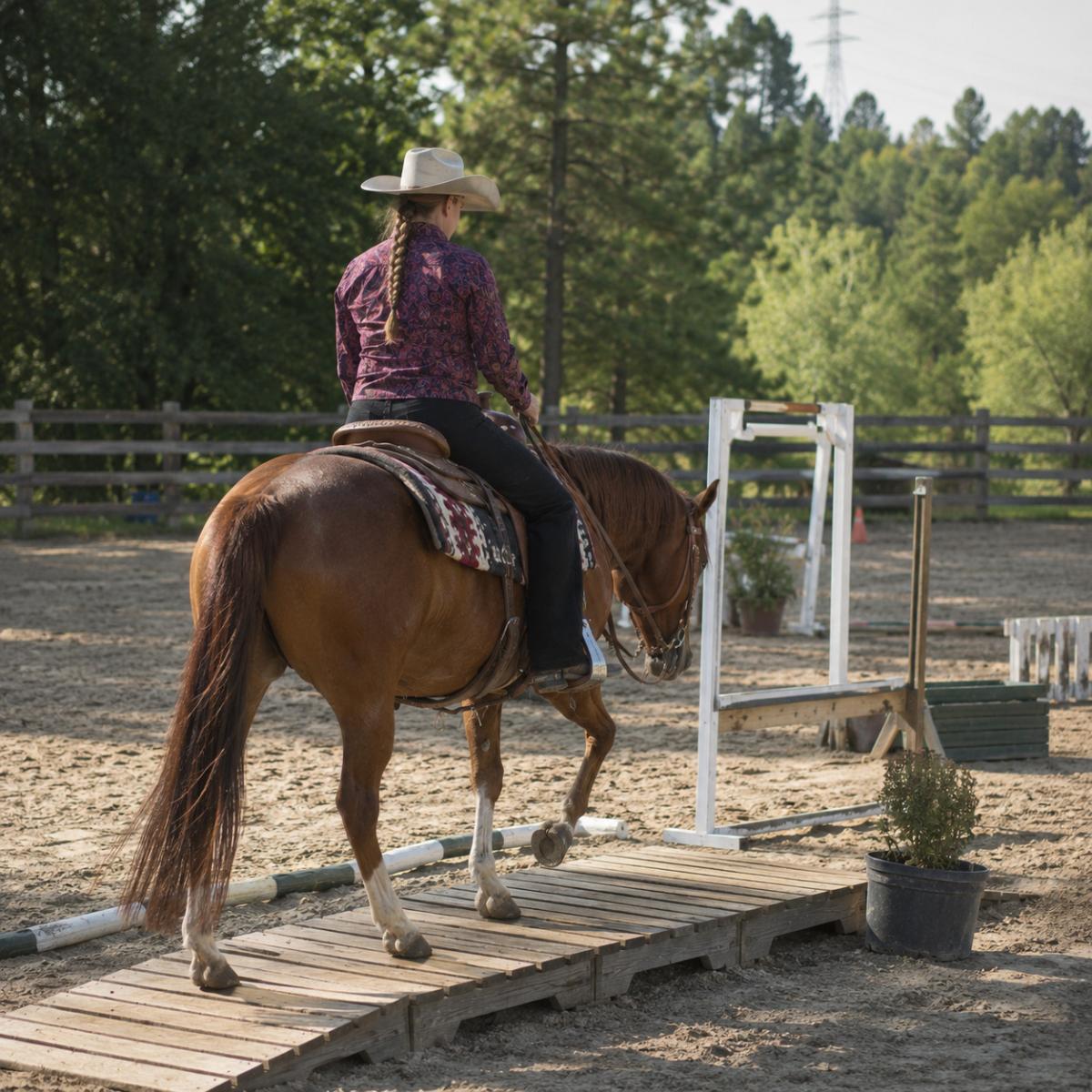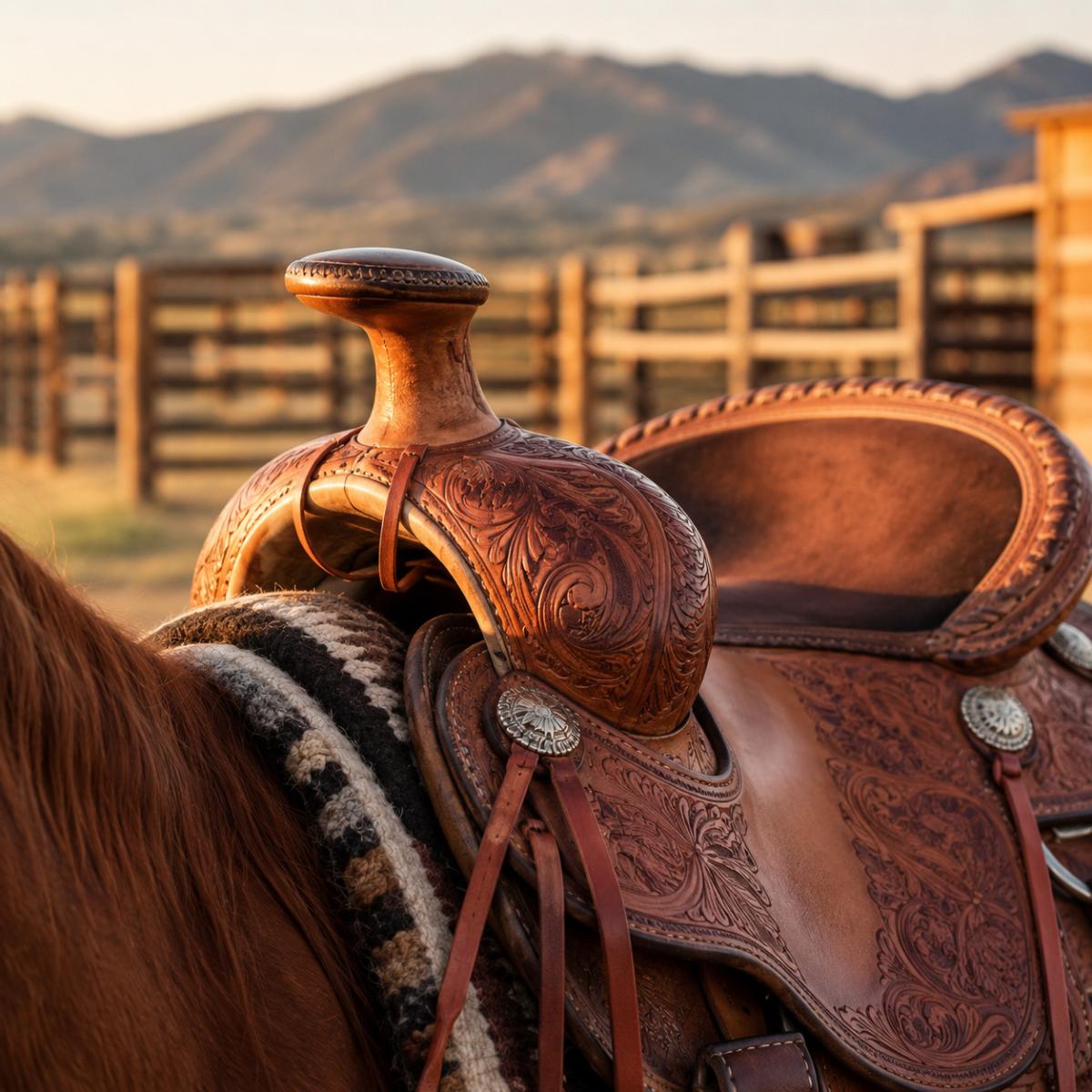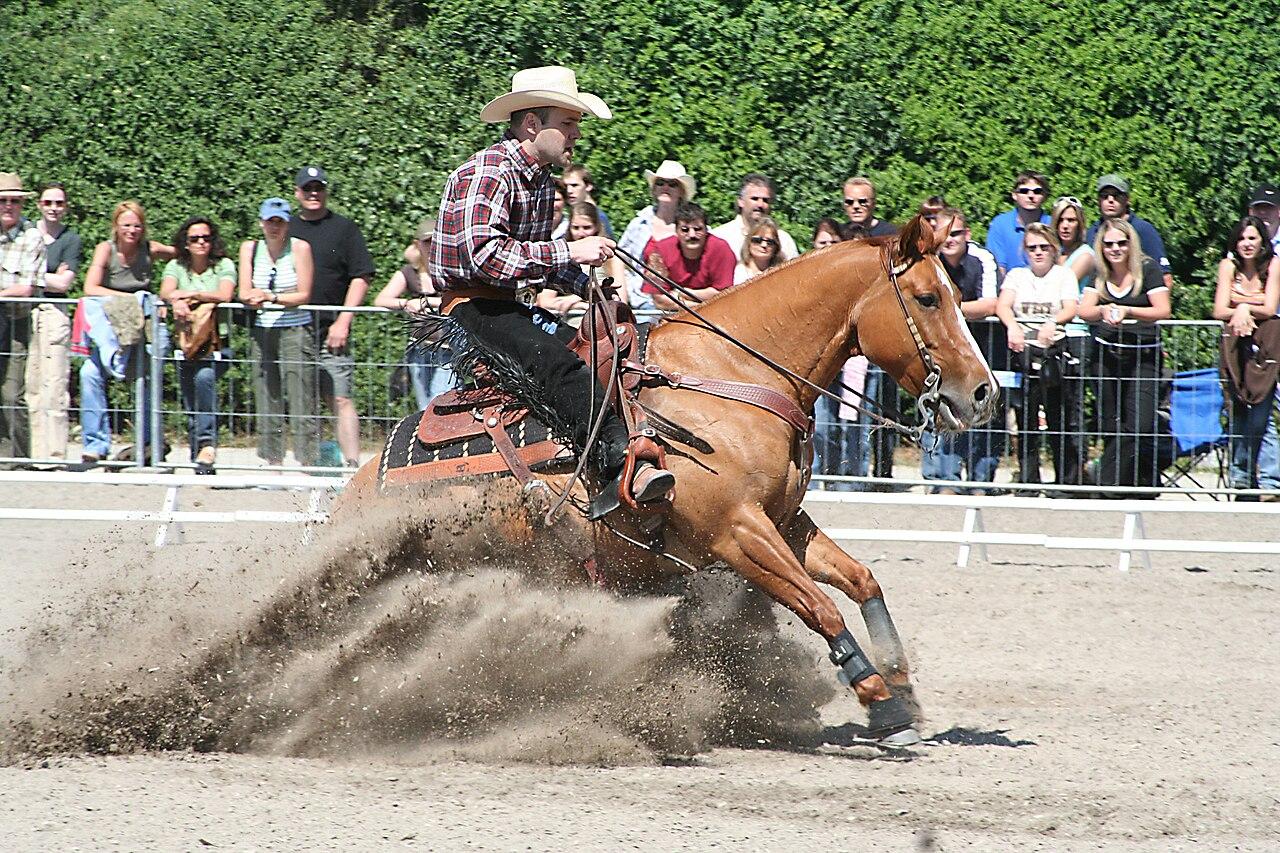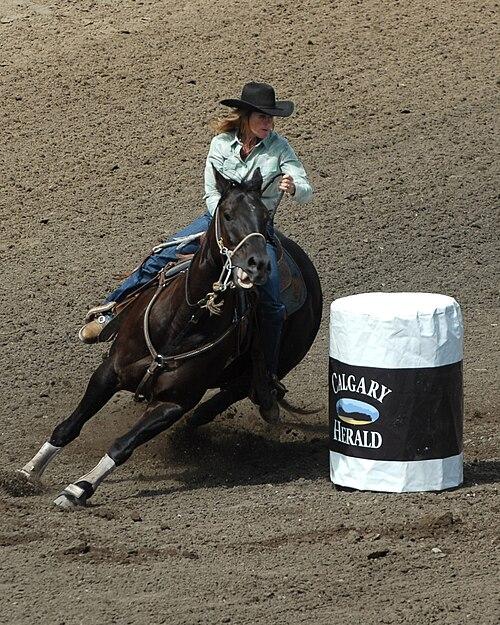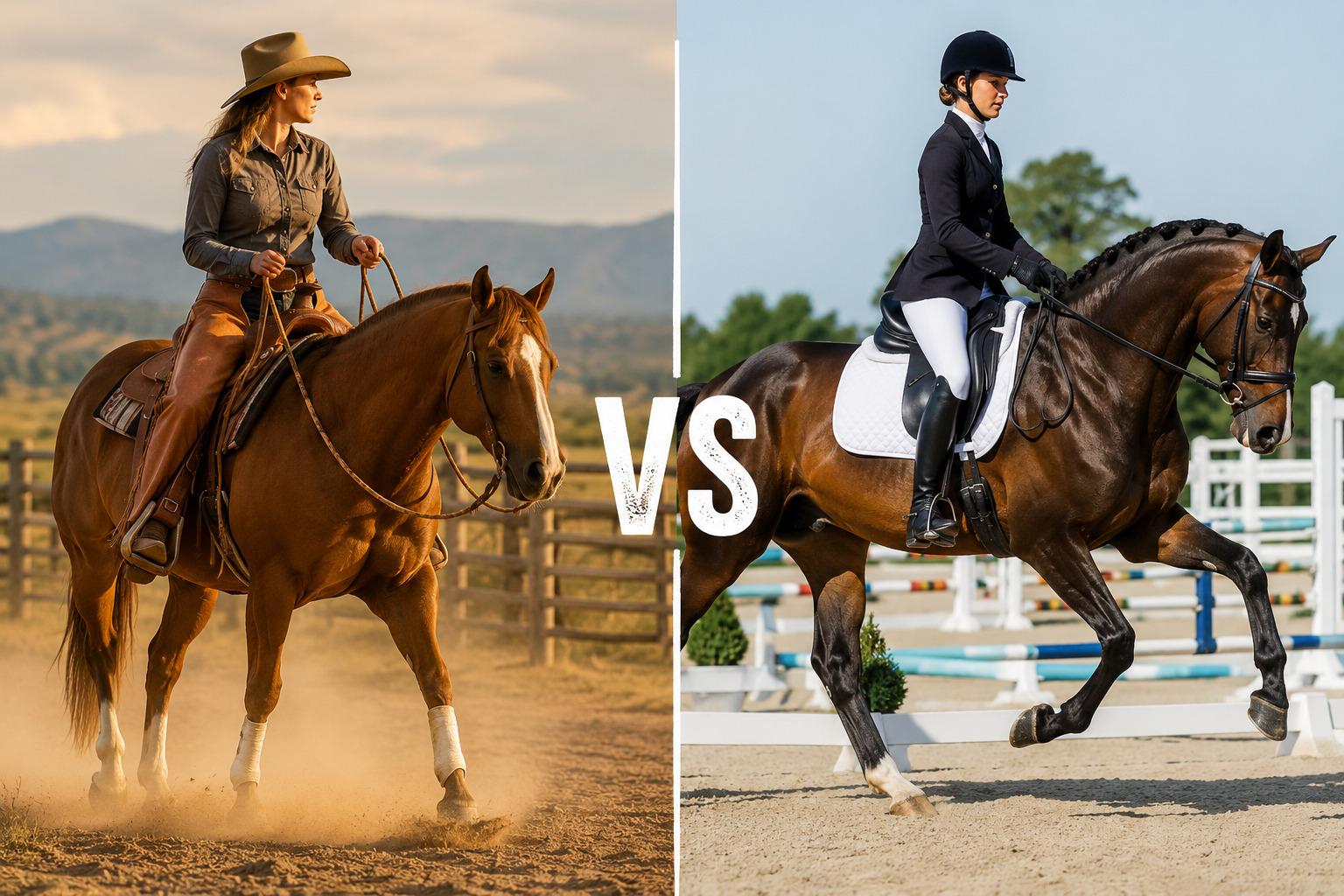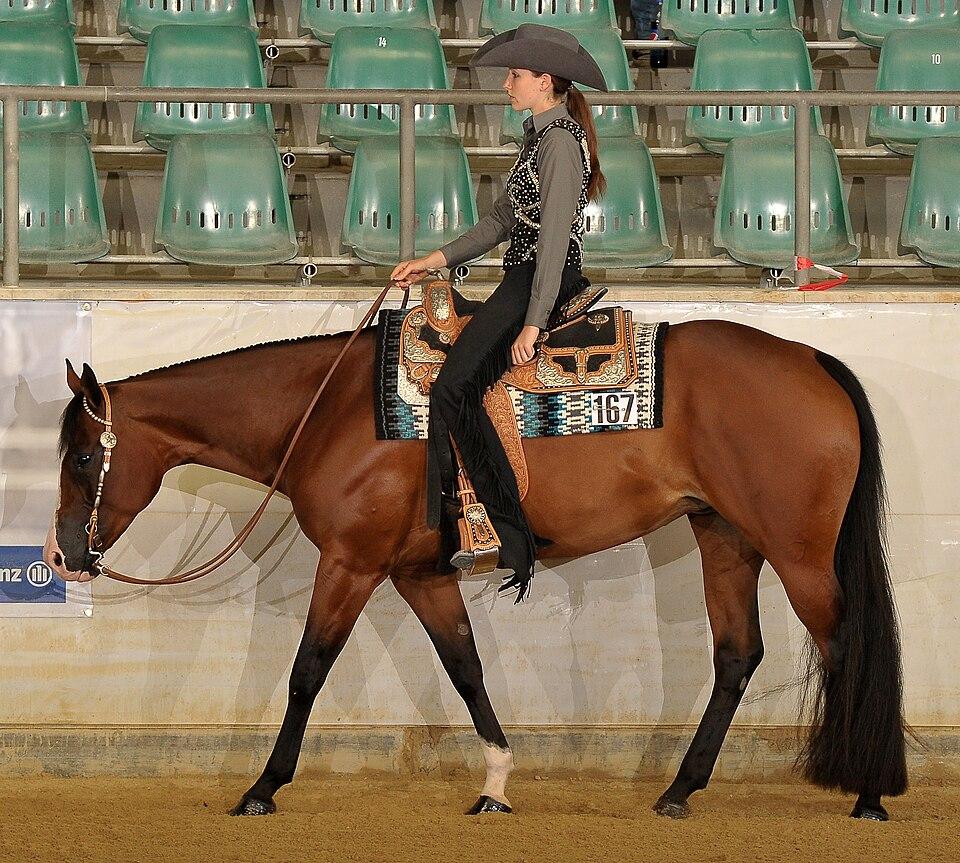
The Quarter Horse has become inseparable from western riding. Reining, cutting, working cow horse, ranch riding, barrel racing and western pleasure: the breed appears across a remarkably wide range of disciplines, to the point that it is often regarded as the quintessential western horse.
Yet this dominance cannot be explained by a single quality.
The Quarter Horse is not simply a naturally “calm, powerful and maneuverable” horse that happened to be perfectly suited to western riding. Its success is the result of a much longer history combining short-distance racing, the development of the American stock horse, cattle work, the creation of an organized breed registry and, above all, several decades of increasingly specialized selection for performance.
Today, a cutting Quarter Horse, a reining Quarter Horse and a racing Quarter Horse can be sufficiently different for genetic studies to identify real population structure within the breed.
That is probably a major part of the explanation: the Quarter Horse does not dominate western riding because of a single universal type, but because breeders have developed different types of horses for different tasks.
The Quarter Horse existed before modern western competition
To understand its present position, it is important to distinguish the early history of these horses from the history of modern western competition.
The name Quarter Horse is associated with short-distance races held in colonial America, particularly over approximately a quarter of a mile.
These horses were valued for their ability to produce considerable speed over a short distance.
However, the modern Quarter Horse is not descended from a population that remained unchanged from that period.
Different genetic influences and different forms of selection contributed to its development. The influence of the Thoroughbred is particularly well documented within the Quarter Horse population, especially among horses selected for racing.
A genetic study examining several performance groups found that racing Quarter Horses showed substantial Thoroughbred influence and represented one of the most genetically distinct groups within the breed. (Petersen et al. — The American Quarter Horse: population structure and relationship to the Thoroughbred)
The modern Quarter Horse is therefore the product of crossbreeding, selection and specialization, rather than a fixed type that had already been definitively established during the colonial period.
From a fast horse to the American stock horse
Short-distance speed alone obviously does not explain the Quarter Horse's importance in western riding.
Across the American West, different types of stock horses were used for cattle work.
Daily work could involve following cattle, separating individual animals, changing direction rapidly or covering large areas of land.
The qualities required in this context were not identical to those of a horse selected exclusively for racing.
The populations that contributed to the modern Quarter Horse gradually became associated with multiple functions, including racing and cattle work.
When the American Quarter Horse Association was founded in 1940, its purpose was to preserve and organize this increasingly recognizable population of American horses.
The breed subsequently developed at the same time that western riding itself was changing: skills originating in ranch work were progressively transformed into increasingly codified competitive disciplines.
The Quarter Horse did not “create” western riding
The historical relationship should not be reversed.
Western riding did not simply descend from the Quarter Horse.
The practices that eventually contributed to western equestrian culture have older roots, particularly in Spanish traditions introduced to the Americas and subsequently developed in Mexico.
Mexican vaqueros had already developed sophisticated cattle-working techniques on horseback before the emergence of the American cowboy as we recognize that figure today.
The Smithsonian has documented the importance of Mexican traditions in the development of saddles and working horsemanship in southwestern North America.
The Quarter Horse therefore developed within an equestrian culture that was already evolving.
Its modern dominance came later, through its increasing importance within that culture and the extensive selection subsequently applied to the breed.
There is no longer a single Quarter Horse “type”
This is one of the most important points for understanding the modern breed.
A major genetic study published in 2014 analyzed Quarter Horses belonging to six performance groups:
- halter;
- western pleasure;
- reining;
- working cow horse;
- cutting;
- racing.
The researchers identified significant genetic structure among almost all of the groups studied.
Differences were particularly pronounced between cutting and racing Quarter Horses.
More broadly, the analyses grouped the horses into three major clusters: stock, racing and pleasure/halter. (PubMed — The American Quarter Horse: population structure and relationship to the Thoroughbred)
This substantially changes the answer to the question “Why is the Quarter Horse so good at western riding?”
There is not simply one universal combination of characteristics shared equally throughout the breed.
Selection has created different specialized populations within the Quarter Horse itself.
A reining Quarter Horse is not selected like a cutting horse
Reining requires controlled acceleration and deceleration, spins, flying lead changes, circles at different speeds and sliding stops.
Cutting presents the horse with a different task: keeping a selected cow separated from the herd while reacting extremely rapidly to its changes of direction.
Barrel racing demands something different again: acceleration, speed, extremely rapid negotiation of three turns and the ability to accelerate away from each barrel.
Western pleasure has its own criteria for presentation and gaits.
Ranch riding evaluates another combination of qualities.
Over successive generations, successful horses in particular disciplines have been used more extensively as breeding animals within the corresponding bloodlines.
The consequence is logical: sport specialization has gradually become embedded in the genetic structure of the breed.
Conformation has also become specialized
This differentiation is not limited to pedigrees.
A study involving 45 Quarter Horses divided between Western Pleasure, Hunter Under Saddle and reining compared fifteen linear measurements and several conformation ratios.
Significant differences were identified among the three groups.
The Hunter Under Saddle horses in the study were taller and had greater values for most length measurements, while the reining horses showed the lowest values for several of those measurements. (PubMed — Comparison of American Quarter Horses Competing in Western Pleasure, Hunter under Saddle, and Reining Using Linear Traits)
The sample was relatively small and obviously cannot define the conformation of every individual horse.
Nevertheless, it demonstrates that functional specialization can also be observed in conformation.
Describing the Quarter Horse simply as a consistently “compact horse with powerful hindquarters” therefore hides substantial morphological diversity.
“Powerful hindquarters” do not explain everything
The Quarter Horse is frequently described as particularly successful in western riding because of its powerful hindquarters.
That description may fit certain individuals and bloodlines, but it becomes misleading when used as a universal biomechanical explanation.
A sliding stop, spin, barrel turn or rapid lateral movement by a cutting horse is not produced by the hindlimbs alone.
These movements involve the entire locomotor system.
Conformation, limb coordination, the ability to accelerate and decelerate, postural control, technique, training, surface and the horse's physical condition all interact.
Even in reining, it would therefore be too simplistic to explain the sliding stop as merely “shifting the horse's weight onto the hindquarters.”
The movement involves considerably more complex mechanics.
Is the Quarter Horse really more explosive?
Some Quarter Horse populations have indeed been selected for activities in which acceleration and speed play major roles.
The history of short-distance racing is directly connected with the breed's name, and modern selection has continued to produce bloodlines specifically intended for racing.
But again, a western pleasure Quarter Horse and a racing Quarter Horse should not be treated as physiologically interchangeable.
Population genetics demonstrates precisely the importance of this separation between performance groups.
Saying that “the Quarter Horse is explosive” can therefore describe some abilities historically selected within the breed, but it is not an identical characteristic in every Quarter Horse.
The famous “cow sense”
Cow sense is probably one of the best-known expressions associated with the Quarter Horse.
It generally describes a horse's ability to observe the movements of cattle and respond rapidly, sometimes with apparent anticipation.
This ability is particularly valued in cutting and certain cow horse disciplines.
However, cow sense should not be treated as a mysterious instinct automatically possessed by every Quarter Horse.
Cutting populations have been intensively selected.
A pedigree analysis involving 1,590 elite Quarter Horses competing in cutting in Brazil examined a pedigree containing 5,832 animals.
The five ancestors with the greatest influence — Doc Bar, Peppy San Badger, Freckles Playboy, Poco Lena and High Brow Cat — together accounted for 30.7% of marginal genetic contributions within the population studied.
The authors concluded that relatively few ancestors accounted for a substantial proportion of its genetic diversity. (PubMed — Analysis of the Pedigree and Ancestors of the Cutting Population of the Quarter Horse Breed)
The Quarter Horse's success around cattle therefore also reflects decades of selection within specialized bloodlines, combined, of course, with individual learning and experience.
Reining has shaped its own bloodlines too
The same phenomenon can be seen in reining.
Successful horses are used to produce new generations intended for the discipline, progressively reinforcing particular bloodlines.
Genomic research involving 143 elite Quarter Horses from six performance subpopulations identified signatures of selection in different groups, including cutting, reining, racing, western pleasure and working cow horse. (PubMed — Genome-Wide Signatures of Selection Reveal Genes Associated With Performance in American Quarter Horse Subpopulations)
It would, however, be incorrect to conclude that researchers have discovered a “reining gene” or a “sliding stop gene.”
Complex athletic performance results from numerous genetic and environmental factors.
These studies primarily demonstrate that selection pressure within different disciplines has left detectable signatures in the genome.
Does the Quarter Horse really dominate every western discipline?
Not in the same way.
The term “western riding” encompasses very different activities, and their competitive systems are not all organized in the same manner.
Some events are directly associated with breed organizations such as the American Quarter Horse Association, while others have their own sport-specific organizations and may accept multiple breeds under their rules.
Nevertheless, the Quarter Horse has an exceptionally strong presence across many American western disciplines.
It is therefore important to distinguish between two statements:
the Quarter Horse is extraordinarily influential in western riding;
and
all western competitions are exclusively dominated by or restricted to Quarter Horses.
The first is well supported. The second would be far too broad.
Why is the Quarter Horse so prominent in reining?
Reining provides an excellent example of the combination of history, selection and specialization.
Modern reining requires the horse to perform precise maneuvers within a prescribed pattern: fast and slow circles, flying lead changes, spins, rollbacks, backing and sliding stops.
Quarter Horse bloodlines intended for reining have been selected within this competitive environment.
The breed's dominance is therefore not simply the result of a historically advantageous body type: it is continually reinforced by breeding from horses that are already successful in the discipline.
The system partly reinforces itself. A large specialized population produces more specialized horses, provides more proven breeding animals and concentrates substantial expertise in breeding and training.
Why is the Quarter Horse so prominent in cutting?
In cutting, specialization is particularly visible.
Horses must react extremely rapidly to changes of direction from a cow after it has been separated from the herd.
Cutting pedigrees have become specialized enough to form an identifiable subpopulation within the Quarter Horse.
Genetic data also indicate that cutting and working cow horse populations are more closely related to one another than to some other Quarter Horse performance groups. (PubMed — The American Quarter Horse: population structure and relationship to the Thoroughbred)
This relationship is consistent with partially shared selection histories and functional abilities centered on cattle work.
What about barrel racing?
Barrel racing requires a different combination of abilities.
The clock is central to the event: the horse must negotiate three barrels according to the prescribed pattern and complete the run as quickly as possible.
Acceleration, deceleration, trajectory, balance through the turns and the ability to accelerate again all contribute to performance.
The Quarter Horse has a major presence in barrel racing, but again, characteristics associated with cutting or reining bloodlines should not automatically be transferred to barrel racing horses.
The existence of performance subpopulations demonstrates that the breed's historical versatility has increasingly coexisted with specialization.
Ranch riding tells another story
Ranch riding is intended to present a functional horse through a series of maneuvers and transitions defined by the rules of the class.
Its presentation and judging criteria are not identical to western pleasure or reining.
The strong presence of Quarter Horses in this type of competition is consistent with the history of the American stock horse and the enormous population of horses already selected for western activities.
But once again, the words “Quarter Horse” alone cannot predict the quality of an individual horse.
Bloodline, individual characteristics, training and experience remain decisive.
Is the Quarter Horse really calmer?
The breed's reputation for being calm and cooperative is extremely widespread.
However, this should not be turned into a biological rule.
Temperament varies between individuals and can be influenced by genetics, education, early experiences, living conditions, training and many other factors.
Most importantly, selection is not identical across Quarter Horse bloodlines.
A racing horse, a cutting horse and a western pleasure horse may have very different behavioral profiles.
It is therefore preferable to assess the individual horse's actual behavior rather than assuming that a Quarter Horse will automatically be calm because of its breed.
Is a Quarter Horse ideal for learning western riding?
It can be.
But breed alone is not enough.
An experienced, well-trained Quarter Horse that is physically suitable and accustomed to beginner riders can be an excellent school horse.
A young Quarter Horse from competitive bloodlines that is sensitive, powerful or still in training may be completely unsuitable for a beginner.
As with other breeds, training level, experience and individual temperament matter more than the breed label when choosing a horse for learning.
The Quarter Horse's dominance in western sport therefore does not mean that every Quarter Horse automatically makes the best beginner's horse.
Real versatility, but with an important qualification
The Quarter Horse has a strong reputation for versatility, and the history of the breed partly supports this image.
The overall population includes horses used for racing, cattle work, numerous western disciplines, recreational riding and different show classes.
But there is an interesting paradox:
the breed is extremely versatile; some individual Quarter Horses are extremely specialized.
A racing Quarter Horse selected over generations for speed is not necessarily the horse one would choose for cutting.
A high-level western pleasure horse is not simply interchangeable with a reiner.
Versatility therefore describes the breadth of the breed as a whole more accurately than it describes every individual Quarter Horse.
Specialization also has genetic consequences
Intensive selection has a downside.
When a relatively small number of highly successful stallions produce very large numbers of offspring, particular bloodlines can become extremely influential.
The 2014 genetic study of Quarter Horse subpopulations identified increased relatedness within performance groups and a disproportionate contribution from certain popular stallions. (PubMed — The American Quarter Horse: population structure and relationship to the Thoroughbred)
This concentration of genetic influence can also contribute to the persistence of inherited mutations within particular bloodlines.
Genetic diseases are not distributed uniformly
The Quarter Horse is affected by several inherited diseases or genetic predispositions for which DNA tests are available.
However, it would be misleading to present all of these variants as equally common throughout the breed.
A study involving 651 elite Quarter Horses, 200 control Quarter Horses and 180 Paint Horses found that the frequencies of certain pathogenic variants differed substantially among performance groups.
For example, HERDA was particularly represented in the cutting group studied, while HYPP and PSSM1 occurred at much higher frequencies in the halter group. (PubMed — Evaluation of allele frequencies of inherited disease genes in subgroups of American Quarter Horses)
More recent data from Quarter Horses born between 2020 and 2024 likewise indicate that frequencies of variants associated with several inherited disorders remain highly variable among performance subpopulations. (PubMed — Allele frequencies of 7 inherited disorders in performance and random cohorts of American Quarter Horses)
Once again, bloodline matters.
Selection is therefore not only about performance
The development of genetic testing now allows breeders to incorporate certain inherited diseases into breeding decisions.
This does not mean that a horse carrying a particular variant should always be treated in the same way regardless of the condition involved: inheritance patterns, genotype and clinical consequences differ between diseases.
A more rational breeding strategy is to know the genetic status of breeding animals and avoid high-risk matings, while maintaining sufficient genetic diversity.
This is particularly important in a breed where certain performance bloodlines have become extraordinarily influential.
Other western breeds are not merely substitutes
The Paint Horse also occupies an important place in the history of American stock horses and western competition.
The Appaloosa likewise has its own competitive circuits and a strong presence within western riding.
Other horses can also participate in western disciplines, as discussed in our article “Can You Practice Western Riding with Any Horse?”.
The Quarter Horse's dominance therefore does not mean that other breeds are incapable of performing the same exercises.
It primarily reflects the historical scale and sporting depth of selection developed around the Quarter Horse.
An advantage that became an entire ecosystem
Genetics and conformation do not explain everything.
A breed with a major presence in a sport gradually benefits from an entire ecosystem:
- numerous specialized breeding animals;
- documented pedigrees;
- experienced breeders;
- trainers familiar with particular bloodlines;
- dedicated competitions;
- an international market;
- and multiple generations of horses with documented performance.
That ecosystem then reinforces the breed's dominance.
When a rider is looking for a reining, cutting or barrel racing prospect, they can turn to families in which several generations have already been selected for that activity.
The Quarter Horse therefore benefits from a cumulative advantage: its historical dominance helps sustain its future dominance.
The Quarter Horse is not “the best horse” in absolute terms
Its position in western riding does not mean it is superior to every other breed in every situation.
Excellent western horses exist in other populations.
And as discussed in our comparison of western and English riding, the term “western” itself covers extremely different activities.
The concept of the “best horse” only makes sense in relation to a specific objective.
An excellent cutting horse is not necessarily an excellent racehorse.
A halter champion is not selected according to the same criteria as a reiner.
Even within a single breed, function can ultimately produce very different populations.
So why does the Quarter Horse dominate western riding?
Because several advantages have reinforced one another.
The Quarter Horse developed through the history of American racing and working horses. It acquired a major place within stock horse culture. Its registry and breed organizations helped structure an enormous population. Then different western disciplines encouraged increasingly specialized selection.
Generation after generation, successful horses produced new generations intended for the same activities.
This specialization is now sufficiently deep to be measurable in pedigrees, conformation and the genome. (PubMed — The American Quarter Horse: population structure and relationship to the Thoroughbred)
The Quarter Horse's real strength is therefore probably not some magical combination of “power, calmness and cow sense.”
It lies in something much more interesting: a very large population in which humans have spent generations selecting different horses for different functions.
That explains how a single breed name can now describe a sprinter, a cutting horse, a reiner, a western pleasure horse or a recreational partner.
And it is this historical ability to diversify and then specialize that has made the Quarter Horse the most iconic breed in modern western riding.
Sources and references
- Petersen et al. — The American Quarter Horse: population structure and relationship to the Thoroughbred
- Genome-Wide Signatures of Selection Reveal Genes Associated With Performance in American Quarter Horse Subpopulations
- Comparison of American Quarter Horses Competing in Western Pleasure, Hunter under Saddle, and Reining Using Linear Traits
- Analysis of the Pedigree and Ancestors of the Cutting Population of the Quarter Horse Breed
- Evaluation of allele frequencies of inherited disease genes in subgroups of American Quarter Horses
- Allele frequencies of 7 inherited disorders in performance and random cohorts of American Quarter Horses (2020–2024)
- American Quarter Horse Association — AQHA Handbook of Rules and Regulations
- Smithsonian Institution — Man Made Mobile: Early Saddles of Western North America