The farrier is one of the oldest professions in the world, yet one of the least understood by the general public. Far more than a simple "horseshoe nail-er", the farrier sits at the crossroads of craftsmanship, biomechanics and animal health. But how does one enter this profession? What training is required, how much does it pay, and what does day-to-day life actually look like? A complete overview.
What Exactly Does a Farrier Do?
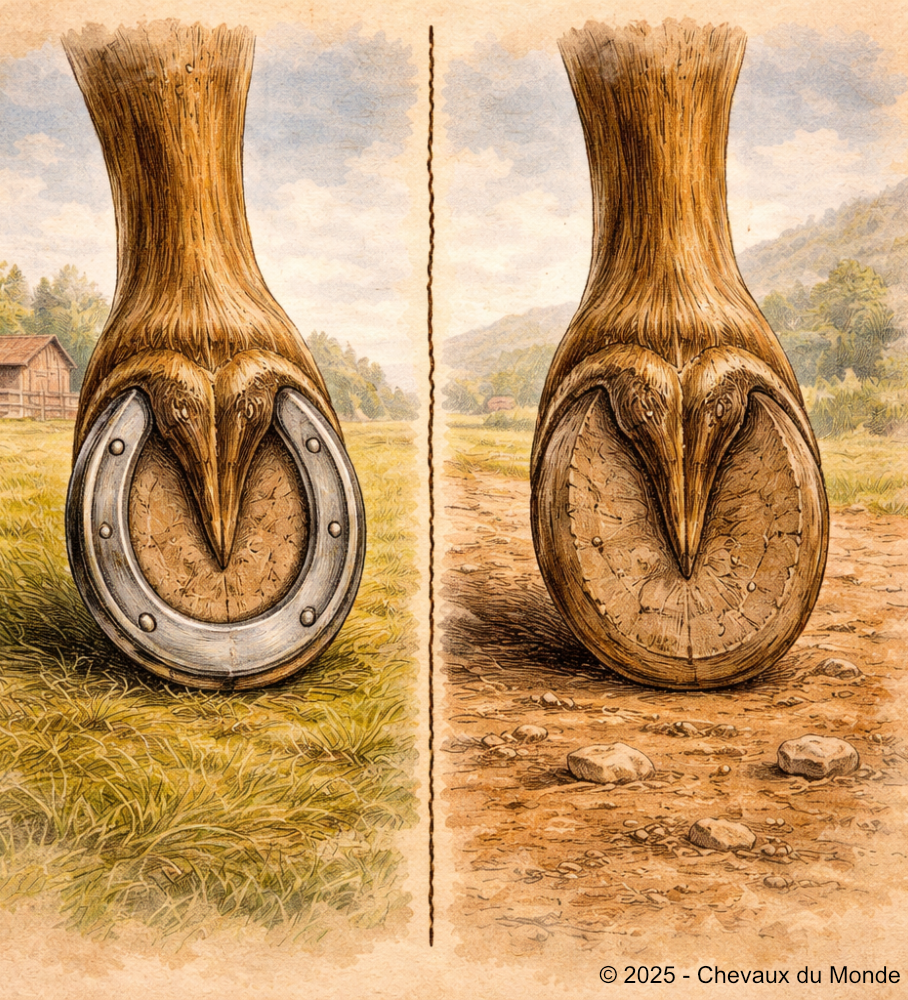
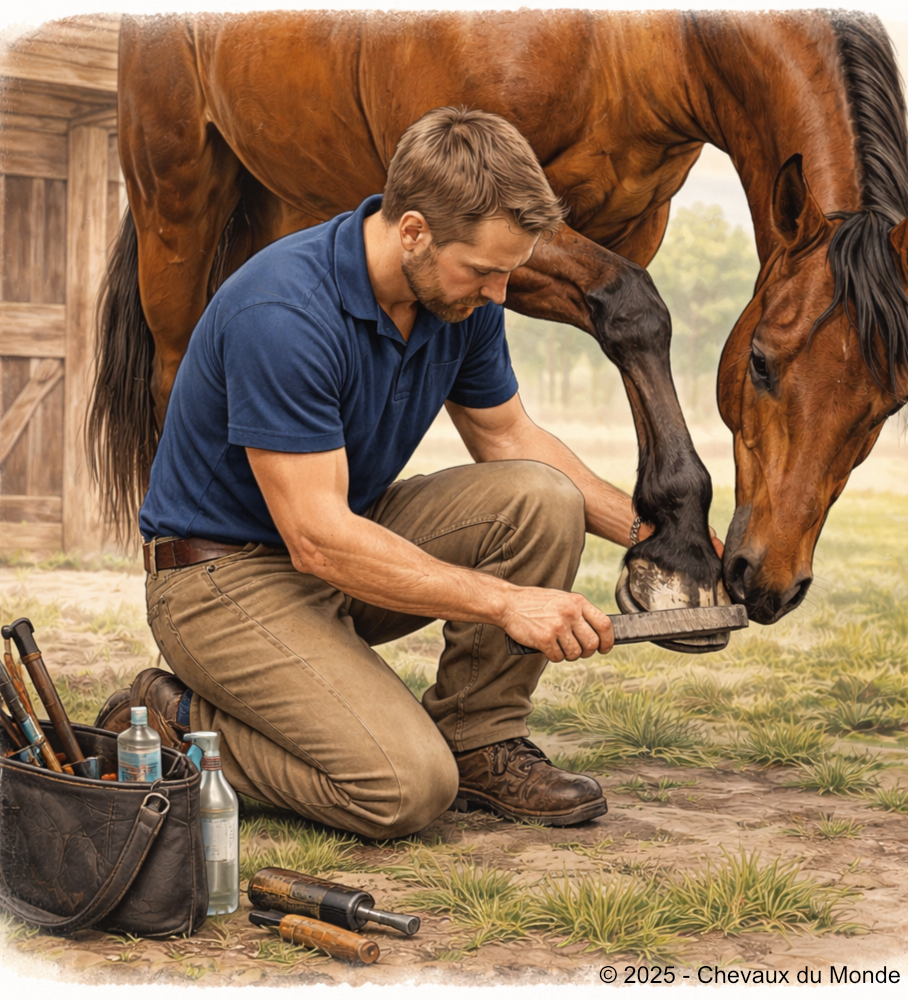
A farrier is a professional specialising in hoof care for horses, donkeys and mules. Their primary role is to trim, balance and shoe equine hooves in order to maintain locomotor health and prevent injury.
Unlike the equine podiatrist, who works exclusively barefoot (without applying shoes), the farrier masters both approaches: barefoot trimming and shoeing. They often forge the shoes themselves, or adapt factory-made shoes to suit the individual horse.
A Farrier's Day-to-Day Responsibilities
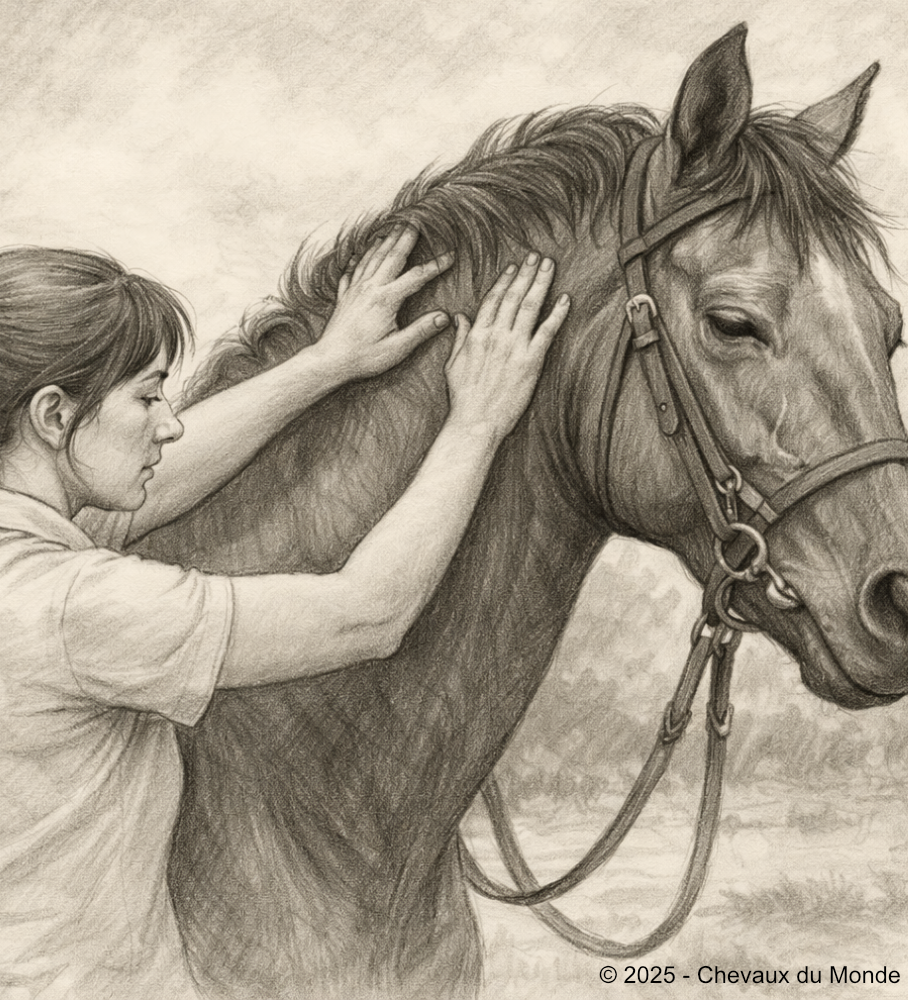
- Examining the hoof and limb alignment before any intervention
- Trimming the hoof: removing excess horn, rebalancing the hoof capsule
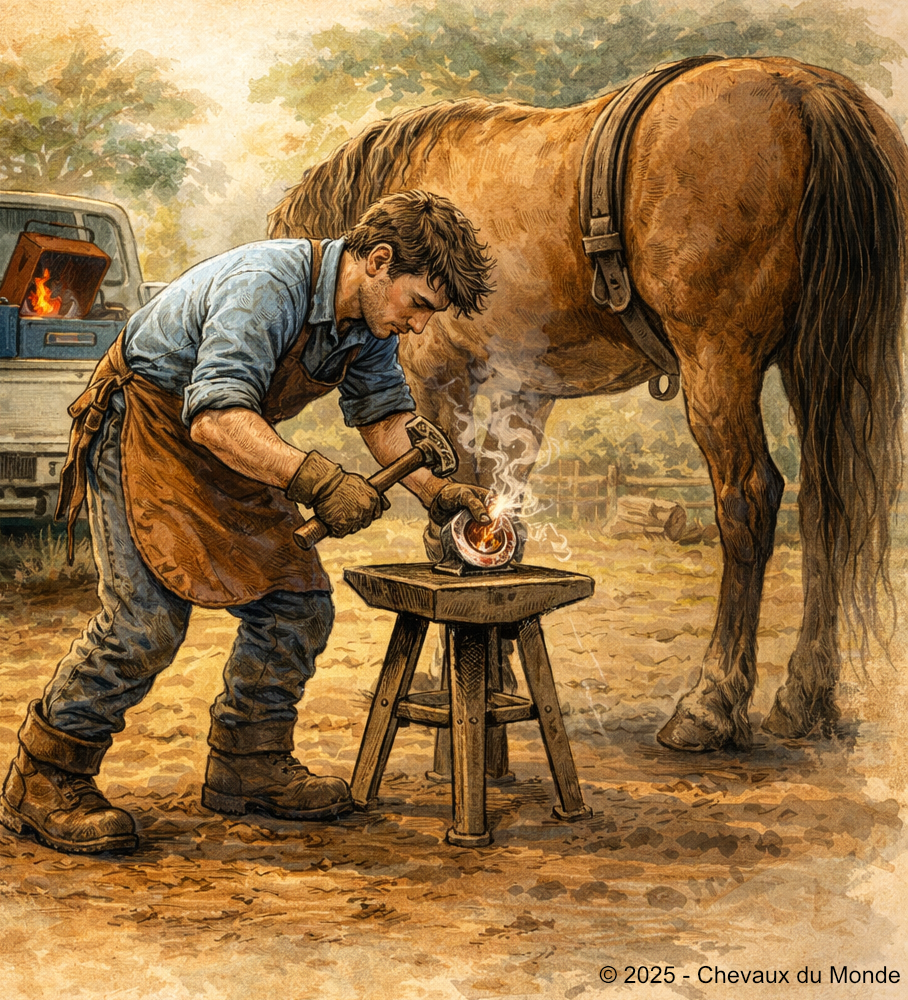
- Forging or adjusting shoes according to the horse's needs
- Hot shoeing or cold shoeing depending on the situation
- Performing orthopaedic shoeing on veterinary prescription
- Advising the owner on hoof maintenance and visit frequency
Why Is This Such a Demanding Profession?
Before talking about training, it is worth being honest about what this job represents physically and mentally.
Physically Intense Work
Farriers spend their days bent under horses, lifting limbs that can weigh between 5 and 15 kg, often in uncomfortable conditions: narrow stalls, uneven ground, forge heat. Musculoskeletal disorders affecting the back, shoulders and knees are very common after a few years in the profession.
A Job That Requires Composure
Working with horses means dealing with the unexpected. A nervous, painful or poorly prepared horse can react violently. A solid understanding of equine behaviour is essential for working safely.
A Largely Itinerant Activity
The vast majority of farriers work as self-employed professionals, travelling to clients with a fitted vehicle (mobile forge, anvil, trimming equipment). Fixed stable work is the minority. A genuine appreciation for the road, schedule management and independence is therefore essential.
Training to Become a Farrier
There are several routes into this profession, from apprenticeship-based qualifications through to higher-level specialist programmes.
The Professional Farriery Certificate (BPM)
This is the benchmark qualification in France, awarded by the Chambers of Trades and Crafts network. The BPM takes 2 years of work-based learning, typically after completing secondary education.
It covers:
- Forge techniques and shoeing (hot, cold and orthopaedic)
- Hoof anatomy and common pathologies
- Equine biomechanics and limb alignment assessment
- Artisan business management
A handful of training centres offer this qualification in France, notably in Aurillac, Gramat, and within certain regional equestrian hubs. Places are limited and selection is competitive.
The CAP Maréchalerie (Vocational Certificate)
Less common than the BPM, this vocational certificate remains an accessible entry point for younger candidates or those wishing to build solid foundations before progressing. It also takes 2 years, completed at a vocational high school or apprenticeship training centre.
Further Training and Specialisations
Once qualified, many farriers choose to specialise:
- Orthopaedic and therapeutic shoeing: additional training to work alongside veterinarians on pathological cases (laminitis, navicular syndrome, conformational issues)
- Natural hoof care and functional shoeing: an alternative approach in high demand within natural horsemanship circles
- International training: some professionals broaden their skills in Great Britain (Worshipful Company of Farriers) or the United States, where the profession is highly structured
Prior Learning Recognition (VAE)
For individuals who have worked for several years as a farrier's assistant or in a related trade, the VAE (Validation of Acquired Experience) allows them to obtain the BPM without completing the full training programme. It is a long and demanding process, but a valid option.
What Qualities Does the Job Require?
Beyond technical skills, a farrier must bring together a set of personal and physical qualities that are difficult to develop in a classroom.
The Essentials
- A genuine passion for horses: without it, the physical demands will eventually take their toll
- Physical resilience: a strong back, good overall fitness, and the ability to work in awkward postures
- Manual dexterity: forge work and trimming demand precision that only improves with practice
- Observation skills: reading limb alignment, detecting a subtle lameness, spotting an anomaly in the hoof capsule
- People skills: trust is built over time, both with horses and their owners
What Is Often Underestimated
The business dimension is frequently overlooked in training. As a self-employed professional, the farrier is also a small business owner: managing a client base, material stock, accounts, and setting rates without underselling themselves.
What Does a Farrier Earn?
The salary question is complex, as it depends heavily on employment status (employed vs self-employed), region and clientele.
As an Employee
A newly qualified farrier in an employed position at a stud farm or riding centre can expect a net monthly salary of between €1,500 and €1,900. Employed positions are rare and typically tied to larger structures such as national studs, major equestrian centres or racetracks.
As a Self-Employed Professional
This is the most common status. Income varies considerably:
- Early career: €1,800 to €2,500 net/month while building a client base
- After 5 to 10 years: €2,500 to €4,000 net/month for an established practice
- Specialist farriers (orthopaedics, elite competition): upwards of €4,000/month
Significant running costs must be factored in however: vehicle and maintenance, forge equipment, insurance, consumables. The cost of setting up as self-employed is estimated at between €15,000 and €30,000.
What Does an Appointment Cost?
As a rough guide, a full shoeing (4 shoes) is charged between €80 and €150 depending on region and complexity. A basic barefoot trim runs around €40 to €70. Orthopaedic shoeing can exceed €200 per appointment.
Career Paths and Progression
Working in Competitive Sport
Farriers who work within elite equestrian sport (show jumping, dressage, racing) often work year-round for professional yards. The standards are high, but so is the remuneration and professional profile.
Teaching and Training
After several years of experience, some farriers pass on their knowledge within apprenticeship training centres or as mentors to apprentices — a way of stepping back from the physical demands of the job while remaining in the profession.
Veterinary Research and Consultancy
Some professionals, often after additional training, work closely with equine vets on complex cases. This niche, sitting at the intersection of biomechanics and equine medicine, is a growing field.
Farriery in Europe and Around the World
The profession is not organised the same way in every country, which opens up interesting possibilities for those willing to travel.
In Great Britain
Farriery is a regulated and highly structured profession. The Worshipful Company of Farriers awards recognised qualifications (including the Diploma of the Worshipful Company of Farriers), and practising without registration is a criminal offence. The technical standard is generally very high.
In the United States
The sector is highly dynamic, with organisations such as the American Farriers Association (AFA) offering certifications at multiple levels. The market is vast, and farriers specialising in Quarter Horses or thoroughbred racing can earn very well.
In France: A Profession in Transition
In France, farriery is evolving rapidly. The rise of natural hoof care and the barefoot movement has disrupted traditional practices, sometimes creating friction between conventional farriers and equine podiatrists. Demand remains strong, but training programmes are struggling to produce enough qualified professionals to meet the needs of the industry.
Is It a Career With a Future?
Yes, for several reasons. The French equine industry counts over 1.2 million horses, and each animal needs trimming or shoeing every 6 to 8 weeks on average. Demand is therefore structurally robust and largely unaffected by economic downturns.
Furthermore, specialisation in therapeutic shoeing represents a genuine growth area: as expectations around animal welfare rise and veterinary care becomes more sophisticated, the orthopaedic farrier is becoming an indispensable figure in equine health.
Generational renewal is also a pressing issue: many experienced practitioners are approaching retirement, and there are not enough newly trained professionals to fill the gap in certain regions.
In Summary: The Path to Becoming a Farrier
- Train via the BPM (the main route) or the CAP Maréchalerie
- Complete a placement or apprenticeship alongside an experienced professional
- Set up as self-employed or secure an employed position within an equestrian structure
- Specialise if desired (orthopaedic shoeing, barefoot, competition)
- Keep skills current through continuing professional development offered by industry associations
It is a demanding profession, physically hard, but deeply rewarding for those who love horses and working with their hands. Few careers offer such direct contact with the animal, such independence, and such variety from one day to the next.