Saddle fitting is a discipline that is still relatively recent in France but has become essential in the management of both sport and leisure horses. A saddle fitter is a professional specialized in analyzing and adjusting saddles to ensure the horse’s comfort and the rider’s stability. An ill-fitting saddle can lead to pain, resistance, decreased performance and sometimes long-term locomotor issues.
What Is a Saddle Fitter?
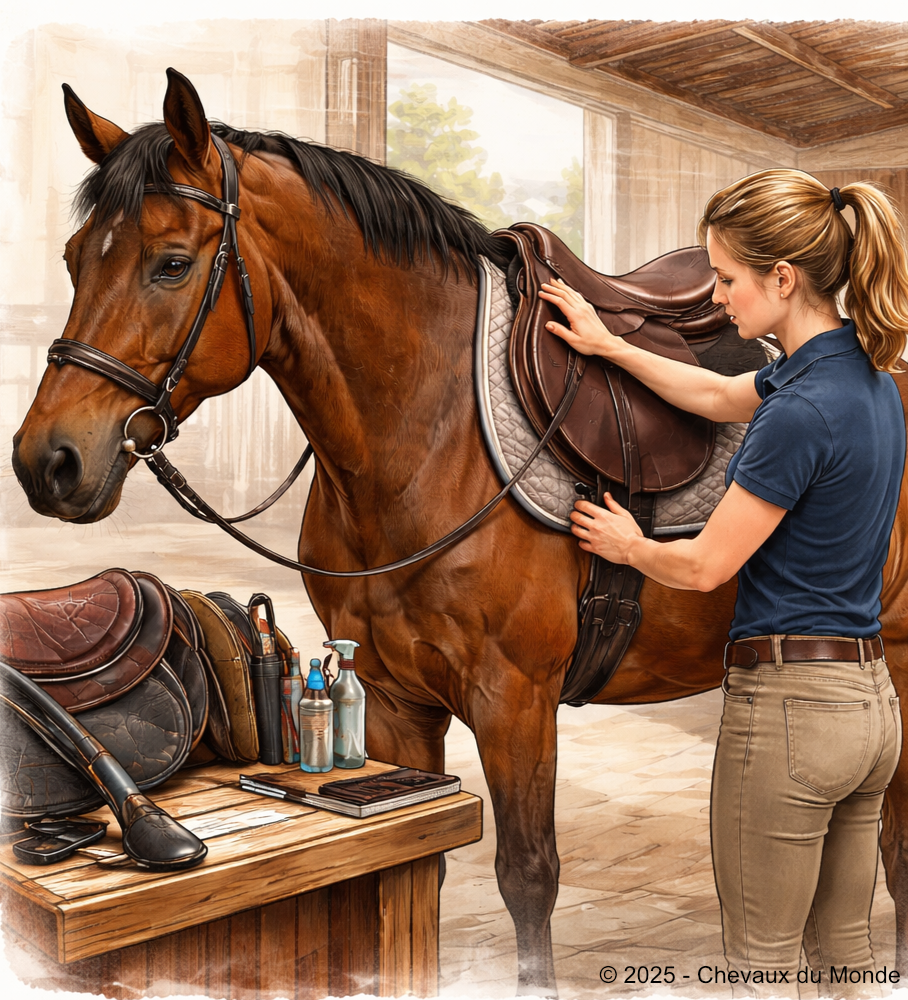
A saddle fitter is a specialist in adapting the saddle to the horse’s morphology and the rider’s posture. Unlike simple equipment sales, their role is to assess the entire horse–rider–saddle combination in order to ensure proper pressure distribution and optimal freedom of movement.
A saddle fitter may be:
- independent,
- affiliated with a specific brand,
- or working in collaboration with saddlers, equine osteopaths, veterinarians and bit-fitters.
When Should You Call a Saddle Fitter?
A saddle fitter may be consulted in many situations:
- appearance of resistance under saddle (hollowing the back, pinned ears, refusal to move forward)
- sensitivity during girthing or back grooming
- unexplained loss of performance
- difficulty engaging the hindquarters
- changes in the horse’s morphology (young horses, return to work, weight or muscle variation)
- purchase of a new saddle
- annual preventive check-up
A saddle that was once suitable can become unsuitable within a few months, especially in horses undergoing muscular development.
How Does a Saddle Fitting Session Work?
1. Static Evaluation of the Horse
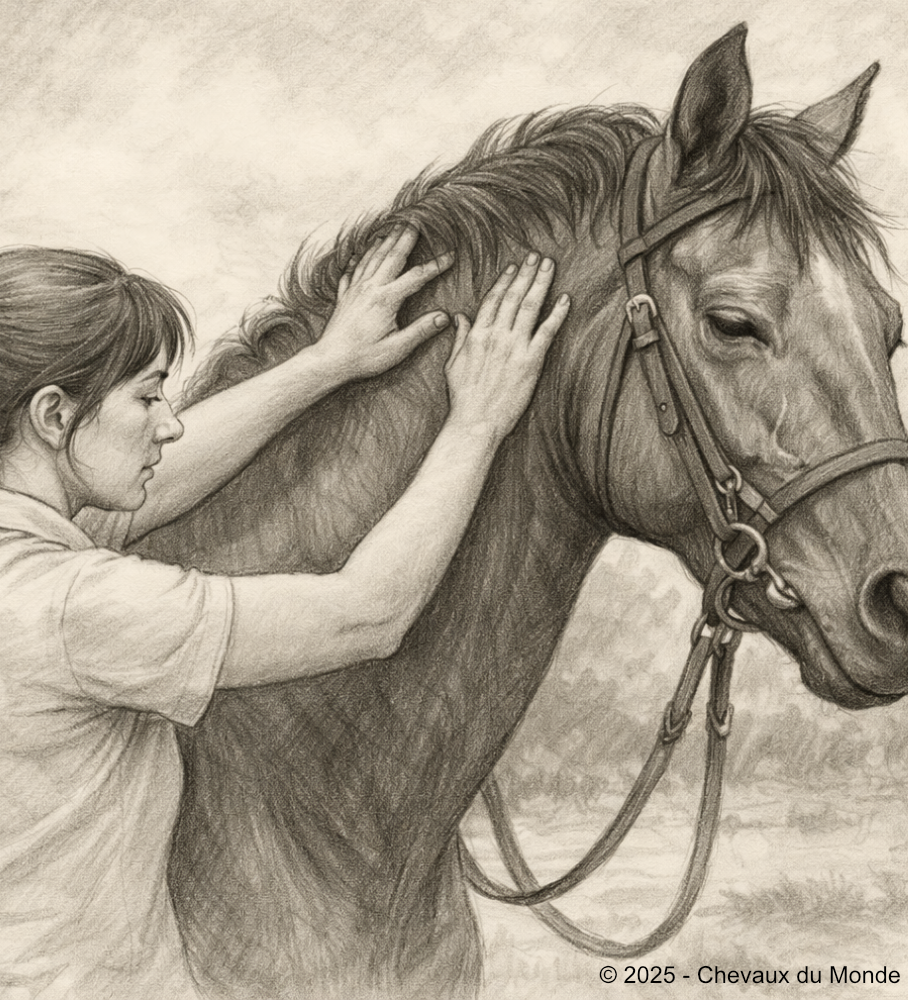
The saddle fitter begins by observing the horse’s conformation:
- shape and width of the withers
- length and posture of the back
- muscular symmetry
- pressure points or sensitive areas
This step helps eliminate unsuitable tree shapes or panel configurations.
2. Observation of the Horse in Motion
The horse is then observed in motion, sometimes ridden:
- stride amplitude
- hindquarter engagement
- shoulder freedom
- overall balance
An ill-fitting saddle can significantly affect locomotion, even without visible lameness.
3. Analysis of the Existing Saddle
The saddle is examined in detail:
- tree width
- front-to-back balance
- panel contact
- clearance of the withers and spine
- stability during movement
The saddle fitter may also assess the flocking condition and suggest adjustments.
4. Consideration of the Rider
A frequently overlooked aspect is the rider’s morphology and posture:
- leg length
- pelvic position
- balance in the saddle
- weight distribution
A saddle may fit the horse well but unbalance the rider, which directly affects the horse’s back.
5. Adjustments and Recommendations
Depending on the situation, the saddle fitter may:
- adjust an existing saddle
- suggest modifications (reflocking, interchangeable gullet)
- recommend a different saddle model
- advise complementary osteopathic or veterinary follow-up
What Are the Benefits of a Well-Fitted Saddle?
The most commonly observed benefits include:
- greater freedom of movement
- smoother engagement
- reduced resistance behaviors
- improved rider posture
- better horse–rider communication
- prevention of back pain
In the long term, proper saddle fitting contributes to the horse’s physical longevity.
Saddle Fitter, Osteopath and Bit-Fitter: A Complementary Approach
Ideally, a saddle fitter works in coordination with:
- the equine osteopath (mobility and compensations),
- the bit-fitter (mouth comfort),
- the farrier or podiatrist (overall balance).
These professions are complementary; none replaces the others.
Limits and Precautions
Saddle fitting never replaces:
- a veterinary diagnosis,
- osteopathic care in cases of confirmed pain,
- a properly designed and quality saddle.
A perfectly adjusted saddle of poor design remains problematic.