Equine osteopathy has become a common practice in sport horse management and overall equine wellness. Its goal is to restore mobility in joints, muscles and tissues, improving comfort and movement. Here is how a session typically unfolds, and when consulting an equine osteopath may be useful.
When Should You Call an Equine Osteopath?
Owners may request an osteopath in several situations, including:
- Loss of performance, horse being “less forward”
- Visible stiffness during warm-up
- Difficulty bending or turning to one side
- Resistance under saddle (bucking, head tossing, unwillingness)
- Sudden behavior changes
- Falls or slips
- Annual wellness check
- Transition periods: breaking-in, returning to work, post-rest
Important: Osteopathy never replaces veterinary care. If a problem appears serious (acute lameness, fever, wound, colic…), the osteopath intervenes only after veterinary approval.
### How Does an Equine Osteopathy Session Work?
Each practitioner may have their own methods, but the general structure is similar.
1. History Taking (Interview with the Owner)
- Horse’s background
- Discipline and workload
- Past injuries or falls
- Behaviors observed during work or grooming
This step helps identify areas requiring attention.
2. Observation of the Horse in Motion
The horse is usually evaluated at walk and trot, in a straight line and sometimes on a circle.
The osteopath observes:
- Hind limb engagement
- Symmetry
- Limb trajectory
- Pelvic rotations
- Neck mobility
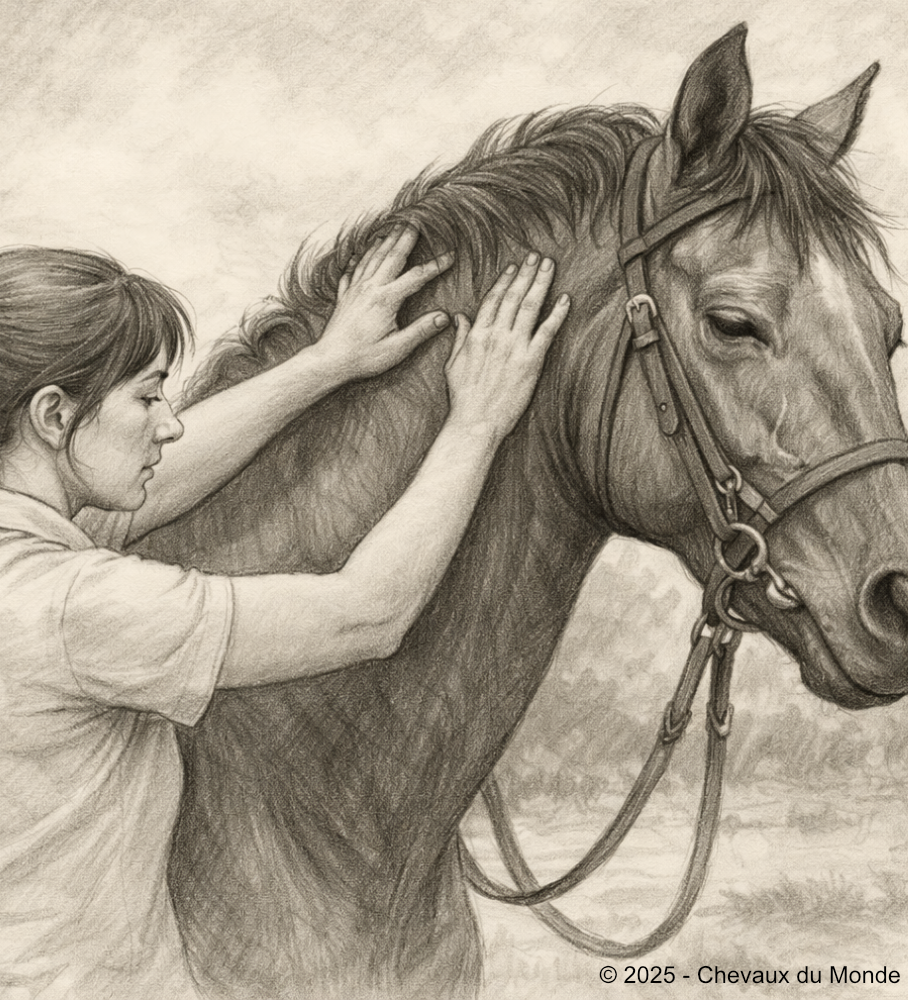
3. Palpation and Mobility Testing
The practitioner manually assesses:
- Joint mobility
- Muscle tension
- Tissue elasticity
- Sensitive or reactive areas
This helps identify tension or restricted mobility.
4. Osteopathic Corrections
Several techniques may be used depending on the osteopath’s training:
- Gentle structural techniques
- Joint mobilizations
- Fascial work
- Cranio-sacral techniques
- Manual muscle relaxation
Contrary to popular belief, osteopathic manipulation should not be forceful or abrupt.
5. Recommendations After the Session
The osteopath often provides management advice:
- 24 to 48 hours of rest or light work
- Flexibility or stretching exercises
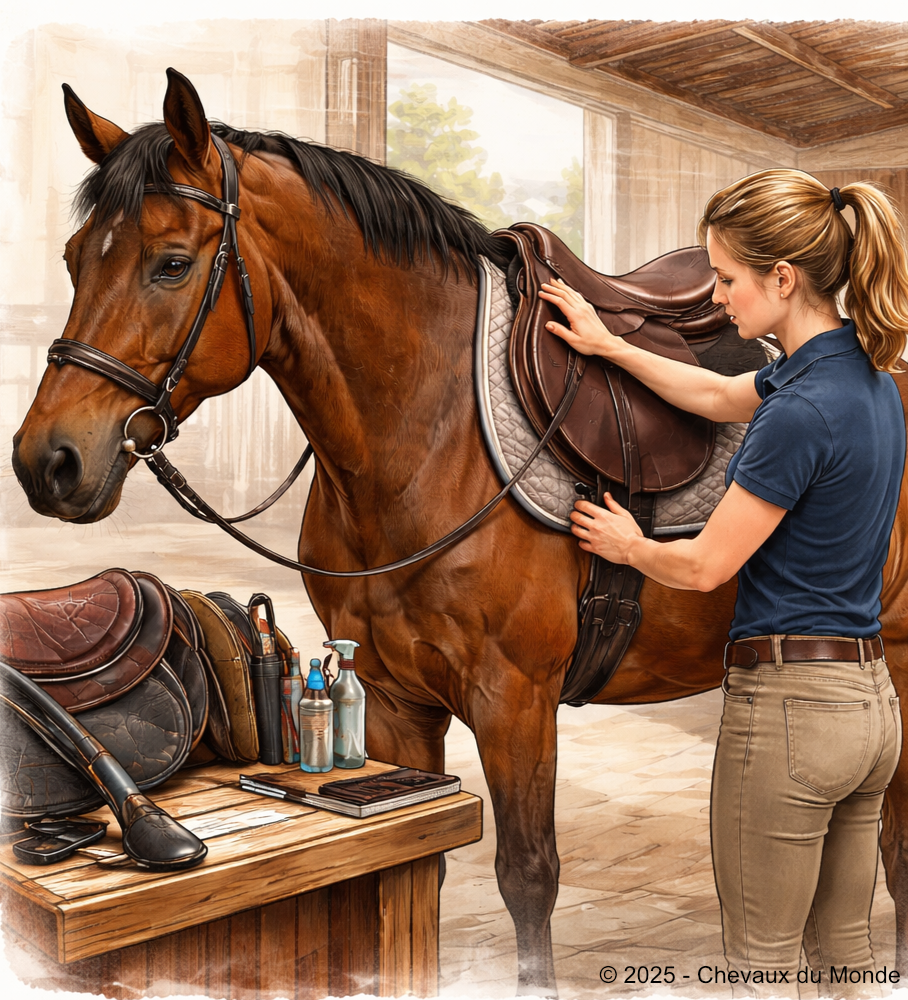
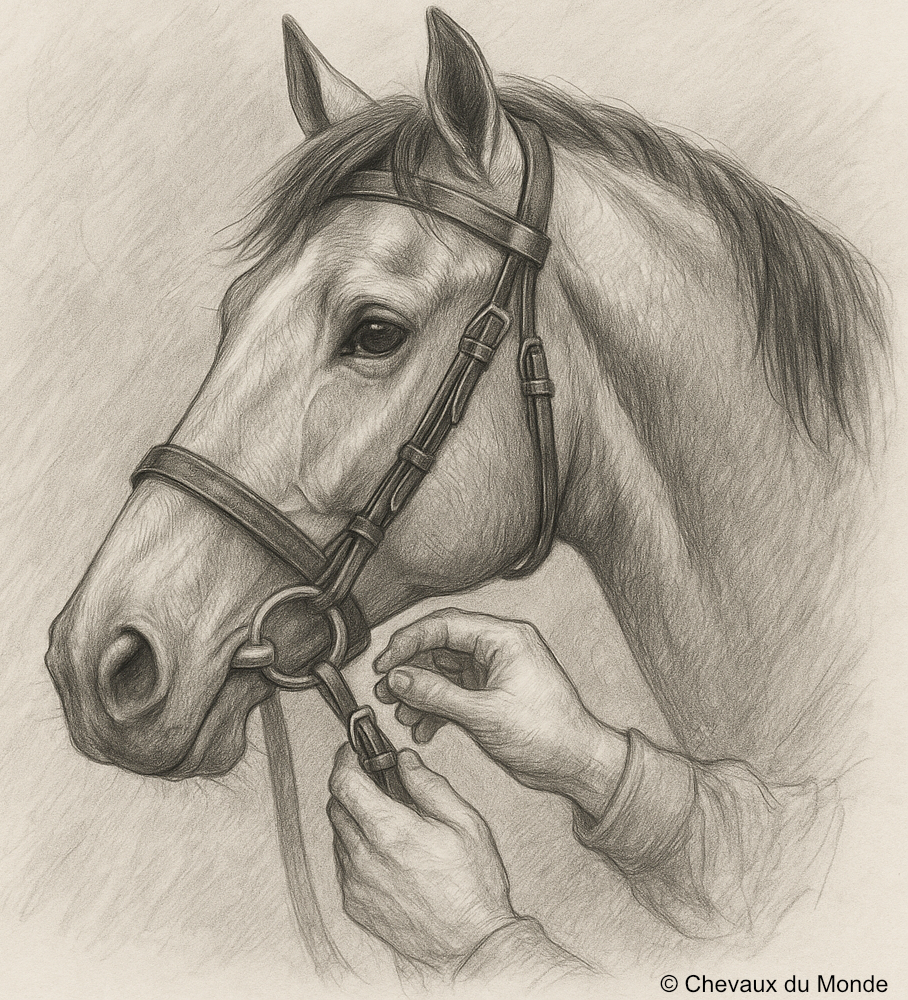
- Adjustment of equipment (saddle, bit)
- Points to monitor daily
### What Are the Possible Benefits of Equine Osteopathy?
The most commonly observed benefits include:
- Better range of motion
- Improved comfort and movement
- Overall body balance
- Better posture and attitude under saddle
- Fewer resistance behaviors related to tension
- Enhanced sport performance
- Reduced compensations before they develop into problems
Important limitation: Osteopathy does not cure every condition. It helps restore mobility but cannot replace veterinary treatment when a medical issue is present.