The horse’s hoof plays a central role in its health, balance and locomotion. Hoof care is provided by professionals whose roles may appear similar but whose approaches differ: the farrier and the equine podiatrist. Understanding their specific roles helps adapt hoof care to the horse’s real needs, without generalization or systematic opposition.
The Farrier: A Regulated and Versatile Profession
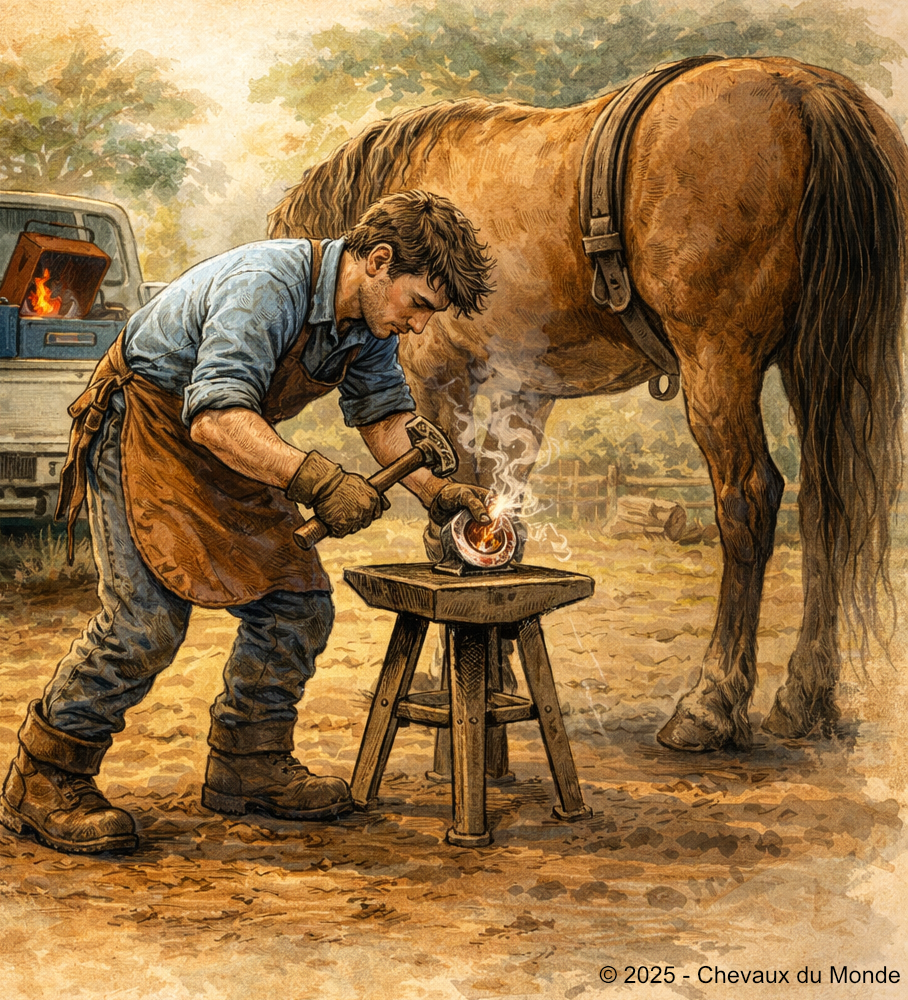
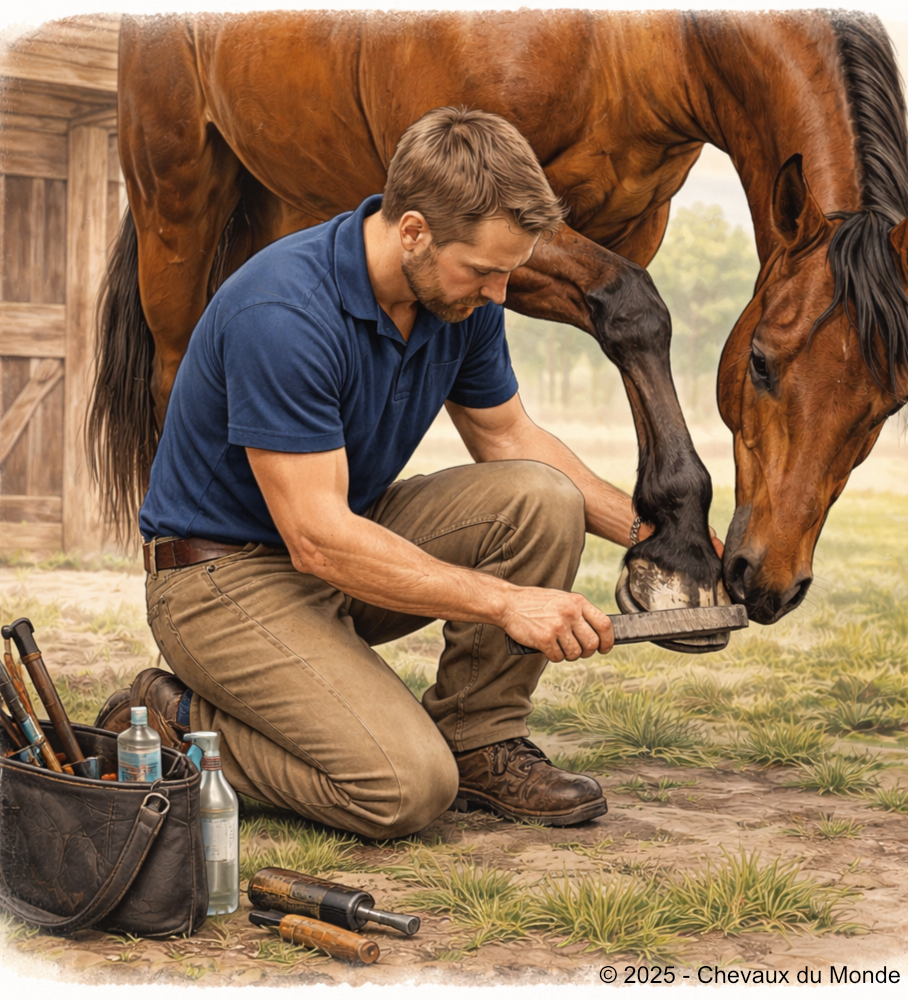
The farrier is a hoof care professional whose occupation is regulated and officially recognized. They are trained to maintain the hoof, apply horseshoes and adapt their work according to the horse’s activity.Their training is based on state-recognized qualifications, ensuring solid technical and anatomical knowledge. They may work on shod or unshod horses and adapt their interventions to sport, leisure, agricultural work or demanding terrain conditions.
Farriers frequently collaborate with veterinarians, particularly in cases involving orthopedic shoeing or locomotor pathologies.
The Equine Podiatrist: An Approach Focused on the Barefoot Hoof
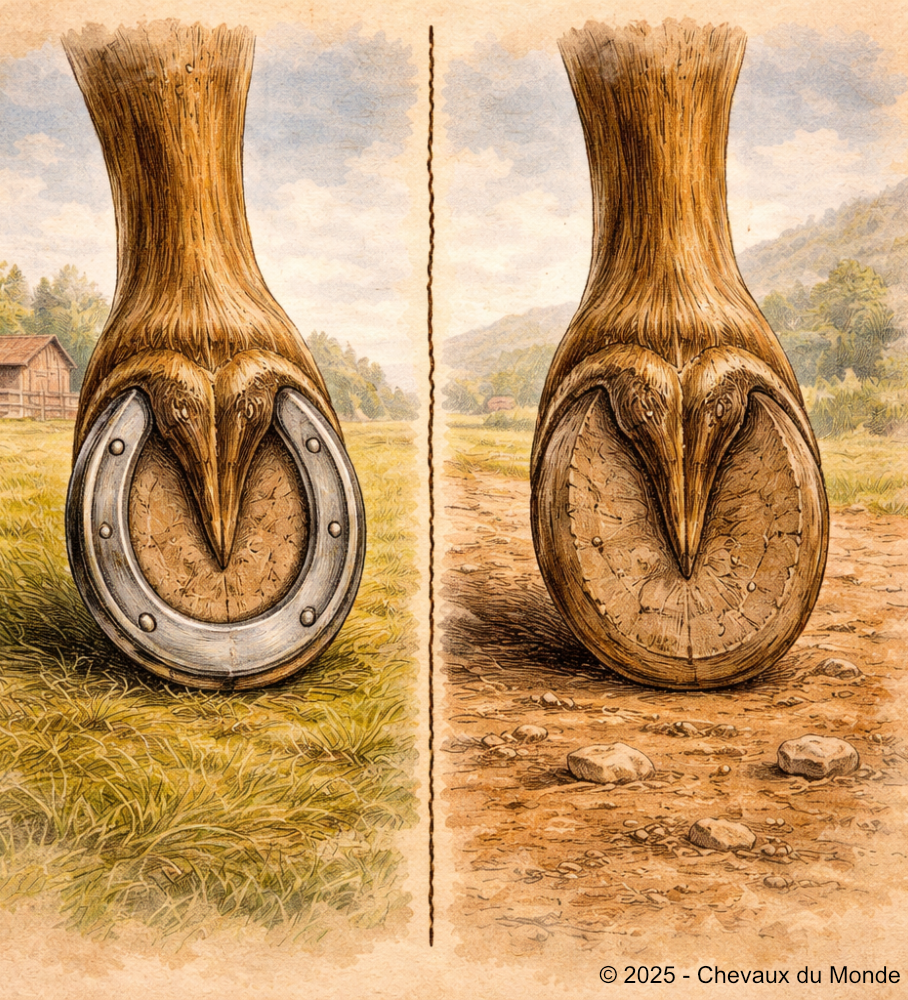
The equine podiatrist is a professional specialized in physiological trimming, generally performed without horseshoes. The goal is to encourage natural hoof function, taking into account biomechanics and the horse’s environment.
In France, the equine podiatry profession is not regulated by the state. Training programs are private and vary significantly in content and quality. This diversity results in wide differences in practice and makes the careful choice of a practitioner especially important.
Equine podiatrists primarily work with barefoot horses, often living in suitable conditions such as varied terrain, moderate workloads and carefully managed environments.
Different Approaches, Shared Objectives
Both the farrier and the equine podiatrist aim to preserve hoof functionality and the horse’s comfort. However, their methods differ.
The farrier adopts a technical and functional approach, using horseshoes as tools for protection, correction or support when necessary. The equine podiatrist favors a physiological approach, seeking to maintain or restore natural hoof function without shoeing.These differences do not represent opposition, but rather responses adapted to different contexts.
How to Choose the Right Professional for Your Horse?
Choosing between a farrier and an equine podiatrist depends on several factors:
- the horse’s activity,
- its lifestyle,
- the type of terrain,
- its health condition,
- and its specific needs.
A sport horse working on demanding surfaces will often require the expertise of a farrier. A barefoot horse living in a suitable environment may be effectively managed by a competent equine podiatrist.In all cases, careful observation of the horse and its comfort should take precedence over ideological considerations.
Complementarity and Collaboration
In a balanced approach to equine welfare, farriers and equine podiatrists can be complementary. Some horses alternate between shoeing and barefoot management throughout their lives, depending on their activity level or physical condition.Collaboration with other professionals, such as veterinarians or equine osteopaths, is often beneficial to ensure coherent and appropriate care.
Limits and Precautions
No hoof care intervention can replace a veterinary diagnosis in cases of lameness or persistent pain. Barefoot management is not suitable for all horses, just as systematic shoeing is not a universal solution. The professional’s competence, experience and ability to adapt to the individual horse remain essential criteria.
Conclusion
Both farriers and equine podiatrists work to preserve the health of the horse’s hooves, but through different approaches. Understanding these differences allows owners to make informed decisions that respect each horse’s individual needs. Equine welfare ultimately relies on a personalized, pragmatic and well-supervised approach.