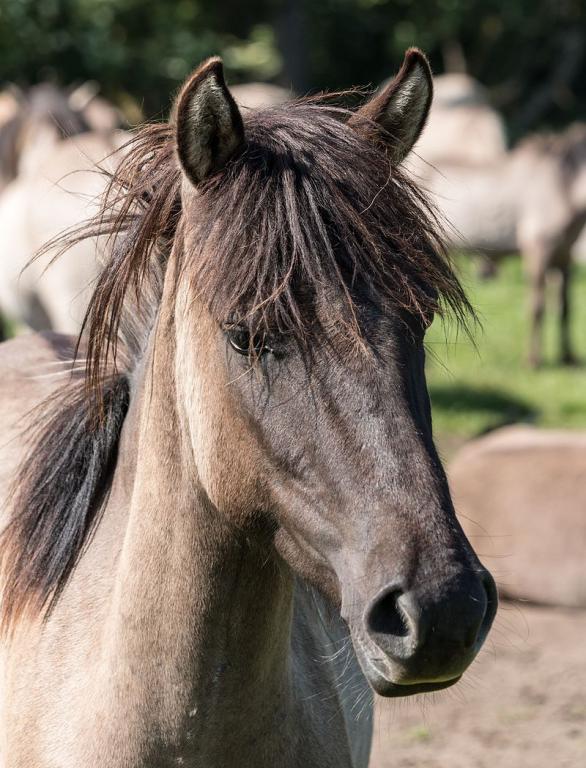
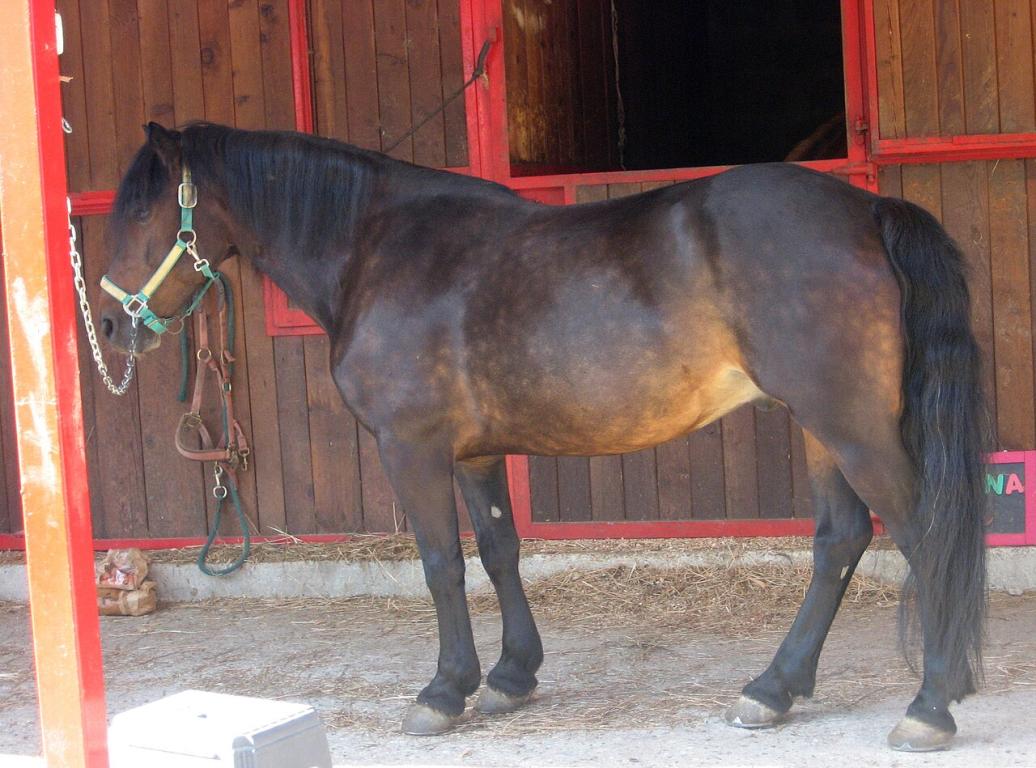
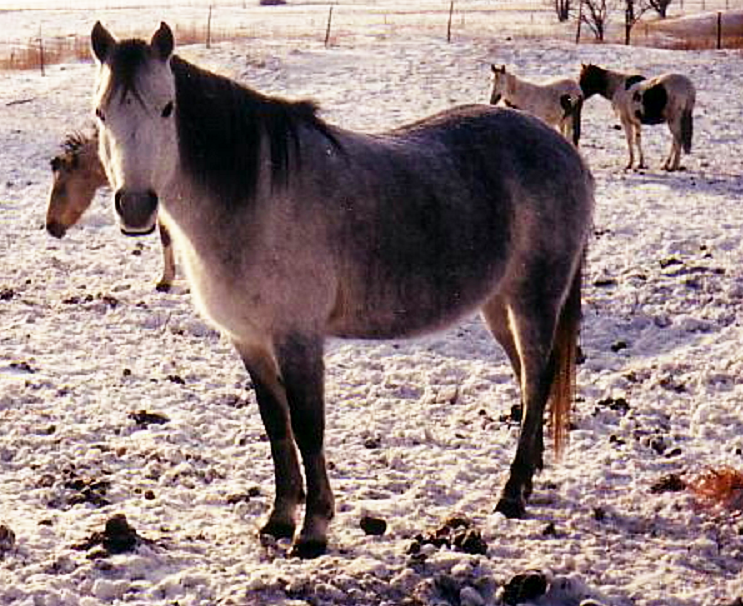
Discover the Henson, a French horse created in the Bay of Somme for outdoor riding, known for its dun coat and appreciated for its hardiness.
By the Chevaux du Monde editorial team · Published on · Updated on
Type: Riding Horse
Continent: Europe
Country: France
Height: 150 – 160 cm
The Henson is a French breed created in the Bay of Somme, in Hauts-de-France. Its development began in the 20th century through the crossing of saddle mares with Fjord stallions, with the aim of producing a hardy horse suited to outdoor riding and extensive breeding in wetland areas.
The Association du Cheval Henson began structuring the selection process in 1983. The population was then gradually bred between Henson individuals in order to stabilize the desired characteristics.
This selection work led to the official recognition of the Henson in 2003. Today, the breed is closely associated with the Bay of Somme and with equestrian tourism in the region.
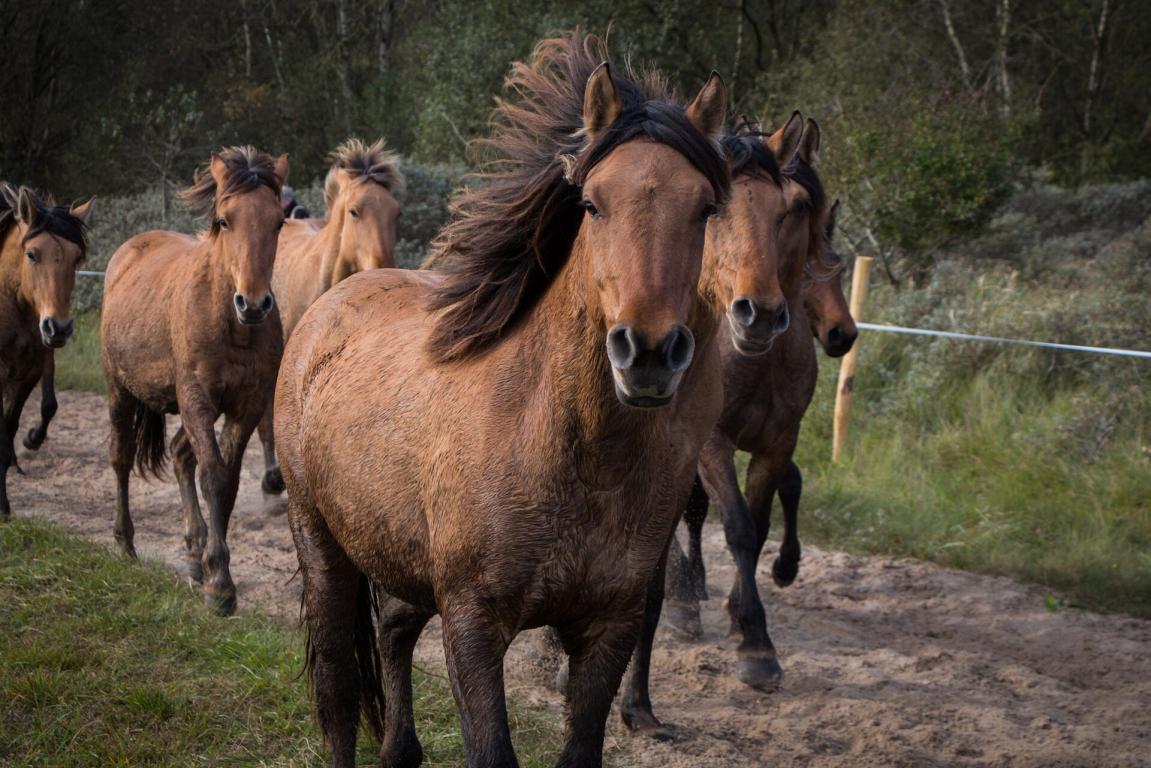
Henson breeding remains mainly concentrated in the Bay of Somme, its historical birthplace in Hauts-de-France. The breed is especially associated with the Marquenterre, an area of dunes, marshes and coastal grasslands.
Many Henson horses are raised in herds and outdoors, in the natural areas of the bay. This breeding system highlights their hardiness, their ability to live outside, and their adaptation to the wetland terrain used for equestrian tourism.
Henson horses may be bred in other French regions, but their presence remains much more limited. The main centre of breeding and selection therefore remains the Bay of Somme and its surrounding area.


The genetic importance of the Henson lies in the stabilization of a population created from saddle horses and Fjords. Selection has gradually fixed a homogeneous type combining hardiness, suitability for outdoor riding, and the breed’s characteristic dun coat.
The selection program monitors genealogical origins, parentage, and the conformity of breeding animals. Breeding choices aim in particular to preserve the traits specific to the Henson while limiting the birth of bay foals, which are accepted from certain mares but are not sought after in selection.
Because Henson numbers remain relatively limited, the management of breeding animals is important to maintain sufficient genetic diversity and avoid an excessive increase in inbreeding. Lineage monitoring therefore contributes to the long-term conservation of this young French breed.
The Henson’s genetic importance mainly concerns the conservation and improvement of its own population. No major influence on the formation or improvement of other horse breeds is currently documented.
The history of the Henson began in the 1970s in the Bay of Somme. Breeders crossed saddle mares with Fjord stallions in order to produce a horse suited to outdoor riding, hardy enough to live outside, and able to move across the varied terrain of the region.
As the first crosses proved successful, selection continued in order to fix the desired characteristics: an intermediate height, a dun coat marked by a dorsal stripe, a temperament suited to leisure riding, and good abilities for trail riding. Later generations were gradually bred among themselves to create a stable population, rather than a simple cross between saddle horses and Fjords.
The Association du Cheval Henson was created in 1983 to organize breeding, define selection criteria, and monitor parentage. This work helped harmonize the breed type and develop Henson breeding in the Marquenterre and, more broadly, around the Bay of Somme.
In 1995, the section of the stud book dedicated to horses from the original crosses was closed to initial registration. This marked an important step: the population would now mainly renew itself through selected Henson breeding animals, helping consolidate the breed’s identity.
After several decades of selection, the Henson was officially recognized as a French breed in 2003. It therefore became one of the most recently recognized French horse breeds. Its development remains closely linked to the Bay of Somme, where it is valued for trail riding, equestrian tourism, and the maintenance of certain natural areas.
The Henson is selected for its calm temperament, an essential quality for a mount intended for equestrian tourism, trail riding, and leisure riding more broadly.
The breed is also valued for its maneuverability. The Henson should remain responsive to the rider’s aids and be able to move across varied terrain, especially during long outdoor rides.
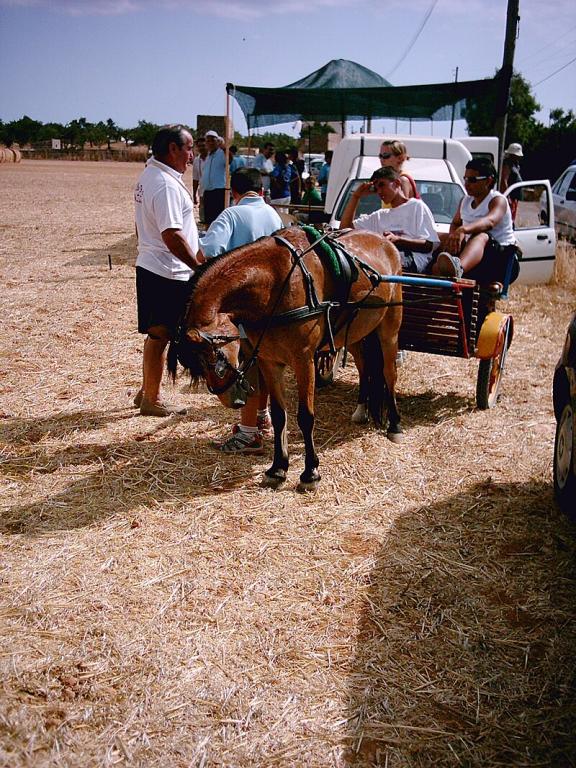
Its temperament contributes to its versatility. In addition to trail riding, the Henson can take part in various disciplines such as driving, TREC, endurance, or show jumping. Behavior and temperament are also among the traits observed in the breed improvement program.
These qualities reflect the breed’s selection goals, but each horse retains an individual character influenced by its age, training, breeding conditions, and experience.
The future prospects of the Henson mainly depend on the development of outdoor riding, trail riding, and equestrian tourism. Its close association with the Bay of Somme gives it a strong territorial identity, which may support its promotion to the public.
The selection program must continue stabilizing the traits specific to the Henson: a homogeneous type, characteristic coat color, hardiness, quality of gaits, and suitability for use. However, selection must avoid reducing the population’s genetic diversity too much by seeking overly strict uniformity.
The relatively limited population remains a point of vigilance. The future of the breed will depend on parentage monitoring, diversified breeding choices, and maintaining a sufficient number of breeding animals in order to limit the increase of inbreeding.
The Henson has qualities suited to current expectations for versatile leisure horses that are hardy and raised outdoors. Its distribution could therefore gradually expand beyond its birthplace, but it is likely to remain moderate: the breed is still strongly linked to the Bay of Somme and does not yet have the numbers of the major French saddle breeds.
The main prospect is to find a balance between increasing numbers, preserving the breed’s identity, and conserving its genetic diversity. Its future appears favorable if its touristic and sporting promotion is supported by rigorous breeding management.
To date, no hereditary disease or particular health predisposition has been officially recognized as specific to the Henson. It would therefore be unwise to attribute a specific disorder to the breed because of its origins or its Fjord ancestry.
The Henson is selected for its hardiness and ability to live outdoors. However, this robustness does not remove the need for standard care: vaccination, dental checks, responsible parasite management, hoof care, and monitoring of body condition.
When living outdoors year-round, particular attention should be paid to pasture quality, seasonal weight changes, access to water, and suitable shelter. A diet that is too rich for the horse’s level of activity may encourage overweight, without this being a breed-specific predisposition.
The Henson population remains relatively limited. Monitoring parentage and making reasoned breeding choices are therefore important to maintain genetic diversity and manage inbreeding. This is a breed management issue, not evidence that a particular hereditary disease circulates within the breed.