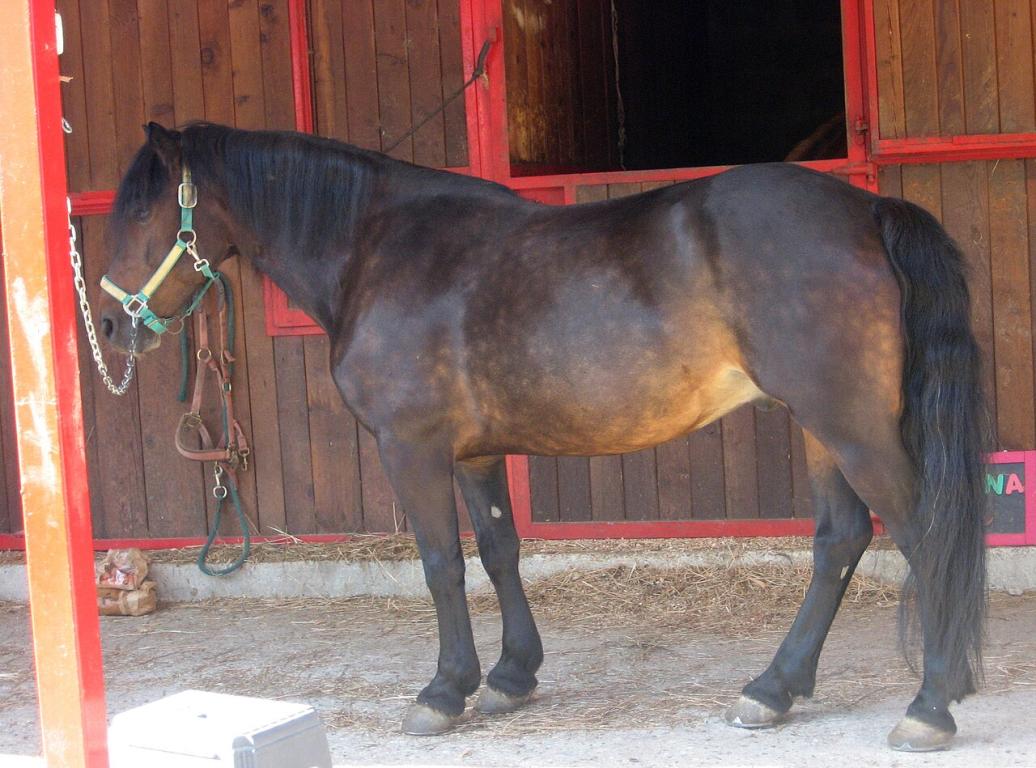
Discover the Corsican Horse, a hardy island breed standing 1.30 to 1.52 m, renowned for its sure-footedness, endurance and adaptation to Corsica's terrain.
By the Chevaux du Monde editorial team · Published on · Updated on
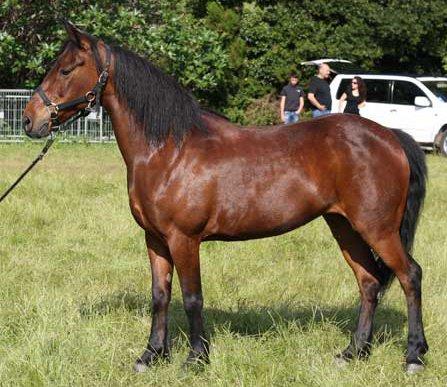
Type: Riding Horse
Continent: Europe
Country: France
Weight: 300 – 400 kg
Height: 138 – 152 cm
The Corsican Horse (Corsican: cavallu corsu or paganacciu) is a French island breed whose native area encompasses the whole of Corsica. It developed mainly in the mountainous interior of the island, at elevations ranging from 500 to 1,800 metres.
Its ancient origins are not known with absolute certainty. Corsica’s horse population probably received various influences through successive occupations and Mediterranean exchanges, possibly including Oriental, Arabian or Barb ancestry. Above all, it was shaped by centuries of free-ranging husbandry in a demanding mountain environment. This adaptation produced a hardy, thrifty and enduring horse with exceptional sure-footedness.
Following the sharp decline in numbers caused by mechanisation, Corsican breeders began working to safeguard and characterise the population. The Corsican Horse was officially recognised as a French breed in 2012. Its stud-book regulations were approved in December 2012 and came into force on 1 January 2013.
The Corsican Horse can be bred throughout the whole of Corsica. The stud-book regulations define the island as the breed’s native breeding area. A horse registered in the stud-book but born elsewhere in France receives the designation “Corsican Horse born outside its native area”.
The breed remains particularly associated with the foothills and middle- and high-mountain areas, where horses may be kept outdoors or moved to summer pastures. Free-ranging or semi-feral populations have notably been reported in the Tenda massif and Nebbio, on the slopes of Monte Cinto, in Alta Rocca, on the Coscione Plateau, and in the Monte Rotondo massif, particularly around the Camputile Plateau.
The stud-book permits the registration of horses born outside Corsica under a specific designation. However, the official sources consulted do not describe any substantial, organised population on mainland France or abroad. The breed therefore remains primarily concentrated in Corsica, within its native environment.


The Corsican Horse represents a local equine population shaped by generations of breeding in Corsica’s mountainous environment. Its genetic importance lies primarily in preserving traits adapted to these conditions: hardiness, thriftiness, endurance and sure-footedness. It therefore constitutes a biological and cultural heritage unique to the island, rather than a breed intended to improve other horse populations.
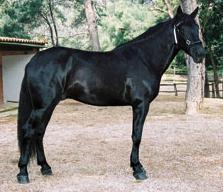
The stud-book regulates breeding to preserve the traditional type of the Corsican Horse. Breeding animals are assessed according to their conformation, coat colour and compliance with the breed standard. The regulations also require genetic testing for chestnut coat colour: stallions entered in the initial registration section must test negative for the chestnut allele, while mares must provide their test results. This selection helps preserve the characteristic black, seal brown and bay coats.
The regulations allow certain Barb stallions to be approved as breeding animals contributing to the Corsican Horse population, following inspection and approval. This outside contribution therefore remains limited and strictly controlled by the stud-book commission. It may assist in managing the breeding population while preserving the desired characteristics, but it does not prove that the Corsican Horse descends directly from the Barb.
None of the official sources consulted indicate that the Corsican Horse played a significant genetic role in the creation or improvement of other breeds. Its present genetic importance lies primarily in preserving a small local population, monitoring parentage and maintaining sufficient diversity among breeding animals.
The Corsican Horse belongs to an ancient population of small horses that developed on the island over the centuries. Its precise origins remain uncertain. Oriental influences, particularly Arabian or Barb, are traditionally suggested, but the available evidence is insufficient to reconstruct the breed’s genetic development accurately.
For centuries, horses played an important role in the travel, transport and pastoral activities of the island’s inhabitants. They were used to cross mountainous terrain, manage livestock and, at certain periods, as military mounts. Equids , including horses, donkeys and mules, remained essential to transport in Corsica until the Second World War. The 1910 census recorded approximately 16,000 equids, comprising 7,850 horses and 8,160 mules, hinnies and broodmares used for mule breeding.
During the 20th century, the spread of motor vehicles and the decline of animal-powered transport greatly reduced the Corsican Horse’s traditional roles. Its population declined and remained without official recognition for many years. Nevertheless, some herds continued to live freely or under extensive management in the mountains, helping preserve the breed’s hardy island type.
From the late 20th century onwards, several local associations began working to identify, characterise and preserve horses corresponding to the traditional type. In November 2009, the associations Evviva u Cavallu Corsu and I Cavalieri di Corsica merged to form U Cavallu Corsu. A steering committee subsequently established the future breed standard using historical, bibliographical and technical research.
During 2010, an identification campaign was conducted throughout Corsica. Horses were examined, measured and tested for the chestnut allele to assess the local population and select animals conforming to the standard. The application for official recognition was presented to the French horse breeds stud-book commission in June and again in November 2011.
The association U Cavallu Corsu received ministerial approval on 10 January 2012. An order dated 14 February 2012 then officially recognised the Corsican Horse as a French horse breed. Its stud-book regulations were approved on 12 December 2012 and came into force on 1 January 2013. This recognition established a formal framework for selection, registration and breed conservation. The identification and characterisation work leading to this recognition was also documented by the IFCE.
Since its recognition, the Corsican Horse has been promoted through a combination of genetic conservation, cultural identity and modern uses. Trail riding, endurance riding, cattle work and leisure riding provide new opportunities for this ancient island population while maintaining its connection with Corsica’s landscapes and rural traditions.
The Corsican Horse is officially described as having a courageous and steady temperament. In equestrian terminology, the French word froid refers to a horse that is generally calm, level-headed and not easily startled, even in difficult situations; it does not imply a lack of energy.
Shaped by Corsica’s mountainous landscape, the breed is enduring, hardy and sure-footed. Its courage and composure are particularly valuable when travelling along steep trails, working with livestock or undertaking long-distance rides.
The Corsican Horse is renowned for its versatility. It can be used for trail riding, endurance riding, driving, cattle work and riding instruction. This range of uses suggests a horse capable of adapting to different tasks and environments, provided it receives consistent training.
These qualities describe the temperament sought within the breed, but they do not mean that all Corsican Horses behave identically. Each horse’s behaviour also depends on its breeding, socialisation, training and individual experiences.
The future of the Corsican Horse remains uncertain. It is listed among the local equine breeds at risk of abandonment, highlighting the need to maintain sufficient numbers of births, breeders and breeding animals. Parentage monitoring and the preservation of genetic diversity will be essential to prevent the population’s gene pool from gradually declining.
The breed’s development could rely on activities suited to its natural qualities, including trail riding, mountain tourism, endurance riding, cattle work and leisure riding. Its sure-footedness, hardiness and adaptation to the island’s terrain are valuable assets for equestrian tourism professionals and riding centres in Corsica. The breeding organisation also considers the development of trail riding a new opportunity for the local breeding sector.
The Corsican Horse has strong ties to the island’s history, pastoral traditions and culture. Promoting the breed through equestrian events, cattle-working competitions and tourism activities could increase its visibility. This heritage value represents an important opportunity, provided that it is accompanied by genuine economic prospects for breeders.
Official recognition and the stud-book provide a solid foundation, but they cannot guarantee the breed’s long-term survival on their own. Its future will depend on maintaining a sufficient number of breeding animals, attracting new breeders and raising awareness of the Corsican Horse among riders. The most promising approach therefore appears to combine genetic conservation, cultural identity and promotion as a leisure and outdoor riding horse, without altering its traditional type.
To date, official sources on the Corsican Horse do not report any hereditary disease or particular health predisposition specific to the breed. It would therefore be inappropriate to attribute a particular condition to it without supporting veterinary or genetic research. The stud-book’s screening for the chestnut allele relates solely to coat-colour selection and not to a disease.
The Corsican Horse is described as hardy, thrifty and well adapted to mountainous terrain. However, this natural resilience does not eliminate the need for routine care, including a balanced diet, dental checks, vaccination, appropriate parasite management, hoof care and regular monitoring of body condition.
The principal health-related concern involves genetic conservation, rather than a known disease. As the Corsican Horse is classified among local breeds at risk of abandonment, maintaining a sufficient number of breeding animals, monitoring parentage and diversifying matings are important to limit increasing inbreeding. This theoretical risk associated with low population numbers does not mean that Corsican Horses systematically suffer from genetic disorders.
The breed is renowned for its small feet, hard horn and sure-footedness on Corsica’s rugged terrain. Regular trimming nevertheless remains essential, particularly for horses working on very rocky ground or moving from extensive management to more intensive ridden activity.