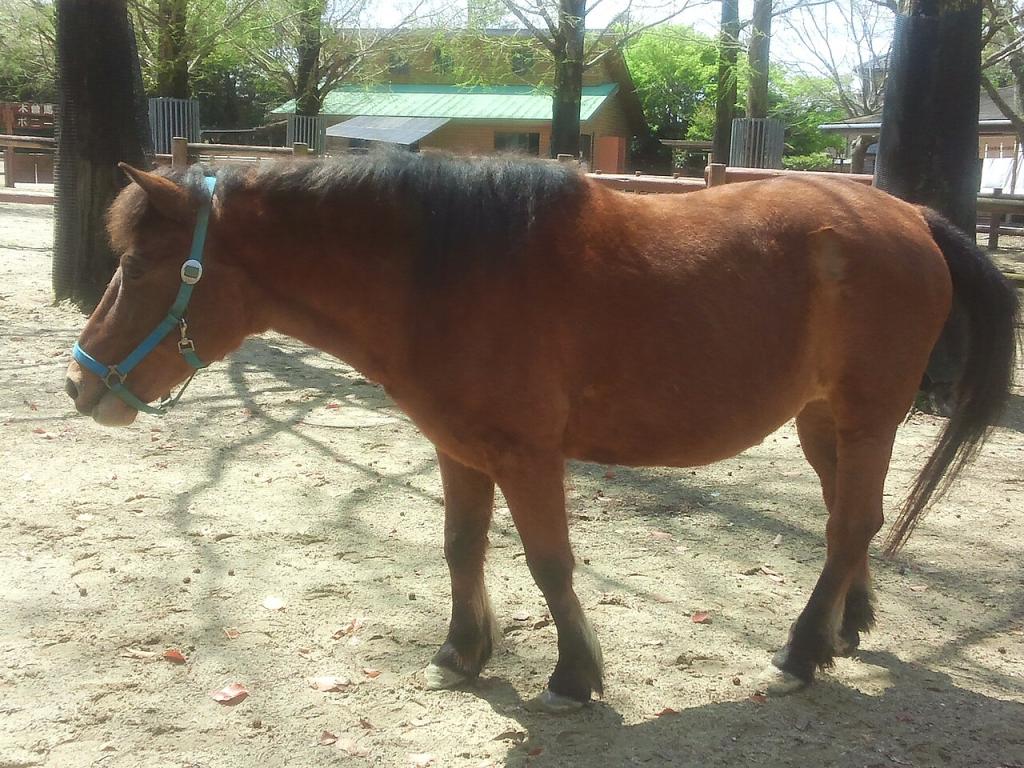
Discover the Debao Pony, a rare natural miniature horse from China: ancient origins, extreme adaptation, and major genetic conservation challenges.
By the Chevaux du Monde editorial team · Published on · Updated on
Type: Pony
Continent: Asia
Country: China
Weight: 90 – 120 kg
Height: 90 – 115 cm
The Debao Pony is a very ancient indigenous horse breed from southern China, originating in Debao County, within the Guangxi Autonomous Region.
The breed is believed to descend from primitive East Asian horses present in the region for several millennia.
Its development is the result of natural selection rather than artificial breeding, driven by:
Historically, the Debao Pony was used by local rural communities for:
The Debao Pony is therefore neither a modern creation nor a miniature pony produced by recent crossbreeding, but one of the rare global examples of ancient, natural equine miniaturization.
The Debao Pony is bred within a very restricted geographical area, corresponding to its historical and genetic cradle.This geographical limitation is essential for its conservation, but also represents a factor of vulnerability.
The breed’s area of origin is located exclusively in southern China, in:
This region represents the historical core of the population, where the breed developed through natural selection.
Outside the core area, the presence of the Debao Pony remains very limited and strictly controlled:
The breeding environment is characterized by highly constraining ecological conditions:
High nutritional pressure has favored the selection of economical, hardy, and well-adapted animals.
Breeding remains mostly extensive and traditional, under institutional supervision:
Exports and crossbreeding are strictly controlled to preserve the breed’s genetic integrity.
The population is geographically fragile, leading to major risks:
Maintaining the breed in situ, within its native environment, is considered essential for long-term conservation.


The Debao Pony has major genetic importance at a global scale, due to its stable natural miniaturization and its ancient evolutionary isolation.
Studied by Chinese and Asian institutes in:
Comparative research with:
Genes associated with:
Adaptation to hot, humid, and resource-poor environments
The Debao Pony differs clearly from other “small horses” through its ancient, stable, and non-pathological natural miniaturization. In contrast, the modern miniature horse results from intensive artificial selection, often associated with morphological or health imbalances. The Falabella, although small, is the result of a relatively recent selection, with variable miniaturization depending on bloodlines.
Finally, so-called primitive ponies show a moderate natural reduction in size, primarily linked to environmental conditions rather than deliberate selection.
The Debao Pony represents one of the oldest known naturally miniature equine populations. Unlike modern miniature horses, it results from a long process of local adaptation shaped by the environment, rather than from recent human creation.
Small local horses have been documented in southern Guangxi for several millennia. This population developed under strong geographical isolation, due to enclosed karst valleys that severely limited external exchanges and crossbreeding.
Selection was entirely natural, driven by:
These constraints led to the gradual fixation of a very small size, characterized by harmonious proportions, great robustness, and an efficient metabolism.
Until modern times, the Debao Pony was used by local farming communities for:
Breeding was extensive and traditional, without a formal studbook or aesthetic selection.
Small size was viewed as a functional advantage, not as a curiosity.
From the mid-20th century onward, the breed was identified by Chinese zootechnicians as an exceptional case of natural miniaturization.
Early morphological and biological studies demonstrated:
These findings led, in the 1980s, to the first protection and monitoring programs.
The Debao Pony was officially recognized as a Chinese local breed and integrated into national animal genetic resources.
Key measures were implemented:
Today, the Debao Pony is considered a rare and protected breed, with priority value in:
It is not intended for commercial production or mass export, in order to preserve its genetic integrity.
The Debao Pony is characterized by a calm, balanced, and highly hardy temperament, shaped by centuries of close coexistence with rural communities and demanding natural selection.
The Debao Pony is primarily a proximity, conservation, and mediation equid, valued more for its behavioral balance than for athletic performance.
The future of the Debao Pony is directly linked to its exceptional genetic value and to the ability of public authorities to ensure rigorous, coherent, and sustainable conservation.
Absolute priority is given to preserving the original gene pool.
Key actions include:
This strategy relies on:
The goal is to preserve a healthy, stable, and unique natural miniaturization, without artificial drift.
Growing scientific interest focuses on:
Potential cooperation exists with:
In the long term, the Debao Pony could become a global scientific reference model for natural miniaturization.
Any valorization must remain non-commercial and ethical, oriented toward:
It can be promoted as:
This approach increases visibility without compromising biological integrity.
Several threats weigh on the breed’s future:
Priority should be given to:
Any form of intensive commercial exploitation must be excluded.
In the long term, the Debao Pony is expected to become:
The Debao Pony generally enjoys excellent health, reflecting ancient natural selection and fine adaptation to a harsh environment.
Absence of disorders commonly seen in artificially selected miniature horses:
Potential sensitivities:
Risks mainly related to:
The Debao Pony perfectly illustrates the link between natural selection, nutritional sobriety, and excellent health, provided its original biological model is respected.