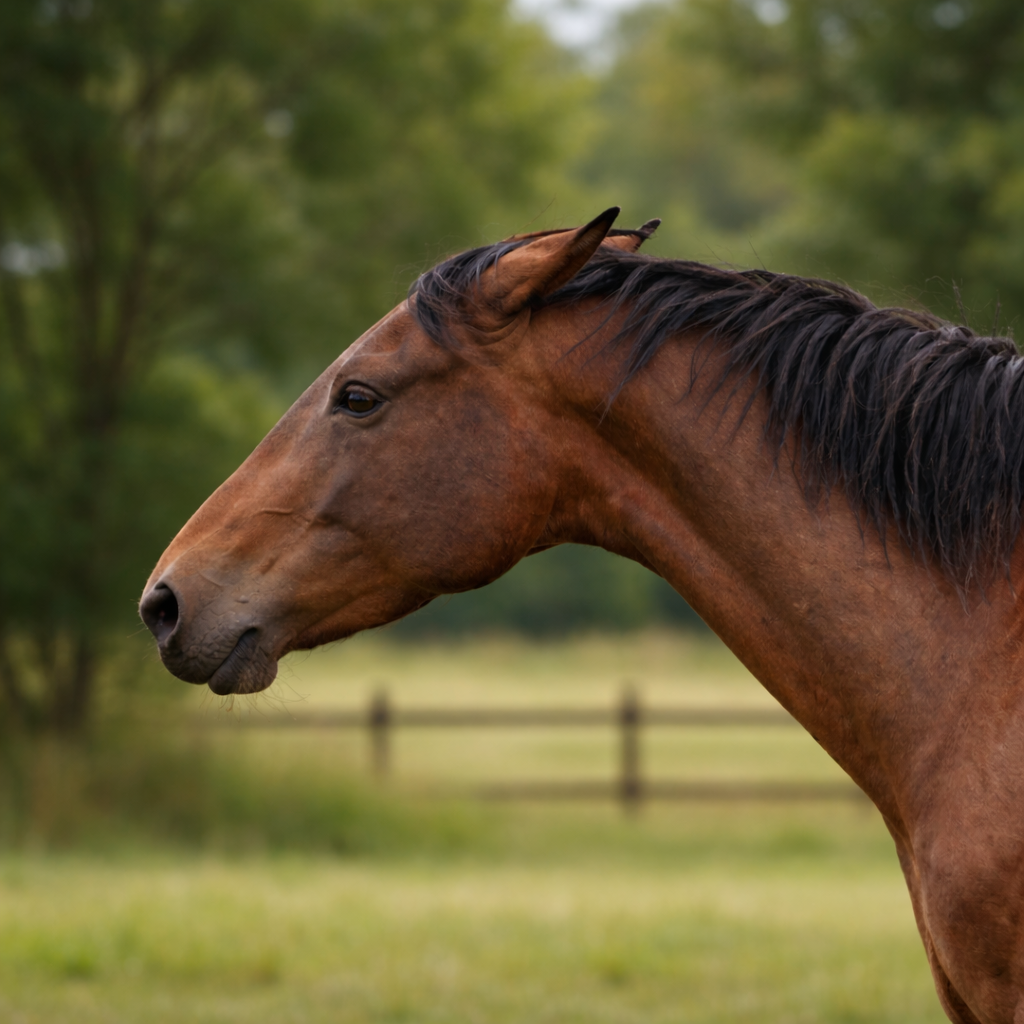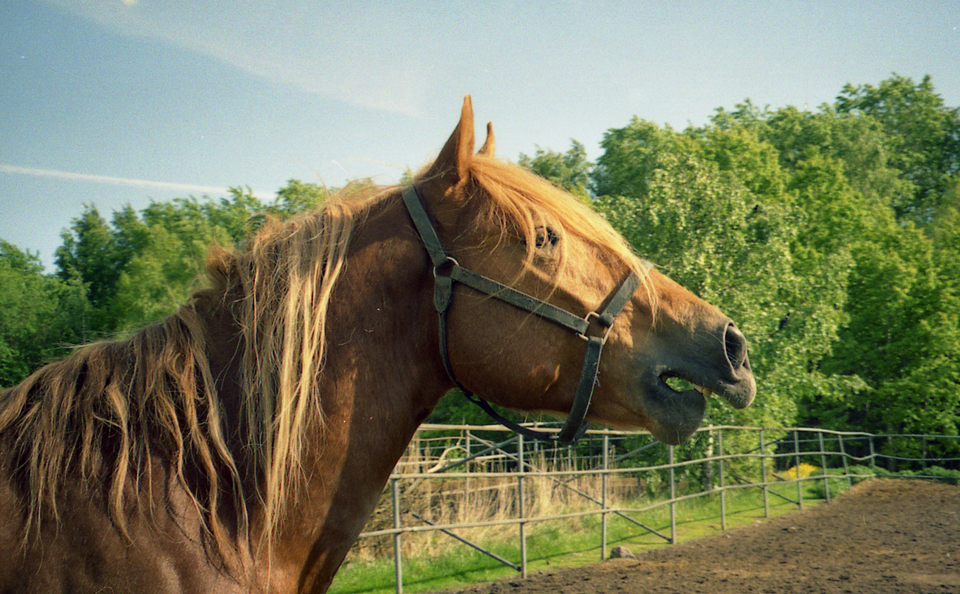
The horse neigh is one of the most iconic sounds in the equine world. Yet behind this powerful call lies a true communication system, subtle and far more complex than it may appear.
When a horse neighs, it is not simply making noise. It is transmitting information. It expresses a state, an intention, and sometimes even a clearly identifiable emotion.
Understanding why a horse neighs therefore means decoding a fundamental part of equine language.
A vocalization designed to be heard
The neigh is a specific type of vocalization: it is long, powerful, and capable of traveling over several kilometers. This is not accidental. As a social species that historically lives in groups, the horse needs to be able to communicate over long distances.
In open environments such as plains or steppes, a horse separated from its companions must be able to signal its position. The neigh fulfills this function precisely. It acts as a long-distance call, helping maintain the connection between individuals.
This ability to carry over distance explains why neighing is often used in situations involving separation or distance.
A deeply social behavior
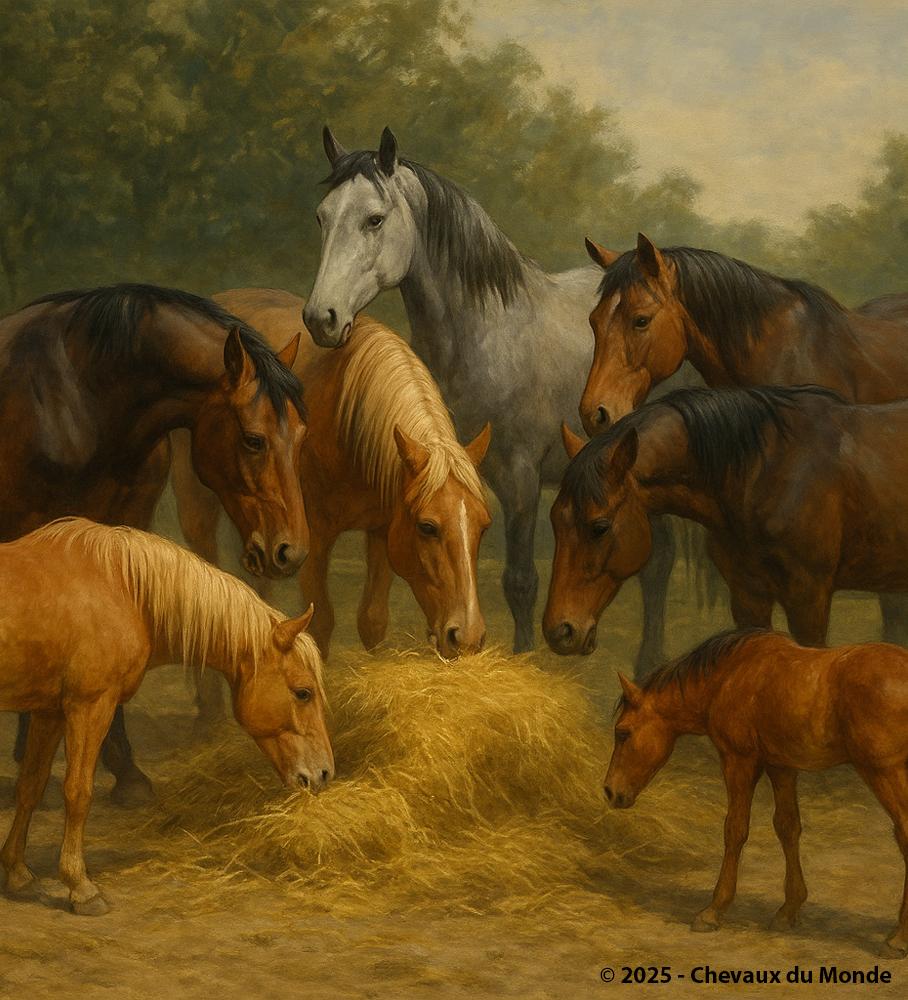
The horse is a gregarious animal, whose survival depends on the group. In this context, neighing becomes an essential tool for maintaining social cohesion.
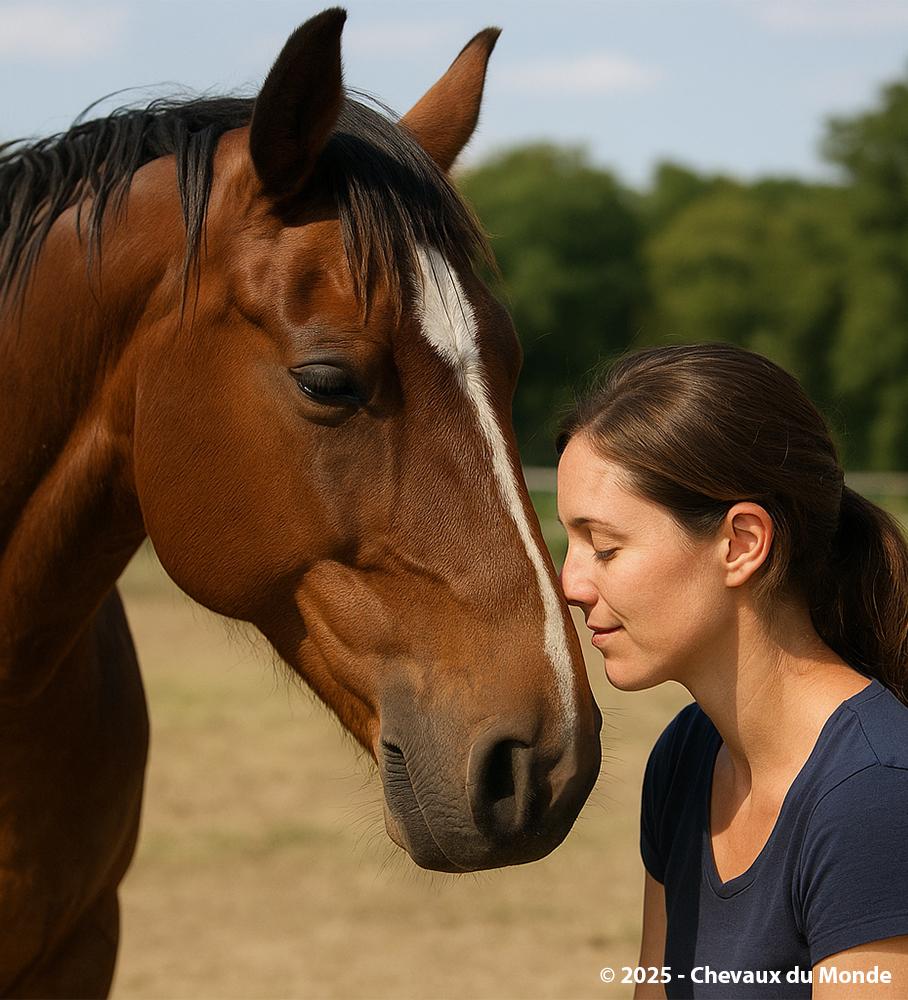
A horse that neighs is usually trying to re-establish contact. This may be directed toward another horse, but also toward a familiar human. When a horse becomes isolated, its vocal behavior increases. This is not a whim; it is a natural response to a situation perceived as abnormal.
In contrast, in a stable group, neighing tends to be less frequent, as communication relies more on visual and physical signals.
Neighing as an expression of emotion
The horse neigh varies depending on its emotional state. This is particularly interesting, as it shows that this vocalization is not only functional but also expressive.
A horse anticipating something positive, such as food or the presence of a companion, may produce a shorter, more dynamic neigh that can sound almost enthusiastic.
On the other hand, a stressed or anxious horse will tend to produce a longer, more tense, and sometimes repeated sound. This type of neighing is commonly observed during separation or environmental changes.
What is fascinating is that these variations are not random. They reflect measurable differences in sound structure, allowing other horses to perceive the emotional state of the individual.
A unique vocal signature for each horse
Beyond emotion, neighing also carries information about the individual itself. Observations in equine ethology suggest that horses can recognize their companions by their voice.
In other words, neighing acts as a kind of vocal signature. It does not simply mean “I am here,” but also “this is me.”
This ability plays an important role in maintaining stable relationships within a group.
Why do some horses neigh more than others
Not all horses neigh at the same frequency. This difference largely depends on their environment and living conditions.
A horse living alone, or with limited social interaction, will tend to neigh more often. This behavior reflects an unmet need for social connection. Conversely, a well-integrated horse living in a group with regular interaction will generally be quieter.
It is therefore important not to interpret frequent neighing as a simple personality trait. It is often a behavioral indicator that may reveal imbalance or unmet needs.
Domestic horse vs wild horse a clear difference
In the wild, horses use neighing more sparingly. Making loud sounds can attract predators, which represents a risk.
Wild horses therefore rely more on silent communication, based on body language and movement.
Domestic horses, on the other hand, are protected from these dangers and tend to use vocal communication more frequently. They are also more exposed to situations of separation or boredom, which can increase neighing behavior.
Understanding before reacting
Understanding why a horse neighs allows for a more appropriate response.Neighing is not a behavior to be corrected, but a message to be interpreted.In some cases, it reflects normal interaction. In others, it may indicate a need for companionship, stimulation, or reassurance.
Observing the context, posture, and overall condition of the horse is essential to give meaning to this behavior.