Why Teaching a Horse to Respond to Voice Commands Is Important
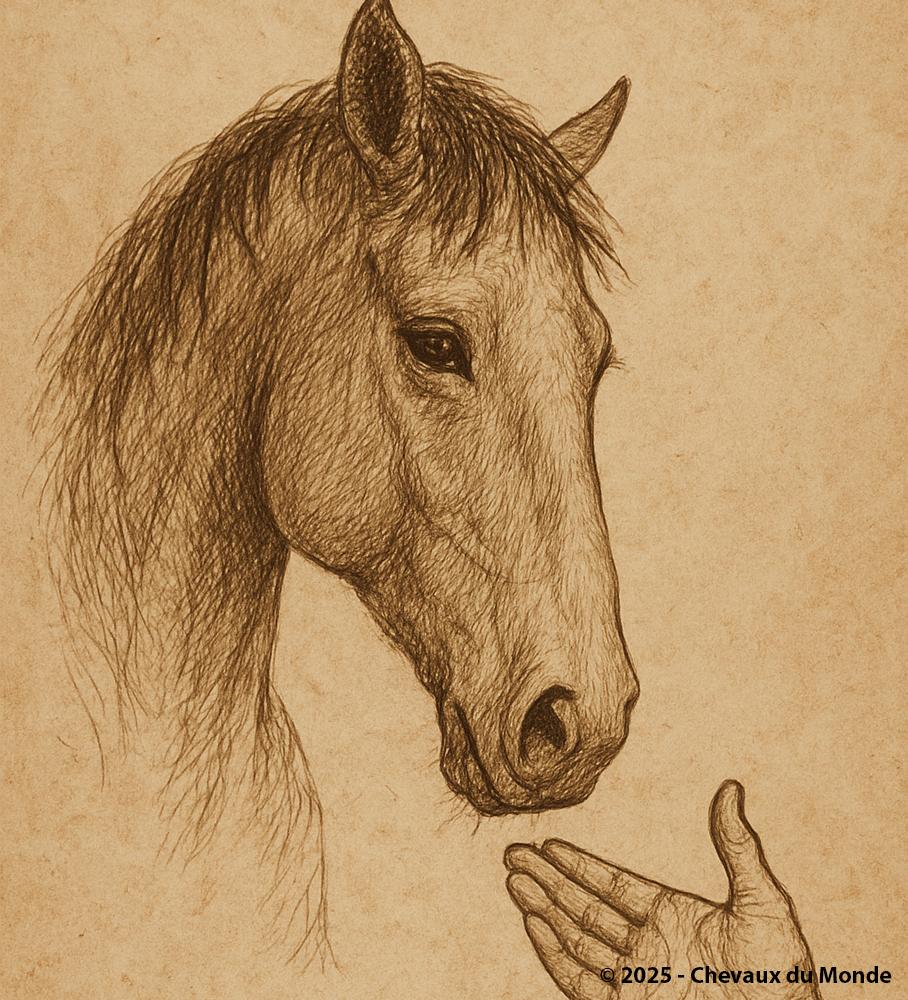
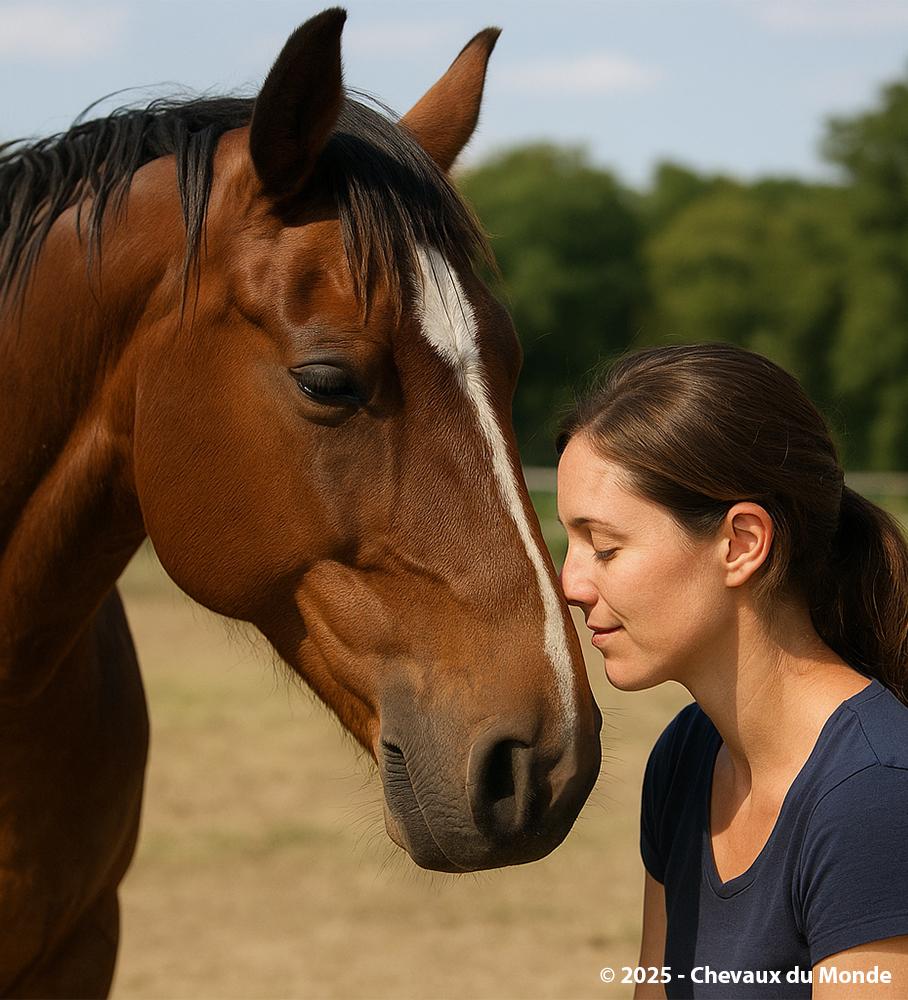
Responding to voice commands is a fundamental part of communication between the horse and the human. It allows clear instructions to be given without physical constraint, while strengthening trust, safety, and mutual understanding.
A horse that pays attention to the voice is generally:
- calmer in its work,
- more receptive to requests,
- easier to handle on a daily basis, both on the ground and under saddle.
Voice training is not reserved for sport horses or professionals. It applies to all horses, regardless of age, discipline, or training level.
How Does the Horse Perceive the Human Voice?
A horse does not understand words in the human sense. Instead, it reacts primarily to:
- intonation,
- consistency of the signal,
- coherence between voice and action.
A voice command becomes meaningful when it is always associated with the same request, expressed with the same tone and in the same context. Variations, hesitation, or contradictory cues make learning confusing.
The voice should remain calm, steady, and controlled. A tense or overly loud voice tends to create anxiety rather than understanding.
Which Voice Commands Should Be Used?
It is best to use a limited number of commands that are simple and clearly identifiable.
The most common ones include:
- Walk: start or maintain walking
- Trot: ask for the intermediate gait
- Canter: ask for a clear acceleration
- Whoa / Stop: halt
- Easy: slow down
- Good: mark a correct response
What matters most is not the word itself, but its long-term consistency. Regularly changing vocabulary prevents the horse from forming clear associations.
Starting the Learning Process on the Ground
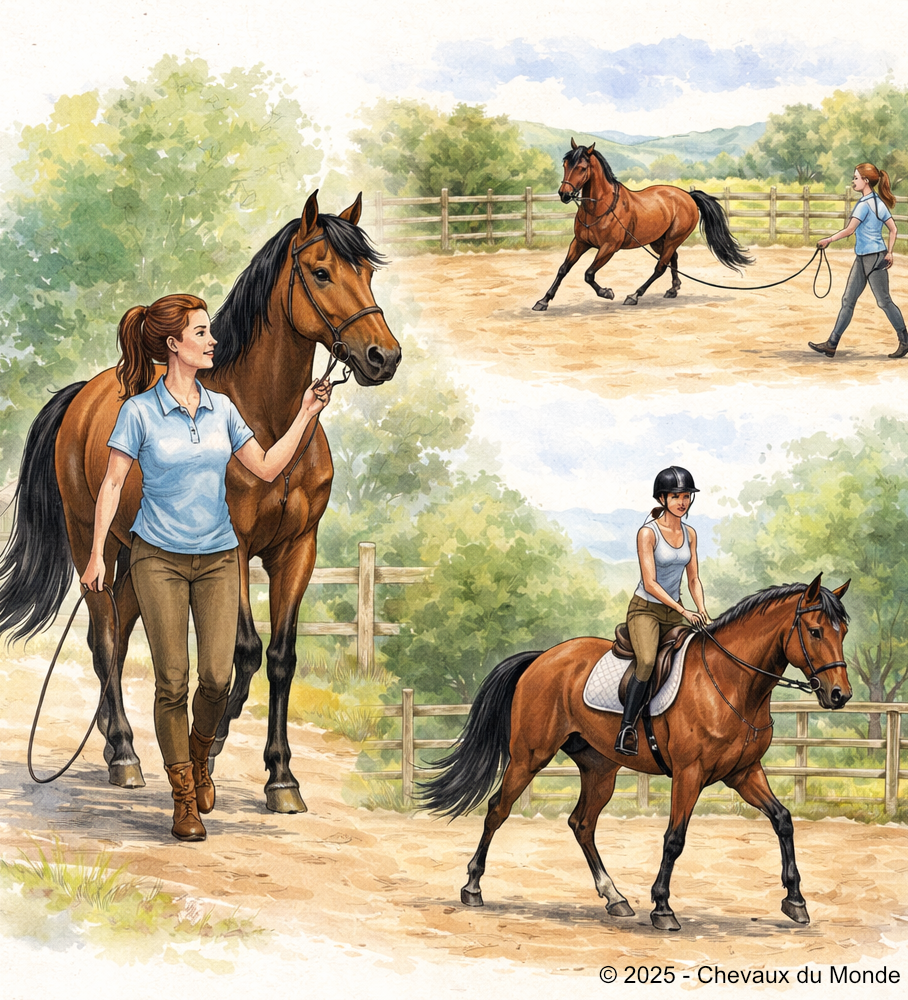
Voice training should ideally begin on the ground, in a calm and familiar environment.
At this stage, the voice is associated with a simple action:
- walking while saying “walk”,
- stopping while saying “whoa”,
- restarting calmly.
Repetition allows the horse to link the vocal cue to the expected movement. A correct response is immediately followed by a release or a verbal reward.
Speaking constantly does not speed up learning. On the contrary, it weakens the meaning of the commands.
Lunging: A Key Step
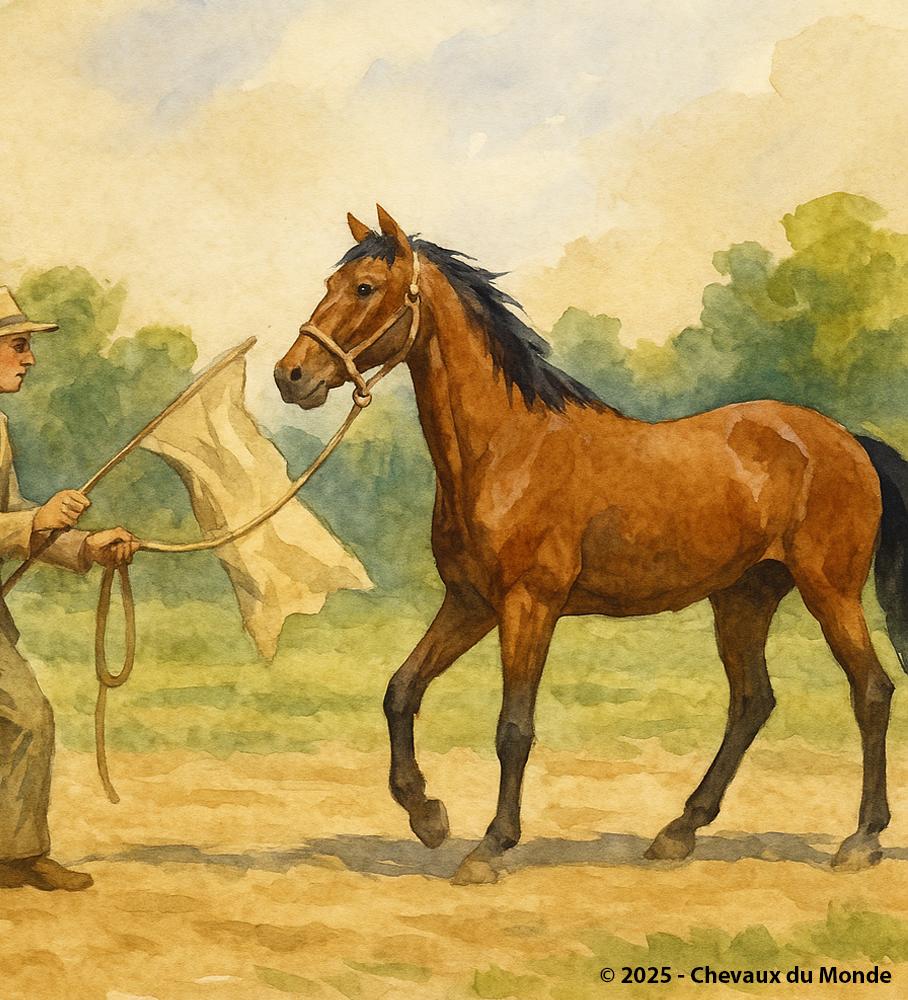
Lunging is one of the best tools for reinforcing voice responses. With the horse at a distance, the voice becomes a central reference, often more important than physical aids.
The principles remain the same:
- give the command before the request,
- optionally support it with a gesture,
- release as soon as the horse responds.
Consistency is essential. A calm, steady voice promotes faster and more durable learning.
Transferring Voice Responses Under Saddle
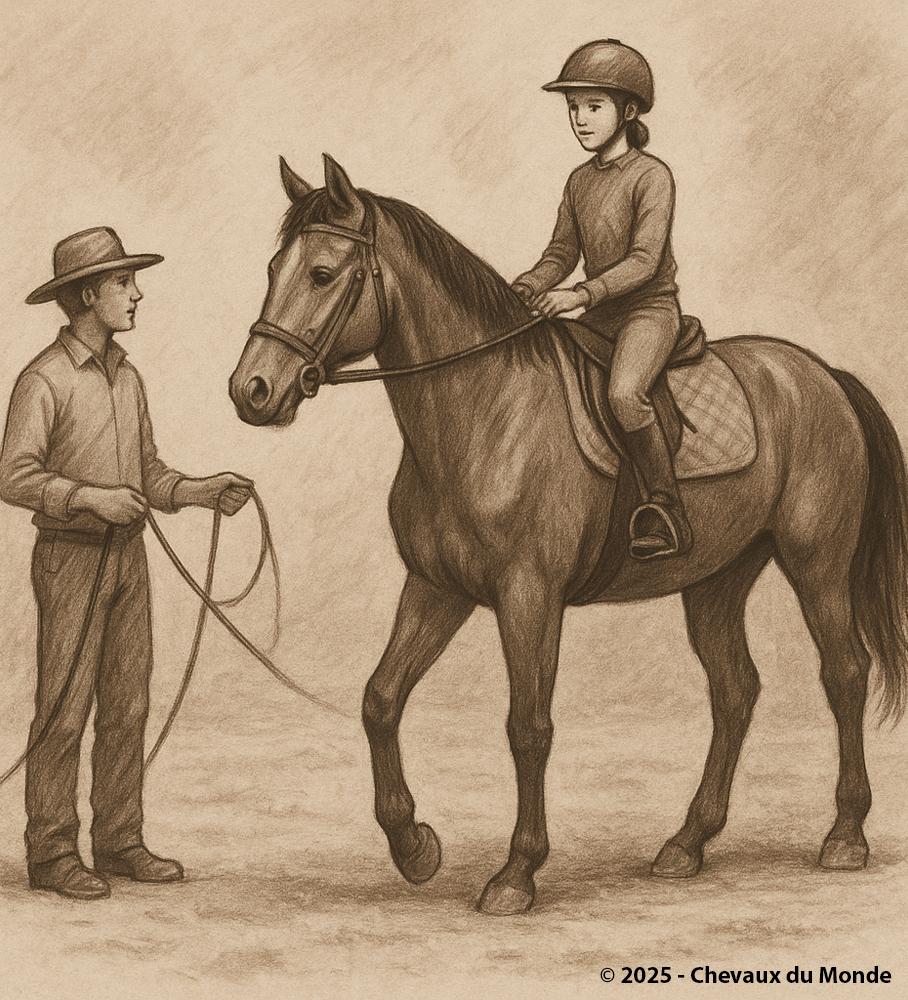
Once the basics are established on the ground and on the lunge, the voice can be used under saddle, always as a complement to the traditional aids.
The vocal cue precedes the action of the legs or hands, allowing the horse to anticipate the request. This anticipation makes the work smoother and lighter.
It is essential to keep exactly the same words and tone used on the ground. Any inconsistency slows understanding.
The Importance of Positive Reinforcement
Horses learn through association and comfort. A correct response should be followed by a clear positive signal:
- a soft voice,
- release of pressure,
- a pause in the exercise.
Verbal reward plays a central role. It reassures the horse and confirms that it has understood what was expected.
Common Mistakes to Avoid
Certain mistakes significantly slow down learning:
- using too many commands,
- changing vocabulary,
- speaking too loudly or nervously,
- lacking consistency between sessions.
A horse that does not respond to the voice is not disobedient. Most often, it is poorly informed or poorly guided.
Conclusion
Teaching a horse to respond to voice commands is a gradual process based on consistency, patience, and clarity of requests. When used correctly, the voice becomes a precise and reassuring communication tool, benefiting both the horse and the rider.