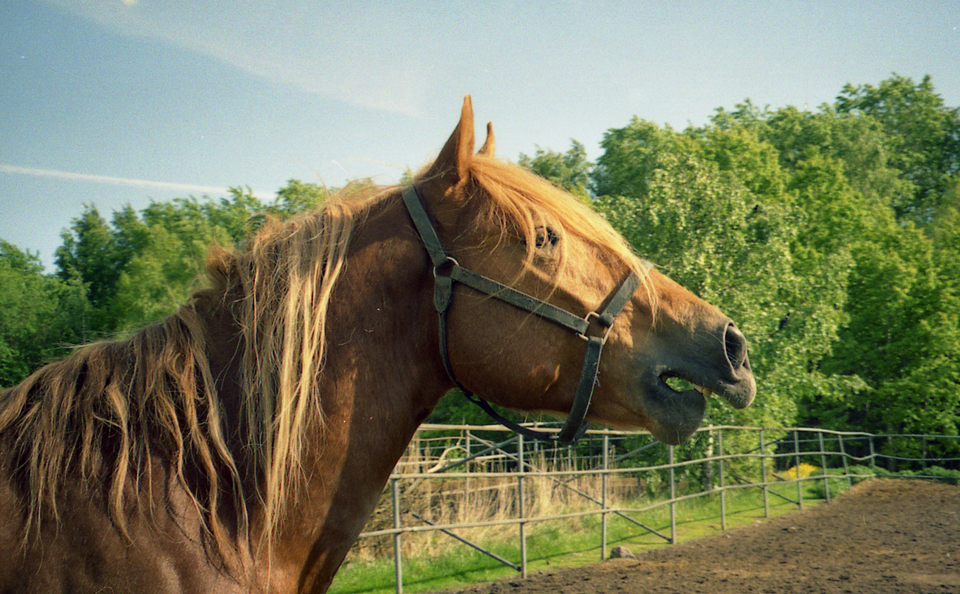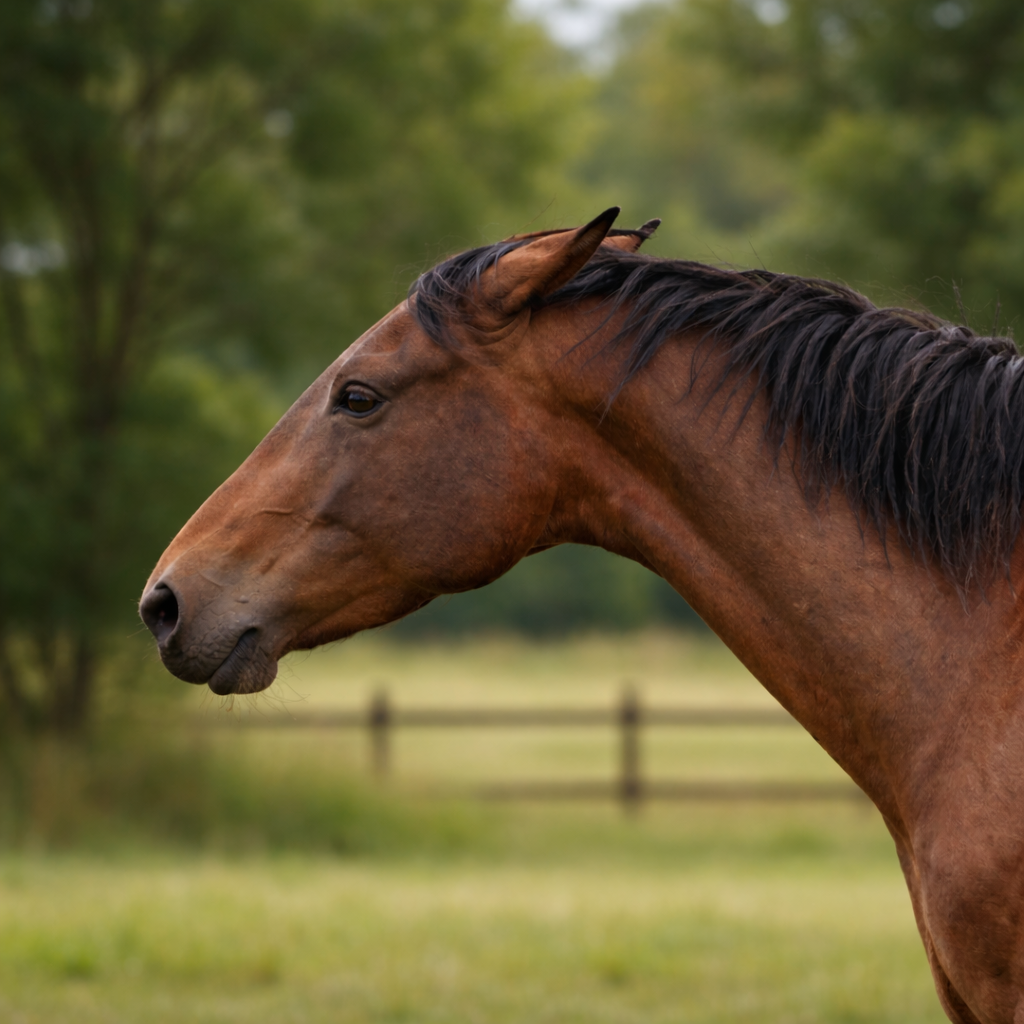
When a horse pins its ears back, it is not just a simple change in mood. It is a precise signal, often underestimated, that belongs to a highly structured body language system.
This behavior is particularly interesting because it rarely appears without a reason. It almost always occurs within a specific situation, involving a context, an interaction, and a gradual rise in tension. In other words, the horse does not suddenly switch to a strong reaction without warning, it gives signals first.
Learning to recognize that moment means understanding the horse before it reacts.
A signal that appears long before conflict
In horses, physical conflict is rarely the first step. Before a sudden movement, a kick, or a refusal, there is almost always a phase of silent communication.
Pinned ears are part of these early signals. They indicate that something is starting to bother the horse, but that it is still in a warning phase. This is a crucial moment, because it leaves room to adjust the situation.
A horse that pins its ears is not necessarily trying to attack. It is first trying to make something understood.
What the horse is really trying to say
The meaning of this behavior always depends on what is happening around it. It is never an isolated gesture.
In some situations, the horse is simply expressing a brief irritation. For example, when a sensitive area is touched without warning, or when a request is not clearly understood. The ear movement is then quick, almost reflexive, and disappears as soon as the pressure stops.
In other cases, the signal becomes more sustained. The ears remain pinned, the gaze becomes fixed, and the body shows slight tension. This is no longer an instant reaction, but a form of growing opposition. The horse is not necessarily aggressive, but it is clearly uncomfortable or disagreeing.
What makes the difference is the duration and intensity of the signal. A horse that keeps its ears pinned for several seconds is communicating something deeper than a simple annoyance.
The most misunderstood case discomfort
One important point that is often overlooked is that horses very frequently use this signal to express physical discomfort.
It commonly appears at very specific moments such as girthing, grooming, bridling, or even during certain ridden requests. The horse is not reacting “against you”, but to an unpleasant sensation.
What is interesting is that this type of reaction is often repeatable. If the ears go back at the same moment, in the same situation, it is almost never random. It is a highly reliable indicator.
A useful approach in these cases is to test small changes. Adjust the way you do things slightly, reduce pressure, and observe whether the reaction disappears. If it does, you have likely confirmed that the issue is discomfort rather than behavior.
When the issue comes from communication
A horse may also pin its ears because it does not understand what is being asked.
This often happens when requests are too fast, inconsistent, or contradictory. The horse ends up in a state of confusion and expresses tension instead of responding correctly.
In these situations, slowing down can change everything. Returning to something simpler and clearer often makes the signal disappear almost immediately. This is an important point: a horse that pins its ears is not necessarily resisting. It may simply be confused.
What experienced riders do differently
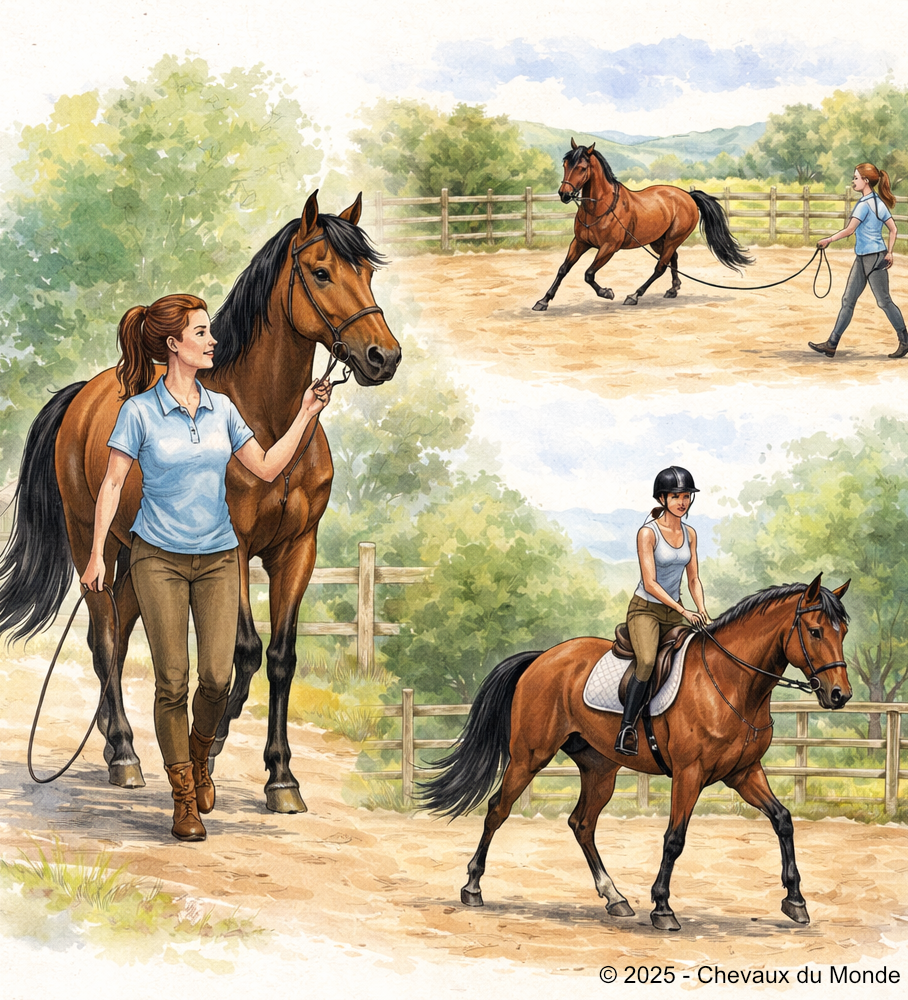
Experienced riders do not react when the horse becomes problematic. They react when the ears change.
This makes a huge difference.
At that moment, the tension is still low, the horse is still available, and the situation can still be adjusted.
A useful reflex is to immediately ask yourself: What did I just do that triggered this?
Then adjust accordingly. A small change in pressure, timing, or clarity is often enough to completely defuse the situation.
What you should never do
A common mistake is to try to correct the horse directly.
Punishing a horse for pinning its ears removes the signal without addressing the cause. The horse does not become calmer, it simply becomes less readable.And that is dangerous.
A horse that no longer expresses warning signals is a horse that may move straight to a stronger reaction without warning.
Conclusion
When a horse pins its ears, it is expressing a fundamental part of its body language. It is neither a flaw nor a bad attitude, but a message.
This message may reflect discomfort, misunderstanding, pain, or simply an interaction that is not well adjusted.
Learning to read it means acting at the right moment, avoiding unnecessary tension, and building a more refined relationship with the horse.