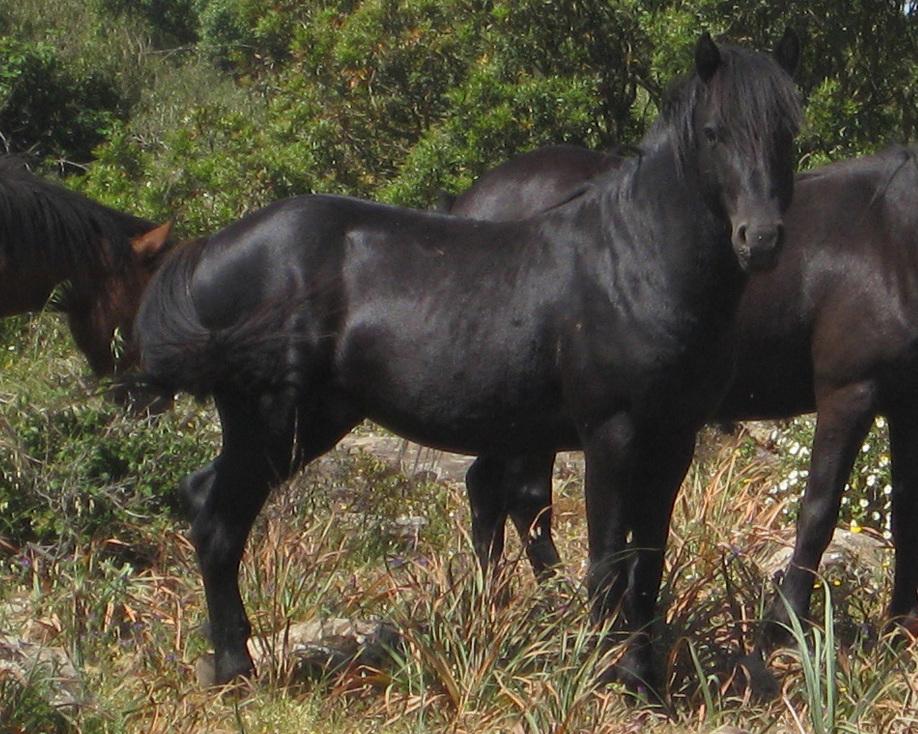
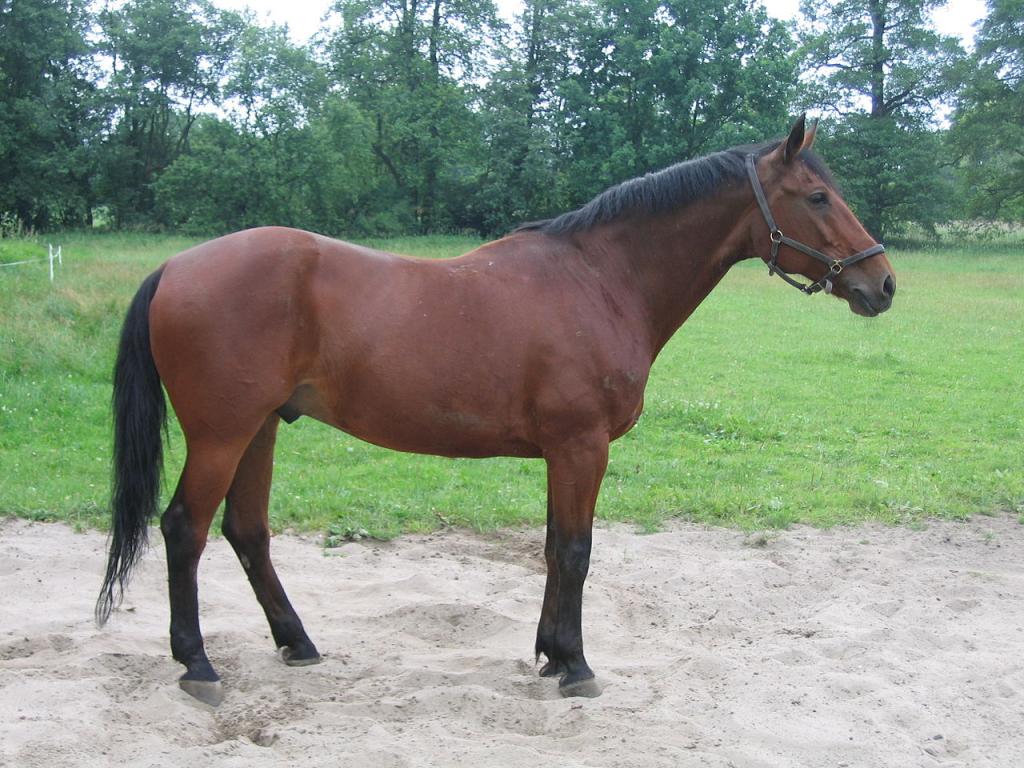
The Hokkaido Washu, also known as Dosanko, is a rustic and hardy Japanese horse adapted to cold climates, traditionally used for agricultural work and leisure.
By the Chevaux du Monde editorial team · Published on · Updated on
Type: Pony
Continent: Asia
Country: Japan
Weight: 200 – 300 kg
Height: 130 – 135 cm
Name: Hokkaido Washu Stud Book
The Hokkaido Washu, also known as Dosanko, is an indigenous horse breed from northern Japan, originating from the island of Hokkaido.
Its origin dates back to Japanese horses brought from the island of Honshu between the 15th and 17th centuries, during the gradual colonization of Hokkaido. These horses, originating from local Japanese populations, subsequently evolved in relative isolation, exposed to a cold, humid and snowy climate, very different from that of the rest of the Japanese archipelago.
The breed developed through natural and utilitarian selection, without any intensive improvement program: only individuals capable of surviving, working and reproducing under these harsh conditions were retained. The Hokkaido Washu was historically used for:
This origin explains its extreme hardiness, compact build, and exceptional adaptation to cold climates, making it one of the few truly northern equine breeds of East Asia.
The Hokkaido Washu is bred almost exclusively on the island of Hokkaido, in northern Japan.
This island constitutes:
Breeding is mainly concentrated in:
These areas offer:
These are ideal conditions for maintaining the breed’s natural rustic abilities.
The breeding areas of the Hokkaido Washu are characterized by:
This environmental context explains:


The Hokkaido Washu represents one of the last indigenous equine genetic reservoirs in Japan.
Unlike many modern breeds, it has not undergone massive crossbreeding with European horses (Thoroughbreds, heavy Western draft breeds), which allows it to preserve:
This relative genetic purity gives the breed a major heritage value.
The breed concentrates stable adaptive hereditary traits, resulting from several centuries of natural selection in Hokkaido:
These traits are polygenic and difficult to modify, making them particularly valuable from a genetic standpoint.
The Hokkaido Washu shows a low prevalence of known hereditary disorders, notably:
This overall genetic robustness is sought after in conservation programs, and also as a model for studying equine hardiness.
The Hokkaido Washu is not used to improve modern sport horse breeds.
Its genetic interest lies in the preservation of global equine diversity, not in performance.
Any attempt at intensive crossbreeding would result in the loss of:
Its genetic management therefore aims at conservation, not transformation.
At an international level, the Hokkaido Washu is considered:
Its disappearance would lead to an irreversible loss of equine genetic diversity.
The Hokkaido Washu originates from Japanese horses introduced to the island of Hokkaido between the 15th and 17th centuries, during a period when the region began to be gradually colonized from the main island of Honshu. These horses came from Japanese populations already present on Honshu, themselves descended from horses introduced earlier to the archipelago through exchanges with the Asian continent. Once in Hokkaido, these horses evolved in relative isolation, without significant external input for several centuries.
The environment of Hokkaido, characterized by long, cold and heavily snowy winters, exerted an intense natural selection pressure. Individuals unable to withstand climatic conditions, limited resources and difficult terrain were not retained.
This non-directed selection shaped a horse that is:
It was during this period that the main morphological and behavioral traits of the Hokkaido Washu became established.
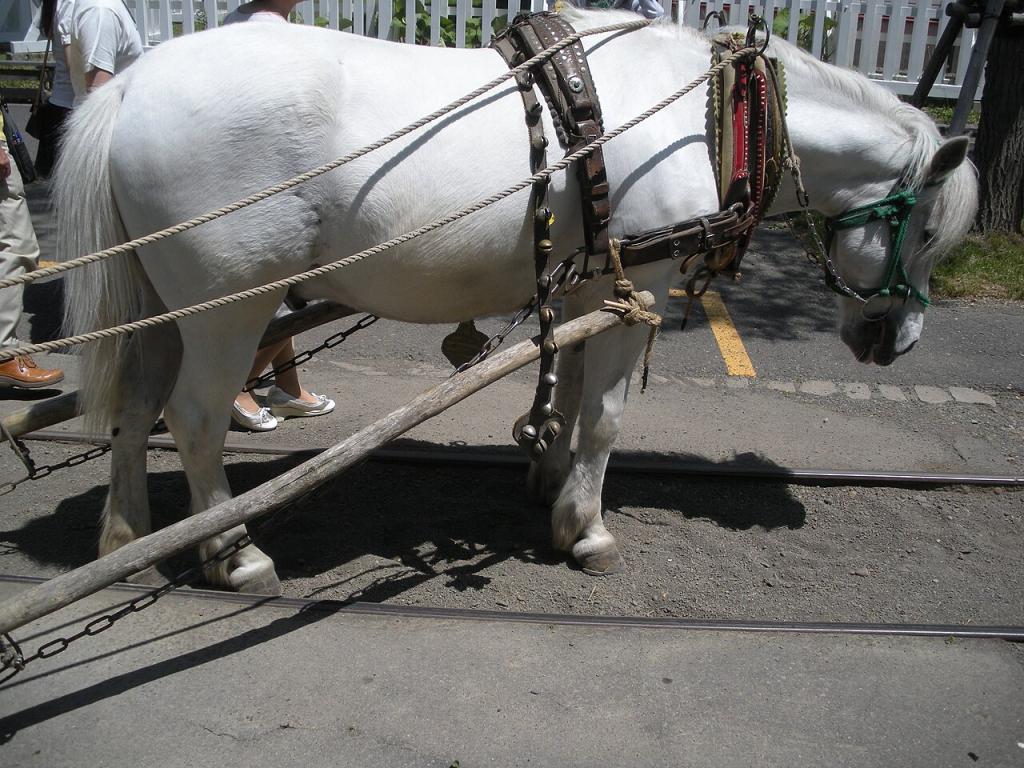
From the 19th century, particularly during the Meiji era, the Hokkaido Washu became a central element of Hokkaido’s rural economy. It was used for:
Unlike other regions of Japan, Hokkaido remained dependent on animal traction for a long time, reinforcing the breed’s functional importance.
At the end of the 19th and the beginning of the 20th century, isolated attempts were made to cross the breed with Western horses (larger or more powerful breeds) to increase traction strength. These experiments proved largely unsuccessful: crossbred horses tolerated the climate poorly and lost part of their rusticity. These failures contributed to an awareness of the value of the local type and encouraged a return to a more conservative management of the breed.
After the Second World War, the Hokkaido Washu underwent official structuring through regional registration systems. The objective was twofold:
It was during this period that the breed was clearly identified as one of the Japanese indigenous horse breeds.
Today, the Hokkaido Washu is no longer an essential working horse, but it retains a:
Its history is closely linked to that of rural Japan, and its preservation is part of a broader effort to conserve local domestic animal breeds.
The Hokkaido Washu displays a calm, steady and thoughtful temperament. It is a horse that is not demonstrative and reacts with measured responses rather than impulsiveness. This emotional stability results from functional selection oriented toward work and survival in a harsh environment.
Historically bred for agricultural and utilitarian purposes, the Hokkaido Washu has developed a pragmatic relationship with humans. It is generally:
It is not particularly expressive or familiar, but it establishes a reliable and consistent relationship with regular handlers.
The breed is known for low reactivity to unusual stimuli. It tolerates well:
This adaptive capacity reflects good stress management, essential in isolated and snowy rural regions.
The Hokkaido Washu possesses a practical intelligence, oriented toward solving concrete situations. It learns:
It is not specialized in rapid execution of complex tasks, but it retains useful behaviors durably.
The breed retains a well-developed instinct of caution. It assesses its environment before acting, particularly on difficult or slippery terrain. This behavior, sometimes misinterpreted as slowness or stubbornness, is in fact a survival mechanism inherited from its environment.
Within a herd, the Hokkaido Washu adopts a stable social organization, with few open conflicts. Interactions are sober, hierarchical and rarely aggressive. This stability favors extensive group breeding.
The Hokkaido Washu is now recognized in Japan as an indigenous breed with high heritage value. Japanese agricultural and cultural policies tend to favor the preservation of local breeds rather than their transformation or large-scale diffusion. In the medium and long term, the breed is therefore expected to remain geographically concentrated and managed within a conservation-oriented framework.
Observed trends show neither rapid expansion nor abrupt decline. Numbers remain relatively stable, supported by:
Any significant increase in numbers is limited by:
Traditional uses (agriculture, local transport) have strongly declined. However, a gradual shift is observed toward:
This evolution increases the breed’s visibility without altering its fundamental characteristics.
The main future challenge concerns the management of a naturally limited genetic pool. Maintaining strictly local breeding requires:
Without these measures, genetic diversity could erode over time.
No serious trend indicates a structured international diffusion of the breed. Administrative, cultural and genetic constraints make this scenario unlikely. The Hokkaido Washu is therefore expected to retain its status as a local Japanese breed, known mainly to specialists and institutions.
The Hokkaido Washu is considered a generally very healthy breed, resulting from prolonged natural selection and low-intensity breeding. No major genetic diseases specific to the breed have been clearly identified in the available veterinary literature.Its average health status is generally good when living conditions respect its traditional breeding environment.
To date, no clearly documented genetic predisposition to specific diseases (osteo-articular, metabolic or cardiac) is associated with the breed. This absence is explained by:
This does not imply total immunity, but a lower incidence of hereditary disorders compared to many modern breeds.
The Hokkaido Washu shows good natural resistance to difficult environmental conditions, notably:
This hardiness results in:
When the breed is kept in conditions too far removed from its original environment, certain issues may appear:
These issues are related to management practices, not genetics.