The cost of a complete horse-driving setup can range from a few hundred euros for very basic second-hand equipment to several thousand euros for a new carriage and harness. The budget increases considerably when driving a pair or a four-in-hand, or when purchasing equipment intended for competition.
There is no genuinely representative "average price". The size of the horse or pony, the number of horses, the type and material of the harness, the carriage and, above all, whether the equipment is bought new or second-hand can produce substantial differences in cost.
As an indication, in 2026, a French driving-equipment retailer lists new leisure carriages from around €900, while some small carriages designed for Shetland ponies start at approximately €545. The second-hand market is even broader, with carriages advertised from a few hundred euros to several thousand.
It is therefore more useful to break down the cost of a driving setup than to give a single figure.
What is included in a complete horse-driving setup?
A basic driving setup requires a carriage suited to the horse and intended use, together with a complete harness.
Depending on the configuration, the harness includes components such as the bridle, reins, saddle or pad, traces, breeching and either a breastcollar or full collar to transmit the pulling force.
The important point is that all these components must work together as a coherent system. A carriage that appears inexpensive is not necessarily a good purchase if its dimensions, weight or shafts are unsuitable for the horse.
Additional equipment may include a helmet, protective equipment, harness-care products and, when the carriage needs to be transported, an appropriate trailer or vehicle.
And, of course, the horse itself is not included in the cost of the equipment.
How much does a driving carriage cost?
The carriage is generally one of the largest initial expenses.
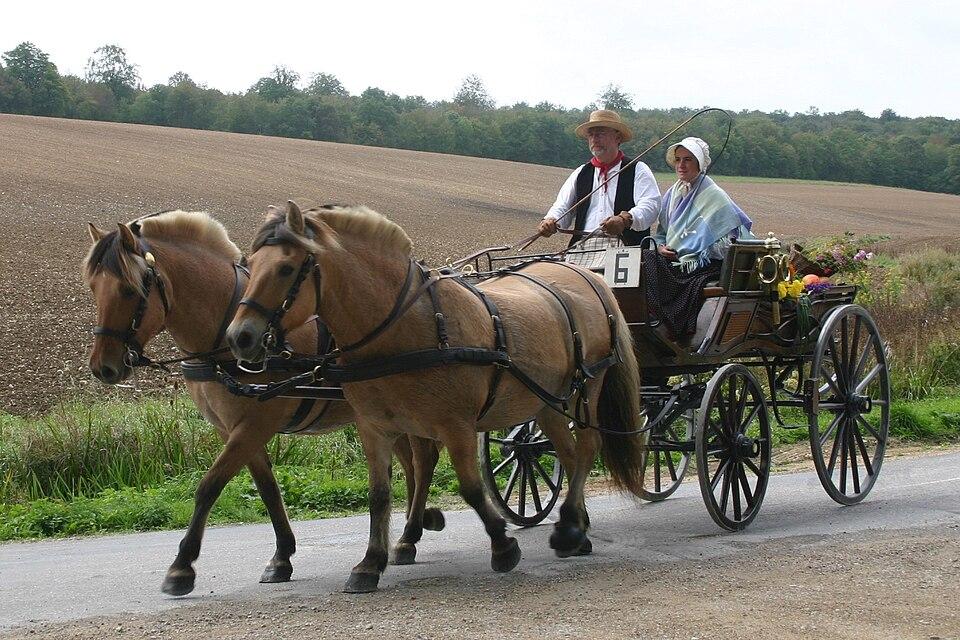
Prices vary considerably depending on whether the vehicle is a small two-wheeled cart, a leisure carriage, a sport model or a traditional horse-drawn vehicle.
Leisure carriages
For new equipment, relatively simple driving vehicles can be found for less than €1,000.
For example, the 2026 range offered by Equip'Horse includes a leisure carriage at around €900 and small Shetland-sized vehicles at approximately €545.
These figures should not be interpreted as average market prices. Dimensions, materials, equipment and technical specifications can quickly increase the cost.
Second-hand carriages
The second-hand market produces an even wider range of prices.
Listings available in 2026 include driving carriages advertised at approximately €350 to €3,500, with many vehicles falling between these figures. A very inexpensive carriage may, however, require repairs or simply be unsuitable for the horse for which it is being purchased.
The condition of the frame, wheels, shafts, attachment points and braking system, where fitted, should therefore be checked carefully.
Sport and competition carriages
Equipment intended for competition can represent a considerably larger investment.
A marathon carriage, for example, is designed for very different demands from those of a lightweight vehicle used occasionally for leisure driving. Technical models intended for pairs or multiple horses can cost several thousand euros, with specialised or custom-built vehicles costing considerably more.
A universal price range is therefore difficult to establish: this market includes second-hand equipment, specialised competition vehicles and bespoke construction.
How much does a driving harness cost?
Harness prices also vary widely.
Contrary to what might be assumed, equipping a single horse does not necessarily require spending more than €1,000.
In 2026, some new synthetic or nylon single-horse harnesses are available from approximately €180 to €300 from specialist retailers. Leather harness sets can also start at a few hundred euros.
Prices rise according to the materials used, quality of manufacture, number of components, adjustability and intended driving configuration.
A pair requires harness specifically designed for pair driving. Current catalogues again show a broad range: some synthetic sets cost a few hundred euros, while specialised and premium equipment can be substantially more expensive.
What about second-hand harness?
Buying second-hand can significantly reduce the initial cost.
French listings in 2026 include complete harness sets offered for a few hundred euros, as well as pair and premium harnesses advertised for more than €1,000.
Price should not be the only consideration. A harness needs to fit the horse correctly, provide sufficient adjustment and be strong enough for its intended use.
With an older leather harness, appearance alone does not indicate its condition. Worn stitching, weakened leather or damaged buckles can create significant safety problems.
Breastcollar or full collar: why the type of harness matters
Not every driving horse uses exactly the same system to transmit the pulling force.
A breastcollar lies across the horse's chest and transfers the force to the vehicle through the traces. It is widely used in leisure and sport driving.
A full collar fits more closely around the neck and shoulders and distributes the pulling force differently. It remains particularly associated with some forms of heavy draught work and traditional driving.
The choice should therefore not be based solely on price or appearance. The work being performed, the horse's conformation and the rest of the harness and vehicle configuration all need to be considered.
How much does a trained driving horse cost?
This is probably the part of the budget for which a general price range is least useful.
The value of a driving horse depends on age, health, level of training, experience, ability and, where relevant, competition record.
A horse genuinely experienced in driving may also have particular value for a novice driver. It is already familiar with the harness, vehicle, driver's aids and many of the situations encountered while working in harness.
It is therefore important to distinguish between the price of a horse that could be trained to drive and one that is already a proven driving horse.
Competition horses form another market altogether, where performance, potential and level of training can lead to considerably higher prices.
Rather than applying an arbitrary range of several thousand euros to every driving horse, it is more meaningful to compare current listings for animals matching the precise age, training and experience required.
What budget is needed for a single-horse setup?
For a first single-horse setup, equipment costs can remain relatively modest if a sound second-hand carriage is combined with a suitable harness.
It is therefore possible to put together some setups for less than €3,000 excluding the horse, particularly when buying second-hand.
A more sophisticated new carriage, higher-grade harness and additional equipment can easily add several thousand euros.
For this reason, a figure such as €3,000 to €10,000 should not be presented as the mandatory cost of a single-horse driving setup. Some combinations cost less, while specialised equipment can cost considerably more.
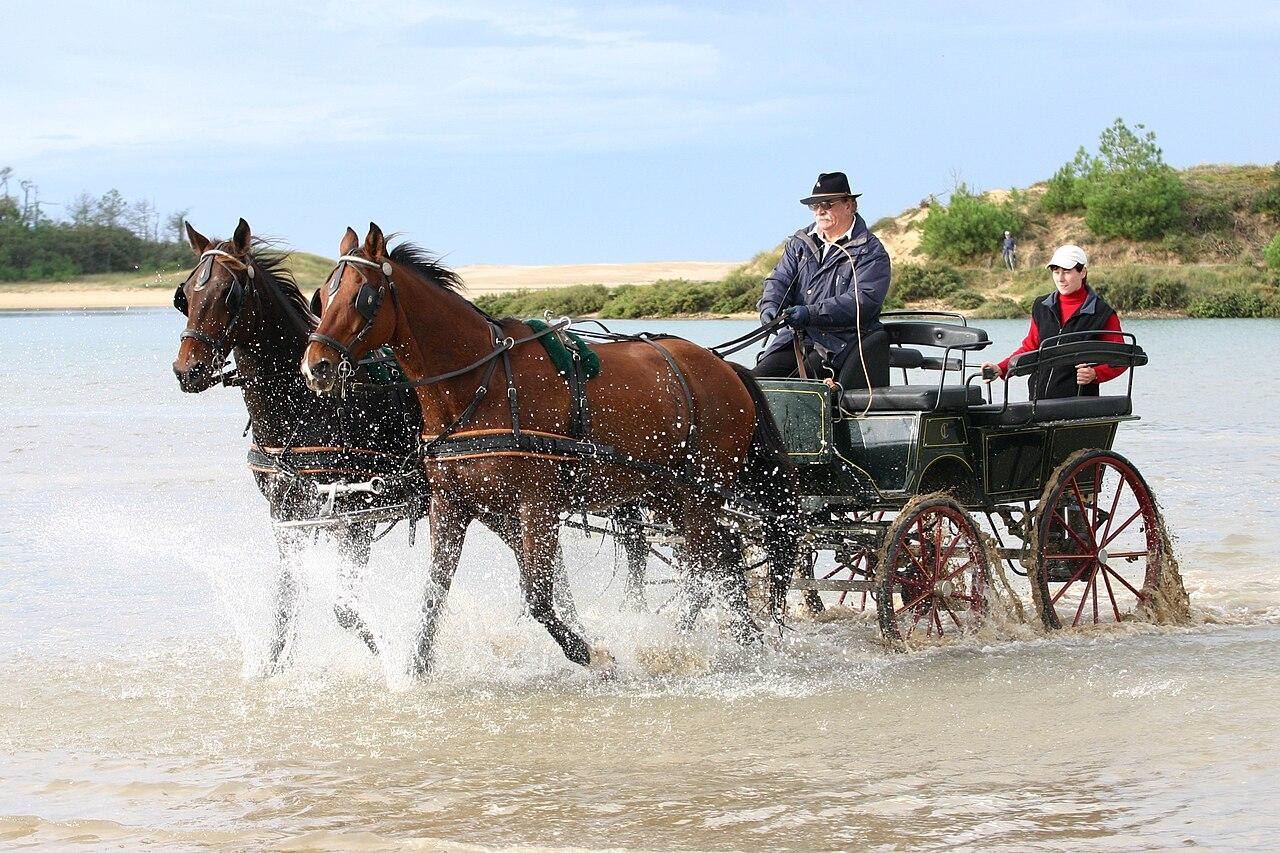
What budget is needed for a pair?
Pair driving requires two horses capable of working together, a pair harness and a carriage compatible with this configuration.
Moving from a single horse to a pair is therefore not simply a matter of purchasing another harness.
The dimensions and characteristics of the carriage change, as do parts of the harness and the arrangement of the reins.
The equipment budget may begin at a few thousand euros when using second-hand gear, but it can rise quickly with a sport carriage or premium equipment.
Most importantly, the purchase and ongoing costs of two horses must be added to the equipment budget and may ultimately exceed it by a substantial margin.
How much does a four-in-hand cost?
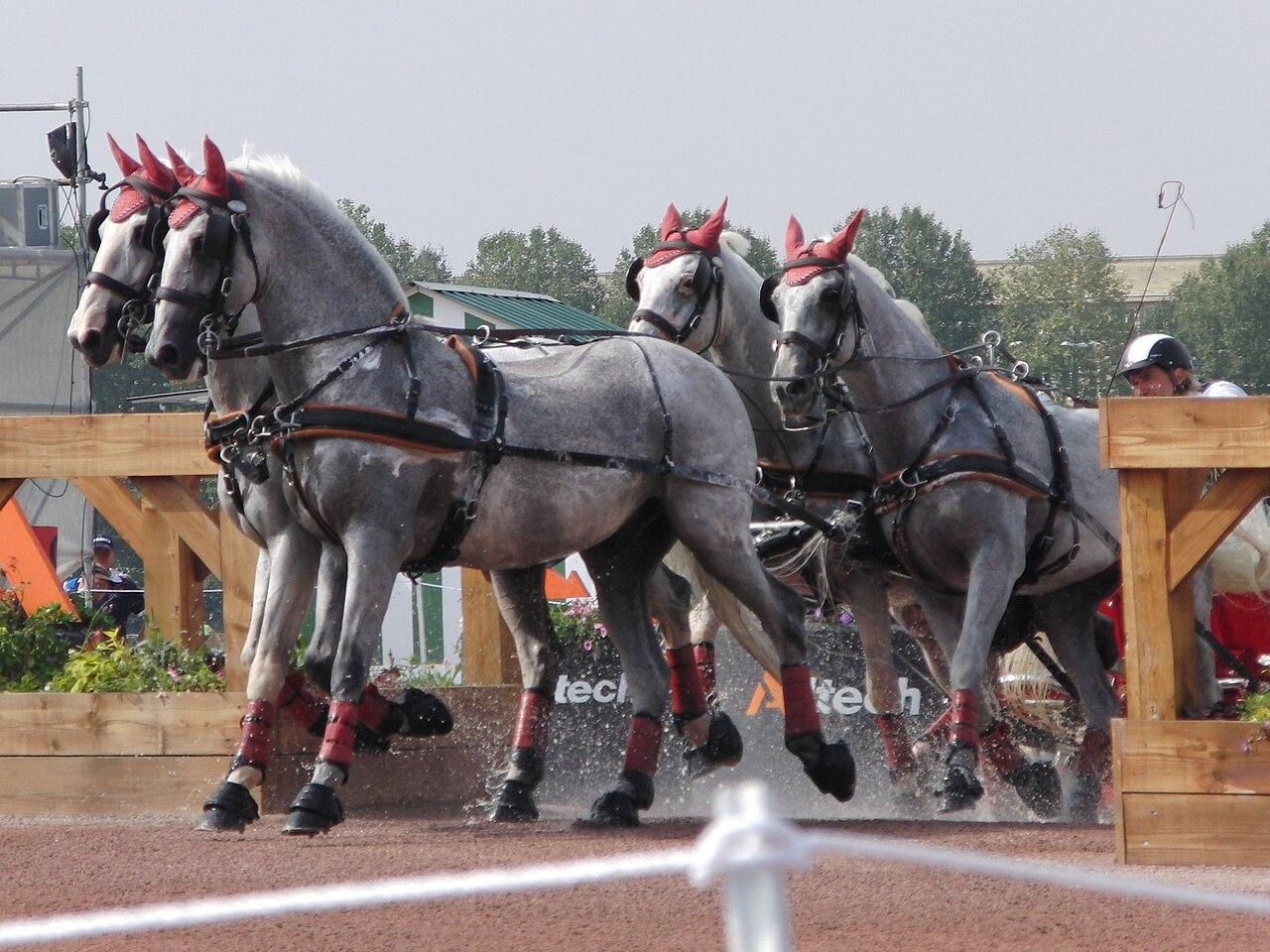
A four-in-hand changes the scale of the investment considerably.
It requires four horses capable of working as part of the same team, a complete multiple-horse harness, a suitable carriage and a significantly higher level of driving skill.
The total value of such an outfit can reach tens of thousands of euros, particularly when the horses themselves are included.
It would nevertheless be misleading to state that every four-in-hand necessarily costs at least €30,000. The value of both horses and equipment varies too widely for such a threshold to be universal.
New or second-hand: which is cheaper?
For a beginner, buying second-hand can make it possible to obtain better-quality equipment on a limited budget.
The French market includes many used carriages and harness components. Listings observed in 2026 include harnesses at approximately €200 to €900 and carriages starting at a few hundred euros.
These figures are advertised prices, not necessarily the amounts for which the items are eventually sold.
Before purchasing a second-hand carriage, it is useful to check:
- the overall condition of the frame;
- wheels and their fittings;
- shafts or pole;
- brakes, where fitted;
- welds and structural joints;
- whether its dimensions and weight are appropriate for the horse.
With a harness, similar attention should be given to stitching, buckles, traces and any components subjected to substantial tension.
For a first purchase, having an experienced driver or driving professional inspect the equipment can prevent an apparent bargain from becoming an expensive piece of unusable equipment.
The true cost of horse driving does not end with the purchase
A carriage and harness are largely one-off purchases. A horse, by contrast, generates continuing expenses.
These may include:
- feed and accommodation;
- veterinary care;
- farriery or hoof trimming;
- insurance;
- harness maintenance and replacement;
- carriage maintenance;
- travel and transport;
- lessons and professional instruction.
With several horses, many of these expenses are multiplied.
Over several years, keeping the horses can therefore cost substantially more than the original carriage and harnesses.
Do you need to own a horse and carriage to start driving?
No.
Before purchasing a carriage and harness, learning at an equestrian centre or driving establishment provides an opportunity to discover the discipline using horses and equipment that are already suitable for the activity.
This also makes it easier to understand the differences between carriage types, harness systems and single- or multiple-horse configurations.
Most importantly, it avoids purchasing equipment before knowing precisely what type of driving you intend to pursue.
For someone planning to establish their own turnout later, a properly trained and experienced driving horse may also be more suitable than a horse that a novice driver would need to introduce to the discipline themselves.
So how much does a complete horse-driving setup really cost?
There is no single answer.
In 2026, a small carriage and harness can be found for less than €1,500, particularly for a pony or when combining suitable second-hand equipment. A more elaborate single-horse setup will generally cost several thousand euros, while a pair, competition carriage or high-level turnout can raise the budget considerably.
The horse is a separate expense, with an even wider range of possible prices.
The best way to compare two driving setups is therefore to examine what is actually included in the price: carriage, harness, accessories, number of horses, condition of the equipment and training level of the animals.
A cheaper setup is only worthwhile if it is suitable for the horse and the intended use. In a discipline where the driver controls a horse connected to a vehicle, correct fit, suitability and sound equipment should take priority over simply finding the lowest price.