Datong

General Characteristics

Region of Origin

Continent: Asia

Country: China

Measurements

Weight: 400 – 500 kg

Height: 140 – 155 cm

Coat Colors

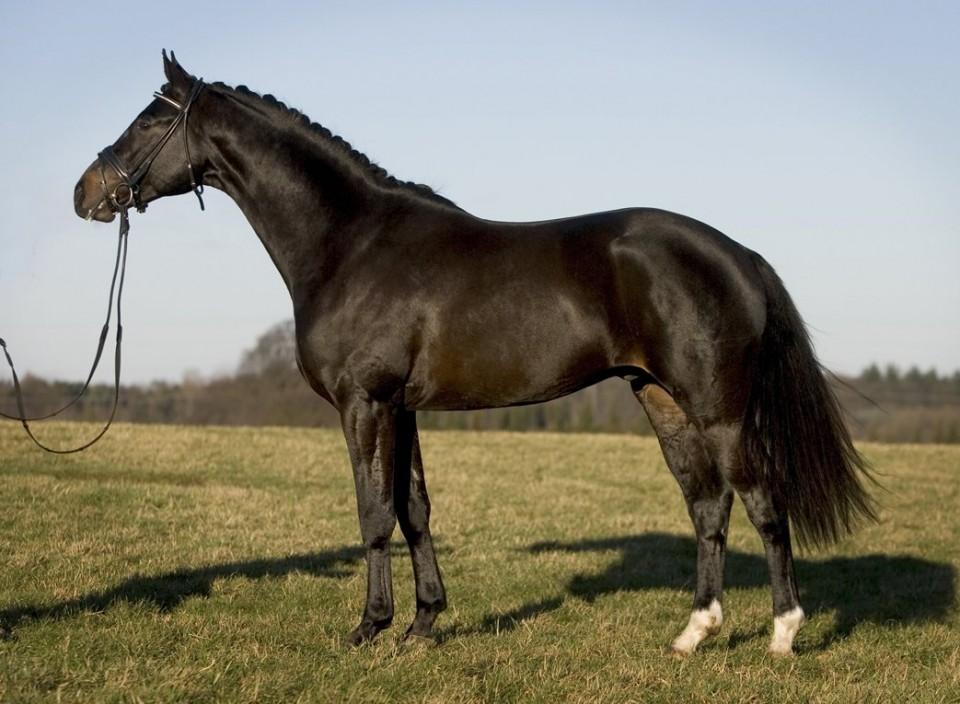
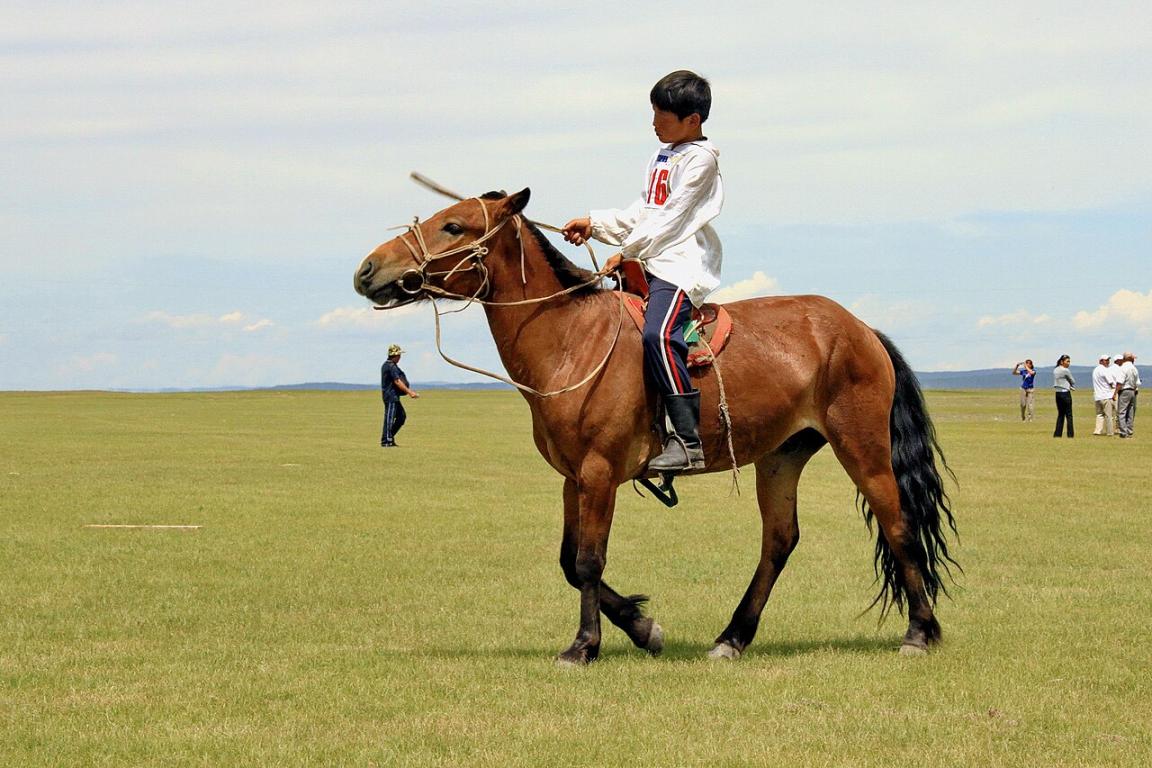
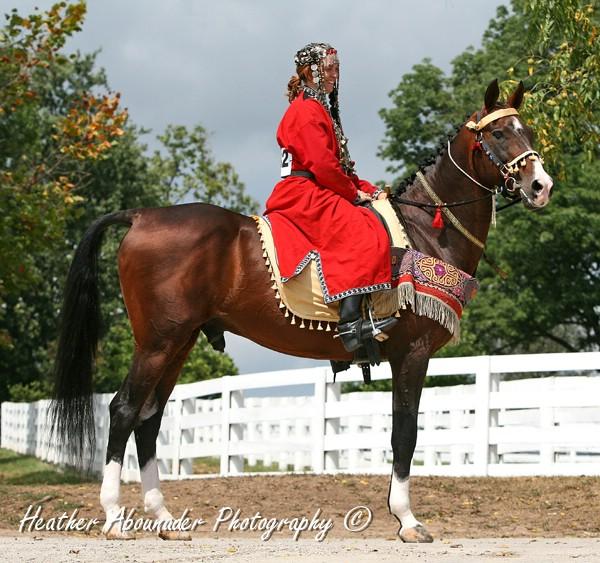
  • Chestnut / Sorrel : Reddish-brown coat with matching mane and tail; no black.
  • Black : Solid black hair and mane, dark skin.
  • Bay : Brown body, black mane and tail, black lower legs/head.
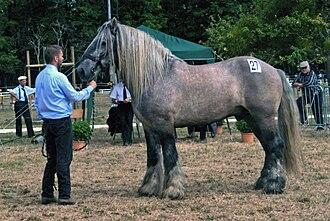
  • Gray : Born dark and lightens with age; mixed dark and white hairs.

Disciplines & Skills

  • Cattle Work
  • Draft Work
  • Cavalry / Military

Origin

Geographical Area and Environment

The Datong horse is a very ancient native breed of northern China, historically associated with the Datong Basin and the cold high plateaus stretching between the northern part of Qinghai Province and the northern margins of Shanxi, around the city of Datong.

This region is characterized by particularly harsh natural conditions:

  • high altitude, generally between 2,200 and 2,600 meters,
  • long, cold, and severe winters,
  • short and dry summers,
  • poor steppe grasslands with low nutritional value.

These environmental constraints have played a decisive role in the formation and long-term survival of the breed.


Historical Origin

The Datong horse is the result of a millennia-long empirical selection, without any official creation or modern standardization. It descends from primitive horses of the North Asian steppes, showing morphological and functional affinities with ancient Mongolian and Tibetan horses.

Several limited but plausible influences can be identified:

  • horses used by nomadic peoples of the region (Xiongnu, Mongols),
  • Tibetan influences linked to ancient caravan routes,
  • a near absence of modern “improved” bloodlines.

The Datong horse is therefore not an artificially created breed, but one shaped by environment and use, within a remarkable historical continuity.


Zootechnical Origin

The selection of the Datong horse is based on a combination of natural selection and pragmatic human choices, exclusively oriented toward functional performance. The dominant selection criteria were:

  • resistance to extreme cold,
  • low nutritional requirements,
  • long-distance endurance,
  • traction strength,
  • longevity and overall hardiness.

No aesthetic goals guided the evolution of the breed. Its morphology, coat colors, and conformation reflect a purely utilitarian adaptation, directly shaped by the constraints of its environment.


Original Uses

Traditionally, the Datong horse was a subsistence multipurpose horse, essential to isolated rural communities. Its main uses included:

  • agricultural work (light ploughing and utilitarian traction),
  • transport and pack work on difficult mountain trails,
  • regional military use, valued for its endurance and sure-footedness,
  • a family horse role, adapted to a wide range of daily tasks.

Breeding Area

The Datong horse has historically been raised in the cold high plateaus of northern China, with a core area of distribution centered on the Datong Basin.


Main Historical Areas

Northern Qinghai Province

  • Main historical and current area
  • High-altitude plateaus ranging between 2,200 and 2,600 meters
  • Cold continental climate
  • Dry steppe grasslands with low forage productivity

Northern Margins of Shanxi

  • Around Datong
  • Surrounding rural districts
  • Traditional breeding integrated into local agricultural systems

Transition Zones: Qinghai – Shanxi – Inner Mongolia

  • Diffuse and poorly structured breeding
  • Mainly family-based
  • Absence of a stud-book or centralized selection

Current Distribution (schematic)

Dispersed rural nuclei, consisting of small herds (a few dozen horses)

Extensive breeding systems, based on:

  • seasonal free grazing,
  • locally sourced winter fodder

Low concentration of horses, with no large specialized studs


Ecological Constraints of the Breeding Areas

Natural conditions impose severe constraints:

  • long and very cold winters, with strong winds and prolonged frost,
  • low precipitation,
  • poor-quality forage,
  • open, sometimes rocky terrain.

These factors have shaped a horse that is frugal, enduring, and exceptionally hardy.


Recent Evolution of Breeding Areas

A progressive reduction in breeding areas has been observed, mainly due to:

  • agricultural mechanization,
  • abandonment of traditional pastoral practices,
  • crossbreeding with larger and more productive horses.

However, conservation pockets remain in the most isolated areas of Qinghai.


Territorial Conservation Challenges

The genetic survival of the Datong horse depends directly on:

  • the preservation of open steppe landscapes,
  • the transmission of local knowledge and traditional practices,
  • in situ management, closely linked to its original environment.

Morphology & Physical Traits

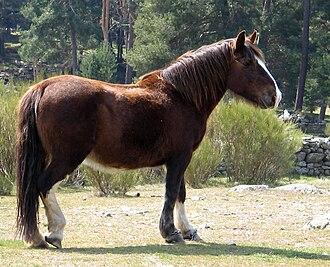
Icon Neck
Neck
Short to medium in length, very muscular. Slightly arched or straight, adapted to traction and load carrying.
Icon Hooves
Hooves
Small to medium-sized hooves, very hard. Thick sole. Excellent resistance without shoeing on rocky or frozen ground.
Icon Head
Head
Straight to very slightly convex profile.
Icon Ears
Ears
Medium-sized, thick, well carried.
Icon Eyes
Eyes
Rather small but alert and expressive.
Icon Chest
Chest
Wide and deep chest.
Icon Back
Back
Short and strong back.
Icon Loin
Loin
Wide and very resilient loins.
Icon Croup
Croup
Wide and rounded, sometimes slightly sloping.
Icon Tail
Tail
Low to medium tail set.
Icon Forelegs
Forelegs
Correct limbs, tolerant of difficult terrain.
Icon Hind legs
Hind legs
Powerful hocks, well let down.
Icon Bone structure
Bone structure
Thick bones, large joints.
Icon General musculature
General musculature
Strength-oriented musculature.
Icon Overall silhouette
Overall silhouette
Compact, stocky silhouette, very different from modern “sport” horses.

Genetic Importance

The Datong horse has a high heritage genetic importance, although it is poorly exploited in modern breeding programs. Its value does not lie in athletic or aesthetic improvement, but in the conservation of primitive adaptive traits that have become rare today.


Reservoir of Hardiness and Extreme Adaptation

The Datong horse constitutes a natural genetic reservoir for fundamental traits linked to survival in harsh environments:

  • tolerance to extreme cold,
  • high metabolic efficiency on poor-quality resources,
  • general disease resistance,
  • functional longevity.

These characteristics are the result of slow, undirected selection, giving the breed a remarkable genetic stability.


Interest for Utilitarian Breeding

Historically, the Datong horse may have been used as a local genetic contributor to reinforce the hardiness of regional equine populations, particularly in contexts such as:

  • agricultural traction in cold climates,
  • pack transport on difficult terrain,
  • low-input extensive breeding systems.

However, its use in crossbreeding schemes remained limited and non-standardized, which helped preserve its relatively intact genetic identity.


Limited Influence in Modern Improvement Programs

Unlike some rustic breeds integrated into formal “improvement” programs, the Datong horse has been largely spared the introduction of improved bloodlines (sport, racing, riding).This low level of hybridization strengthens its scientific and conservation value, but also explains its economic marginalization.

It is therefore a breed with little genetic influence at a global scale, yet highly valuable at a local and heritage level.


Role in the Conservation of Equine Genetic Diversity

The Datong horse contributes to the genetic diversity of North Asian horses, alongside other mountain and steppe populations.

Its disappearance or genetic absorption would lead to:

  • the loss of cold-adaptation genes,
  • an impoverishment of China’s indigenous equine heritage,
  • a reduction in the overall genetic resilience of rustic horse populations.

In this respect, its value is more conservational than productivist.

History

Ancient Origins (Antiquity – Early Middle Ages)

The Datong horse traces its roots to primitive horses of the cold steppes of East Asia, present for several millennia on the high plateaus of the Datong Basin. These equine populations, closely related to the ancestors of Mongolian and Tibetan horses, were shaped by:

  • an extreme continental climate (cold, wind, drought),
  • high altitude,
  • limited forage resources.

Selection was not driven by aesthetics, but by survival.


Period of Empires and Caravan Routes

Located on strategic axes linking Northern China, Inner Mongolia, and the Tibetan Plateau, the Datong region long functioned as a military and commercial crossroads.

During this period, the Datong horse was used:

  • as a local military horse (endurance, sure-footedness),
  • for caravan logistics (pack work and traction),
  • by sedentary and semi-nomadic agro-pastoral populations.

It underwent little directed crossbreeding, contributing to the stability of its type.


Late Imperial Period (Ming – Qing)

Under the Ming and Qing dynasties, the Chinese state occasionally promoted certain military breeding programs, but the Datong horse remained primarily a peasant horse, used for:

  • agricultural traction,
  • rural transport,
  • extensive family-based breeding.

This period consolidated its compact build, frugality, and docile temperament.


20th Century: Disruption and Marginalization

In the 20th century, several factors weakened the breed:

  • agricultural mechanization,
  • introduction of larger or “improved” horse types,
  • absence of a structured stud-book,
  • decline of traditional uses.

The Datong horse survived mainly in isolated areas of Qinghai, where conditions remained too harsh for imported breeds.


Modern Recognition

At the end of the 20th century and the beginning of the 21st century:

  • the breed was identified as a local genetic resource,
  • integrated into Chinese national inventories,
  • referenced in international databases (FAO / DAD-IS).

There is still no Western-style stud-book, but the Datong horse benefits from heritage and scientific recognition.

Behavior & Character

The Datong horse is characterized by a calm, steady, and reliable temperament, the result of very ancient selection based on utility and survival rather than athletic performance.

  • Docile and cooperative
  • Low emotional reactivity, restrained responses
  • Mentally stable, even in harsh or noisy environments
  • Very sure-footed, confident on difficult terrain

Relationship with Humans

  • Strong familiarity with humans, without excessive dependence
  • Natural acceptance of harnessing, pack work, and traction
  • Undemonstrative, yet faithful and consistent
  • Learns through repetition and routine rather than intense stimulation
  • Respectful and rarely conflict-prone, appreciated by rural breeders

Work Behavior

  • Endurance-oriented rather than fast
  • Starts work calmly and maintains effort over long periods
  • Excellent mental resilience to fatigue, cold, and monotony
  • Very rarely affected by performance-related stress

Herd Behavior

  • Socially balanced
  • Clear hierarchy with low levels of aggression
  • Strong group cohesion
  • Good behavior alongside other rustic equids

Behavioral Adaptation to the Environment

The Datong horse is psychologically adapted to:

  • isolation,
  • wide open spaces,
  • abrupt climatic variations.

It demonstrates:

  • economy of movement,
  • natural caution,
  • instinctive energy management.

Future Perspectives

The Datong horse is currently in a situation of short-term vulnerability, but shows growing strategic interest in the medium and long term, particularly in the fields of genetic conservation, agroecology, and climate resilience.


Major Risks

  • Continuous decline in population numbers
  • Linked to agricultural mechanization and rural exodus, reducing the breed’s direct economic usefulness.
  • Uncontrolled crossbreeding
  • With larger or more productive horses, leading to progressive genetic erosion and loss of adaptive traits.
  • Absence of a structured stud-book
  • Resulting in a loss of lineage traceability and difficulty in identifying authentic genetic nuclei.
  • Aging of traditional breeders
  • Causing a break in the transmission of knowledge and practices related to local extensive breeding systems.

Conservation Opportunities

  • Recognition as a local genetic resource
  • Potential integration into conservation frameworks (FAO, national Chinese programs).
  • Creation of in situ conservation nuclei
  • In the most isolated areas of Qinghai, where crossbreeding pressure remains limited.
  • “Low-input” conservation programs
  • Focusing on hardiness, frugality, and autonomy, rather than performance or productivity.

Future Interest in a Global Context

The Datong horse could play a key role:

  • as a reservoir of genes for adaptation to extreme cold and food scarcity,
  • in scientific research on primitive Asian horses,
  • within extensive and sustainable breeding projects,
  • as a sentinel breed in the face of climate change impacts.

Cultural and Territorial Valorization

Several development pathways may be considered:

  • local heritage micro-chains,
  • rural and cultural tourism,
  • living museum projects dedicated to ancient breeds.

The breed could also be integrated into international initiatives such as Parc Chevaux du Monde, as a representative breed of the cold Asian steppes.


Long-Term Survival Conditions

To ensure the future of the Datong horse, it would be necessary to:

  • identify and map existing lineages,
  • establish an open conservation register,
  • provide economic support to local breeders,
  • maintain breeding within its native environment,
  • strictly limit absorption crossbreeding.

Health

The Datong horse is renowned for its excellent overall health and robustness, resulting from centuries of natural selection in a cold, dry, and demanding environment.

  • High longevity for a working horse
  • Low incidence of chronic diseases
  • Good natural resistance to common illnesses

Factors of Hardiness

  • Thick skin and dense coat → protection against cold and wind
  • Efficient metabolism → tolerance of poor-quality diets
  • Strong bones and tendons → low incidence of lameness
  • Hard hooves → excellent hoof health, often without shoeing

Common Pathologies (Low Prevalence)

Compared to improved breeds, the Datong horse is rarely affected by:

  • chronic respiratory disorders,
  • metabolic diseases (laminitis, metabolic syndrome),
  • severe digestive disorders (colic),
  • skin or allergic conditions.

When health issues do occur, they are most often related to management or environmental conditions, rather than genetics.


Locomotor System

  • Very strong joint structure
  • Resilient hocks
  • Slow joint wear due to a compact build
  • Rarely affected by osteochondrosis or severe congenital defects

Hoof Health

  • Small, round, hard hooves
  • Thick sole
  • Good vascularization
  • Tolerates rocky, frozen, or dry ground
  • Often used barefoot year-round in its native environment

Mental Health

  • Low chronic stress levels
  • Good tolerance of isolation and routine
  • Rarely prone to stereotypic behaviors

Points of Attention

  • Sensitive to hot and humid climates (outside its native range)
  • Risk of dietary maladaptation if fed overly rich rations
  • Slow transition required in cases of exportation or environmental change

Breeds to discover