Owning a horse is a dream for many. But before taking the leap, it is essential to look at the financial reality honestly. A horse is not an ordinary pet: it is a long-term commitment whose monthly cost can exceed that of a car loan. This guide covers every expense, from the most obvious to the most overlooked, so you can budget realistically before getting started.
What a Horse Really Costs: The Big Picture
Before getting into the detail, here are the key figures to keep in mind. The purchase price ranges from a few hundred to tens of thousands of pounds or dollars depending on the horse's profile. The average monthly budget sits between £400 and £1,200 depending on the boarding arrangement and region. Over a full year, most owners should expect to spend between £5,000 and £15,000 for a horse in full livery.
These figures vary considerably depending on your location, the type of boarding you choose, the discipline you practise and your horse's health. Let us break down each expense category in turn.
Buying the Horse: The First Investment
Price Ranges by Profile
The purchase price depends on many factors: breed, age, level of training, discipline and pedigree.
For a leisure horse or pony, expect to pay between £500 and £2,000 for an unschooled animal, between £2,000 and £6,000 for a well-broken leisure horse, and between £3,000 and £8,000 for an experienced trail or hacking horse.
For an amateur sport horse, prices range from £5,000 to £15,000 for a club-level show jumper or dressage horse, and from £10,000 to £30,000 for a horse with a competition record.
For high-level competition, prices quickly exceed £30,000, with no real ceiling for elite horses.
The Pre-Purchase Veterinary Examination: Essential
Before any purchase, a pre-purchase vetting is strongly recommended — and essential for anything above £3,000. It includes a full clinical examination, X-rays and sometimes an endoscopy or ultrasound scan. Budget between £300 and £800 depending on the scope of the examination. This is money well spent: a horse with a hidden pathology can cost thousands in veterinary bills down the line.
Additional Purchase Costs
On top of the purchase price come transport (£150 to £500 depending on distance), passport update or microchip registration (£50 to £100) and the first veterinary check-in at your yard (£80 to £150).
Livery: The Single Biggest Ongoing Expense
This is by far the heaviest and most regular cost. There are three main boarding options, each with very different levels of service and price.
Full Livery
The yard manager takes care of everything: feeding, daily care, bedding and monitoring. This is the most convenient option but also the most expensive.
In rural areas, prices range from £350 to £550 per month. In suburban areas, expect £500 to £700. In London and the Home Counties or other high-cost regions, the range rises to £700 to £1,200 per month.
Full livery generally includes hay and basic feed, bedding and mucking out, daily monitoring and access to facilities such as an arena or manage. Hard feed (£30 to £80/month), individual turnout (£20 to £60/month) and specific treatments are often charged as extras.
Grass Livery or Part Livery
The horse lives outdoors with access to a field shelter, either with other horses or alone. This is a less expensive option and often more beneficial for the horse's wellbeing. Grass livery costs £150 to £350 per month. Part livery, which involves sharing costs and riding days with another rider, runs £100 to £250 per month.
Keeping a Horse at Home
Keeping your horse on your own property is the most economical option on paper, but fixed costs are significant. Hay alone costs £600 to £1,500 per year depending on region and quality. Bedding (straw or shavings) runs £50 to £120 per month. Hard feed adds £30 to £80 monthly. This does not include the initial infrastructure investment — fencing, shelter, water supply — which can easily exceed £10,000 to £20,000.
Veterinary Care: Budget for the Routine and the Unexpected
Essential Annual Care
Some veterinary costs are recurring and predictable. Vaccination against equine influenza and tetanus is compulsory for competition access and often required by livery yards: budget £80 to £150 per year. A tailored worming programme costs £60 to £150 annually, with faecal egg counts adding £20 to £40 per test. An annual equine dental check costs between £80 and £180. A routine annual veterinary health check is advisable at £60 to £120.
In total, recurring veterinary costs amount to between £300 and £600 per year under normal circumstances.
Unexpected Costs: The Category That Always Surprises
This is where many owners are caught off guard. A simple colic treated medically costs £200 to £500. Surgical colic can reach £3,000 to £8,000 or more. A lameness investigation requiring X-rays and ultrasound scans runs £300 to £1,500. A wound requiring treatment costs £100 to £500. A respiratory illness typically runs £200 to £800.
The golden rule is to set aside £100 to £200 per month to cover unexpected veterinary expenses, or to take out equine health insurance.
Horse Insurance: Worth It or Not?
Mortality insurance covers accidental death or death from illness, typically costing around 1 to 3% of the horse's declared value per year. Veterinary fee insurance reimburses all or part of treatment costs: expect £50 to £150 per month depending on the level of cover. Third-party liability insurance is compulsory at most yards and is often included in a home insurance policy or available through equestrian federations for around £20 per year.
Veterinary fee insurance is particularly worthwhile for young horses and valuable sport horses. For a healthy adult leisure horse, the calculation is less straightforward.
Farriery: A Recurring Cost That Is Often Underestimated
Whether shod or barefoot, your horse needs regular hoof care every 6 to 8 weeks, meaning 6 to 8 farrier visits per year.
A barefoot trim costs £40 to £70 per visit, or £240 to £560 annually. A full set of four shoes runs £80 to £150 per visit, or £480 to £1,200 per year. Front shoes only (two shoes) sits between £360 and £800 annually. Orthopaedic shoeing exceeds £150 to £250 per visit.
This is a cost that beginner owners frequently forget to factor in, and it can represent up to £1,200 per year for a fully shod horse.
Equipment: Initial Investment and Ongoing Replacement
Essential Basic Equipment
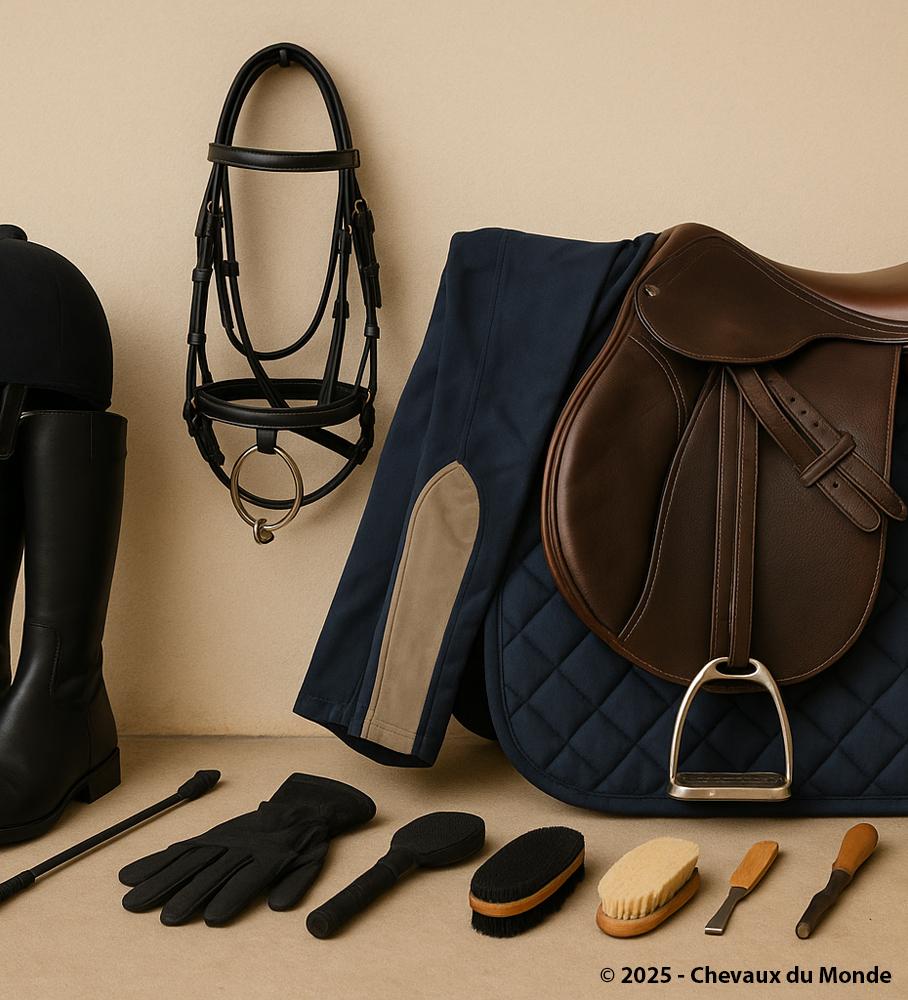
When acquiring a first horse, a complete set of equipment needs to be budgeted for. The saddle is the most significant item: £300 to £3,000 new, or £150 to £800 secondhand. A complete bridle costs £80 to £300. Headcollar and lead rope together run £35 to £120. A saddle pad costs £30 to £150. Leg protection (boots or bandages) runs £30 to £120. Rugs (stable, turnout, waterproof) cost £60 to £200 each. Grooming kit (brushes, curry comb, hoof pick, bucket) runs £50 to £100.
Overall, the starting equipment budget sits between £800 and £5,000 depending on quality and discipline.
Annual Replacement
Equipment wears out, breaks and gets lost. Budget around £200 to £500 per year for replacement items and consumables such as leather care products, fly masks and stable bandages.
Lessons and Coaching
If you are not an experienced rider, or simply want to improve, lessons represent a significant expense. A group lesson at a riding school costs £20 to £40 per session. A private lesson runs £40 to £80. An intensive clinic of 3 to 5 days costs £150 to £400.
For a rider taking one lesson per week, budget £80 to £160 per month for group lessons, or £160 to £320 for private sessions.
Competition: A Budget Category of Its Own
If you want to enter competitions, costs add up quickly. An annual federation membership runs £80 to £150. Each competition entry costs £20 to £80. Transport costs £0.50 to £1.50 per kilometre if you own a trailer, or £80 to £200 per day for hire. A rider entering around ten competitions per year can easily spend an additional £1,500 to £3,000 on this category alone.
Budget Summary by Rider Profile
Profile 1 — Leisure rider, horse in full livery in a rural area
Adding up full livery (£4,800 to £7,200), veterinary costs including routine care and contingency (£600 to £1,200), farriery (£600 to £900), equipment replacement (£300 to £500) and one lesson per week (£960 to £1,920), the total annual budget sits between £7,260 and £11,720, or £605 to £977 per month.
Profile 2 — Leisure rider, horse kept at home
For owners keeping their horse on their own property, the main costs are hay and hard feed (£1,200 to £2,500), bedding (£600 to £1,200), veterinary care (£600 to £1,200), farriery (£600 to £900) and equipment replacement (£300 to £500). The total annual cost ranges from £3,300 to £6,300, or £275 to £525 per month — not including the initial infrastructure investment.
Profile 3 — Amateur sport rider, horse in full livery in a high-cost area
This is the most expensive profile. Livery alone accounts for £8,400 to £14,400 per year. Adding veterinary care (£800 to £1,500), farriery (£800 to £1,200), equipment (£500 to £1,000), coaching (£1,920 to £3,840) and competitions (£1,500 to £3,000), the total annual envelope sits between £13,920 and £24,940, or £1,160 to £2,078 per month.
Costs People Forget to Budget For
Transport
If you do not own a trailer or horsebox, every journey — to a specialist vet, a competition or a new yard — is an extra expense. Hiring a trailer costs £80 to £200 per day. Buying a secondhand trailer starts at £3,000 to £8,000, with maintenance, insurance and the relevant towing licence on top.
The Horse's Retirement
A horse can live to 25 or 30 years old. Past a certain age, they can no longer be ridden but continue to require the same basic care. Some owners place their retired horse with a specialist facility; others find a cheaper livery arrangement. The question of retirement and its costs is one that needs to be thought through from the start.
The Rider's Own Wellbeing
Falls are part of riding. Quality protective equipment (a certified helmet and a body protector), personal accident insurance, and sometimes physiotherapy or osteopathic treatment for the rider are all expenses worth factoring into the overall picture.
Tips for Keeping Costs Under Control
Negotiating your livery rate is a first avenue worth exploring: some yards offer reduced rates in exchange for helping with daily tasks such as mucking out or feeding, which can save £50 to £150 per month.
Buying secondhand equipment is another highly effective approach. The secondhand tack market is very active, and it is possible to find quality saddles, rugs and equipment at half the retail price through specialist platforms or general secondhand marketplaces.
Sharing costs through part livery or co-ownership allows you to split expenses while still enjoying regular access to a horse.
Building a dedicated savings buffer from day one is essential: setting aside £100 to £150 per month into a ring-fenced account means unexpected veterinary bills do not catch you off guard.
In Summary: Can You Afford It?
Owning a horse represents a minimum financial commitment of £400 to £600 per month in the most economical setups, and can easily exceed £1,500 per month for a sport rider in a high-cost area.
This is not a reason to give up on the dream, but it is a reason to prepare carefully. An underestimated budget is one of the leading causes of horses being given up, with sometimes serious consequences for the animal.
The good news is that intermediate solutions exist. Part livery, co-ownership or taking on a loan horse allow you to live your equestrian passion fully without bearing the entire financial burden alone.