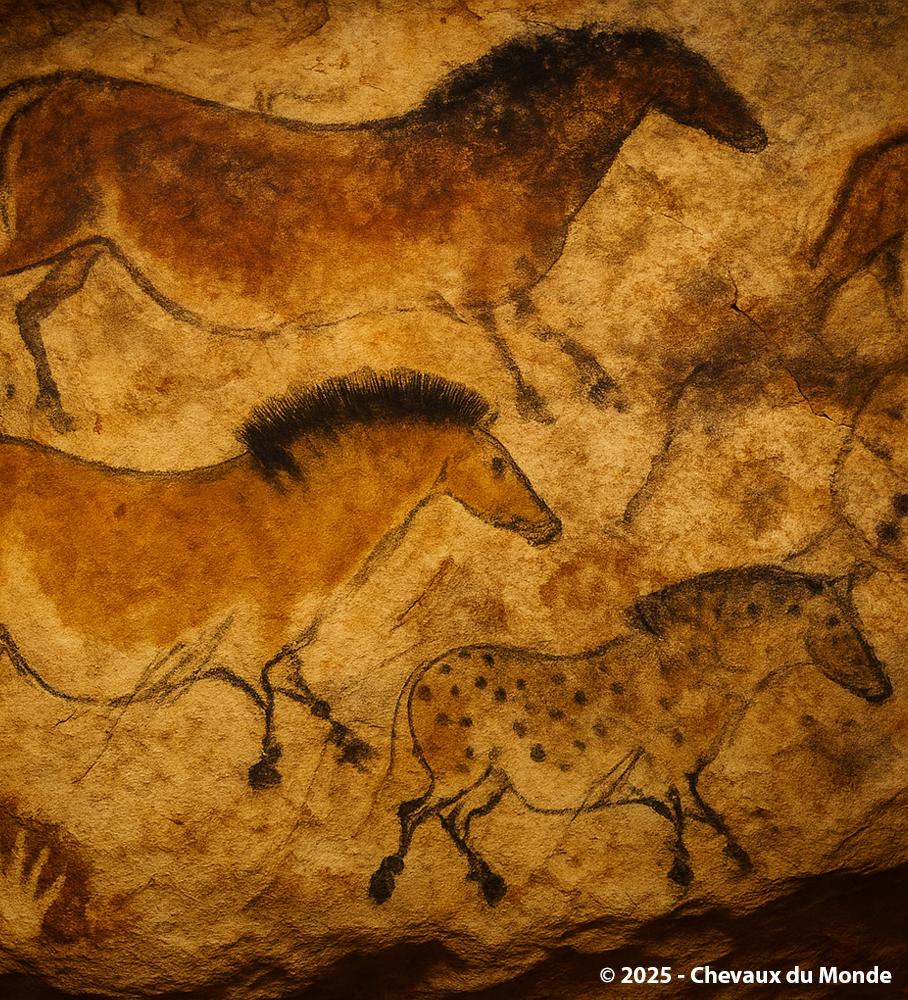
Since Antiquity, the horse has held a central place in the human imagination. A symbol of strength, freedom, and sometimes mystery, it appears throughout myths, religions, and the foundational narratives of many civilizations.
Its presence in dreams is therefore far from trivial. It reflects deep dimensions of human experience: vital energy, self-mastery, and the relationship between the material world and the spiritual realm.
But what does it really mean to dream about a horse?
Is it the expression of an inner drive, a symbolic message, or the echo of a cultural unconscious?
Drawing on Western, Eastern, shamanic, and religious traditions, this article offers a cross-cultural interpretation of the horse as a universal dream symbol, rooted in history yet open to personal meaning.
What Does It Mean to Dream About a Horse?
In general, dreaming about a horse reflects an inner dynamic linked to power, freedom, and movement.
The horse often represents what is both instinctive and controllable within us. It may symbolize:
- an expanding inner strength when the horse is free or in motion
- a channeled energy when it is ridden or guided
- an inner imbalance when it appears injured, aggressive, or uncontrollable
The horse’s color, behavior, and context are also essential:
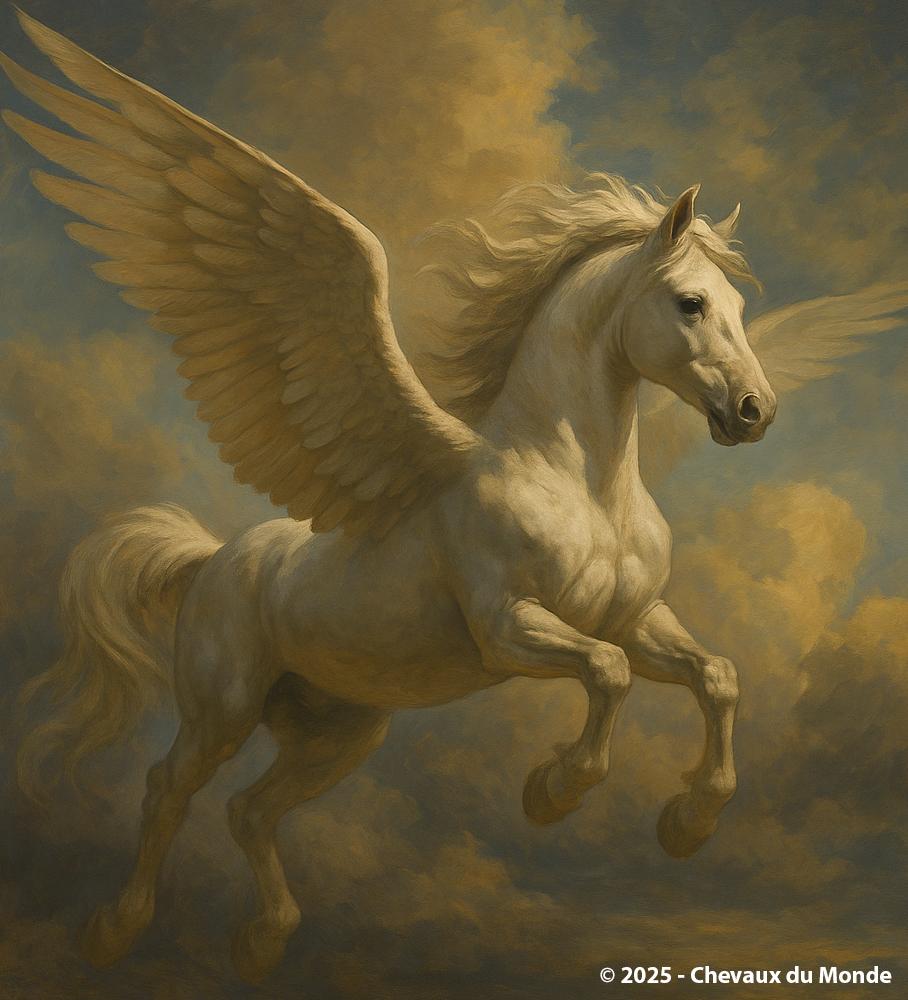
- a white horse often represents purity, transcendence, or spiritual guidance
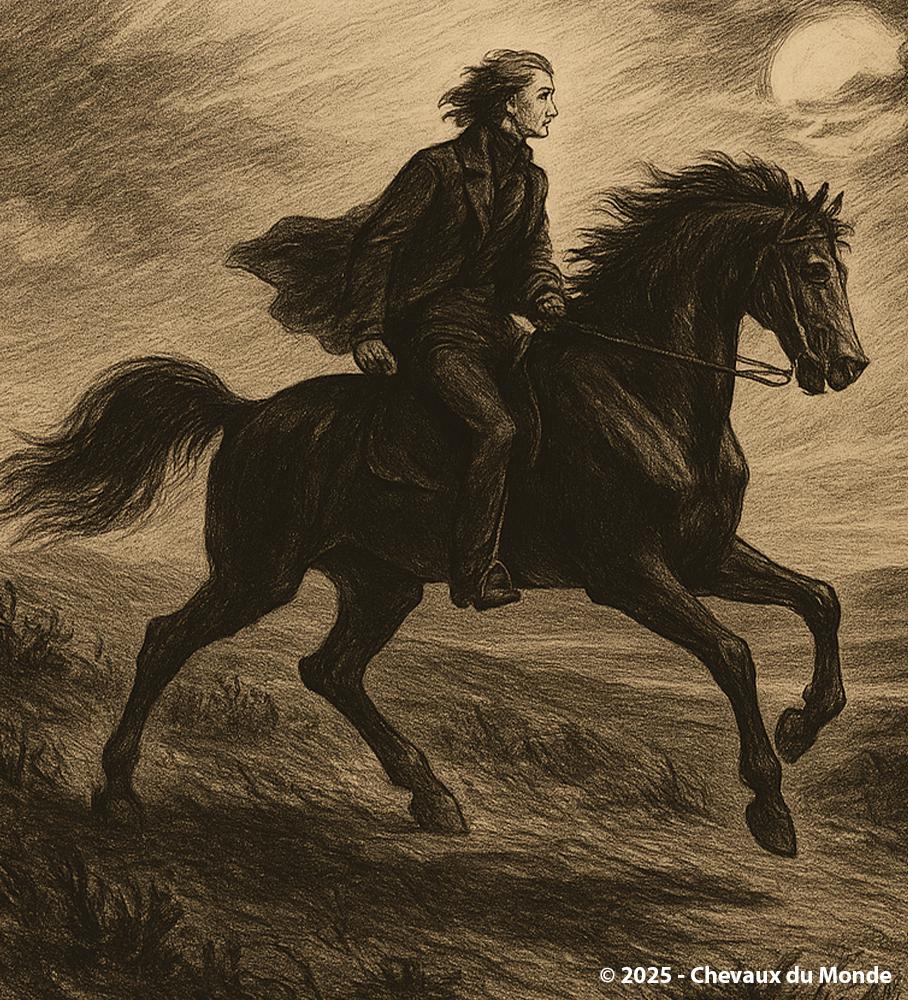
- a black horse relates to the unconscious and hidden emotions
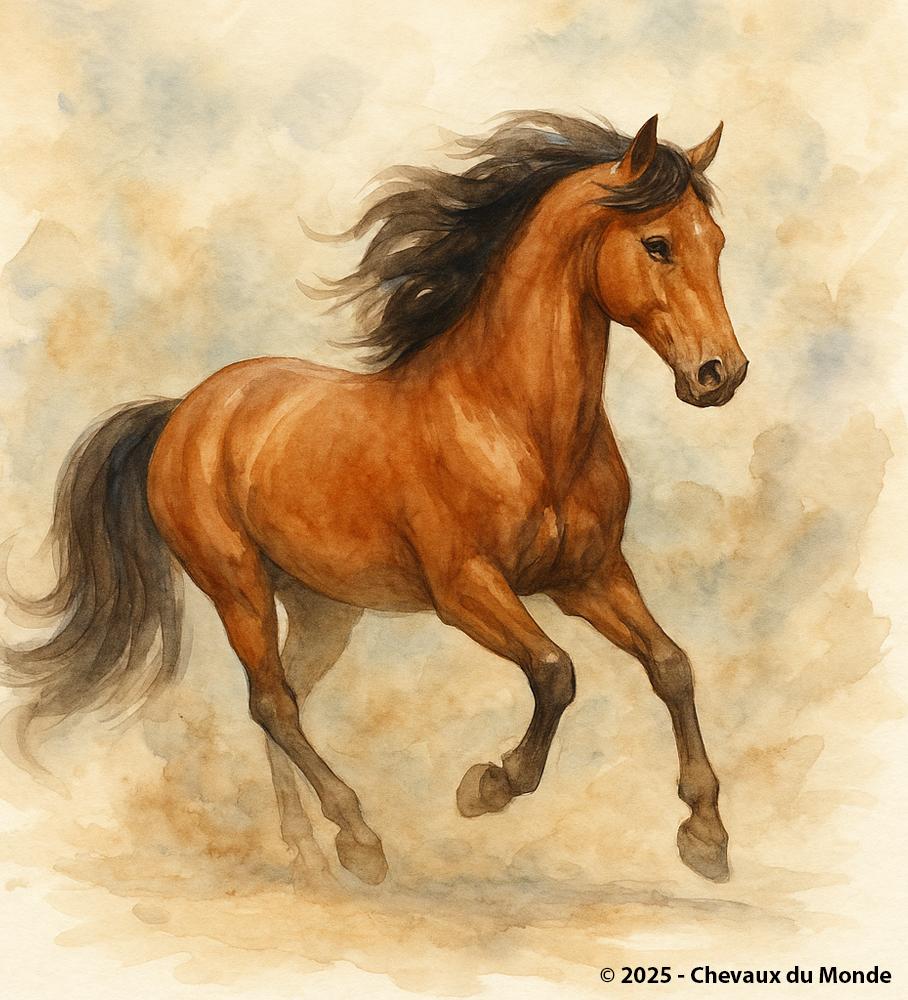
- a galloping horse reflects a powerful life force or a desire for change
However, these meanings become clearer when viewed through cultural perspectives.
The Horse in Dreams in Western Traditions
In Western thought, the horse is shaped by both classical heritage and psychoanalysis.
According to Sigmund Freud, the horse may represent instinctual drives, particularly those linked to desire and suppressed impulses.
From a broader symbolic perspective:
- the horse embodies a vital force that must be understood and guided
- the rider represents reason, capable of directing that force
- an uncontrollable horse reflects a tension between control and surrender
Christian traditions also present the horse as an ambivalent figure—both a symbol of power and a vehicle for spiritual journeys.
Eastern Symbolism: China, Japan, and India
In Asian cultures, the horse is closely tied to cosmic and symbolic systems rather than psychoanalysis.
In China, it represents success, perseverance, and social advancement. Dreaming of a horse in motion often signals future achievement.
In Japan, horses are seen as messengers of the gods (kami), symbolizing a connection with the spiritual world.
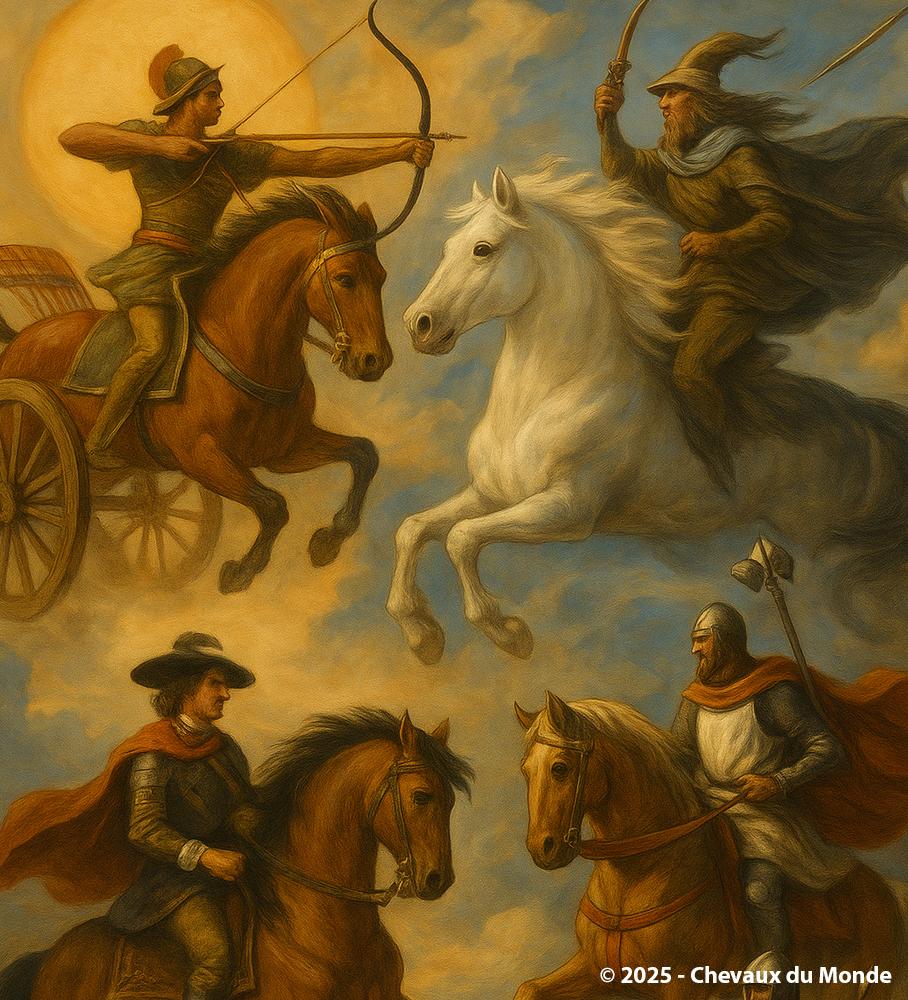
In India, the horse is linked to prana, the life force. The sun god Surya’s chariot, drawn by horses, reflects the horse as a cosmic force in motion.
The Horse in Shamanic Traditions
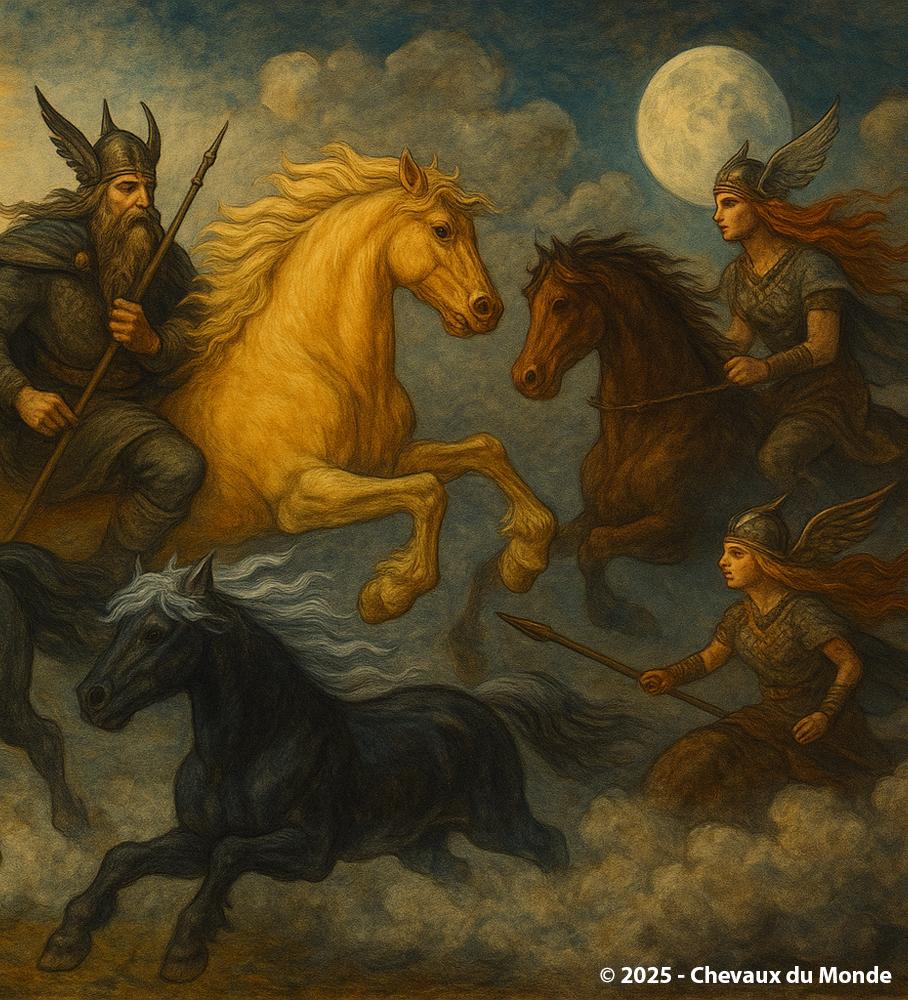
In shamanic cultures across Central Asia, Siberia, and the Americas, the horse plays a crucial role as a guide between worlds.
It is considered a psychopomp, capable of:
- carrying the soul across spiritual realms
- guiding the dreamer through inner journeys
- offering protection during symbolic or initiatory experiences
A winged or flying horse represents spiritual elevation, while a familiar horse may act as a personal spiritual ally.
In these traditions, dreams are not illusions but real spaces of interaction with the unseen.
Arab and Islamic Interpretations
In Arab and Islamic traditions, the horse symbolizes nobility, discipline, and spiritual elevation.
The figure of the Buraq, the Prophet’s celestial mount, illustrates the horse’s role as a bridge between earthly and divine realms.
In dreams:
- a noble horse reflects moral elevation
- a controlled horse symbolizes self-discipline
- an uncontrollable horse may indicate inner conflict or unrestrained desires
The horse becomes a metaphor for the relationship between the individual and their inner forces.
The Horse in African Dream Traditions
In some African cultures, particularly in the Sahel and North Africa, the horse represents power, prestige, and social identity.
In dreams, it may:
- signal a rise in status
- represent a protective force
- indicate an important life transition
In animist traditions, a white horse can be seen as a spiritual visitation or a protective presence.
Synthesis of Interpretations
Across cultures, recurring themes emerge.
The horse in dreams is commonly associated with:
- vital energy in motion
- inner power to be mastered
- the balance between instinct and consciousness
- a connection to the spiritual dimension
At the same time, it may reveal tensions between control and freedom, awareness and the unconscious.
Conclusion
Dreaming of a horse is never insignificant.
As a universal symbol, it embodies both instinctive strength and spiritual aspiration. It reflects the part of us that seeks to move forward, to evolve, and to break free.
Its meaning cannot be fixed: it depends on cultural frameworks as well as the dreamer’s personal experience.