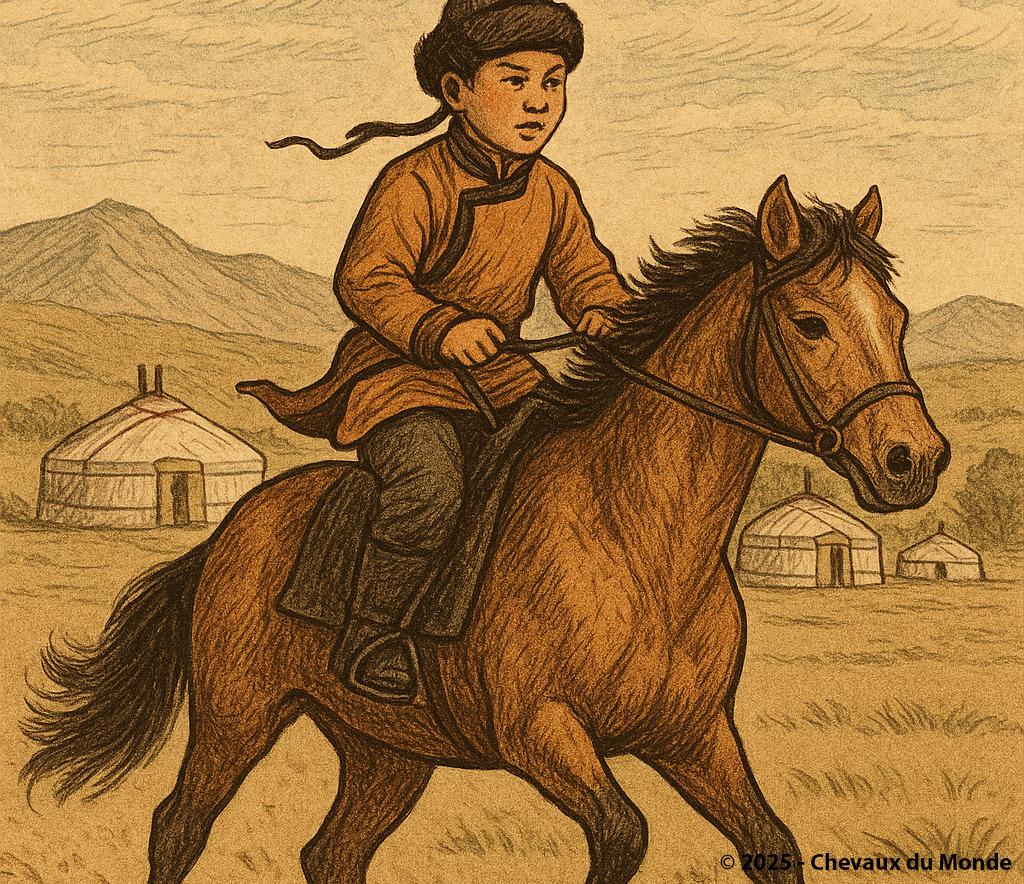
In the vast windswept stretches of the Mongolian steppe, one animal alone embodies the soul of a people: the horse. Tireless companion, sometimes wary yet always loyal, it is far more than a mount for the nomads. It is a vital ally, a spiritual inheritance, a symbol of identity. Let’s journey to meet these free-roaming horses, at the heart of one of the world’s oldest and most vibrant equestrian cultures.
A People Born on Horseback
In Mongolia, it is said that children learn to ride before they even learn to walk. And it’s no exaggeration: by the age of two or three, young boys already compete in their first races. Growing up to the rhythm of hooves is second nature. The horse is a means of transport, a work tool, a playmate, and a source of family pride.
Mongolian herders don’t raise horses to dominate them, but to understand them. They can read their movements, anticipate their reactions, and form a bond rooted in instinct. This ancestral closeness gives rise to a unique relationship, forged by centuries of nomadism and adaptation to the harsh climate of Central Asia.
Naadam: A Festival of Horses and Identity
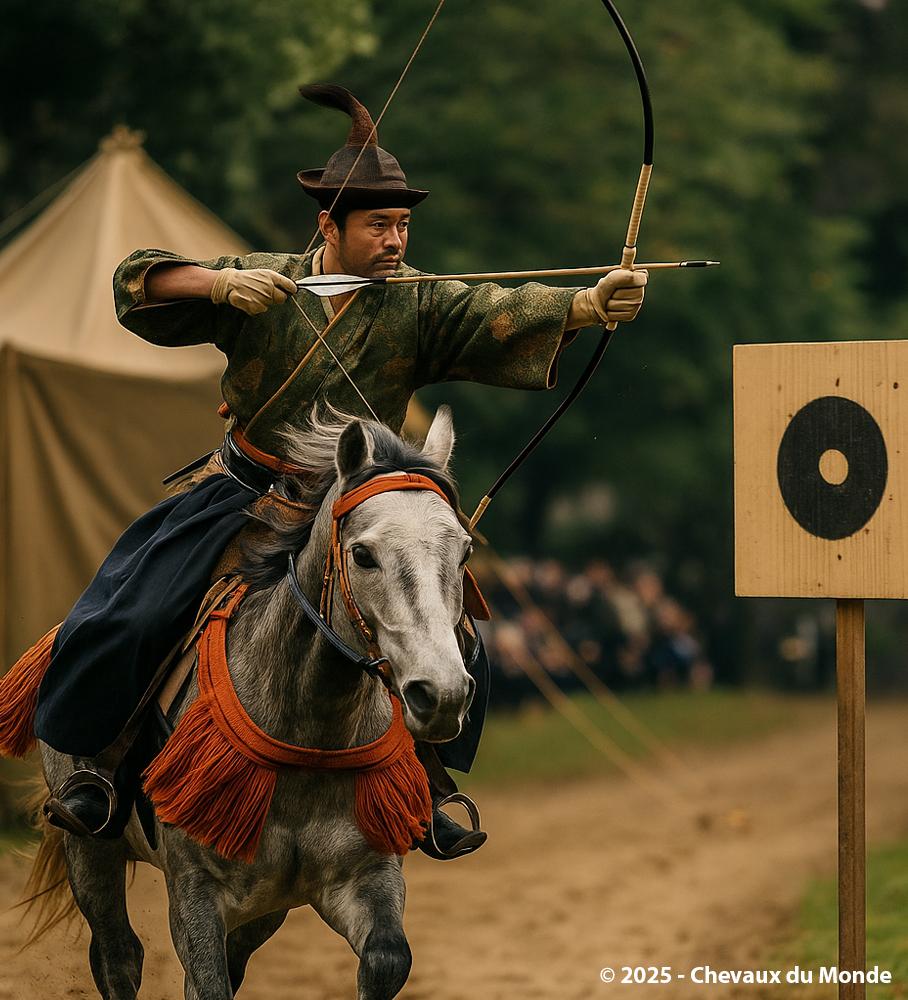
Every summer, during the national festival of Naadam, horses take center stage. This symbolic event combines horse racing, Mongolian wrestling, and archery—the "Three Manly Games" that anchor Mongolian heritage.
The races are for child jockeys, light and agile, who ride bareback over distances up to 30 kilometers. These are tests of endurance and intelligence, rather than pure speed. Blessing songs, ceremonial preparations, and reverence for the winners all reflect the spiritual importance of the competition.
A Hardy and Free-Roaming Horse
The Mongolian horse, small yet sturdy, survives extreme temperatures (–40 °C in winter, +30 °C in summer). It lives semi-wild all year round, roaming the steppes in small groups under the distant watch of herders.
This rugged lifestyle shapes a horse that is autonomous, resilient, and resourceful. Mongolian herders do not keep them in stables—they let them forage on their own, which strengthens both instinct and intelligence.
In appearance, the Mongolian horse is stocky, with thick hair and a dense mane often cut into a stiff brush. Its natural gaits are smooth, and it can walk for days on end without tiring.
Sacred Horse, Celebrated in Song
In Mongolian spirituality—shaped by both shamanism and Tibetan Buddhism—the horse holds a sacred place. It is seen as a link between worlds: earth, sky, and spirit.
Horses are honored in traditional songs known as urtiin duu, where their beauty, strength, and courage are exalted. Some horses, through lineage or bravery, are considered to be blessed.
Coat color symbolism also matters deeply: chestnut horses are often associated with solar energy, while black ones hold a more mystical, spiritual significance.
A Model of Harmony to Preserve
Today’s Mongolia is striving to maintain this delicate balance between tradition and modernity. Many herders still live in mobile yurts, follow the seasons, and uphold an age-old lifestyle.
Yet modern pressures—urban expansion, climate change, unregulated tourism—are putting this world at risk.
Preserving the Mongolian horse means more than saving a hardy breed: it is about safeguarding a living culture, a poetic and respectful relationship with nature.
In a world where horses are often reduced to sport or leisure, Mongolia reminds us that humans and animals can live together—at the pace of wind, seasons, and silence. The Mongolian horse, free and proud, continues to carve invisible paths through the steppe, guided by an ancestral memory that nothing seems able to erase.