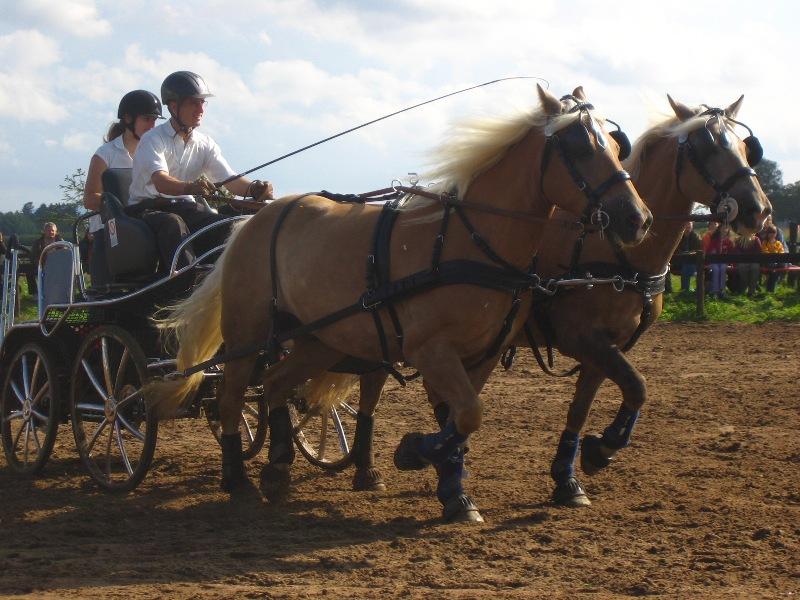
Haflinger pair in carriage driving competition. - CC BY 3.0 - Haflingermaus
Source : https://fr.wikipedia.org/wiki/Haflinger#/media/Fichier:SportHaflingerKutsche.jpg
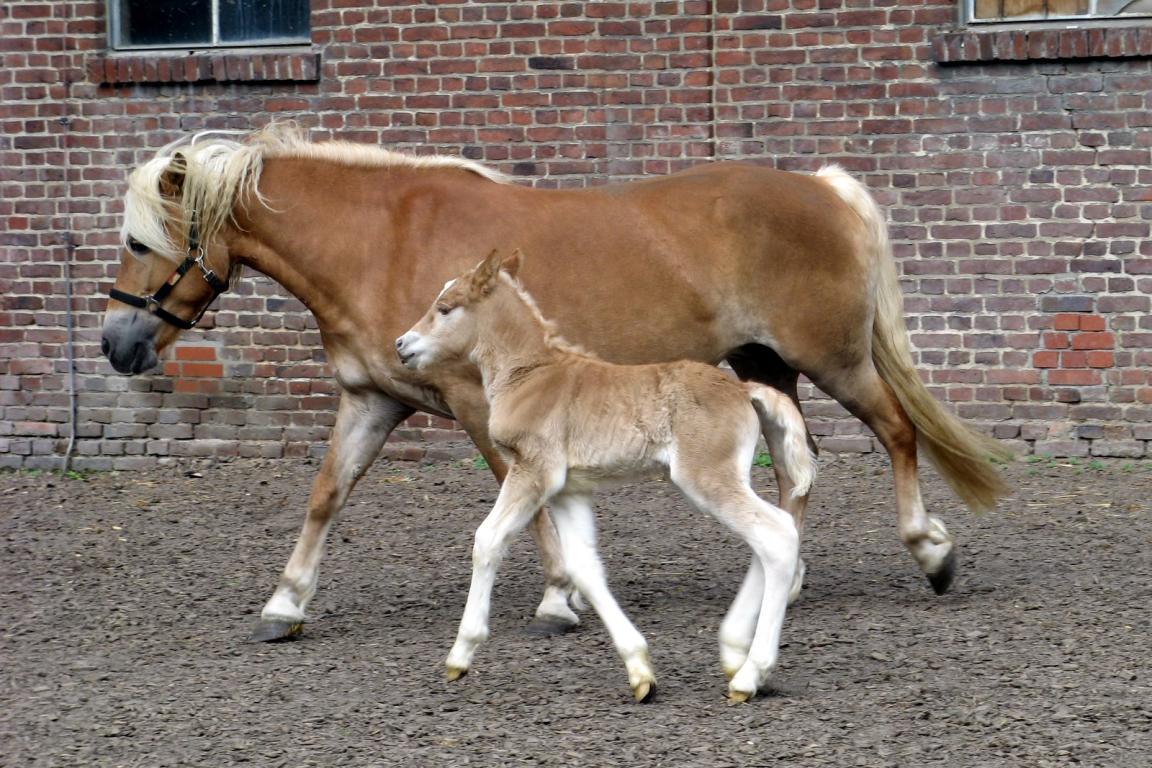
Haflinger mare with her foal. - CC BY-SA 3.0 - Matthias Walther
Source : https://fr.wikipedia.org/wiki/Haflinger#/media/Fichier:Haflinger_Mona_und_Auguste.JPG
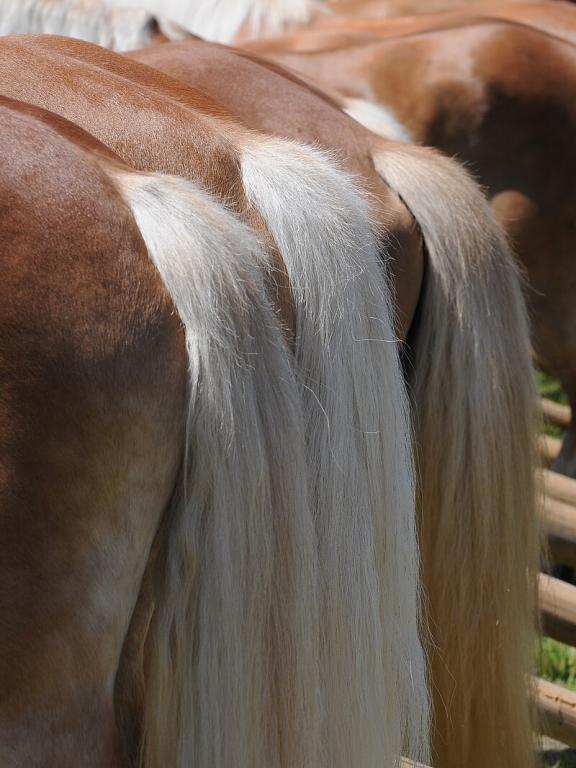
Detail of the croup. - CC BY-SA 2.5 - Böhringer Friedrich
Source : https://fr.wikipedia.org/wiki/Haflinger#/media/Fichier:Haflinger_Details_5.JPG
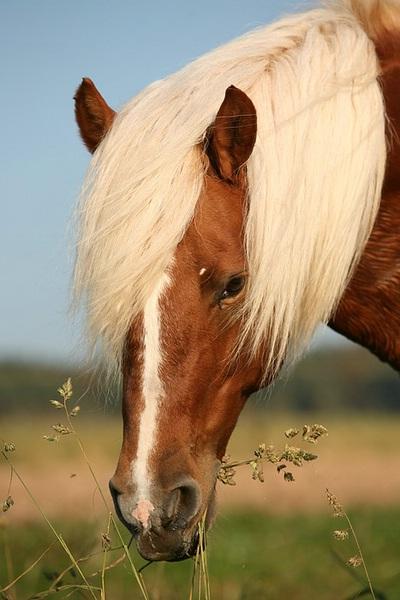
Detail of a Haflinger's head with a list, white mark clearly visible here. - CC BY-SA 3.0 - Hans-Jörg Hellwig
Source : https://fr.wikipedia.org/wiki/Haflinger#/media/Fichier:Co-pd-07-008.jpg
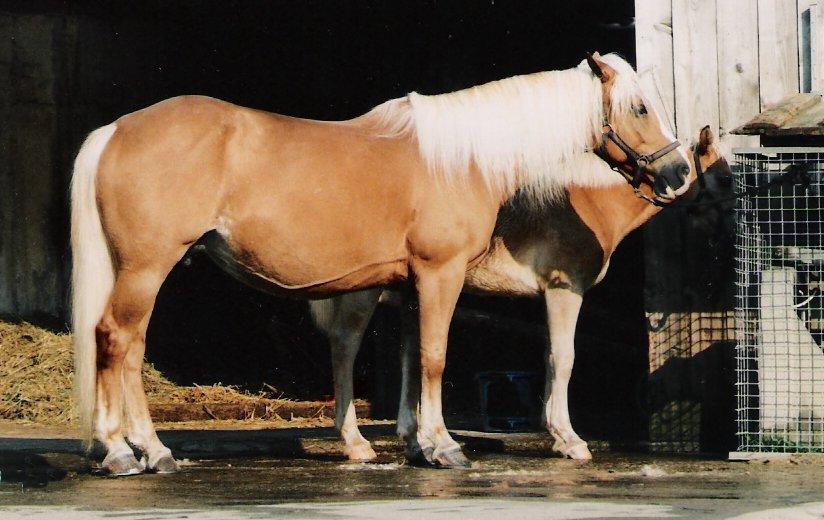
Golden Chestnut Haflinger - CC BY-SA 3.0 - Dominik Hundhammer
Source : https://fr.wikipedia.org/wiki/Haflinger#/media/Fichier:Atara.jpg
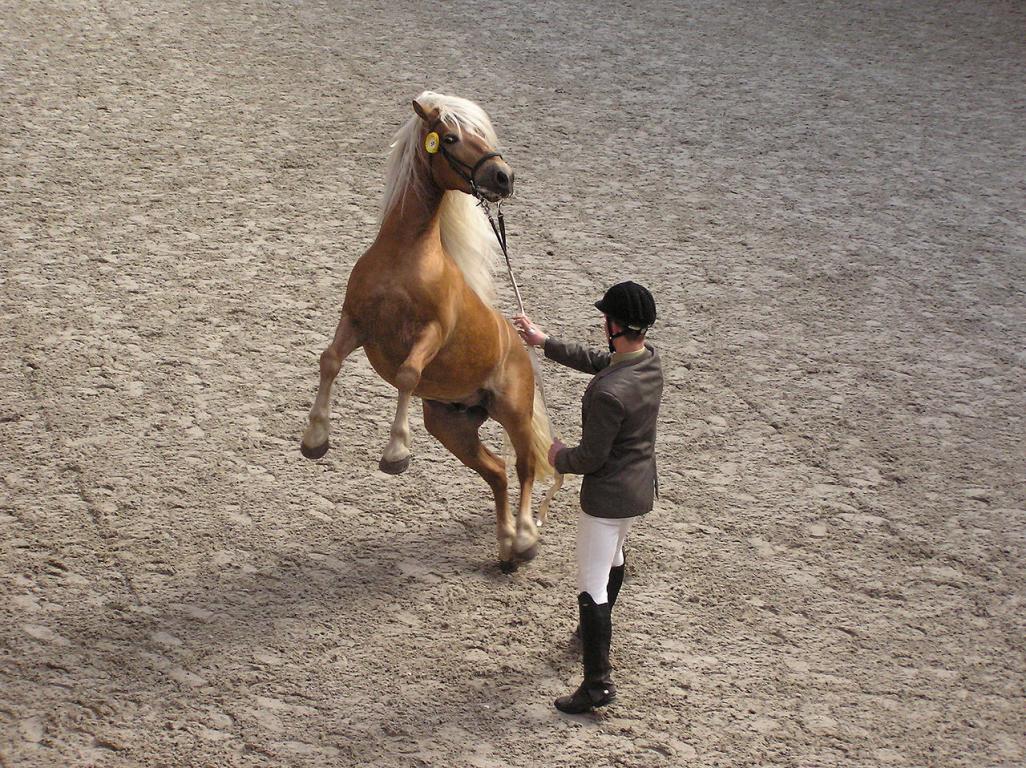
Calm and friendly by nature, the Haflinger nevertheless requires good training, like any horse. - CC BY-SA 3.0 - Karakal
Source : https://fr.wikipedia.org/wiki/Haflinger#/media/Fichier:Haflinger.JPG
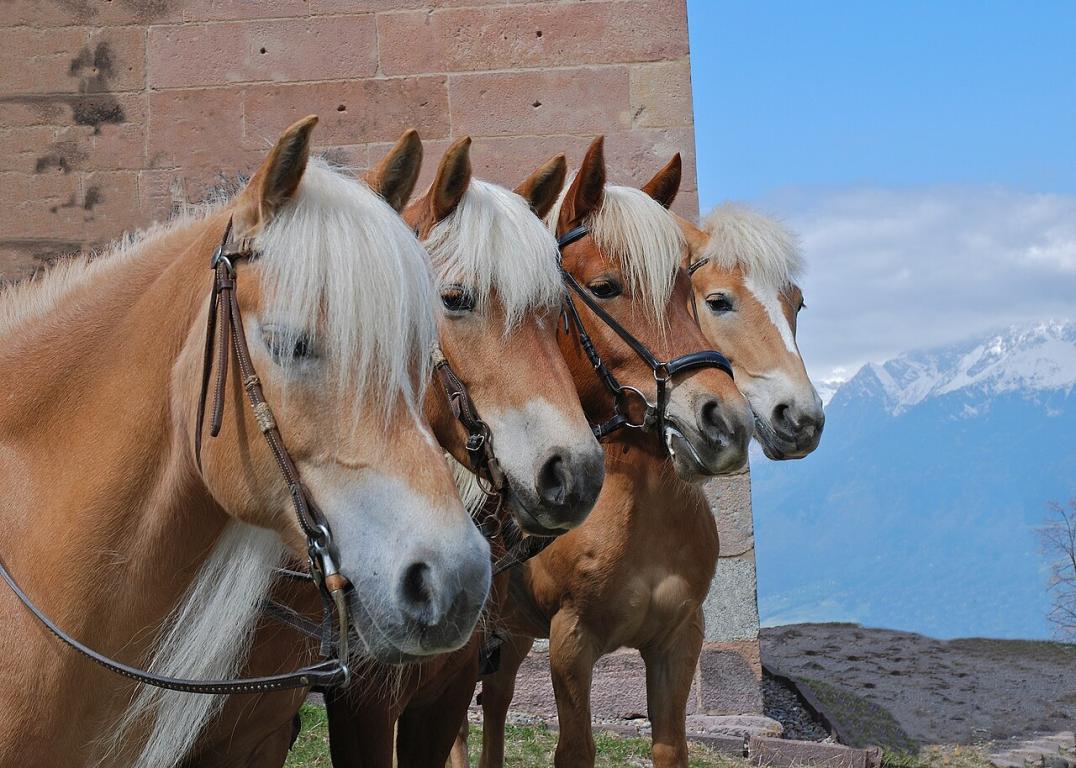
A group of Haflingers, clearly showing their similarities in coat and pattern. - CC BY-SA 2.0 - Julian Berry
Source : https://fr.wikipedia.org/wiki/Haflinger#/media/Fichier:Hafling_Horses.jpg
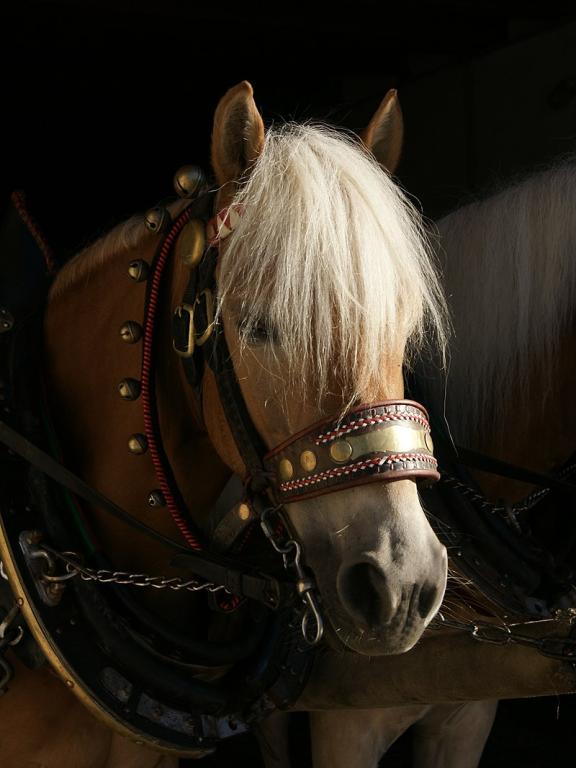
Haflinger equipped for traction, photographed in Au Rehmen. - CC BY-SA 2.5 - Böhringer Friedrich
Source : https://fr.wikipedia.org/wiki/Haflinger#/media/Fichier:Haflinger_Jungtier.JPG
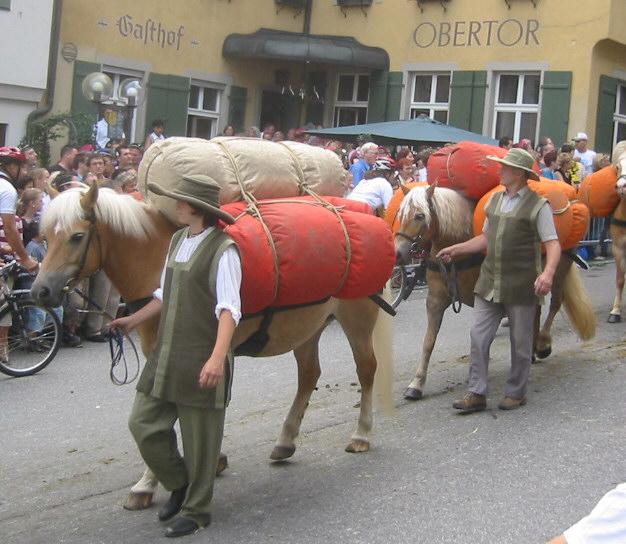
Haflingers used as pack horses in a medieval reenactment - CC BY 3.0 - Photo: Andreas Praefcke
The Haflinger takes its name from the village of Hafling (Avelengo in Italian), a small mountain village perched in the Alps of South Tyrol, now located in Italy. Hardy, frugal and versatile, this horse with its flaxen mane and golden chestnut coat is one of the most recognizable breeds in the world — and one of the most popular in Europe.
The entire history of the modern Haflinger rests on a single horse: the stallion 249 Folie, born in 1874 in Hafling. His breeder, Josef Folie, wanted to develop a horse that was sure-footed, light, and capable of working on mountain trails. To achieve this, he crossed a native Tyrolean mare with a half-Arab stallion, producing a golden chestnut foal of exceptional quality. Folie was then used for breeding, and all Haflingers in the world descend directly from him, without exception.
The Tyrolean Alps, with their steep terrain, altitude, and harsh climate, imposed a relentless natural selection. Only the strongest, most frugal, and sure-footed animals survived and reproduced. It is this environmental pressure, combined with rigorous human selection, that explains the remarkable consistency of the Haflinger type across generations.
The Haflinger presents a rare genetic characteristic: the entire global breed traces back to a single foundation stallion, 249 Folie. This unique origin implies a structural level of inbreeding, documented from the earliest genetic studies on the breed. The seven current male lines, all traceable back to Folie, make up the entirety of the breed’s global reproductive pool.
The seven foundation lines are designated by the letters A, B, M, N, S, ST and W. The A line (Anselmo), which nearly disappeared in the 1970s, is now the most important line in the world. It notably produced the stallion liz.200/T Abendstern, World and European Champion at Haflinger shows in 2000, 2003, 2005, 2008 and 2010.
A study published in 2024 in the journal Archives of Animal Breeding (Kulišťáková et al., Mendel University, Brno) analyzed 443 horses from five countries. It concluded that despite differentiation into three to four genetic subpopulations, the overall level of differentiation remains low, with a high degree of admixture among all populations, resulting from cross-importations between Austria, Germany, Italy and the Czech Republic.
Thanks to its temperament, which has been documented as an official breed standard criterion since the second half of the twentieth century, the Haflinger represents a unique genetic reservoir for the selection of horses that are both versatile and docile. It has also been used in equine cloning research: in 2003, the mare Prometea became the first cloned horse in the world, and the seventh cloned mammal after Dolly the sheep.
The Haflinger is generally considered a robust, hardy and resilient breed, shaped by centuries of selection in difficult mountain environments. Its life expectancy is remarkably long — between 25 and 30 years with good care, and some individuals exceed even that age. This longevity is one of the breed’s most appreciated characteristics, especially for owners looking for a long-term companion.
The Haflinger is an easy keeper — it extracts maximum energy from its feed, even when the diet is poor. While this quality was valuable in the Tyrolean mountains, it becomes a risk under modern conditions. Obesity is the breed’s main health threat and can lead to metabolic laminitis, a painful inflammation of the hoof directly linked to dietary imbalances. Strict weight management is therefore essential.
Individuals heavily worked in dressage or intensive driving may show tendon fragility, especially in the forelimbs. Gradual training progression and regular monitoring are recommended.
Sweet itch (summer seasonal recurrent dermatitis), an allergic reaction to insect bites, affects a significant proportion of Haflingers. It causes intense itching, hair loss, and skin lesions, especially during summer. Fly sheets, insect nets, and specific treatments can help manage this sensitivity.
Directly linked to the breed’s tendency to gain weight, equine metabolic syndrome can affect poorly managed Haflingers. It manifests as insulin resistance, fat deposits in characteristic areas such as the crest of the neck and around the tail head, and a high risk of recurrent laminitis.
Rare cases of hydrocephalus and dwarfism have been documented in the breed, linked to hereditary genetic defects. These cases remain uncommon thanks to controls imposed by the WHF and national breed associations.
The Haflinger is now recognized as one of the most widely used breeds in Europe for the commercial production of mare’s milk, particularly in Austria, northern Italy, Germany and Switzerland. Its availability, docile temperament that facilitates milking, and robustness make it the reference breed for this still confidential but rapidly growing production.
Unlike dairy cows, mares produce much smaller quantities. A Haflinger mare can yield between 1.5 and 2 liters of milk per day in a commercial milking system, with the rest of the production reserved for the foal, which must remain in daily contact with its mother for lactation to continue. At peak lactation, during the first month after foaling, production can reach 15 liters per day, but the greater part of that milk goes to the foal.
Mare’s milk stands out for its composition, which is close to human breast milk: low in casein, rich in lactose and albumin, and with a favorable fatty acid profile. These characteristics explain its growing interest in several fields. In cosmetics, it is used in creams, soaps, and skincare products for sensitive or atopic skin. In nutrition, it is consumed fresh or fermented as koumiss or mare’s milk kefir. In alternative and pediatric medicine, it is sometimes used as a partial substitute for infants intolerant to bovine proteins, under strict medical supervision.
Medieval writings describe oriental horses present in the Tyrolean Alps long before the official foundation of the breed. These animals, probably descended from horses abandoned by retreating Byzantine armies, are thought to have formed, over the centuries, a local population isolated by mountainous geography — a natural landrace, shaped by its environment before any organized human selection took place.
The official history begins on January 1, 1874, with the birth of stallion 249 Folie at Josef Folie’s stud in Hafling. This golden chestnut colt, out of a Tyrolean mare and a half-Arab stallion, gave rise to a new type of horse — and to an entire breed. His descendants were officially recorded from 1921 onward in the first Haflinger studbook, established in Zams, in North Tyrol.
The outcome of the First World War profoundly disrupted Haflinger breeding. South Tyrol, with its broodmares, was attached to Italy, while North Tyrol, with its stallions, remained Austrian. Visionary breeders quickly organized cross-border exchanges to preserve the breed: mares were exported to Austria, while stallions were made available to Italian breeders.
In the 1930s, many Haflingers were sold to the Austrian army for mountain transport of equipment. During the Second World War, the breed was massively requisitioned by the military to supply positions at high altitude. Paradoxically, this period of intense mechanization slowed the breed’s development, but also spared it from the extinction that threatened other, less visible breeds.
After the war, the Tyrolean Haflinger Breeding Association was restructured in 1946 under a rigorous breeding program. The uncontrolled crossbreeding of previous decades was abandoned in favor of a closed studbook, dedicated to breed purity. It was at this time that the modern Haflinger type — taller, more rectangular and lighter — was fixed, while preserving the ancestral qualities of hardiness and temperament.
The Haflinger has a unique place in scientific history. In 2003, the mare Prometea, born in Cremona, Italy, became the first horse ever cloned, and the seventh mammal cloned in the world after Dolly. Prometea was a Haflinger. She proved fertile and herself gave birth five years later to the stallion Pegaso. This breakthrough opened new prospects for preserving the genetic material of geldings or deceased horses.
On July 5, 2019, in Mannheim, Germany, 132 Haflinger horses took part in the largest quadrille ever performed, entering the Guinness World Records. This event illustrates better than anything the breed’s worldwide popularity and consistency of type.
The Haflinger is universally recognized for its calm, docile and willing temperament, to the point that these behavioral qualities became an official breed standard criterion during the second half of the twentieth century. This is unusual in the world of horse breeding, as few breeds have made temperament such a formalized selection criterion.
Beneath its sturdy appearance and modest size, the Haflinger possesses generous energy and a real willingness to work. It shows a natural readiness in the execution of exercises, which explains its popularity in both dressage and driving. Its gaits are rhythmic, energetic, and naturally light in the forehand, qualities appreciated in modern sport disciplines.
Often described as the “horse for the whole family,” the Haflinger adapts to very different riders: children, adults, beginners and sport riders. Its intermediate size (between 138 and 155 cm) and sturdiness allow adults of average size to ride it comfortably. It develops close bonds with its owner and generally copes well with group living.
Whether in breeding environments or at pasture, the Haflinger is a sociable horse, generally getting along well with other horses. Its placid temperament limits conflict behavior. Considered an “easy keeper,” it suits owners with limited experience, provided its weight is monitored carefully, as it can quickly become overweight.
Although the breed is now present on all continents, Austria remains the global nerve center of Haflinger breeding. Fohlenhof Ebbs, the Tyrolean national stud located in the Inn Valley, is recognized as the breed’s world breeding headquarters. It houses the reference stallions and organizes official inspections. The Tyrol–Vorarlberg–Salzburg region alone accounts for more than 50% of the Austrian Haflinger population.
From the 1950s onward, the breed was exported on a large scale. The United States received its first Haflingers in 1958, imported by Tempel Smith for his stables in Illinois. The World Haflinger Federation (WHF), founded in 1976, now oversees 23 member associations in 19 countries (2024 data). In 2005, the global population was estimated at nearly 250,000 individuals, including around 45,000 mares bred annually by 2,000 stallions.
A notable point is that The Livestock Conservancy removed the Haflinger from its priority conservation list, a sign of exemplary demographic recovery. The breed, which had experienced severe genetic pressure after the First World War, managed to recover thanks to a strict breeding policy and effective international commercialization.
The Haflinger was long used by armies for transport in mountainous terrain. The Austrian army still uses it today as a pack horse on terrain inaccessible to motorized vehicles. An attempt to establish the breed in India at the end of the twentieth century failed, as these Alpine horses were unable to adapt to the hot climate of the subcontinent.
The Haflinger enjoys strong international demand. Its distinctive beauty, docile temperament, and versatility make it an ideal breed for a very broad range of users, from children to adults, and from beginners to sport riders. Its positive image in the media, breed shows and cinema further strengthens its global visibility.
Despite the reassuring appearance of global population numbers, the scientific community remains vigilant. Managing inbreeding in a breed with a single founder remains a permanent issue. Mean kinship selection is recommended by geneticists to reduce the inbreeding rate from one generation to the next, without sacrificing the breed’s morphological and behavioral qualities.
Modern selection is pushing the Haflinger toward taller, lighter models, better suited to contemporary sport disciplines. There is growing interest in dressage, show jumping, and eventing, where well-selected Haflingers are beginning to stand out against traditional sport horse breeds. In driving, however, the breed remains a benchmark.
Thanks to its exceptional temperament, the Haflinger is now one of the breeds most widely used in equine-assisted therapy in many countries. Its intermediate size, gentleness and robustness make it an ideal partner for children, people with reduced mobility, and therapeutic programs. Equestrian tourism also represents a fast-growing outlet, particularly in the Austrian and Italian Alps.
Né le 01/01/2005
A remarkable Haflinger mare in French driving competitions, both in pairs and solo, Folie has won multiple medals in regional and national events. Known for her willing temperament, consistency, and typical beauty (golden chestnut coat with flaxen mane and tail), she has also taken part in numerous demonstrations and public events, proudly representing the breed.
Nom : Haflinger Pferdezuchtverband Tirol
Site : http://www.haflinger-tirol.com
Date de création : 1976
