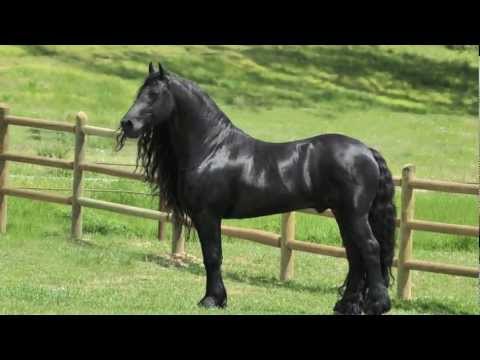
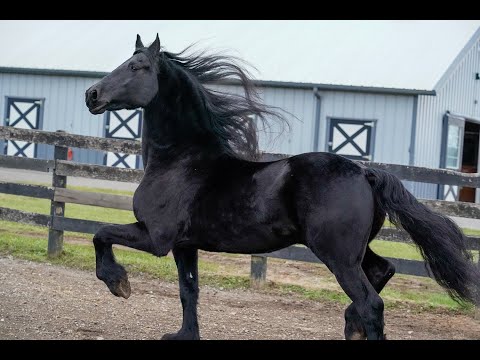
The Friesian, an iconic breed from the Netherlands, stuns with its jet-black coat, flowing mane, and remarkable talent in driving and dressage. Discover this exceptional horse.
Continent: Europe
Country: Netherlands
Weight: 500 – 700 kg
Height: 155 – 170 cm
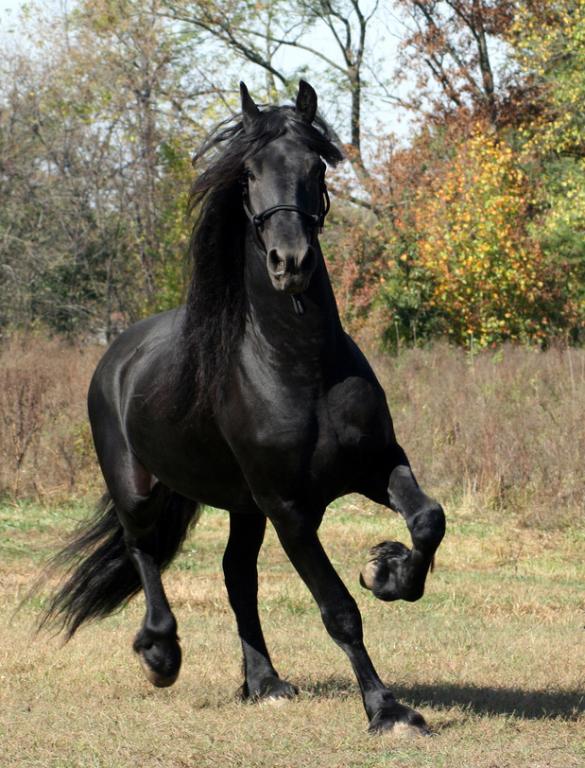
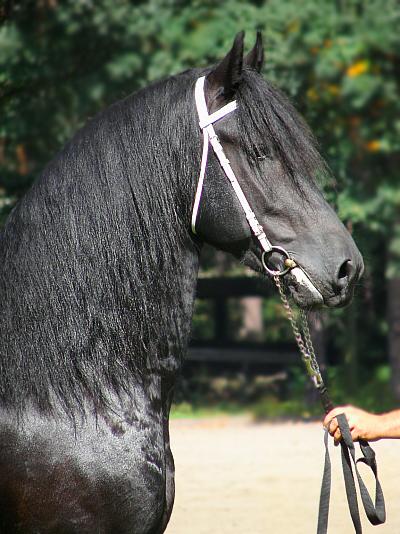
Country of origin: Netherlands, province of Friesland, in the northern part of the country along the North Sea.
The Friesian horse is one of the oldest horse breeds in Europe, directly descended from the native horses of Friesland. As early as the 4th century, historical records mention Frisian troops riding their own horses. Roman chronicles already describe strong black horses from this region, used by legions during their campaigns in Northern Europe.
The Friesian horse is more than just a breed — it is a cultural symbol deeply rooted in Dutch identity. Its image appears in 17th-century Flemish paintings, medieval frescoes, and regional coats of arms.
Even today, it represents the pride of the people of Friesland, who have always fought to preserve their iconic horse.
The Frisian landscape — flat, humid, and exposed to sea winds — has shaped a horse that is powerful, hardy, and enduring, capable of working in harsh conditions.
This combination of natural selection and strict human breeding explains the remarkable consistency of the Friesian type over centuries.
Although Friesland remains its traditional home, Friesian breeding has expanded across the Netherlands, under the supervision of the KFPS studbook, which ensures genealogical tracking and strict selection.
Many specialized, often family-run farms continue to preserve the breed with rigorous inspection standards.
Since the 20th century, the breed has spread worldwide:
In 2014, The Livestock Conservancy removed the Friesian from its conservation priority list, reflecting a successful recovery.
From only 500 individuals in the mid-20th century, the population has grown to 60,000–70,000 registered horses worldwide, representing about 7% of the Dutch horse population.
Despite global expansion, the Netherlands remains the central authority for breeding and selection.
Only horses approved under Dutch standards can be registered in the KFPS studbook, ensuring the preservation of the breed’s type.


The Friesian horse represents a rare and ancient genetic lineage, directly derived from the native horses of Friesland.
Its relatively isolated development, without the introduction of Thoroughbred blood (unlike most European sport horses), has allowed it to retain distinctive traits:
Genetic studies confirm that the modern Friesian is a genetically distinct breed, largely isolated from other Dutch horse populations.
It originates from a landrace, meaning a population shaped primarily by environmental and cultural adaptation, rather than intensive artificial selection.
Over the centuries, the Friesian has played a significant role in the development of several European and American breeds:
The Friesian population remains relatively limited, with around 70,000 registered horses worldwide and fewer than 100 approved stallions — an extremely small breeding base.
This genetic concentration leads to a high risk of inbreeding, confirmed by a study published in the Journal of Animal Breeding and Genetics (November 2024).
The KFPS studbook implements strict lineage management to maintain genetic balance.
The Friesian horse is one of the oldest horse breeds in Europe, originating from the province of Friesland in the northern Netherlands. Its roots go back to Antiquity: Roman writings already mention strong black horses from this region, reportedly used by the armies of Julius Caesar. By the 4th century, Frisian troops were riding their own horses in conflicts against the Romans.
During the Middle Ages, the Friesian gained a strong reputation as a war horse. Its power, proud carriage, and willing temperament made it a desirable mount for heavily armed knights. Among the historical figures sometimes associated with Friesian-type horses is William the Conqueror, whose illustrations depict a horse strongly resembling the breed. Its elegant yet energetic movement also made it well suited to tournaments.
In the 17th century, during the Spanish presence in the Netherlands, Friesian horses were crossed with Andalusian horses. These Iberian influences refined the breed’s silhouette, strengthened its elevated action, and enhanced its head and neck carriage — traits still visible today.
It was also during this period that the Friesian became popular in royal riding schools and European equestrian carousels.
The modernization of agriculture and the rise of heavier draft horses caused a sharp decline in the breed during the 19th century. In the 1800s, Friesians were crossed with trotters in an attempt to make them lighter and faster, which weakened the original type.
By 1902, only 15 approved stallions remained in Friesland.
In response to this threat, dedicated breeders founded the Friesch Paarden-Stamboek (FPS) in 1879, the oldest studbook in the Netherlands. This initiative helped save and structure the breed by imposing strict approval standards and stopping type-diluting crosses.
In 1907, the studbook was renamed Friesch Paarden Stamboek, and in 1943, non-Friesian horses were permanently removed from the register, contributing to what would later become the KWPN.
At the beginning of the 20th century, the breed remained in critical condition: in 1913, only 3 approved stallions were left. Paradoxically, the Second World War slowed agricultural mechanization and gave the breed a temporary reprieve.
The Strassburger Circus, which fled Nazi Germany to the Netherlands, also helped reveal the Friesian’s spectacular qualities to a wider audience.
On July 5, 2019, in Mannheim, Germany, 132 Friesian horses took part in the largest quadrille ever performed, setting a Guinness World Record and illustrating the breed’s worldwide popularity.
The Friesian horse is widely known for its calm and docile character, which makes it a valued partner for both amateur and professional riders. Its sensitivity and responsiveness make it attentive and generally easy to train when handled with respect.
Behind its majestic look, the Friesian has generous energy and a genuine willingness to work. It often shows a natural desire to perform, which explains its popularity in dressage, where it displays powerful, elevated action, and in driving, where it impresses with its dynamism and presence.
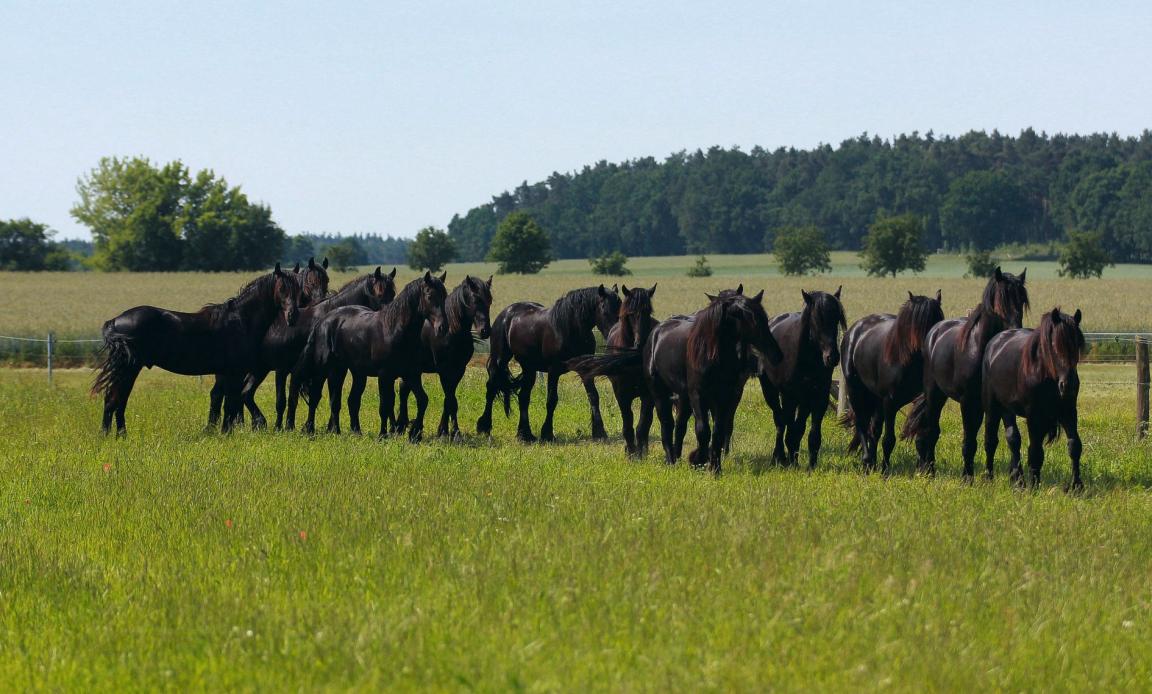
In breeding environments as well as at pasture, the Friesian is generally a sociable horse that gets along well with other horses. Its calm disposition tends to reduce conflict, making it easier to integrate into a herd.
The Friesian is often described as a loyal horse that forms strong bonds with its rider or caretaker. This relational quality, combined with its reliability, makes it a trusted companion.
Despite its imposing size, the Friesian is often better suited to intermediate riders than to complete beginners — not because of its temperament, but because of its specific care requirements, including intensive grooming, health monitoring, and its relatively late maturity.
One of the main priorities for the future of the Friesian horse is the conservation of its genetic heritage. The FPS studbook ensures that inbreeding is avoided by broadening the genetic base through rigorous selection and careful monitoring of bloodlines. This management is essential to guarantee the health and vitality of the breed.
The Friesian is experiencing growing popularity worldwide, particularly in the United States, Germany, and Scandinavia. This international demand provides sustainable economic development for breeders, while spreading the breed far beyond its native land.
An increasing number of Friesians are being selected for high-level dressage, thanks to their expressive gaits and impressive presence. Although sometimes less competitive than certain warmbloods, they captivate with their elegance and charisma. Their strong presence in driving, both sport and leisure, also reinforces their role in international competitions.
Current trends highlight horses that are both spectacular and versatile. The Friesian fits these expectations perfectly, combining beauty, strength, and docility. Many projects aim to promote its use in equestrian shows, tourism, and cinema, where it remains highly sought after.
Although the Friesian appears robust, the breed has an average life expectancy of around 16 years, which is significantly shorter than that of many other horse breeds, often living 25 to 30 years. Some well-managed individuals can still reach 25 to 30 years of age.
This fragility is closely linked to a limited genetic pool and decades of intensive inbreeding, which have contributed to several serious hereditary disorders.
Aortic rupture is the most alarming and breed-specific condition in the Friesian. Unlike in other breeds, where rupture usually occurs at the aortic root, in Friesians it occurs consistently at the aortic arch near the ligamentum arteriosum — a unique location suggesting a genetic connective tissue defect.
Three clinical scenarios are possible:
The median age of onset is only 4 years. Aortic rupture accounts for about 24% of deaths in Friesians. The breed is also the only animal species currently known in which an aortopulmonary fistula is regularly observed.
Hydrocephalus is a serious inherited disorder causing an excessive accumulation of cerebrospinal fluid in the brain. Affected foals are born with an abnormally enlarged, rounded head. This condition is genetically linked to chondrodysplasia, itself associated with dwarfism.
Friesian dwarfism produces foals with abnormally short limbs, while the head and body may appear nearly normal in size. Typical signs include hyperextended hocks and long, narrow hooves.
In the past, dwarf mares were sometimes used for breeding — a practice now prohibited by the KFPS.
Megaesophagus is a permanent enlargement of the esophagus, which loses its ability to move food efficiently to the stomach. Linked to collagen abnormalities characteristic of the breed, it can result in weight loss, malnutrition, and aspiration pneumonia.
Chronic progressive dermatitis, sometimes referred to as a greasy heel-type condition, affects the back of the pasterns beneath the feathering. The lesions tend to thicken, ulcerate, and often respond poorly to treatment.
One study found that 18% of Friesians show hypersensitivity to insect bites, commonly known as sweet itch.
Friesian mares have a relatively high rate of retained placenta after foaling, a condition that can lead to laminitis and septicemia if not treated rapidly.
The KFPS requires mandatory genetic testing for all breeding stallions in order to identify carriers of the mutations responsible for dwarfism, hydrocephalus, and distichiasis. Strict veterinary controls are also required for breeding approval.
Practical recommendations include:
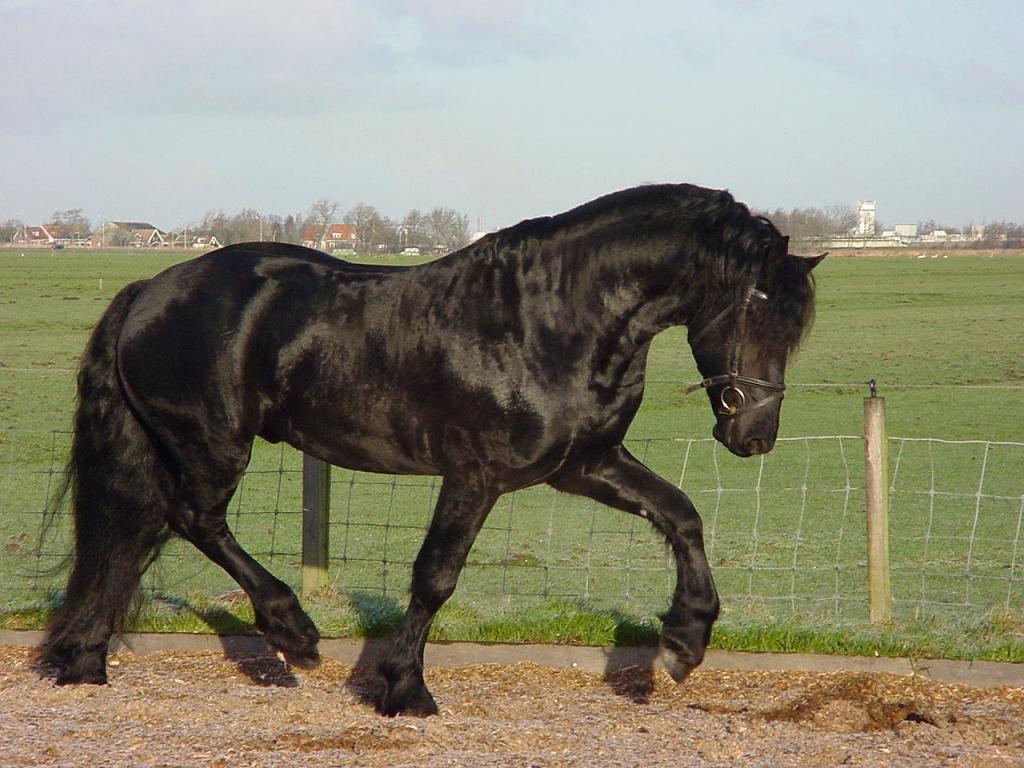
The Friesian is especially renowned for its powerful, rhythmic, and highly elevated trot, characterized by strong knee action (high foreleg lift) and impressive extension. This spectacular gait is highly valued in carriage driving and shows, as it combines power, suppleness, and elegance.
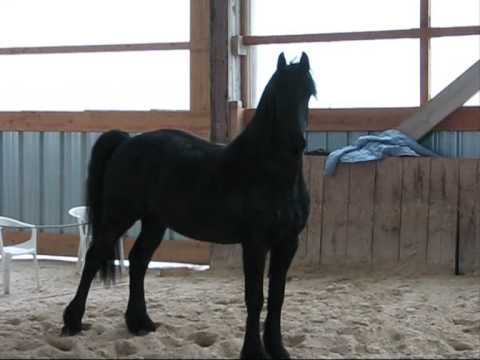
Born on 04/01/2001
Dubbed "the most beautiful horse in the world," Frederik has distinguished himself in dressage, show business, and modeling. He has become an international star thanks to his spectacular mane, charisma, and viral videos.